Before iPacket was a cloud platform, it was a dealership nuisance. A customer would ask the sort of question sensible people ask before spending serious money: What came on this car? What work has been done? What does the warranty cover? The answers existed, but existence is a low bar for useful information. A window sticker might be in one place, service receipts in another, and a vehicle-history report somewhere else. The salesperson was left conducting an archaeological dig while the shopper waited.
Seve Astorg knew this scene from the inside. He began selling cars at Astorg Motor Company in 2005, moved into dealership finance, and spent years where the sales process meets paperwork. His family had been in the auto business since the 1960s. He did not have to imagine the dealer’s workflow or the customer’s suspicion. Both were sitting across the desk.
In 2012, Astorg and software-minded co-founder Ken Wilkinson started assembling a better answer. Gather everything the dealership knew about a vehicle - service records, reconditioning work, original equipment, warranty material, history reports - and turn it into a digital presentation that could follow the customer home. The company that emerged was iPacket. Its foundational innovation was less a grand reinvention of retail than a beautifully organized act of showing your work.
The early company carried the constraints of its setting. A 2018 podcast introduced Astorg as a young founder building a bootstrapped software business in rural America, where attracting technical talent required its own salesmanship. His advice to aspiring entrepreneurs leaned toward patience and hard work rather than launch-day mythology. That temperament fits the product. Vehicle records are repetitive, integrations are fussy, and dealerships do not suspend business while a startup finds itself. The software had to earn its place one useful packet at a time. Hundreds of dealer customers came before the larger platform story, an order of events that kept the company accountable to the mundane test every vertical-software founder eventually meets: does this save someone trouble on a Tuesday?
“We were just trying to solve the need for my family’s dealerships.”Seve Astorg, recalling iPacket’s origin at NADA 2026
The folder learns to travel
There is an appealing modesty in Astorg’s account of the beginning. He was selling cars for his father, working in finance and helping put deals together. The goal was not to make shopping theatrical. It was to get better information to people considering a car. That meant collecting as much as possible about the specific vehicle and making it legible at the moment of decision.
The distinction matters. Automotive software can sound abstract when described as digital retail, engagement analytics or data integration. A customer looking at a pre-owned sedan is not shopping for an integration. The customer wants to know why this sedan costs this much, whether it has been cared for and what, precisely, is included. iPacket’s packet gave the salesperson a compact way to answer with evidence.
The system was concrete enough to become intellectual property. A patent application filed in 2014 names Paul Astorg, Seve P. Astorg and Kenneth S. Wilkinson as inventors. Its title is a sentence only a patent office could love: a system and method for generating an informational packet for marketing a vehicle to prospective customers. Its substance is more elegant. Pull varied vehicle data into a central repository, normalize it, and produce tailored presentations and reports.
That early description anticipated the direction Astorg now emphasizes: data is valuable when it is structured, verified and usable. The original packet made documents portable. The larger opportunity is to make the information inside those documents computable - useful for appraisals, comparisons and market validation, not merely available for viewing.
Selling the condition, not the adjective
Astorg’s public writing stays close to the sales floor. In an essay about vehicle reconditioning, he argues that dealers should document and share the money they spend preparing a used vehicle. Receipts can demonstrate transparency, establish value, reduce buyer anxiety and build loyalty. The claim is practical: if a dealership has replaced the brakes, fitted new tires or completed certified work, hiding the paperwork wastes the investment.
It also changes the competitive frame. Used cars are often flattened into year, mileage and price. Documentation restores texture. Two cars that look similar in a listing may have very different histories and preparation. A dealer that can explain the difference with invoices and inspections has something more durable than a polished phrase.
This philosophy helped push iPacket beyond the packet. Its tools now reach into reconditioning workflows, showing where a vehicle sits between inspection, approval, repairs, detail and the front line. The company also tracks how shoppers engage with vehicle information so sales teams can follow up with context. The common thread is visibility: help the employee see the stalled car, help the salesperson see the interested shopper, help the customer see the work behind the price.
The clever sales move was not a louder claim. It was letting the customer inspect the case.
A company coded by Mountaineers
iPacket grew in West Virginia, away from the usual software capitals and close to the dealerships that supplied its first problem. Astorg attended West Virginia University. He has described the company as “coded by Mountaineers,” a neat phrase that works as both recruiting pitch and declaration of provenance. In 2025, iPacket became a sponsor of WVU Athletics, which Astorg framed as an investment in the place and people that built the company.
The geography is more than decoration. Vertical software improves when its makers remain near the peculiar irritations of the industry. A dealership is a collection of departments that must cooperate while speaking different operational dialects. Sales wants the car ready. Service wants approvals. Management wants accountability. The shopper wants a straight answer. Products designed beside those tensions have less room for imaginary problems.
Astorg’s management signals carry the same local, operational tone. When iPacket reshaped its leadership in 2024, he emphasized promotion from within while adding experienced people where needed. The language was about people earning larger responsibilities, not a founder performing every role forever. For a company that began as a tool inside one family business, that widening circle of operators is its own milestone.
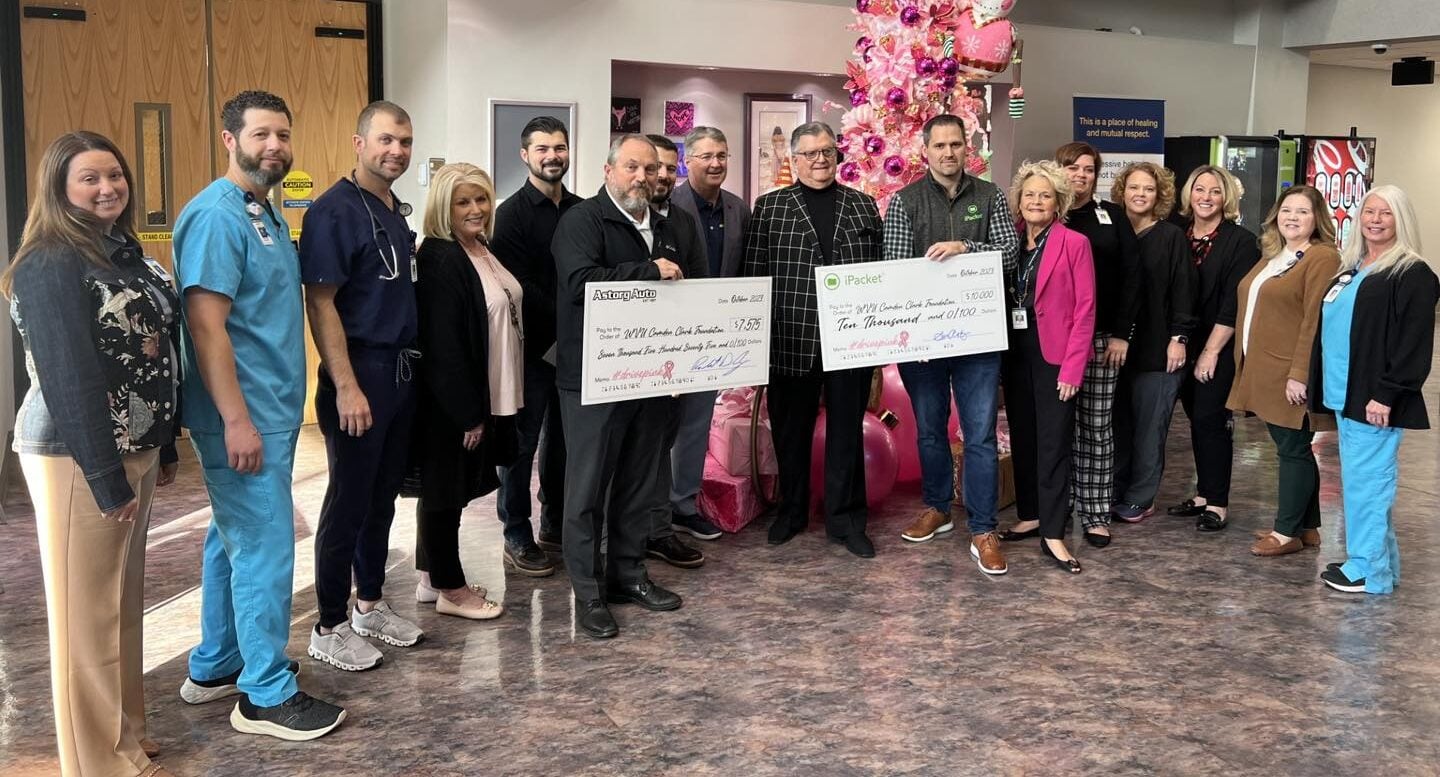
The other packet: giving locally
Some of iPacket’s clearest public moments occur not at trade shows but back in Parkersburg. The Astorg family has maintained a long local giving tradition, and iPacket has connected its annual October growth to donations for the Camden Clark Foundation. In 2024 and 2025, the company pledged money for each dealership newly added during the month. In November 2025, iPacket and Astorg Auto announced a combined $19,275 raised through that year’s campaign.
The company’s other visible partnerships have stayed close to cars. iPacket has sponsored Graham Rahal’s IndyCar entries while working with Rahal dealerships as a technology provider. In 2024, the race livery carried both iPacket and iPacket Recon. The symbolism was almost suspiciously tidy: software intended to move cars through reconditioning faster, printed on a car designed to move very fast indeed.
Astorg seems comfortable translating between these stages - the family dealership, the industry convention, the race paddock and the software roadmap. The connective tissue is not celebrity. It is fluency in how dealers work and patience with the unglamorous details that determine whether work gets done.
From documents to decisions
At NADA in 2026, Astorg traced iPacket’s present ambitions to its oldest habit. The company had spent years collecting original MSRP stickers and other OEM records. That collection could now support more accurate comparisons and appraisals because it preserved the exact equipment attached to a VIN. In a market where search and AI systems can test a seller’s claims, structured evidence becomes more important, not less.
This is a subtle evolution. The paper packet answered, “What do we know about this car?” A structured data platform can ask, “What does that knowledge imply?” The first helps a shopper trust a presentation. The second can help a dealer decide what to acquire, how to value it and which comparisons actually belong together.
Still, the humane center of the idea has hardly moved. Car buying invites uncertainty because the object is costly, complicated and imperfectly known. Astorg’s career has been built around reducing that uncertainty without pretending it can be charmed away. Put the facts together. Make them easy to inspect. Alert the salesperson when the customer is paying attention. Keep the vehicle moving. Follow up on time.
There are founders who begin with the future and work backward. Astorg began with the drawer and worked outward. It has taken him from sales to finance, from a digital folder to a patent, from presentation software to reconditioning and vehicle intelligence. The drawer, one suspects, is finally quite tidy.