A shipping box has a peculiar talent: it disappears while doing its job. You notice the coffee machine, the groceries, the birthday present. The corrugated structure that delivered them becomes something to flatten with your foot. International Paper makes a business out of everything that happens before that small act of destruction - and, increasingly, afterward.
- What it sells: packaging, plus the design, testing and recycling around it.
- The big turn: DS Smith joined in 2025; a regional separation was proposed in 2026.
- Why it matters: a cheap box can become an expensive shipment.
A box is a system
Consider the apparently simple instruction to use less packaging. Make the board lighter, and you may save material. Make it too light, and the stack can fail. Shrink the box, and you might improve the fit. Forget the packing line, and your elegant redesign becomes a bottleneck. The useful question is how the package behaves throughout the journey.
This is where International Paper earns its place. It makes containerboard, the paper that becomes corrugated packaging, and converts it into boxes, sheets and trays. Its broader range includes bulk packaging, solid-fiber products and retail displays. Customers include food producers, consumer-goods businesses, industrial manufacturers and e-commerce sellers. They are buying a container with a fairly unforgiving assignment: arrive intact.
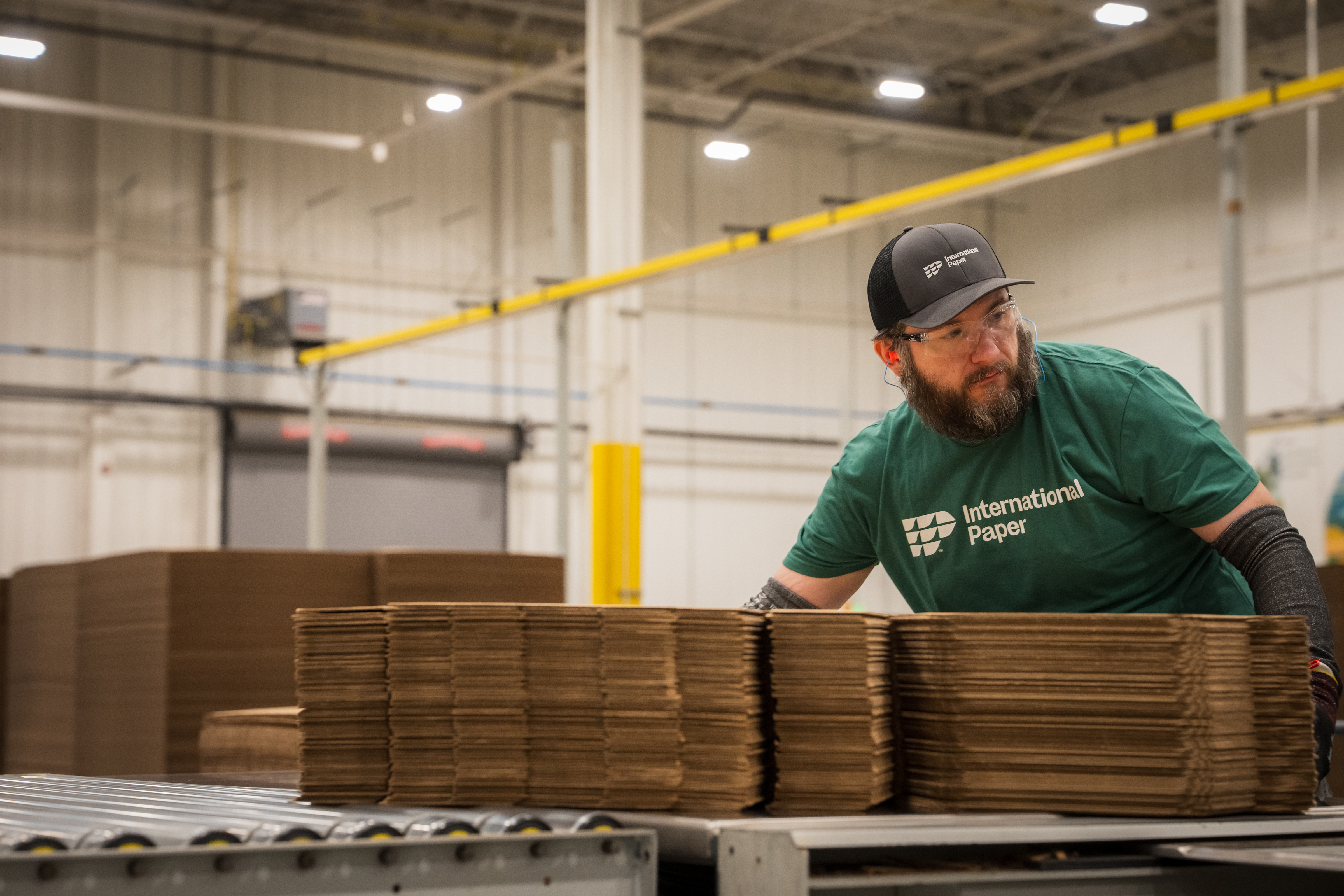
The less visible offering is expertise. IP provides structural design, graphics, printing, fulfillment, assembly and mechanical packaging support. Its laboratories simulate vibration, impact and compression. They test water absorption and handle strength. These are useful services when a purchasing team needs to explain why yesterday’s cheaper carton created today’s returns.
Hallmark offers a concrete example of the relationship. IP helped it transition corrugated packaging to SFI-certified fiber sources, work recognized in an August 2026 supplier award. Conagra recognized IP’s supplier performance the following month. One relationship concerns sourcing; the other emphasizes coordinated delivery. Both show why the product extends beyond a stack of brown rectangles.
The purchase, then the rethink
International Paper began in 1898 through a combination of 17 pulp and paper mills. Its early business included newsprint. Today’s emphasis on packaging reflects a different commercial world: businesses still need to move physical goods, whatever happens to the printed page.
In January 2025, IP acquired DS Smith. Closing-date purchase consideration was approximately $9.9 billion, paid through newly issued IP shares. The distinction matters: this was a transfer of ownership through stock, rather than a cash cheque of that size. The combination expanded packaging capabilities across North America and Europe, the Middle East and Africa.
Then came the surprising part. On January 29, 2026, IP proposed creating two independent public companies organized around those regions. Each would contain assets from both legacy businesses. This would redraw the combined network geographically, rather than simply restore the companies that existed before the acquisition.
“The two businesses operate in distinct market environments and are at different stages of their transformation.”Andy Silvernail · January 2026
That was chairman and CEO Andy Silvernail’s stated explanation. Management said the previous year had clarified the different regional opportunities. The implication is practical: decisions about where to invest and which customers to prioritize may benefit from regional control. Whether the proposed separation delivers those benefits remains an open question.
By October 15, the possible routes had multiplied. IP confirmed early discussions with potential bidders following unsolicited approaches for the EMEA business. It continued preparing the spin-off in parallel. As of October 22, neither a sale nor the separation was complete. That uncertainty belongs in any account of what the company is becoming.
The price of a simpler business
The reset has an accounting cost and a human one. Full-year 2025 results included a $2.47 billion noncash goodwill impairment. That is a warning about carrying value, not evidence that every acquired plant or customer relationship failed. The distinction prevents an interesting corporate reversal from turning into a story the numbers cannot support.
Q2 2026 segment operating profit / loss. Bar lengths show absolute magnitude; these are regional results, not estimates of acquisition returns.
Meanwhile, IP announced a $250 million conversion at its Riverdale mill in Alabama, alongside Georgia closures affecting approximately 1,100 positions. By the second quarter of 2026, management reported the conversion complete. Simplifying a manufacturing network means choosing where equipment and jobs remain. The consequences reach well beyond an earnings presentation.
The portfolio is narrowing, too. IP completed the $1.5 billion sale of Global Cellulose Fibers in January 2026; consideration included preferred stock with a $190 million initial liquidation preference. Fluff and specialty pulp from that business should no longer be casually listed as current IP offerings. Fresh spending includes the $360 million NORPAC acquisition, completed in June to strengthen lightweight packaging-grade capabilities and West Coast service.
The return journey
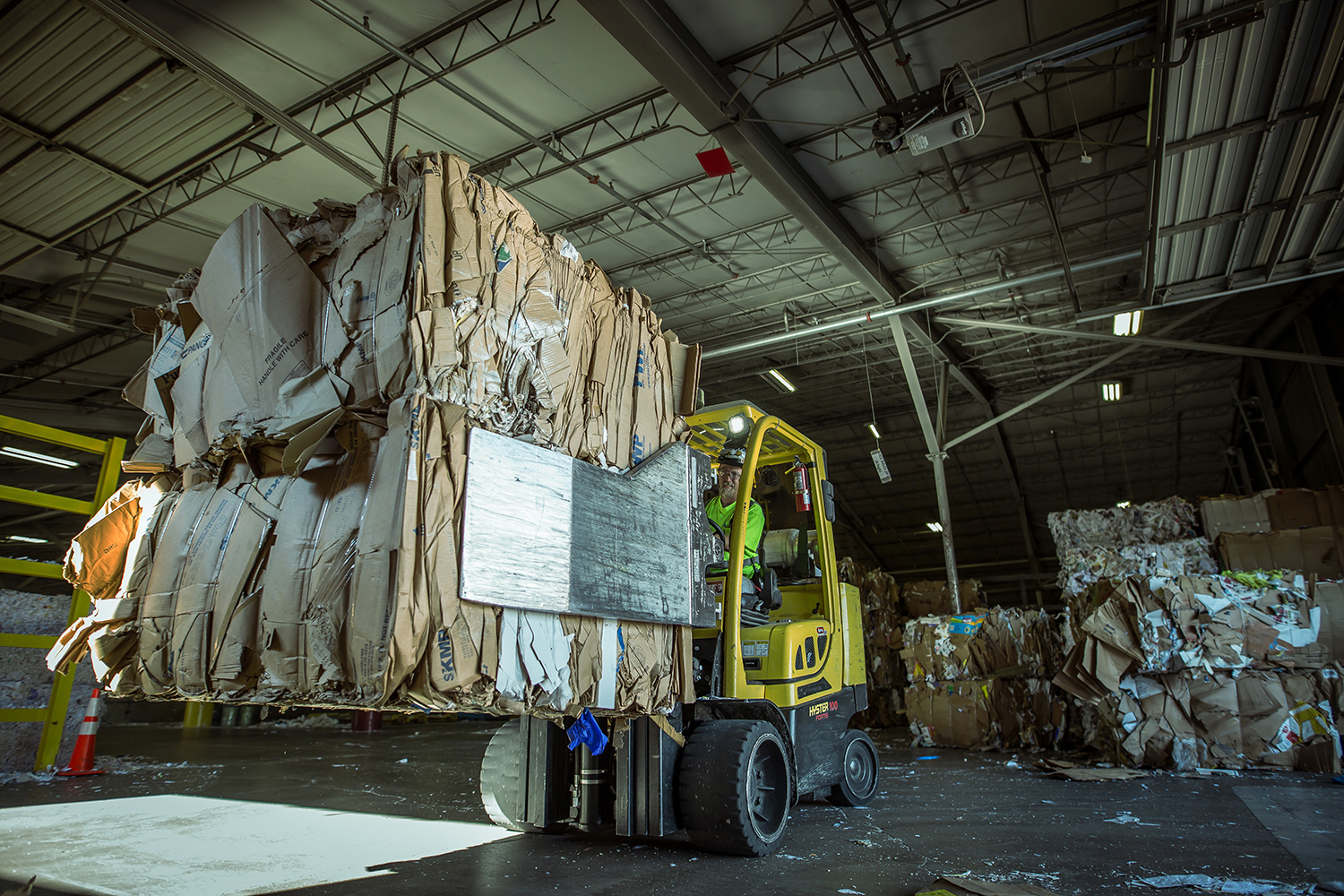
A box maker has a useful reason to care about used cardboard: it is feedstock. IP’s commercial recycling operation collects, moves, processes or brokers recovered material. The company connects businesses trying to clear loading docks with mills that need fiber. Its business model spans selling packaging and organizing part of the material’s return.
- 01 Make paper
- 02 Convert boxes
- 03 Ship goods
- 04 Recover fiber
↳ Back to the mill, with fresh fiber added as needed.
The loop has limits. Wood fiber cannot be reused indefinitely, and collection does not guarantee that every discarded package becomes another box. Material quality and recovery logistics matter. Manufacturing also carries fixed costs: weak demand, expensive energy or a mill outage can upset the economics. Competitors including Smurfit Westrock and Packaging Corporation of America pursue integrated packaging businesses, too. Scale alone does not settle the contest.
What a buyer can borrow
The useful lesson is to specify the journey before the carton. Give the supplier the product’s weight, storage conditions, packing-line requirements and expected handling. Ask for testing against those conditions, then compare material, freight, damage and recovery costs together. International Paper can supply that combination of manufacturing and services. The buyer’s task is to establish whether it works for the actual shipment.
A box earns its keep by making an uneventful delivery possible. International Paper’s own restructuring is considerably less uneventful. The standard it must meet is still recognizable: put the right resources around something valuable, and get it where it needs to go.