The troublesome thing about a warehouse report is how reasonable it looks. A number sits in a column. It has a heading. Someone has probably exported it to a spreadsheet. Yet at one American logistics business, the numbers had acquired a peculiar afterlife: records deleted in one system continued to influence another. The software could remember an order that its neighbour had forgotten. This is a useful place to meet Innovecs, a company whose work often begins where two apparently sensible systems stop making sense together.
- Custom engineering for businesses with software to build, connect or repair.
- Four specialist practices: supply chain, high tech, games and iGaming.
- A practical buying lesson: define one broken workflow before commissioning more technology.
The record that wouldn’t die
In Innovecs’ published reconciliation case, a temperature-controlled logistics provider used a warehouse application, a central data lake and a reporting warehouse. Deleting records removed them from the lake, while corresponding entries survived in the reporting layer. Inventory balances became unreliable.
Innovecs describes a 1.5-month team-extension engagement involving a backend engineer, data engineer and solution architect. They improved integration and added reconciliation jobs to compare changes. Deleted entities were marked and excluded from reports, while historical data remained available for analysis. The company reports restored consistency.
The revealing detail is the deletion. Ask how a system handles an arriving order and you may get a polished demonstration. Ask how it handles an order that disappears and you begin to understand the actual operation.
Simplified from Innovecs’ case description. Reported delivery: 1.5 months.
Four doors into the same company
Founded by Alex Lutskiy in 2011, Innovecs began in Kyiv and developed an international engineering business. Today its offer includes software development, testing, cloud infrastructure, data work and maintenance. Those capabilities appear in plenty of competitors’ brochures. The more interesting question is how a firm organizes them around a customer’s particular problem.
Innovecs now presents four specialist practices. Supply Chain concerns the movement of goods and the software around it. High Tech serves technology businesses. Innovecs Games covers video game production. Innovecs Play addresses iGaming, including casino games and the platforms behind them.
Play launched in May 2025, following years of gaming work. Its services span game mathematics, art, backend engineering, testing and live operations. A casino operator and a warehouse manager may both need reliable software, but their definitions of a bad Tuesday differ considerably. Separate practices give those conversations somewhere specific to begin.

The buyer wants a working Tuesday
The customer list helps explain the range. Innovecs publishes testimonials from East Coast Warehouse & Distribution, transport platform EmergeTMS, vehicle logistics company Autosled, video technology business AnyClip and game developer Jam City. These are organizations buying engineering capacity and implementation knowledge.
Autosled’s Jeremy Wood highlights access to specialists for smaller allocations of time, including mentoring. That detail matters. Sometimes the missing ingredient is an experienced person available for a few hours. Hiring a whole department to answer one architectural question would be an expensive way to ask it.
“Having access to experts”Jeremy Wood, Autosled, in an Innovecs-published testimonial
The commercial model includes team extension and scoped project work. Clutch lists a $25–$49 hourly band and a minimum project size of $25,000+. Those are directory indicators, not a quote for the warehouse repair. A sensible comparison should include internal management time, cloud spending, integration dependencies and the work of maintaining whatever gets built.
The partners change the job
Consider the warehouse relationships. Innovecs works with Davanti around CORAX and describes itself as a preferred systems integration partner for SAVOYE’s ODATiO. The latter combines warehouse, transport and order management capabilities. Innovecs’ role includes connections to third-party applications, migration, reporting and support after implementation.
This places the company between a platform vendor and the customer’s existing operation. Buying warehouse software and making it fit the business are connected decisions with different kinds of work attached.
Snowflake’s own directory confirms Innovecs as a Select partner. Meanwhile, Innovecs markets Innochain, a supply chain AI toolkit covering document processing, voice picking, yard management and support. The buying question should remain stubbornly concrete: which task becomes easier, and how will the customer check?
Knowledge has to stay somewhere
Industry knowledge accumulates in people. Innovecs’ InnoCamp began with a manual QA course in 2019 and expanded into technical learning with mentoring. The company’s anniversary account says roughly 40% of track graduates were working there by 2022. That makes training part of the delivery story.
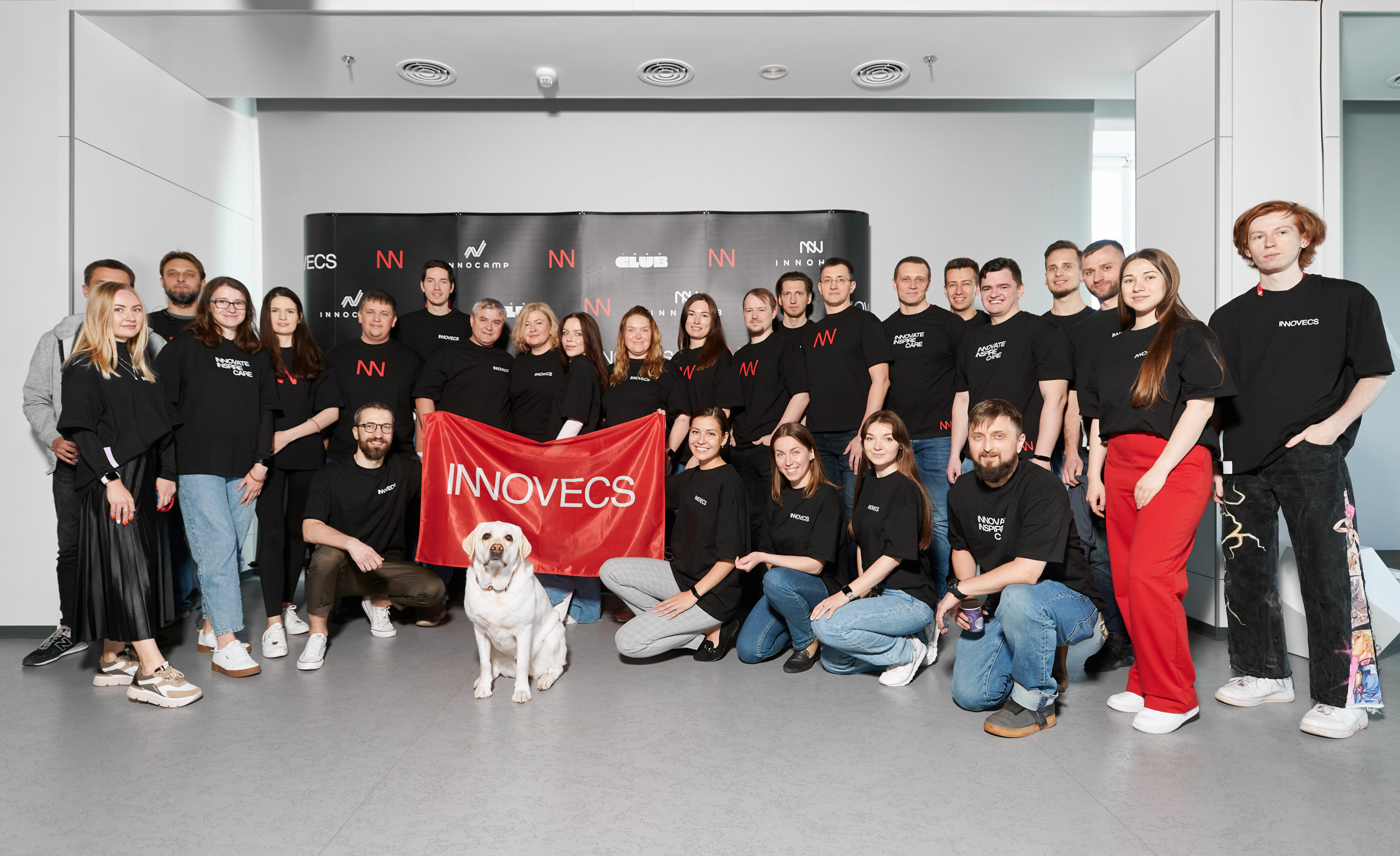
Its stated values are “Innovate, Inspire, Care.” The Women’s Empowerment Principles directory records its signature in October 2024. Lutskiy also serves as president of the Ukrainian Amateur Hockey League. Between courses, clients and hockey, the company has several ways to get people into the same conversation.
Start with the troublesome handoff
Another published engagement makes the practical lesson clearer. A US logistics provider struggled with electronic document exchange. Transmission and parsing failures could go unnoticed. Innovecs describes a two-month project adding automated processing, visible status, failure alerts and tools to retry documents. Recovery became part of the design.
Readers can copy the sequence: trace one workflow, identify its failure point, then define an observable acceptance test. For a report, that might mean checking what happens when an order is deleted. For a document, it might mean proving a failed transmission can be found and retried.
A useful acceptance test also names the owner, the input and the expected result. Give the team a sample of ordinary transactions and a handful of awkward ones: duplicates, cancellations, missing fields. Agree who can approve a change to a business rule. Otherwise a delivery team can produce technically correct software while two departments continue arguing about what the number means.
This approach suits a buyer with a defined operational problem, access to the relevant systems and someone able to make decisions. A ready-made tool may be more economical for a standard requirement. Extra engineers will struggle if nobody owns the process. Innovecs’ most instructive work starts with a question small enough to answer: where, exactly, did the connection stop working?