In 1970, a fire forced a Philadelphia printing business out of its building. Instant Copy Service had started five years earlier with one small press and one pressman. Now its founders, Don Wightman, Richard Bastian and Richard Prendergast, needed somewhere else to work. In temporary quarters on Juniper Street, they bought an Apollo Web Offset Press and entered direct mail. The building was gone. The business had acquired a different future.
- The work: turn customer data and campaign ideas into printed, personalized, dispatched mail.
- The buyers: national marketers in finance, insurance, fintech, nonprofits and healthcare.
- The bet: fewer handoffs between targeting, production and postal logistics.
Today, ICS operates in South Jersey and describes a 500,000-square-foot campus with capacity for more than 4.5 million pieces daily. Those are capacity claims. A separate, historical result makes the scale concrete: ICS says it produced more than one billion pieces in 2022. Somewhere between a single press and that enormous pile of envelopes lies an interesting business idea: own more of the steps that can make a campaign late.
A letter has a surprisingly long supply chain
To the recipient, mail looks finished. For the marketer, it begins as a set of dependencies. A customer list needs cleaning. Different people may need different offers. Artwork needs approval. Printing has to match the data. Pieces need finishing, inserting and a postal plan. Each step can create work for the next person or prevent it.
ICS sells services across that chain. Its production menu includes acquisition campaigns, customer communications, retargeting, trigger programs, live checks and hand fulfillment. Variable data printing lets information change from recipient to recipient. Its client services team coordinates budgets, component checks and postal options. The business model is tailored B2B campaign work, with scope and budget developed around the job.
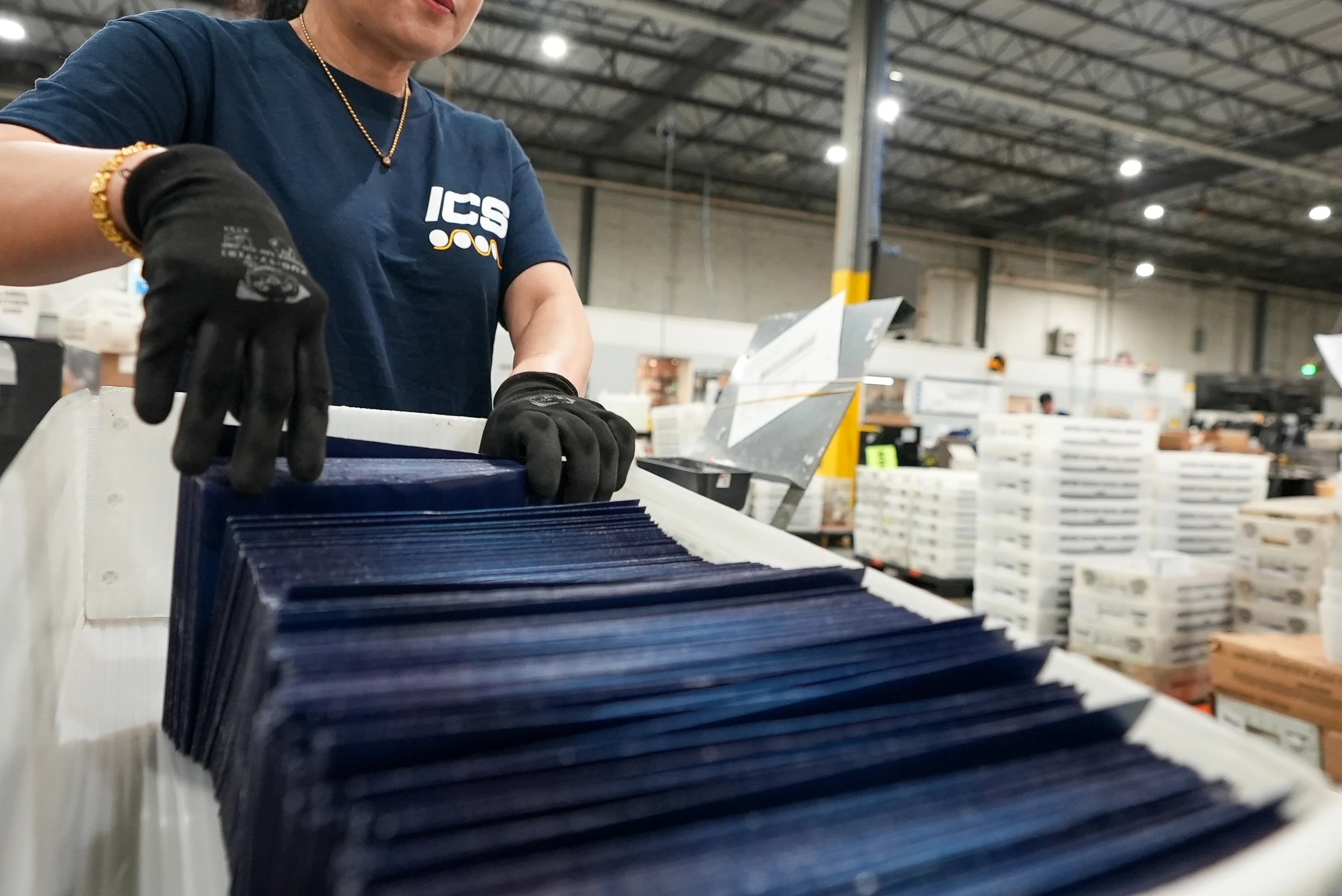
The customer list explains the need for coordination. ICS’s production page displays logos including Capital One, Credit One Bank, Ally, Mutual of Omaha, UNICEF and Sallie Mae. These organizations have different messages and audiences. They share a reason to care about accurate execution at volume.
The saving hidden in the sorting
One of ICS’s more revealing services has a magnificently unromantic name: commingling. Mailings from different customers are combined into larger sorted pools. Shared volume can qualify for postal discounts that an individual mailing would struggle to obtain. ICS keeps this operation in-house, giving it control over when the pools run.
Its published schedule describes two pools a week, with flexibility for a third. That detail matters as much as the machinery. A marketer needs the economics of aggregation without losing the campaign’s timing. ICS offers postage analysis using an existing mail file and can consider commingling or drop shipping. The useful buying question is whether the postal plan fits the deadline.
- 01Clean
the list - 02Personalize
the print - 03Pool
the mail - 04Plan
dispatch
There are constraints. Pieces must meet USPS size and machinability requirements. A format that cannot run through the relevant equipment, or a schedule that cannot accommodate pooling, needs another plan. Postal savings deserve evaluation against the actual mailing, rather than an attractive average.
The machine for the little jobs
In April 2024, ICS announced a 60% increase in printing capacity through an expanded Ricoh and EMT relationship. The installation included a Ricoh Pro VC40000 with MICR capabilities for live checks and new finishing equipment. The announcement also described a Kyocera cutsheet device for samples, small jobs and reprints.
That second machine is the telling detail. ICS explained that it would help preserve the performance of the roll-to-roll equipment. Small work has somewhere appropriate to go. The broader lesson is practical: improving throughput involves deciding which jobs should share a machine, as well as buying a faster one.
The next purchase begins with the list
ICS’s data services include hygiene, warehousing, segmentation, modeling and personalized URLs. For financial services clients, the company says it is approved to process credit data and personally identifiable information. It describes encrypted storage, controlled access and audit processes, including SOC 2 Type 2. Sensitive customer information makes the route to the printer part of the buying decision.
On January 2, 2026, ICS introduced Sayker Analytics. Its explanation began with a complaint about rigid data platforms, slow changes and inefficient targeting. “We kept seeing the same story,” the announcement said. Sayker’s proposed answer is flexible analytics close to execution, with models that can be refined as conditions change.
“We kept seeing the same story.”ICS on the recurring data problems behind Sayker Analytics, January 2026
That move extends a pattern. IM Group Marketing supplies direct marketing support; LAMA adds agency services such as branding, websites and content. Sayker adds a named analytics business. ICS’s position sits between the commercial printer, the data bureau and the agency. Its proposition is that their work becomes easier to coordinate inside one company family.
The $104 detail above everybody’s head
A supplier case study offers a smaller, unusually tangible investment story. When ICS moved from a 100,000-square-foot facility to one twice that size, the new building had old T12 lighting. It wanted better light and lower energy use at about $100 per fixture. OEO used New Jersey Clean Energy Program incentives to bring the reported net cost to $104 per fixture. The budget was the obstacle; incentives helped solve it.
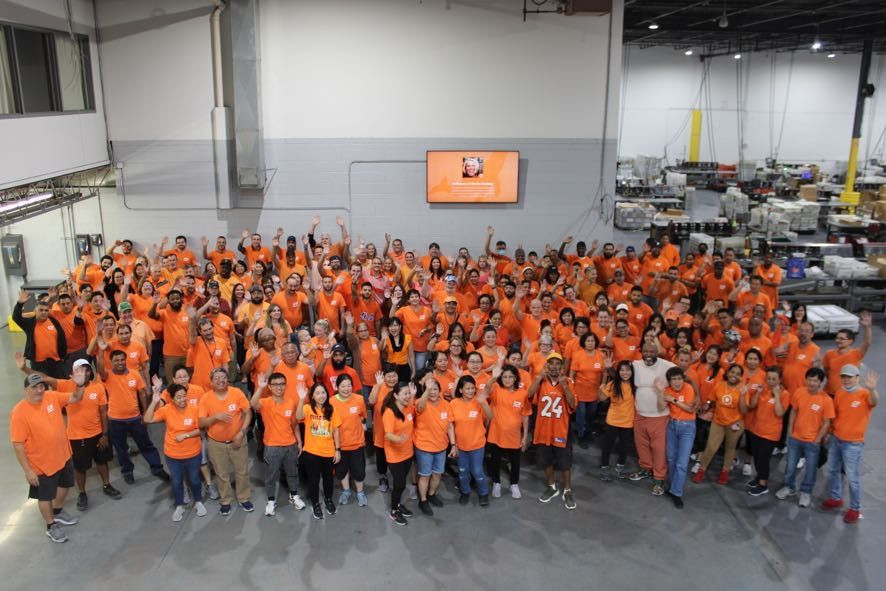
The people beneath those lights matter, too. Great Place To Work’s March 2026 profile lists 408 U.S. employees and reports that 84% say ICS is a great place to work. For a business selling dependable execution, employee experience belongs in the operational picture.
What can a reader copy? Map the campaign’s handoffs. Separate sample work from volume production. Check postal eligibility before committing to a format. Put targeting decisions close enough to execution that mistakes have visible costs. These choices need a viable offer and a reachable audience; additional printing capacity cannot supply either. ICS’s history makes the less glamorous work worth examining. An envelope arrives alone. Getting it there is a group project.