The revealing thing about Fry Communications is what happened after a customer went looking for another printer. Before renewing its contract in 2006, The Nation compared suppliers capable of producing its weekly magazine. Several dozen could handle the printing. The decisive question concerned what happened afterward: getting the issue into readers’ hands.
- Fry makes magazines, catalogs, and direct mail, then handles finishing and distribution.
- Offset, digital, binding, and co-mailing share one Pennsylvania campus.
- The buying lesson: judge the delivered issue, including its deadline.
The mailing room wins the account
The Nation stayed with Fry. Its account, submitted to Congress in 2007, makes an unusually candid customer reference. The magazine praised the printer’s pricing and mailing capacity, while explaining how little freedom a weekly publication had to chase postal savings. The ink could be perfect. The economics could still be punishing.
That year’s postage increase was estimated to add $500,000 to The Nation’s annual costs. This was a postal bill, not Fry’s fee. Combining different publications into common mail streams could unlock discounts, but waiting for the right companions introduced another expense: time. The magazine reported delivery delays during its co-mailing experiment.
“mailing capabilities became the leverage point in our final decision”
The Nation, congressional submission, 2007
The lesson has a long shelf life. A discount only helps when the operating conditions fit. For a weekly selling timely commentary, a cheaper journey that arrives too late can damage the product. Fry’s opportunity lies in working through these connected decisions with the publisher.
The shopper that bought a press
Fry began in 1934 with a weekly shopping guide. For more than thirty years, the family operation concentrated on publishing it. Then Henry Fry bought an offset press in 1967 and began printing the shopper. A publisher had acquired the means of production.
In 1970, the company moved into government and commercial printing. Its history says it became the country’s largest federal contract printer within five years. In the early 1980s came business catalogs and trade and consumer magazines. Each step widened the customer base while putting the factory to work on related problems.
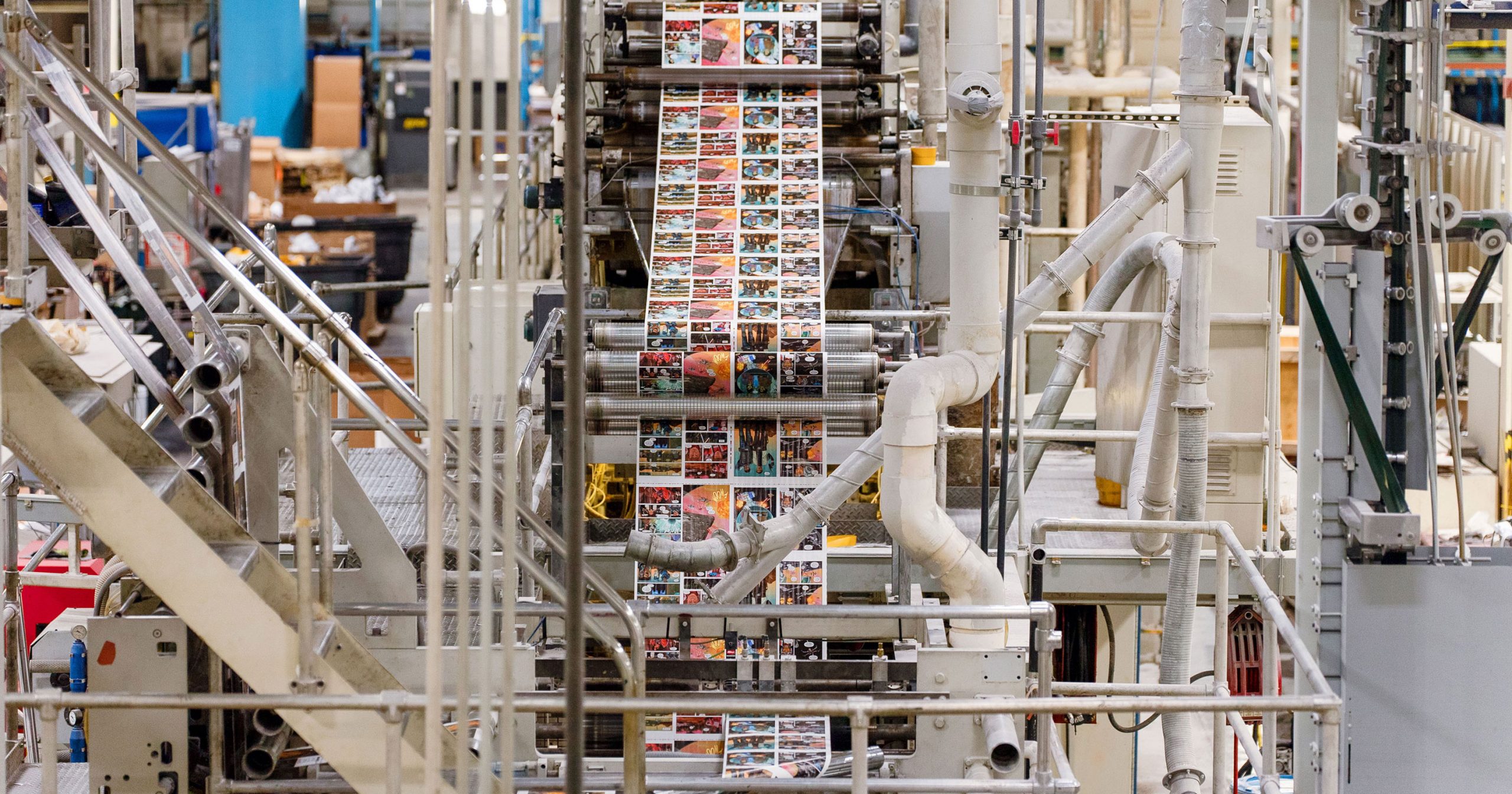
Today, Fry serves publishers, catalogers, and marketers. Its published customer testimonials include Harvard’s T.H. Chan School of Public Health, McMahon Publishing, Style Weekly, and MoCo360. These are organizations buying physical communication for their own audiences. Fry sells production and related services to businesses, with the specifications shaping the job.
One campus, fewer handoffs
The company’s central proposition is geographical. Web offset presses, sheetfed equipment, digital inkjet production, binding, specialty finishing, and co-mailing sit within the same manufacturing campus. A job can require several of these capabilities. Keeping them close gives planners more ways to coordinate the schedule.
- 01PrepareFiles + proofs
- 02PrintOffset + digital
- 03FinishCovers + binding
- 04DeliverSort + distribute
The attraction becomes clearer with a complicated issue. A publisher might want a soft-touch cover, a foldout advertisement, and different inserts for different readers. Fry offers coatings, cold foil, embossing, gatefolds, and selective binding. Those options still have to fit the paper, production sequence, budget, and mailing date.
Software handles some of the coordination. Insite provides file submission, proofing, and approval. Journal Designer helps with layout and pagination. Customer Online exposes production information and supplied paper and insert usage. These tools make the customer’s decisions part of the production workflow.
That combination positions Fry among publication manufacturers that can take responsibility beyond the press run. Publishers can also buy printing, finishing, and mailing separately. Comparing the two approaches means pricing the handoffs as well as the individual operations.
The factory also needs people who know what the equipment is telling them. Fry operates around the clock, with twelve-hour production shifts. Its recruitment material promises ongoing training and advancement, alongside health insurance options and a retirement-plan match. Those are practical commitments in a business where experience must survive a change of shift. A proofing portal helps organize decisions; someone still has to make them.
The small change that changes the bill
Fry’s hybrid print offering applies the same thinking to customization. Offset produces the common content; digital production adds variations such as customized covers, targeted offers, or regional editions. A marketer can preserve a shared core while changing the part a particular reader encounters first.
Offset content + digitally customized components
Whether that makes financial sense depends on the run length, the amount of variation, and what the mailing must achieve. The practical move is to ask for alternatives before freezing the specification. Compare a common edition with versions for distinct audiences. Include finishing, freight, postage, and delivery assumptions in both quotes.
Relevant Reach, Fry’s direct-mail and digital-print division, extends the offer into lettershop services and personalized inkjet work. Its OmniReach platform combines mail with digital marketing and tracking. The Fry Family Network adds NPS Media Group’s circulation and audience services and GTxcel’s digital publishing tools.
Inside the factory, smaller interventions matter too. In June 2025, Fry described piloting 3D printing for replacement parts and maintenance. The goal was to reduce dependence on uncertain parts supplies. A publisher need never see that component; a stopped machine makes its importance obvious.
A dog, a calendar, a useful question
Material choices require similar attention. Fry reports FSC and PEFC chain-of-custody certifications for certain papers it offers, plus investments in rooftop solar, building controls, and heating upgrades. For a buyer, the useful follow-up is specific: which paper and which certification apply to this particular job? A company-wide statement becomes useful when it reaches the purchase order.
There is a gentler piece of engineering in Fry’s identity. In 1964, Betty Fry traded advertising in the family’s Shoppers Guide for a sign showing a town crier and a dog. She gave it to Henry. The Scottie later acquired a name: Frydo, pronounced like Fido.
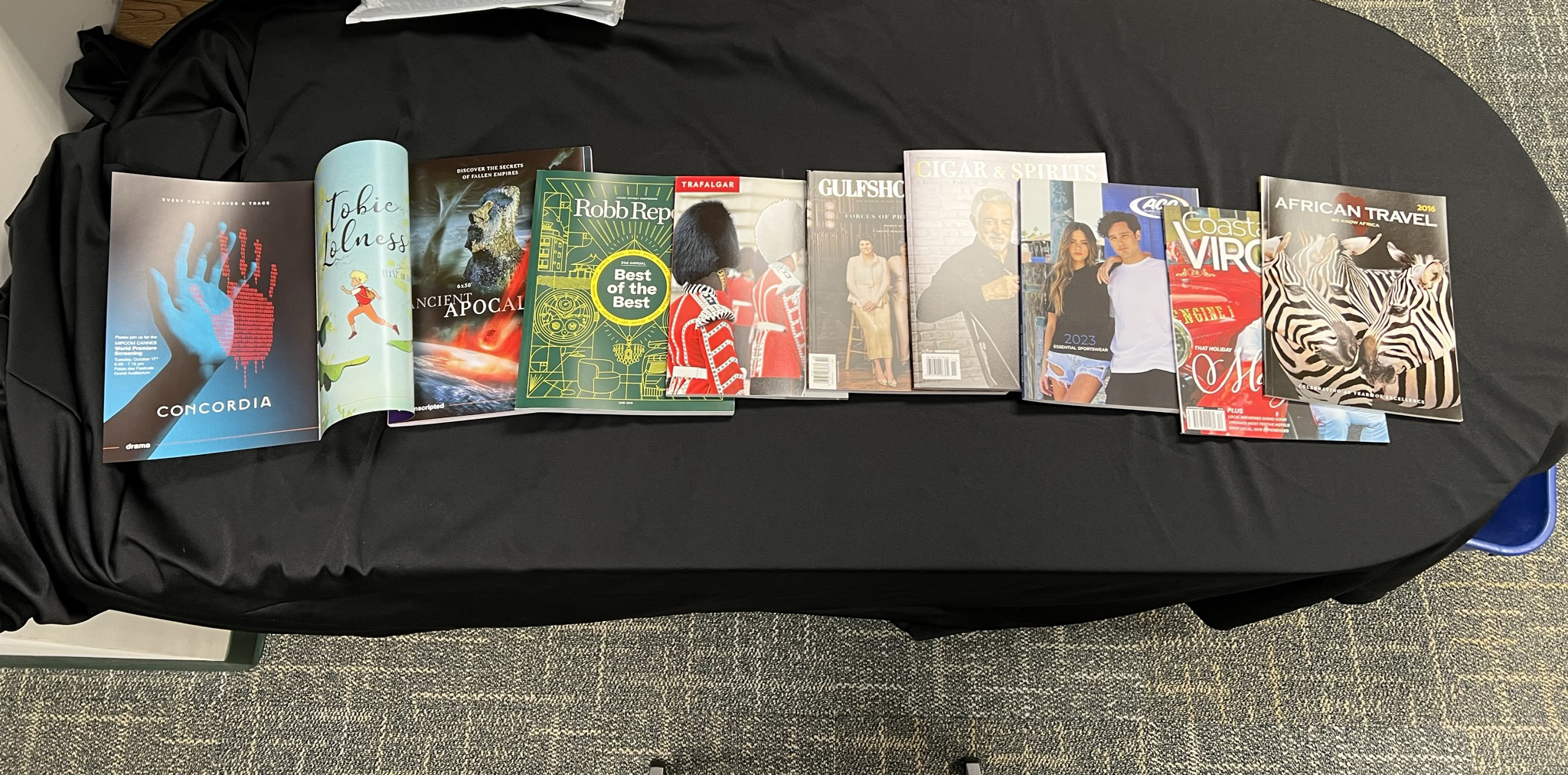
The company still makes objects that explain its capabilities. Its Discovering Beauty calendar received first runner-up in the 2026 NeoGraphics Power of Print competition. A sample can put a finish into a buyer’s hands in a way a specification cannot.
In July 2026, Fry promoted Cassandra Crawford to oversee customer and distribution services, linking customer service more closely with its Presort Information and Logistics Team. The organizational change echoes the manufacturing arrangement: connect the people responsible for decisions that affect one another.
For a prospective customer, the useful starting point is a complete brief: audience, quantity, files, format, personalization, and required arrival date. Then ask Fry to work backward from the mailbox. That is where the reader discovers whether all the earlier decisions worked.