The peculiar thing about a payment terminal is how little of a shopkeeper’s day it explains. It records the moment money changes hands. It says less about why somebody walked through the door, whether they will return, or who will remember to call their order. iBoxPay entered through that narrow opening. Over fifteen years, it has kept widening the assignment.
- A phone-connected reader gave small merchants a way to accept cards.
- Android terminals and merchant software added jobs beyond checkout.
- The 2026 iBOXAI brand puts AI-assisted operations at the centre of the pitch.
Its earliest proposition was wonderfully tangible: a small reader plugged into a phone’s headphone socket. Suddenly, an object already in a merchant’s pocket could become part of a card-acceptance system. The company’s investor, GSR Ventures, describes online and offline payments through UnionPay. This was technology meeting a recognisable problem, with a recognisable place to put the solution.
The socket was only the start
Founded in Shenzhen in 2011 by Hansen Han, iBoxPay belonged to a busy Chinese mobile-payment market. Lakala and QFPay were pursuing related opportunities. Alipay and other established payment businesses were moving into physical commerce. By early 2013, industry reporting described price wars and falling commissions. A reader could be useful without remaining unusual for long.
The first thing under pressure was the sector’s ability to charge for similar payment services. That does not establish a failed iBoxPay product. It does explain the commercial backdrop against which a payment company might seek more work to do. Helping a merchant collect money creates an opening; helping that merchant operate creates a longer conversation.
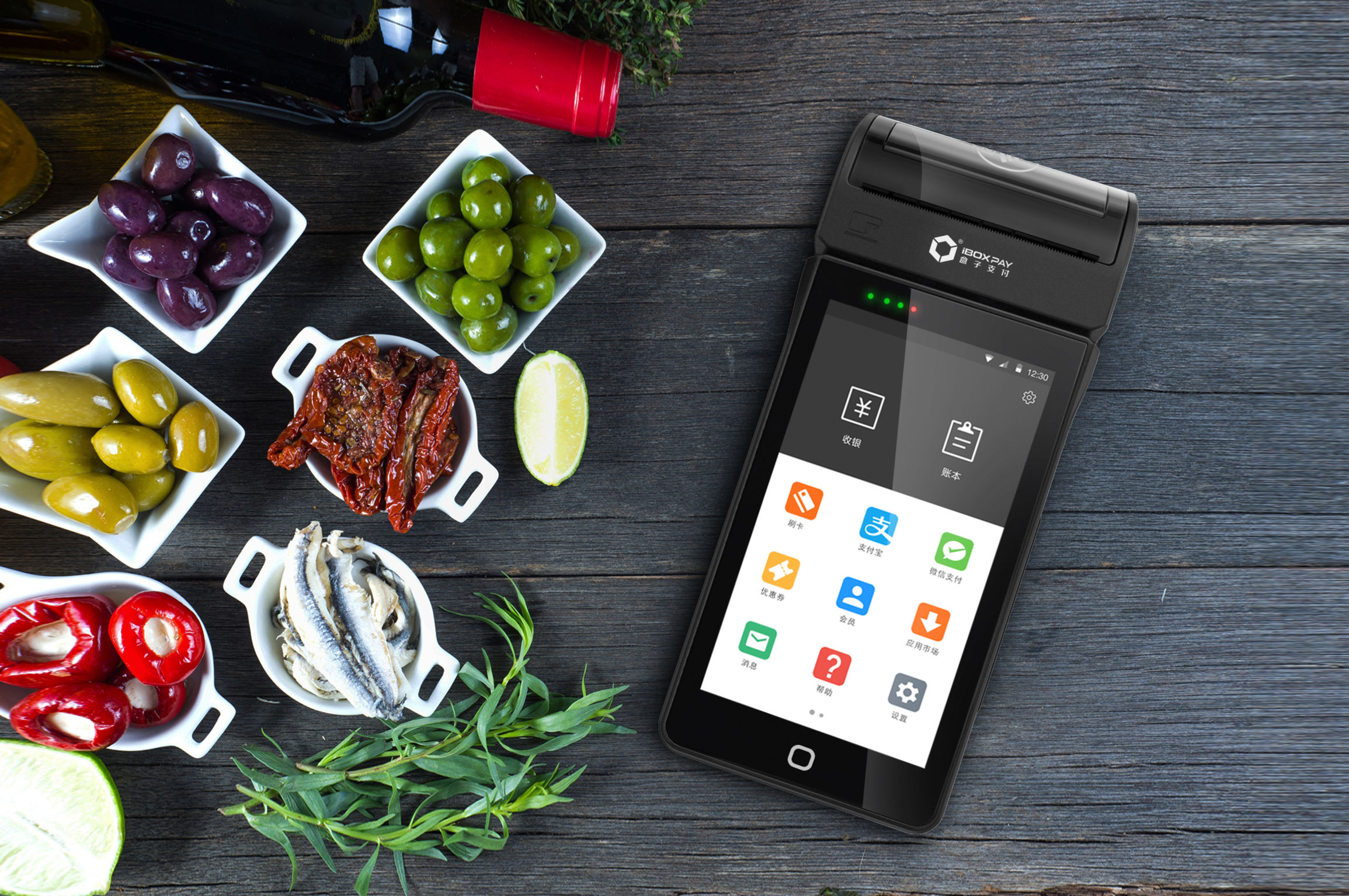
The hardware story also has an interesting accomplice. SMiT supplied mobile POS devices to iBoxPay and invested in the company. Its exchange filings describe iBoxPay as a major customer. A later prospectus, citing Frost & Sullivan, placed iBoxPay third among China’s hardware-based mobile-payment providers by cumulative business users in 2014. Behind the little reader sat a supply chain and a substantial distribution problem.
A bigger screen, a longer working day
Look at the S302, whose iF Design entry dates its launch to 2016. The handheld terminal had a 5.5-inch touchscreen and ran Android. It accepted Apple Pay, cards, NFC and QR payments. Its description also included takeaway ordering, marketing, membership systems and data analysis. The screen had become somewhere to put the rest of the merchant’s work.
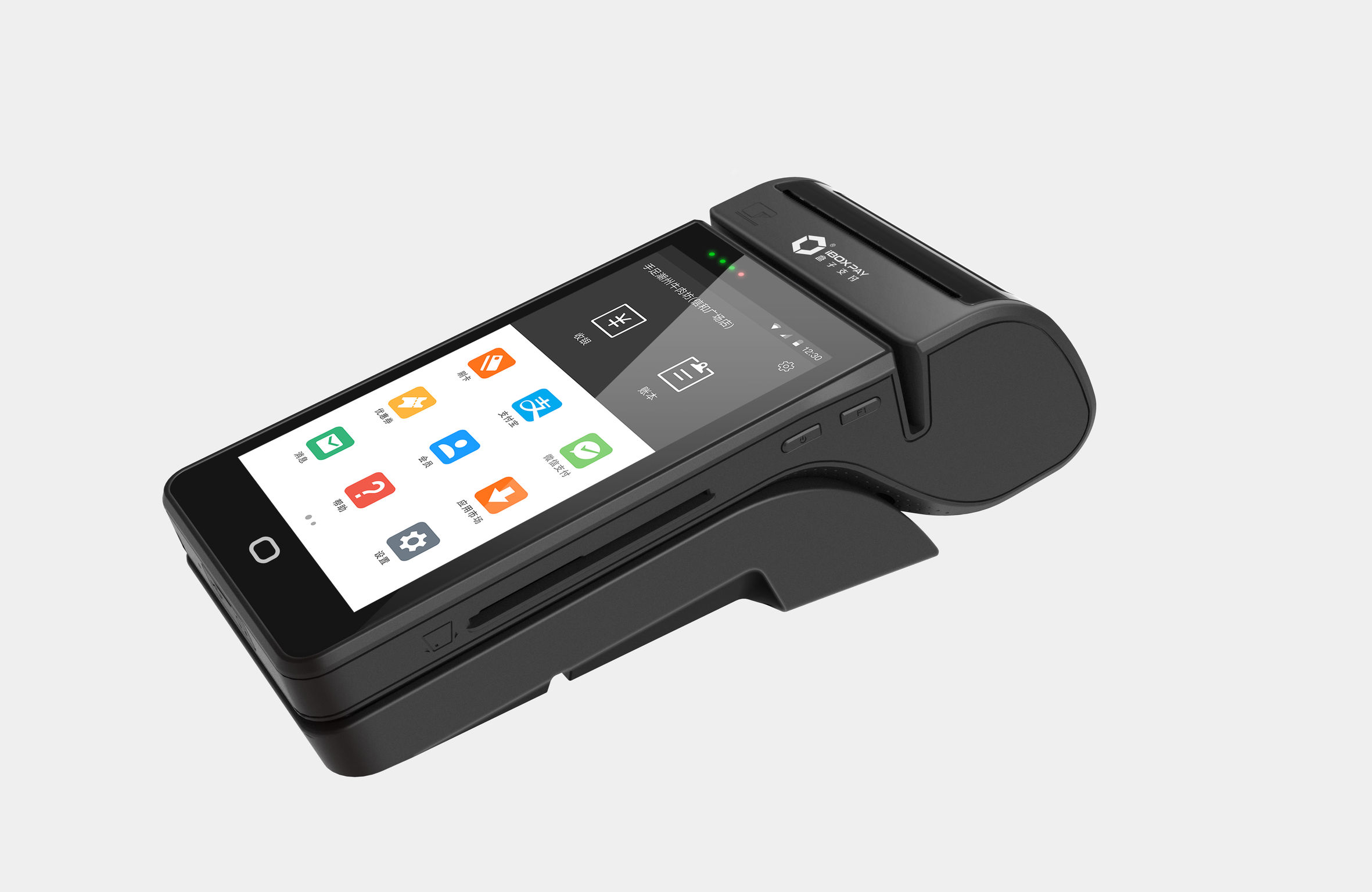
For a restaurant, the appeal is having payment and the next operational step close together. For a retailer, it may be keeping membership activity connected to purchases. These are different demands on the same piece of counter space. An application platform can accommodate both, provided the owner finds the functions worth learning and the staff can use them under pressure.
That is a useful distinction when thinking about the company’s expertise. iBoxPay works where payment hardware, software and physical retail meet. It must accommodate a customer’s chosen payment method while giving the business something usable on the other side of the sale. Its current HuiPOS2 listing still combines multiple payment methods with coupons, membership tools and a built-in printer.
In October 2018, the company introduced Huidian, a WeChat mini-program designed around attracting customers and bringing them back. Its launch announcement described a SaaS platform, marketing tools and ways to build a merchant’s own customer pool. At the same event, it announced a strategic agreement with Focus Media and a positioning-and-design business school. Payment was becoming an entry point into customer relationships.
The logic is easy to copy, although the execution is harder. Begin with a job that happens repeatedly. Earn a place in that workflow. Then solve an adjacent problem for the same person. Huidian’s adjacent problem was concrete: a successful checkout today says nothing about tomorrow’s foot traffic.
The cost of getting onto the counter
This expansion required capital. Contemporary coverage records RMB 14 million in early financing from GSR Ventures in 2011, then a reported $10 million Series B in 2013 involving SMiT, GSR and Atomico. Those figures describe investor backing, rather than what a merchant pays to use the products. For a buyer, the relevant calculation includes equipment, payment processing and the operating services selected.
The business spans devices, payment aggregation, merchant applications and services. Its customers include restaurants, supermarkets, clothing shops and service businesses. Company materials claim cumulative reach beyond ten million merchants and enterprises. That is a statement about the wider business’s history, rather than ten million shops already paying for its newest AI offering.
“Connecting everything in life.”The HAODA app’s concept, recorded by iF Design
Distribution matters here. The company’s LinkedIn description reports more than two million registered participants in its offline sales-and-service network. Registered participants are not employees. Still, the emphasis is revealing: getting technology into local shops involves people who can explain it, install it and help it fit the working day. A download button cannot do every part of that job.
Now the shop gets an AI team
In March 2026, the company adopted the iBOXAI brand. Its May launch presented an “AI operating team” for businesses. The accompanying announcement described a 306-day project effort and RMB 1.2 million in research-and-development incentives. The incentive amount is a reported reward pool, not the cost of building the system.
Reported project effort before the AI-team launch.
RMB 1.2 million in announced R&D incentives.
The current catalogue makes the ambition physical again. iBoxPop combines payment collection with advertised customer-attraction functions. iBoxNano is pitched at staff coordination; iBoxEye at customer-traffic analysis. The merchant app brings together collections, shop management and membership marketing. These are company-described capabilities. Whether they earn their place depends on what happens during an actual shift.
For a shopkeeper, the sensible trial starts small: choose a recurring task, measure the time it takes, and see whether the tool helps. A business with little repeat traffic may get less from membership marketing. A shop with inconsistent records gives operating software less to work with. Equipment, staff habits and the specific payment environment all affect the result.
The position in the market is therefore layered. Payment networks supply methods customers recognise. iBoxPay supplies merchant-facing devices and services around those methods. Broader software ambitions bring it into competition for another scarce resource: the owner’s attention. Every additional function must justify its place alongside the existing ways a shop already gets things done.
iBoxPay’s most instructive change is the unit of ambition. First it wanted to make a transaction possible. Then it wanted another customer visit. Now it wants a place in the running of the shop. The counter remains the same. The question asked across it keeps getting bigger.