A finger is a splendid invention until you want to see what is underneath it. Put one on a tablet and the exact point of contact disappears. Try drawing a careful line and the instrument begins to feel rather large. Ian Kung helped build a company around the space between touching a screen and making something on it.
Kung co-founded Adonit in 2010 after working at HP and Apple. The company became known for digital pens, but the appeal of his story lies in the decisions around the object: how to make it useful, how to work with software developers, and how to get it to people far from the place it was made.
In 2013, Kung’s earlier employment was described as twelve years of research and development across HP and Apple. That background placed him close to the making of computers before he began selling a tool for using them. At Adonit, the work turned toward the smaller encounter between the device and its owner: a hand trying to put a particular mark in a particular place.
There is an appealing modesty to a pen as a starting point. It fits in a pocket. It requires little introduction. Yet a digital version has an unusually demanding audience. Anyone who has used paper already knows how the experience ought to feel. The competition includes a very inexpensive pencil.
A keyboard, before the handwriting
Adonit’s first product direction was an external keyboard for a tablet. The move toward styluses came afterward. That sequence matters. Kung and his colleagues were looking at what people could do with a tablet, and the keyboard offered one answer. Drawing and handwritten notes suggested another.
The founding team numbered five. Former Apple colleagues were part of it, including Zach Zeliff and Jasper Li. Kung had been their manager at Apple. Kris Perpich and David Sperry also became part of the founding group. The relationships brought experience from larger technology companies into a much smaller enterprise, where deciding what to make was only the beginning of the work.
By summer 2011, the Jot stylus was being put in front of Kickstarter backers. A crowdfunding page is an unusually public place to test a private conviction. People can inspect the idea, watch the demonstration and decide whether it deserves their money. For a young hardware company, that is a useful encounter with the outside world.
The proposition was easy to grasp: a tablet could be a surface for making things. It could carry the movement of a hand into a drawing or a note. Entertainment had already supplied plenty of reasons to pick the device up. Kung wanted productive work to supply more.
A tablet keyboard.
Kickstarter.
partner apps.
global argument onstage.
The small engineering of an ordinary gesture
The early Jot’s transparent disc addressed a familiar irritation: the tool could obscure the very spot the user wanted to reach. A visible contact point gave the hand and eye a more useful arrangement. It was a detail small enough to overlook in a photograph and large enough to matter every time someone drew.
That is the peculiar difficulty of tools. The things people notice first are often the things that interrupt them. A pen can have an attractive body and still earn its owner's displeasure at the tip. Precision has to survive contact with an actual hand.
In a 2013 television interview, Kung described the work in terms of a digital pen and professional use. Software could assign different functions to the hardware’s controls. A button might change a stroke setting or help move through an action. The physical object was becoming an entrance to a set of software behaviors.
At the launch of the Jot Script Evernote stylus, he described an engineering challenge as making the iPad believe a finger was moving. The phrase captures the awkward negotiations inside a seemingly natural gesture. The user wants to write. The device has to understand what is arriving at its surface.
“Make the iPad think a finger is moving.”
Ian Kung on the Jot Script challenge, 2013
Translated from Chinese
The Evernote experience also addressed the way a person rests a palm while writing. With Penultimate’s digital-inking functionality enabled, the hand could sit on the screen. A writing tool asks the rest of the body to cooperate; a product that ignores that fact gives its owner an unnecessary little performance to sustain.
The app could not be an afterthought
Kung tried commissioning an app called Jot Studio. It briefly achieved a prominent download ranking before slipping away. He then moved toward supporting other drawing and note-taking applications. The decision widened the company’s view of where the pen would live.
For a hardware founder, software presents a tempting invitation to build everything. The product has capabilities; an app can display them. But customers arrive with habits, files and favorite places to work. Asking them to adopt an unfamiliar tool is one request. Asking them to relocate their work is another.
The shift toward other developers’ applications made the pen part of a larger collection of tools. Adonit worked with Evernote and Adobe. Those connections gave Kung’s company a place in conversations that extended beyond the manufacture of an accessory.
A drawing session contains no helpful boundary line between the responsibilities of the pen maker and the app developer. The person drawing experiences the result as a whole. Cooperation between companies therefore becomes part of the product, even though it never appears in the box.
Each has to understand the next. The person drawing gets one experience.
Consider a shortcut button. Its physical position belongs to the pen’s design. The action it triggers belongs to an application. Kung discussed precisely this flexibility: different apps could give the controls different jobs. The designer has to consider both the thing a finger presses and the consequence that appears on the screen. Even a tiny switch can require a conversation across company boundaries.
That gives the Jot Studio episode its interest. A founder could respond to a disappointing app by commissioning more features. Kung pursued compatibility and partnerships. The pen could gain usefulness through work done elsewhere, provided the connections were good enough.
Two places, one company
Adonit developed across Taipei and Texas. In the early arrangement, Taiwan handled research, hardware manufacturing and customer service, while the American operation worked on software, visual presentation and design. The company’s geography reflected the work it needed to do.
This put an international business inside the company before it was merely a destination for sales. The team had to operate across places and backgrounds while trying to present a coherent object to the customer. A pen gives little indication of the coordination required to bring it into existence.
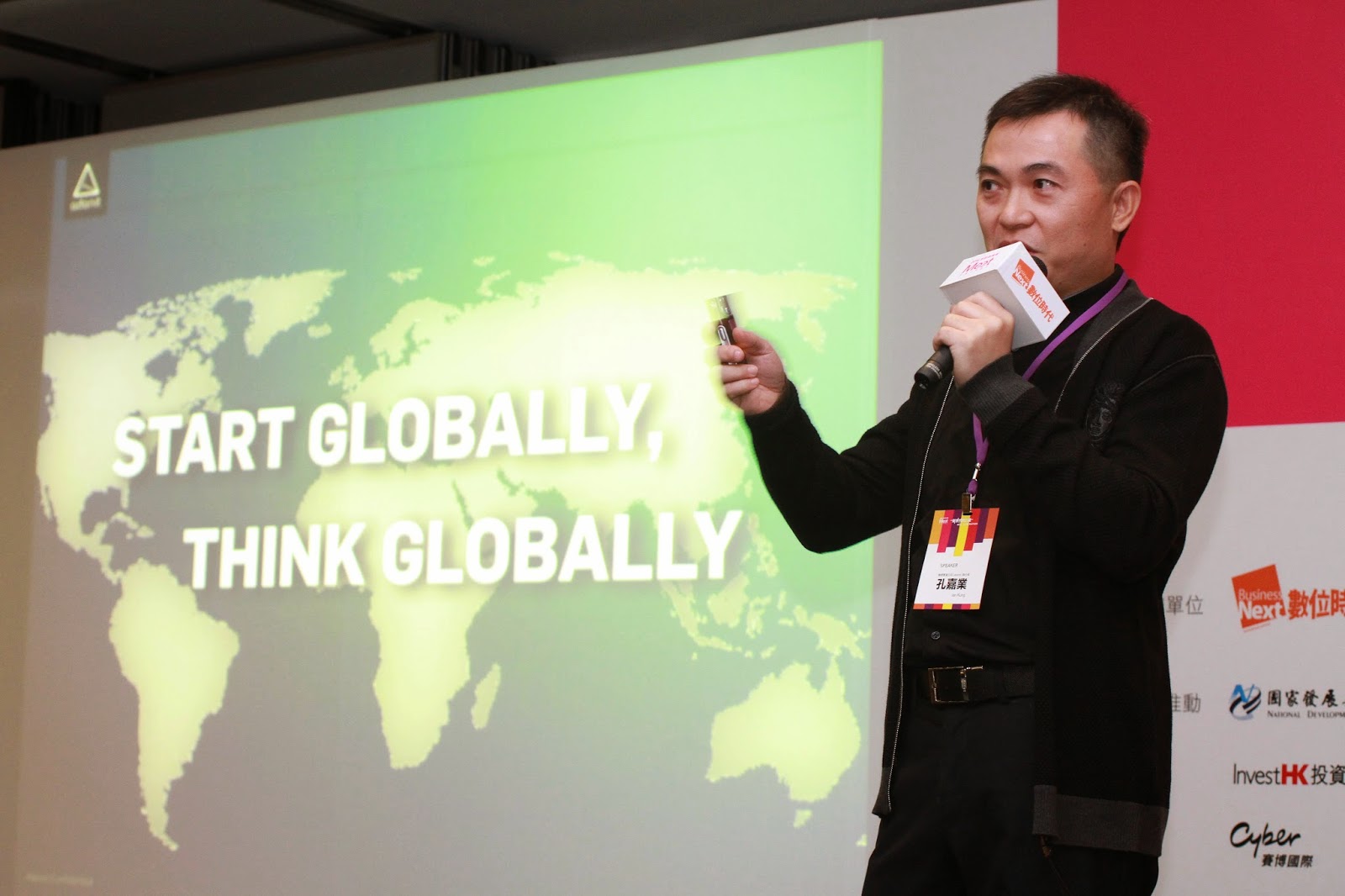
At Meet Taipei in December 2014, Kung argued for choosing international operations from the start. Adonit’s products had reached more than 100 countries, he said. He also discussed the value of a culturally mixed team and the role of customer service in feeding users’ needs back into product development.
Customer service is an interesting inclusion in that argument. It is where the polished account of a product meets the untidy circumstances of ownership. Someone has a question, a difficulty or an expectation the designers did not anticipate. Listening there can change what happens in the next design discussion.
Kung’s international ambition was accompanied by a commitment to an Adonit brand. That placed responsibility for the customer’s expectations close to the company’s name. Design, packaging, distribution and the experience after purchase all became part of the same undertaking.
Eventually, someone has to ship the pen
By 2016, Kung was also discussing the less photogenic machinery of international trade. Battery-equipped products brought complications to cross-border delivery. Adonit turned to UPS for help with matters including risk assessment, tax handling and transit.
His advice was practical: find a capable logistics partner rather than attempting everything inside the startup. A tool can be carefully designed and still become a poor purchase if it cannot arrive reliably. The journey to the customer belongs in the business plan just as surely as the shape of the tip.
There is a dry joke in the contrast. The ambition travels around the world in a sentence. The product travels with paperwork. Kung’s willingness to seek specialist help adds a useful texture to the picture of a hardware founder: judgment includes deciding which work belongs with somebody else.
His connection to software extended into investment. In 2016, Kdan Mobile named him among the backers of its pre-Series A financing, alongside VenTek Ventures and GMobi’s Paul Wu. Kdan’s applications included tools for notes, animation, documents and video. The connection sits comfortably beside the creative uses Adonit had been pursuing.
The object that stays in the hand
Adonit later expanded into wireless charging and smartphone photography accessories. Its current catalogue still includes digital pens, alongside other tools for mobile devices. An October 2026 company record lists Kung as Adonit’s registered representative, continuing his documented connection to the business he co-founded.
His early work offers a grounded picture of how an accessory becomes a business. The product needs a reason to exist beside the device. It needs software partners, a way to reach buyers and enough attention to the ordinary movements of a person using it.
The pen remains a useful place to end because it makes those obligations visible. Put it down on the screen. Can you see the point? Does the mark follow? Can you settle into the work? A great many decisions have to cooperate before the person holding it can stop thinking about them.
Follow the line
Explore Adonit’s products and the Adonit company profile.
- The early Adonit story and the choice to build a brand · 遠見, 2014 · Chinese
- Hardware, software and the Jot Studio experiment · 天下, 2013 · Chinese
- Jot Script and the Evernote partnership · INSIDE, 2013 · Chinese
- Kung’s Meet Taipei talk on international expansion · 2014 · Chinese
- The logistics behind international sales · 天下, 2016 · Chinese
- Kdan Mobile’s 2016 financing announcement
- Ian Kung’s university lecture listing: creative work and Adonit · NYCU OpenCourseWare · Chinese