In June 2018, Ian Bresnahan appeared on a video call with futurist Kevin Benedict to discuss a surprisingly stubborn obstacle to digital transformation: the network. Benedict wore a bow tie. Bresnahan wore an open-collar blue shirt. Between them sat a question that has occupied much of Bresnahan’s working life. How does a business move quickly when the machinery connecting it still takes so much human effort to change?
By then, Bresnahan had already co-founded one telecommunications business, seen it acquired by Alcatel-Lucent, and started another. Itential, which he founded with Chris Wade in Atlanta in 2014, was four years old. Its subject was network automation, a phrase unlikely to improve the atmosphere at a dinner party. Its consequences were easier to appreciate: fewer repetitive operations, faster delivery of services, and less waiting for the network to catch up with the business.
Bresnahan has kept returning to that last problem as the vocabulary around him changes. Software-defined networking gave way to hybrid cloud, and now to AI agents. His company’s present ambition involves machines that can reason about infrastructure and act through controlled workflows. The through-line is a practical one: progress has to survive contact with the equipment already installed.
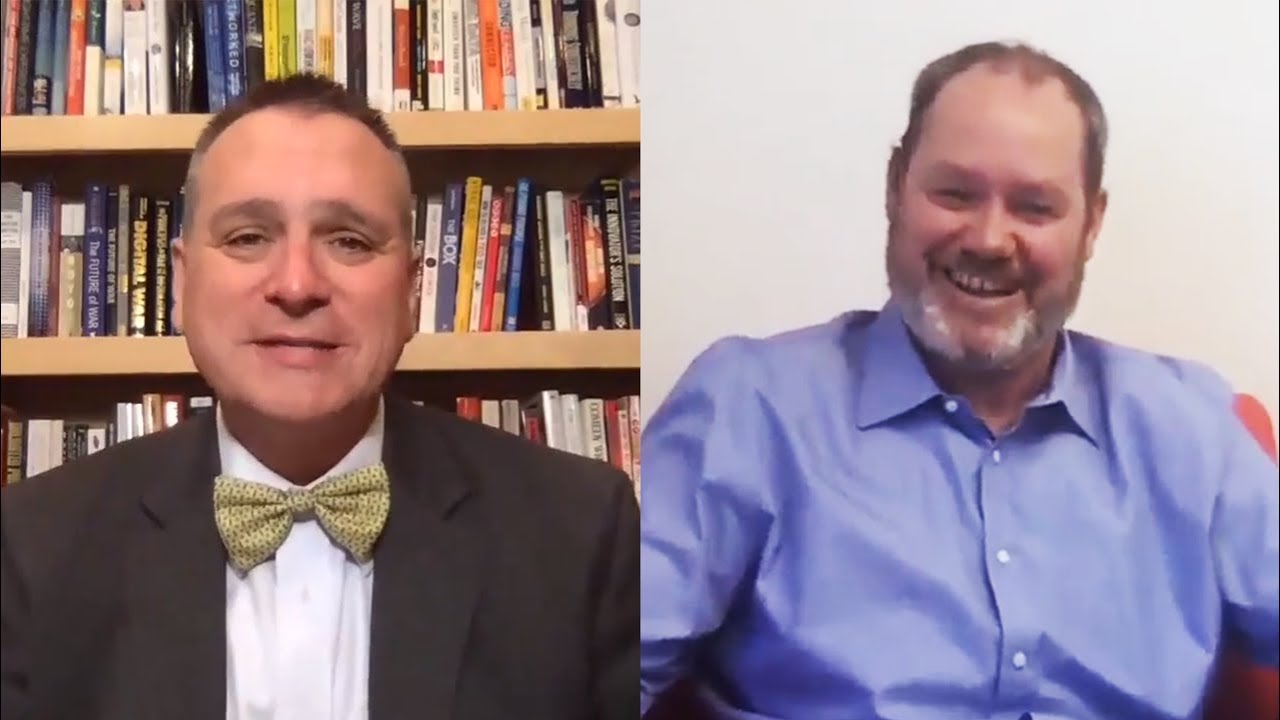 ▶ WATCH THE CONVERSATION
Before the network could change itself
Bresnahan studied political science at Syracuse University, attending from 1986 to 1991. His subsequent career took him into software and telecommunications, including leadership work at Windward Technology Group, Verso Technologies, Osmose Utilities Services, and the business that became Nokia. The career covers both the selling of complicated systems and the responsibility of making them useful to customers.
ReachView Technologies supplies an earlier chapter with a recognizable theme. Bresnahan co-founded the company to provide service assurance for large enterprises and telecommunications operators. Service assurance concerns whether the service a customer bought is actually available and performing as promised. It brings software into the less theatrical, more consequential business of keeping things working.
ReachView had offices in Atlanta and Dallas and approximately 85 employees when Alcatel-Lucent agreed to acquire it in 2008. The acquisition expanded Alcatel-Lucent’s consulting and software integration work. Bresnahan led ReachView to that acquisition. The experience put him inside the operational concerns of the large organizations he would later approach through Itential.
The pattern matters more than a string of job titles. Service assurance and network automation both require attention to the joins between systems. An organization can purchase capable equipment and still struggle to make its tools, teams, and processes agree. Bresnahan’s businesses have worked in that awkward space, where the diagrams are tidy and the day-to-day arrangements are considerably less so.
Atlanta, 2014: the next business begins
He founded Itential with Wade as networks were becoming more programmable. The premise was straightforward: the network needed to match the agility of computing infrastructure. Applications could change rapidly; the connectivity supporting them often remained dependent on manual procedures. The founders built software to coordinate changes across different technologies rather than make customers adopt a single equipment vendor.
That choice shaped the business. Itential’s early descriptions emphasized connecting network controllers and orchestrators with IT service management and configuration tools. The useful unit of work was a workflow across those systems. A company buying more software would ideally spend less time translating between the software it had already bought. Enterprise technology does enjoy charging admission to its own reunions.
The first outside investment arrived in September 2017: $5.5 million from Elsewhere Partners. Kenny Van Zant joined the board, bringing experience from Asana and SolarWinds. Itential had already attracted customers before taking that funding. The money was intended to accelerate development and delivery, giving Bresnahan a way to expand a business whose central argument was already being tested inside customer networks.
The skill was supposed to spread
Bresnahan’s language about automation has often concerned the people expected to use it. At AnsibleFest in 2018, he argued that organizations needed to make network operating skills available more widely. Itential’s work with Red Hat brought its visual workflow approach together with Ansible automation. The aim was to let network engineers and IT operations teams create and execute automation without requiring everyone to write code.
There is a managerial problem underneath that product decision. If a new method depends on a small group of specialists, the organization can acquire a fresh bottleneck along with its new capability. A visual environment offered another route into the work. Engineers could connect existing tools into a process colleagues could use, inspect, and repeat.
A 2019 customer example gave the idea a concrete setting. A multinational financial institution in the United Kingdom needed to migrate load-balancing services away from unsupported equipment. Itential provided a self-service portal for the migration, allowing network engineers to carry out the work alongside their existing responsibilities. The achievement was an orderly transition inside a working institution. There are few glamorous photographs of that outcome, which may be part of its appeal.
“We believe that networks must be managed like software”
Ian Bresnahan · 2021
That short statement captures the discipline behind his pitch. Software practices make changes repeatable and testable. Applying them to networks asks an organization to treat its infrastructure as something it can develop and operate systematically. Bresnahan’s interest is in getting that capability into the hands of the teams responsible for delivery.
A larger company, built close to home
By 2020, Itential had reached No. 1,568 on the Inc. 5000, with reported three-year revenue growth of 276.8 percent. The number records a period of business expansion, rather than a forecast. It also places the company’s development well before its current AI products. Bresnahan was building a network software business through several changes in the industry’s preferred explanation of the future.
In April 2021, Elsewhere Partners invested another $20 million in a Series B round. Cam McMartin, previously chief operating officer and chief financial officer at SailPoint, joined the board. The financing supported further development of Itential’s software-as-a-service offering and expansion in the enterprise market. It brought the two announced Elsewhere rounds to $25.5 million.
In that same period, Bresnahan described a company of more than 200 people globally, with roughly 60 percent based in Atlanta. His explanation of its local ties was specific. Wade was a Georgia Tech alumnus, and Itential participated in the university’s co-op program, giving students practical industry experience. Those placements could become full-time jobs.
It is a useful detail in a founder’s story because it describes how a company reproduces its knowledge. Investment supplies resources; people still have to learn the work. Bresnahan connected Itential’s growth to the Atlanta community and to students getting their first experience inside the industry. The local hiring pipeline sat alongside a business serving customers internationally.
Capital to expand the enterprise SaaS business, with Elsewhere Partners returning as investor.
His public enthusiasm also extends to the gatherings where network practitioners compare their work. Ahead of AutoCon 2 in Denver, he described the upcoming visit as his first Network Automation Forum event and invited customers and partners to meet the team. It is a small entry in the record, but a concrete one: a founder whose company sells coordination still has to show up where the people doing that work gather.
The customer’s network has the final vote
Lumen shows the scale of the operating environment Bresnahan was addressing. In January 2021, the companies described work spanning field operations, service assurance, and service delivery. Lumen’s teams had used Itential to deliver automations across tens of millions of jobs and tasks. The emphasis was on coordinating activities across separate networks and IT systems.
The earlier ReachView concerns are visible again: service quality, integration, and the practical conditions under which customers operate. An enterprise network accumulates technologies and procedures over time. Bringing those arrangements together demands a business that can work with the collection. Bresnahan’s role has been to build and finance the organization selling that coordination.
His public comments became more pointed about scattered automation. When Itential introduced its Automation Service in 2024, he wrote that he repeatedly heard about the difficulties created by proliferating scripts. Individual pieces of automation could work while their operational overhead prevented teams from getting the full benefit. The problem had moved from performing a task to managing the growing collection of ways to perform it.
Now the network gets an AI colleague
In November 2025, Itential introduced FlowAI in private customer preview. It added agents capable of reasoning about goals while using the platform’s controlled automation. On LinkedIn, Bresnahan described his pride in the launch and the need to adopt AI while preserving governance and trust. The aspiration extended the company’s existing work into a new way of directing it.
Itential announced FlowAI’s broader release at Cisco Live in June 2026, with general availability beginning July 1. Its design gives agents defined purposes, tools, and permissions. Workflows carry out actions, while records preserve what happened. Six enterprises participated in the validation program, including use cases involving incident triage and checks before infrastructure changes.
- 01ReasonAn agent works toward a defined goal.
- 02ControlPermissions and policies bound its actions.
- 03ExecuteWorkflows perform and record the change.
For Bresnahan, the latest chapter preserves a familiar commercial question. A clever capability needs an operating model before an enterprise can depend on it. In 2018, the conversation concerned networks holding back digital transformation. In 2026, it concerns AI acting inside those networks. The actors have changed; the need to coordinate them remains.
His career has moved from assuring services to orchestrating changes, with Atlanta as the base for the company he and Wade built. The ambition is easier to understand when the acronyms are put aside: give people a dependable way to change complicated systems. If the work succeeds, the people using those systems may barely notice. For someone selling network operations software, an uneventful afternoon is a respectable result.
Keep the conversation going
Follow Bresnahan, watch the interviews, or explore the milestones behind the story.
- Ian’s LinkedIn
- Official biography
- Itential
- 2018 video interview
- 2021 video interview
- Atlanta growth & hiring
- ReachView acquisition
- 2017 investment
- 2021 funding
- 2020 company growth
- Ansible collaboration
- Bank migration case
- Lumen partnership
- Bresnahan on script sprawl
- FlowAI introduction
- FlowAI availability