The spreadsheet exercise usually took half an hour. Daniel Jebaraj remembers one young person finishing it correctly in five minutes. The learner had picked up spreadsheets while working part-time in a cyber cafe in Kisumu, Kenya. University was beyond his means. He was making a living from a small plot of farmland. Here was someone who could do the work, with very little chance of being invited to do it.
Jebaraj had been volunteering to teach computer skills there since 2018. The students learned, assembled résumés, and were encouraged to approach local businesses. Then came a problem that a better résumé could hardly solve: there were no jobs for them. The training had reached the edge of its usefulness. Someone would have to create work.
“Why not open an office?” was how Jebaraj later recalled the thought. Syncfusion began its Kisumu operation with four employees in September 2020. For its co-founder, the decision joined two familiar interests: finding capable people and removing whatever prevented them from getting started.
Before the corner office, a grid
His own qualifications were substantial. Jebaraj studied mechanical engineering at the College of Engineering, Guindy, in Chennai, then earned a master’s in industrial engineering at Clemson University. His LinkedIn education record identifies human-computer interfaces and graphical interface design as an area of interest. Even on paper, the route bends toward the meeting point between a working system and the person expected to use it.
At Stingray Software, he worked on Objective Grid. At Rogue Wave Software, he managed development and strategic planning for Objective Studio’s collection of MFC extensions. These are tools for other software builders: the pieces inside the thing someone else eventually opens on a screen. It is work whose success often looks like somebody else having a less troublesome afternoon.
In 2001, he helped found Syncfusion in North Carolina. The company began with eight employees and a Windows Forms grid component. A grid puts information into rows and columns, an occupation with limited red-carpet potential and a considerable number of customers. Business applications need to display data properly. Developers would rather spend their time on the parts that make their own applications distinctive.
The founding work was shared. Stefan Hoenig developed the early grid; Jebaraj led development of Essential Chart. His brother, Davis Jebaraj, also contributed to the early products. The company’s history is crowded with builders, rather than a lone founder receiving inspiration beside an obliging window. Jebaraj spent nearly two decades as vice president before his elevation to CEO was announced in March 2020. He continued working closely with development teams.
Syncfusion
books launch
Kisumu opens
is announced
A hundred pages, then get on with it
One of Jebaraj’s more revealing complaints concerns technical books. Experienced programmers trying to learn a new technology kept having to wade through explanations of things they already understood. The useful material was in there somewhere. Unfortunately, so was the rest of the book.
He saw continuity beneath the changing names of languages and platforms. A developer who already understood one environment carried mental models into the next. A guide could respect that knowledge and concentrate on what needed to change. After internal discussions, Syncfusion decided to publish concise technical books, generally around 100 pages, aimed at experienced developers.
The resulting Succinctly series began in 2012. Jebaraj was careful about the promise: a short introduction would help readers become useful in a new area, rather than confer expertise over an afternoon. That restraint matters. Learning enough to attempt a real task is a practical milestone. A person can build from there.
He returned to the subject outside publishing, too. In 2021, when invited to host an executive seminar for Business Today’s International Conference, he emphasized giving young people of different backgrounds a foundation of knowledge, skills, and experience. The vocabulary is ordinary. So is the work it describes: make the next step possible, then let someone take it.
“Rocket science isn’t rocket science if you break it down.”
Daniel Jebaraj, on learning complex skills in steps
Even the small print has a job
For someone selling software, Jebaraj has devoted considerable attention to the irritation of buying it. In an essay about licensing, he described the counting that can follow a purchase: users, developers, servers, deployments. A tool bought to make work easier can acquire an administrative life of its own. The accountant becomes an unexpected member of the development team.
His prescription was simpler agreements and predictable fees. The argument treats purchasing and compliance as part of the customer’s experience, deserving the same attention as a button or a chart. A capable tool can still be awkward to adopt if nobody understands what using it will eventually cost.
That concern also appears in his product conversations. Discussing a 2016 release, he was interested in helping customers carry existing C# applications across mobile platforms, and in making the wider product range available through broader licensing. The technical and commercial questions sit together: can a team use what it already knows, and can it obtain what it needs?
Syncfusion’s move into finished business applications extended the idea. Bold BI became a standalone analytics product in 2019, following earlier dashboard work. Bold Reports, BoldSign, and BoldDesk address reporting, electronic signatures, and customer support. Reusable components had helped other developers build applications; the company could also use that foundation to build applications itself.
The practical appetite extends to its own purchases. In April 2026, Jebaraj described reassessing a familiar CRM whose expanding capabilities and expense had drifted away from his teams’ needs. Syncfusion built an internal alternative and later released it publicly. Familiarity, in his account, was a poor reason to stop asking whether a tool still fitted the work.
A different address for ambition
The office in Kisumu gives this attention to access a physical address. Teaching had revealed the ability. Opening an office supplied somewhere to put it to work. The original four-person operation grew to handle functions including sales, testing, accounting, and legal work. Expansion meant creating a working business alongside the training.
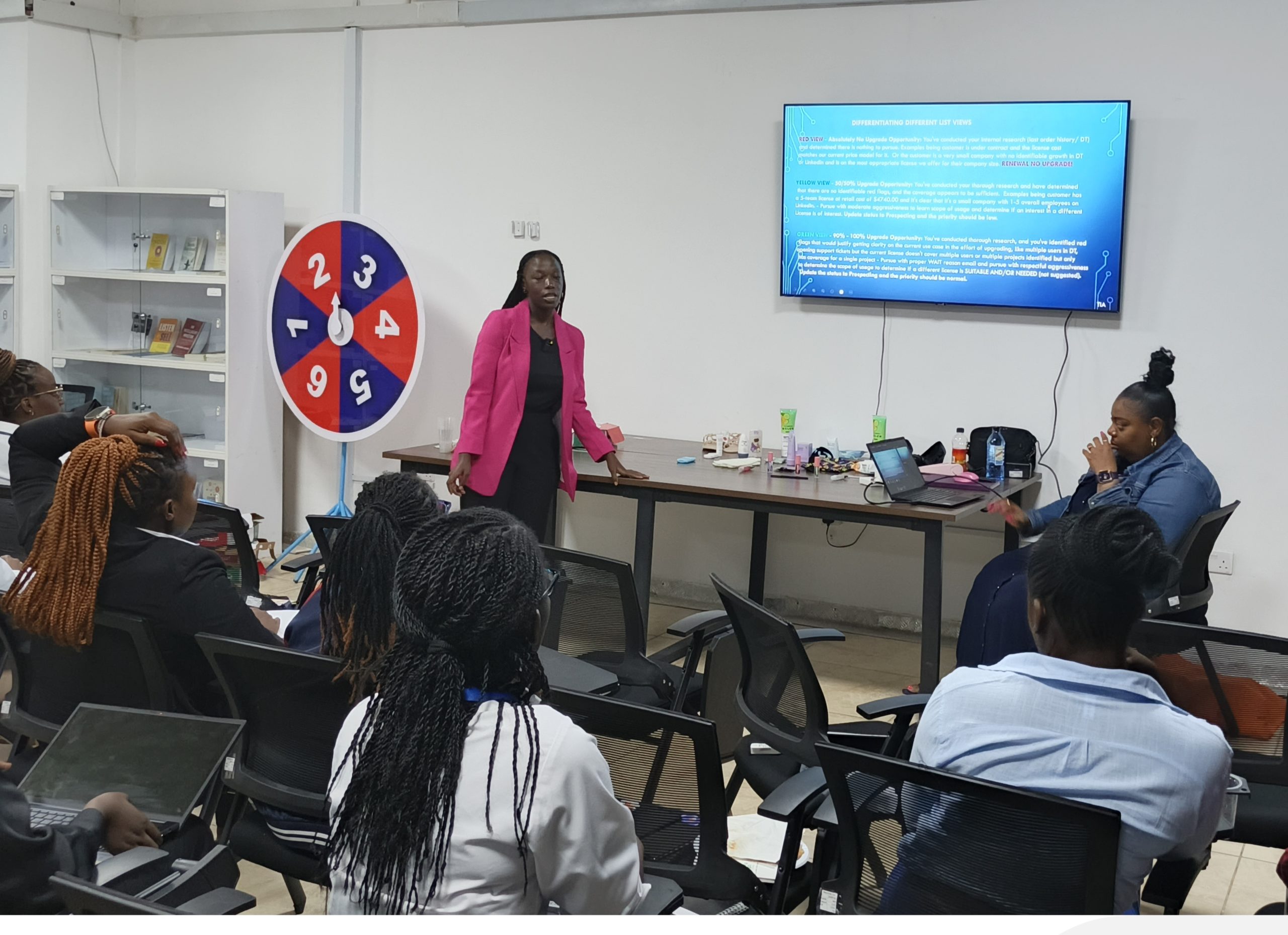
Jebaraj has described employees moving from sales into test automation when sales proved a poor fit. He regarded letting those people go as a missed opportunity. A job title had supplied an incomplete account of what they could contribute. The alternative required time, training, and a willingness to revisit the original assignment.
The Kisumu team’s published career stories make that movement concrete. Faith Adhiambo Otieno progressed from learning computer skills into quality-assurance automation and later HR management. Jeff James Adale began as an office cleaner, moved into a technical-assistant role, and became a lead in Essential Studio testing. Their paths contain steps that a conventional screening process might never have offered.
Jebaraj’s writing on hiring urges managers to invest in mentoring, cross-training, and promotion from within. He also argues against dwelling on mistakes when someone is learning. A company asking people to develop unfamiliar skills has to give them room to be beginners. Otherwise, the invitation to learn comes with some rather discouraging fine print.
The machine speeds up. The list gets longer.
AI has given Jebaraj another version of the capacity question. Syncfusion announced Code Studio in June 2025, bringing AI assistance into a code editor connected to its component library. At launch, he said the tool had begun inside the company and was already writing up to a third of its code. That was a company claim about its own use, rather than a forecast for every development team.
The underlying approach is familiar: combine existing building blocks with help assembling them. For an organization that has spent years selling reusable software, AI-assisted development presents a new way to put those components to work. The catalog becomes part of the machinery used to create the next application.
His account of an internal AI rollout contains a pleasingly uncooperative detail. Tasks that once took weeks finished in days. At the next planning session, product managers responded with more ambitious features. Faster work had made a longer list possible. Anyone who has ever cleared a desk may recognize the phenomenon.
Jebaraj argues that leaders should use the capacity to pursue additional projects and help employees acquire new skills. He describes self-taught colleagues in Kenya advancing into test-automation leadership while adopting AI tools. His position is an argument about what employers can choose to do with productivity. The choice still has to be made.
Twenty-five years, still reconsidering
By its June 2026 anniversary, Syncfusion reported more than one million active developers and over 2,000 employees across the United States, India, and Kenya. It remained self-funded. Its free ebook library had passed 200 titles and four million downloads. These are company-reported measures of a business built over a quarter century, with several different kinds of customer along the way.
From one software component to tools used by more than one million active developers.
Company-reported anniversary figuresIn September 2026, Jebaraj wrote about the difference between the value a company exists to provide and the technology it currently uses to provide it. Tie the business too tightly to one platform, he argued, and its disappearance becomes an existential problem. Helping customers develop software more easily leaves room to change the means.
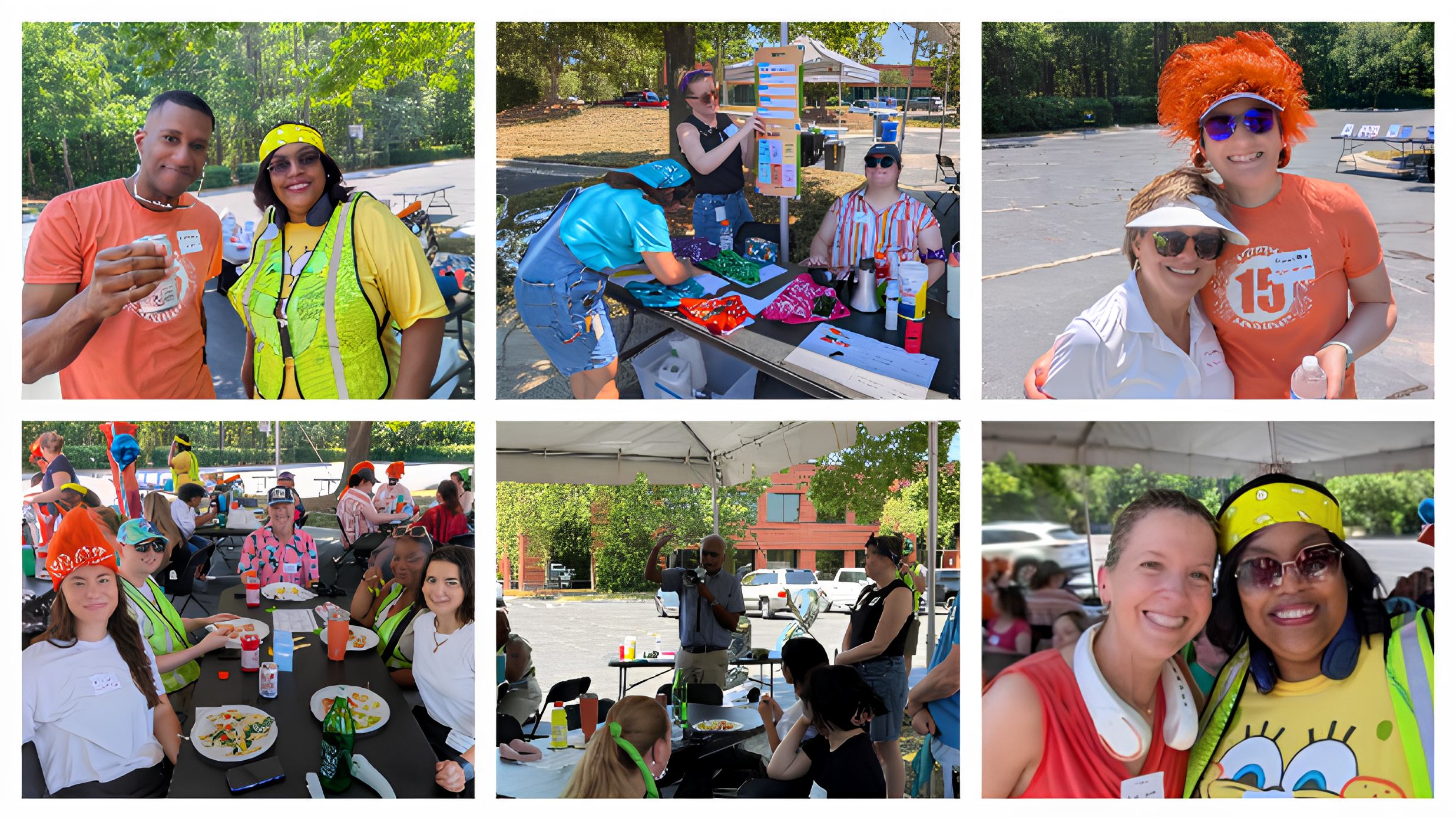
The distinction helps connect an otherwise varied working life. A chart control, a concise technical book, a simpler agreement, and an office in Kenya address different obstacles. In each case, somebody has something useful to do, and the conditions make it unnecessarily difficult to begin.
The young spreadsheet learner in Kisumu supplied an unusually clear demonstration. Five minutes were enough to show what he could do. Making that ability useful required a much longer commitment: an employer, colleagues, instruction, and actual work. Jebaraj’s story becomes interesting in the distance between those two timescales. Recognizing potential can happen quickly. Giving it somewhere to go takes years.