There is a tidy version of Ian Bertrand's career, and it reads like a tour of modern sports marketing: start on a Canadian sales floor, cross a continent, cross an ocean, help turn a marathon moonshot into an experience, move into luxury outerwear, then come home to hockey. The tidy version is accurate. It is also incomplete. The more useful version is about proximity - to the consumer, to the team doing the work and, lately, to the young player waiting for a coach to explain the next drill.
Bertrand joined CCM Hockey as Chief Marketing Officer in June 2026. In announcing the move, he described sport as a constant in his life and hockey as the game with a special claim on him. The language was personal, but the assignment is commercial and global. CCM carries more than a century of equipment history into a market where professional endorsements, specialty retailers, direct commerce and grassroots participation all meet. Bertrand's task is to make those parts feel like one brand to a player who may know little about the organization behind the gloves.
The store was the first classroom
Bertrand started with Nike Retail Canada in 1997. This matters because retail is where the elegant language of brand strategy runs into the untidy facts of human behavior. A shopper walks past. A display confuses. A product invites a question. The feedback is immediate and difficult to soften. Over the next thirteen years, he moved through retail brand roles in Canada, from specialist to manager to senior manager, before taking responsibility for North American running retail in 2010.
The titles grew, but the subject remained consistent: how does a performance idea travel from an athlete or a product team into a place where an ordinary person can understand it? By 2013, Bertrand was working in global running and category roles. In 2015 he moved to Amsterdam to lead integrated retail marketing across Europe, the Middle East and Africa. Later came global partner marketing. His Nike career stretched from a Canadian shop floor to the internal geography of a multinational matrix.
Former colleagues describe how he operated inside that complexity. One recalled his positive habit of asking critical questions and gathering information from several angles before committing to an answer. Another, from Canada Goose, paired four descriptions: leader, listener, creative thinker and operator. The pairing is more interesting than any one word. Brand leaders are often rewarded for the size of their vision; operators are judged by whether the work arrives intact. Bertrand's public recommendations suggest he tried to keep both obligations in view.
“Sport has been a constant throughout my life, with hockey always holding a special place in my heart.”Ian Bertrand, on joining CCM Hockey
A moonshot needs a doorway
The most cinematic project in Bertrand's Nike years was Breaking2, the 2017 attempt to run a marathon in under two hours. The performance took place on a Formula One track in Monza, Italy, with elite runners, pacing formations, new footwear and a live audience watching a number on a clock. Bertrand later discussed the project as an example of something broader than elite sport. A moonshot can produce spectacle, but the brand still needs a doorway through which a consumer can enter.
Retail supplied that doorway. The scientific story, the athletes and the shoes could be translated into environments that let people participate in the idea even if they would never run at that pace. This is the distinction that runs through Bertrand's work: performance earns attention; experience makes it portable. A campaign becomes more durable when a customer can encounter it in a store, discuss it with someone and locate a piece of personal ambition inside it.
That philosophy also helps explain why inclusion appears alongside consumer insight in accounts of his leadership. A brand experience can be polished and still feel closed. Building a larger community requires teams able to notice who is missing, retail environments that do not assume a single kind of customer and stories with more than one point of entry. These are operational choices before they become slogans.
Cold weather, warmer reasons to return
After Nike, Bertrand moved into Canadian outerwear. He served first as global fall and winter brand director at Canada Goose, then as vice president of commercial marketing. In 2025 he joined Moose Knuckles as global vice president of marketing, later serving as executive vice president. The category changed from running shoes to jackets, but it sharpened a familiar problem: what does a brand built around a seasonal need say during the rest of the year?
Bertrand's answer at Moose Knuckles connected assortment and narrative. Lighter layers and products suited to different climates gave people more occasions to enter the brand. Stores gave those products a physical world. He said the expanded range could bring consumers back instead of leaving them to think about the company only once a year, when they needed a jacket. The point was less about frequency for its own sake than about building a relationship with more than one chapter.
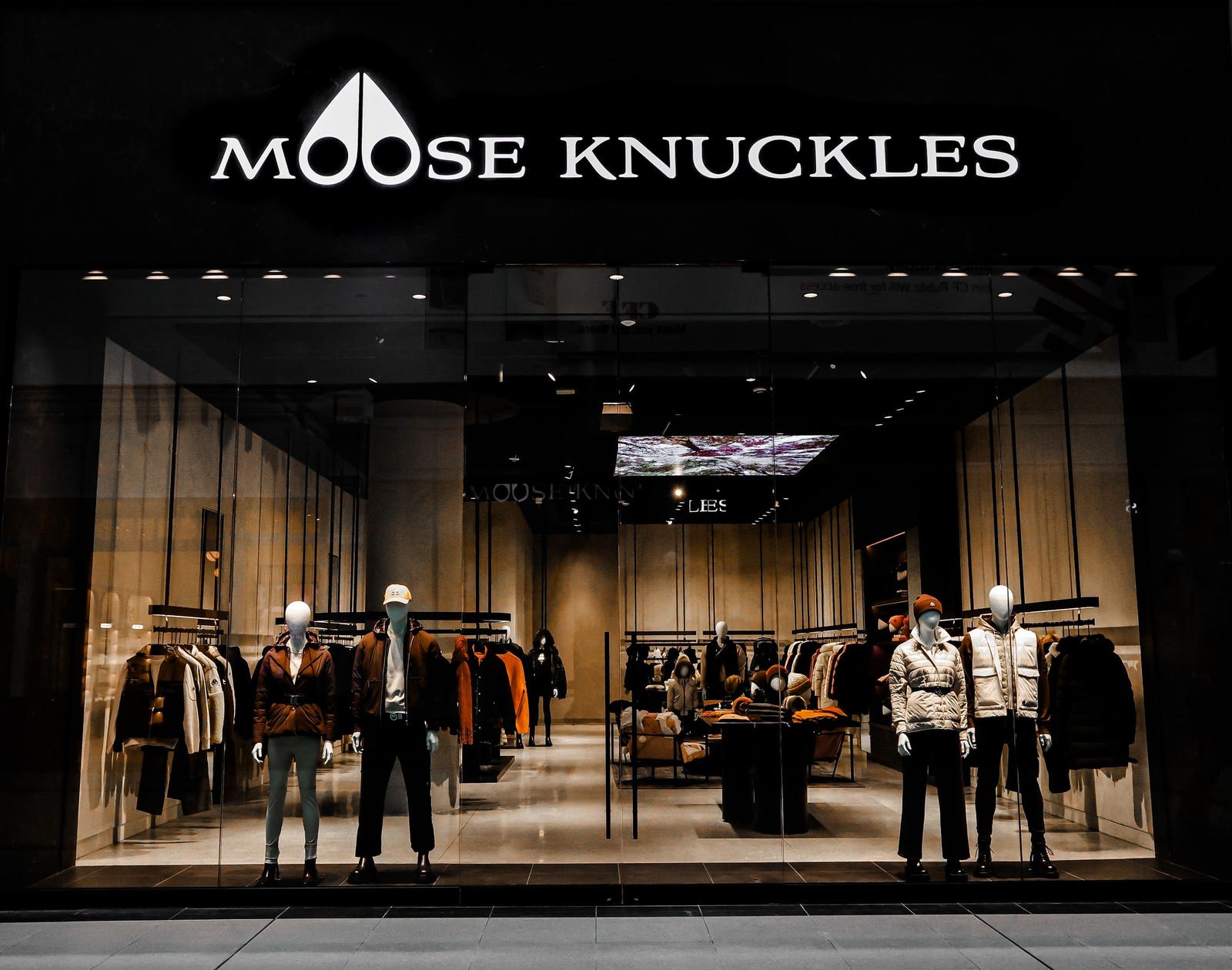
The renovated Toronto Eaton Centre store made the argument visible. Digital elements, product and architecture worked as a single environment. Physical retail, in this view, is not a stubborn remnant of the pre-digital era. It is a piece of media people can walk through. The online channel offers reach and convenience; the store supplies scale, texture, conversation and a memory tied to a place.
“Maybe before they only thought of Moose Knuckles once a year when they needed a jacket, now they can explore and find new things all year round.”Ian Bertrand, 2025
The other bench
While holding global jobs, Bertrand took on a local one. Since 2022, he has been a head coach with Aurora Minor Hockey Association. His coaching profile identifies him with the Aurora Tigers and records his participation in an Ontario development group. There is no glossy way to reduce youth coaching to a marketing metaphor, and that is precisely its value. The work happens in cold arenas, among different confidence levels, with instructions that either help a player or do not.
Coaching offers a kind of consumer research stripped of euphemism. Equipment has to fit. Guidance has to be understood. A team has to make room for individual development without losing its common purpose. Progress is visible in small corrections. Bertrand has said that coaching and mentoring belong in the future he wants to build. At CCM, those ambitions now sit beside responsibility for a global brand whose customers include the first-time skater and the professional player.
The two benches also run on different clocks. Global marketing plans are built by season, market and launch date. A young player's confidence can change during one practice. Holding both views may be Bertrand's most useful discipline. It asks him to think years ahead without overlooking the next clear instruction, and to see growth as both a commercial outcome and a player deciding to come back next week. For a hockey company, those measures are connected. The market expands one participant at a time.
Stay near the use case
A global title can create distance. Coaching keeps the real player, with real questions and real equipment, in view.
Turn performance into participation
The technical achievement earns credibility. The experience gives a wider community a way into the story.
Make heritage face forward
A long history is useful when it creates confidence for the next customer, not when it becomes a museum label.
What CCM is hiring
CCM is hiring the accumulated pattern, not merely the résumé. Bertrand has worked inside specialty retail and global campaigns, through direct-to-consumer growth and wholesale partnerships, with performance products and fashion products, across Canadian, American and European offices. He understands that the same brand must make sense to athletes, retailers, employees and parents, each of whom arrives with a different question.
His stated priorities are to grow the game, strengthen CCM's connection with athletes and consumers, expand its global impact and inspire the next generation. Those are broad ambitions. The career behind them suggests a more grounded method: ask questions, connect perspectives, create an environment people want to enter and give the team enough clarity to execute.
The circle back to hockey is satisfying, but circles can imply that a person ends where he began. Bertrand is arriving with more equipment than he left with: the reflexes of retail, the scale of a global operator, the patience of a coach and an interest in experiences that make people feel part of something. CCM's history supplies the archive. The live question is what he and the team do for the player lacing up next.