A startup can run out of money before it has anything interesting to spend money on. The desk, the testing bill, the accountant and the question nobody on the founding team can answer arrive well before the triumphant product launch. In Ahmedabad, i-Hub Gujarat has built an institution around that awkward interval. One of its most useful promises comes with a refreshingly legible price: a co-working seat costs ₹3,000 a month, plus taxes.
The bigger proposition is to make the journey from student invention to functioning business less dependent on a founder’s existing contacts. i-Hub combines workspace with mentoring, seed-support programs and introductions to investors. Its remit leaves room for ideas that would never look fashionable on a conference stage. A hand-operated coffee harvester belongs here. So does a machine that cleans solar panels.
That breadth gives the hub its character. It treats entrepreneurship as something an education system can help people practise, with practical assistance after the classroom exercise ends. The ambition is substantial; the interesting details are often small. How long can a team stay? Who checks its product? Which person can help with the next obstacle?
A public institution with a founder’s to-do list
Established in 2019, Gujarat Student Startup and Innovation Hub grew out of the state Education Department’s Student Startup and Innovation Policy, or SSIP. It is a Section 8 nonprofit company. Its institutional origin matters: its purpose is to develop ventures and connect the state’s startup-support network, rather than sell one product to one narrowly defined customer.
The official leadership page identifies Anju Sharma as founding chairperson; Hiranmay Mahanta is listed as CEO on the team page. This is a government-backed organization with public, academic and industry participation. Its offering stretches across commercial mentoring, intellectual-property assistance, infrastructure and introductions to specialist services.
Its audience is correspondingly mixed. Student innovators and early-stage companies receive support; universities help connect talent; mentors contribute experience; investors look for ventures they might back. These groups need different things from the same institution. A student might need a first technical assessment while an investor needs evidence that a product has a buyer. The hub’s usefulness lies in helping those conversations meet.

The seed cheque and the seat bill
Startup Srujan Seed Support, usually shortened to S4, publishes a grant range of ₹2.5–10 lakh. Its stated purpose is to help innovators move toward a product and the market. The eligibility language includes Gujarat school students, higher-education students, alumni and dropouts up to age 35. That makes room for someone whose education took a detour.
The program sits within a much larger policy framework. The S4 page cites a ₹500 crore allocation for SSIP 2.0 across the state. That figure describes the policy corpus, not a financing round raised by i-Hub. Likewise, a grant for a participating startup is money for that venture. Keeping these amounts separate is essential to understanding the business model.
Workspace has its own terms. The published guidelines generally allow up to 10 seats for a maximum of two years, with applications evaluated for allocation. They list meeting rooms, internet and workspace maintenance; tea, coffee and printing are marked as paid extras. A five-person team would therefore budget ₹15,000 a month in base seat fees, or ₹1.8 lakh a year, before taxes and additional charges.
₹1,80,000 per year
₹3,000 × seats. Taxes and paid extras excluded. Allocation is subject to i-Hub’s terms.This is a public-support model with a published workspace charge. Grant eligibility, desk allocation and investor selection remain separate decisions. A founder evaluating the offer should match the program to the immediate need, then budget for the costs that remain. Even an inexpensive office does not buy product development, staff salaries or customer demand.
Before the startups moved in, the deadline moved
The building has its own cautionary history. In April 2023, The Indian Express reported that the new campus was heading toward a third missed inauguration deadline. Construction had begun in 2020. January 2022 and May 2022 targets had passed; another opening was scheduled for May 2023.
The report put the project’s cost at ₹95 crore, up from ₹65 crore, and described government objections to higher costs alongside changes and additions to the project. Civil work was complete, but interiors remained unfinished. The documented early stumble was a delivery problem: getting the promised facility ready.
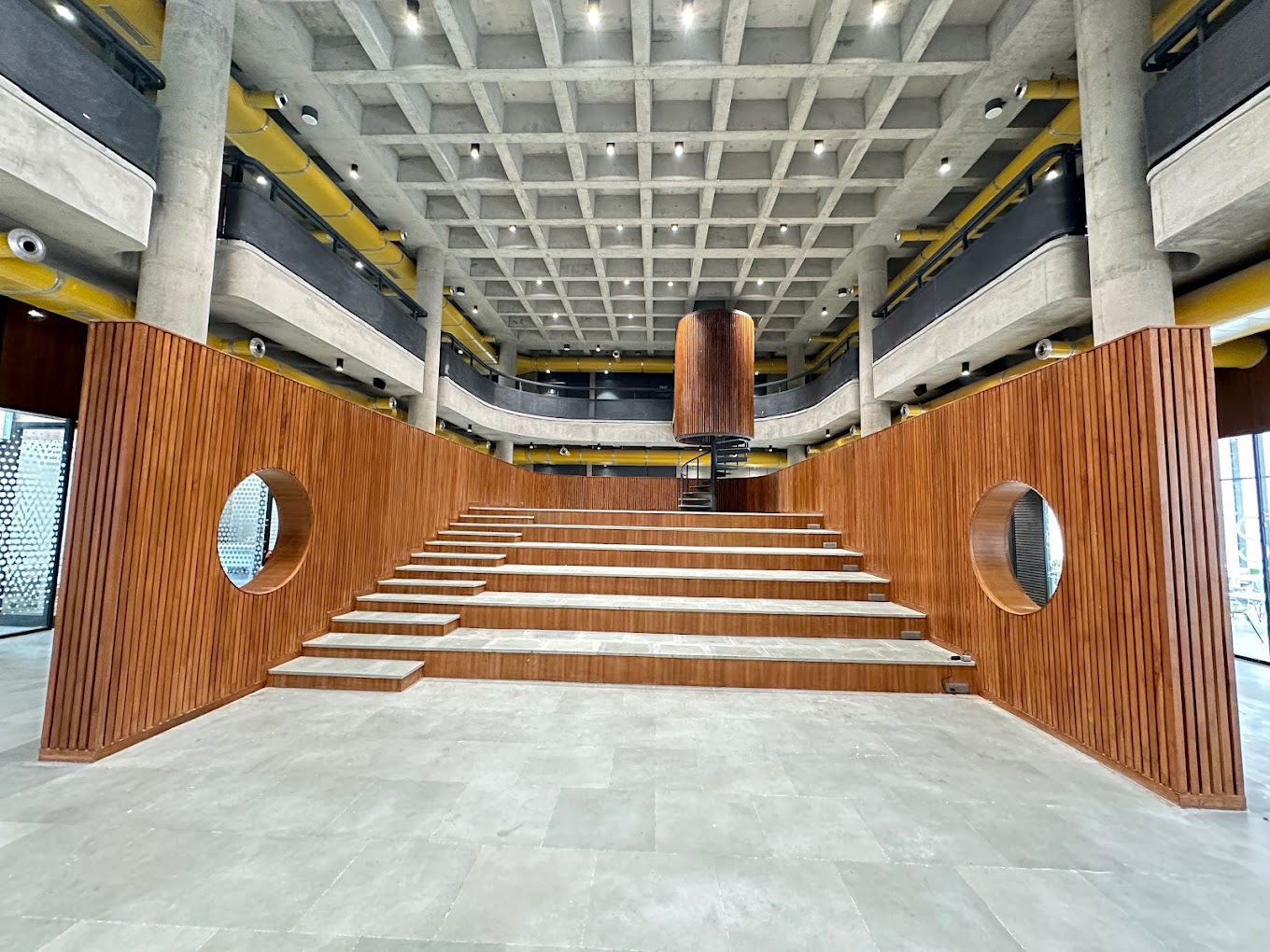
Chief Minister Bhupendra Patel inaugurated the campus on December 5, 2023. The Times of India’s opening report described a ₹100 crore complex and the handover of workspace allotment letters to five startups. Those are reported project figures at different dates, not a tidy final cost audit. They show how much public infrastructure sits behind a relatively modest monthly desk bill.
Eighteen months to get past the demonstration
The main incubation program, Startup Grow, publishes an 18-month duration, with a possible six-month extension at i-Hub’s discretion. It bundles mentoring, networking, intellectual-property support and access to funding opportunities with shared facilities. That timetable gives the proposition a shape: sustained support through development, rather than a single afternoon of pitching.
Other programs isolate jobs that can get lost inside the word “incubation.” Startup Clinic connects founders with expertise in legal matters, accounting and company affairs, technology and marketing. Its stated rationale is that finding help from multiple providers consumes scarce startup resources. The clinic is designed to make those introductions easier.
Startup Manak addresses testing and certification. Its program description proposes connections with research laboratories, testing centres and specialist organizations, including subsidized or other preferential access through institutional arrangements. For a physical product, testing can expose a weakness before a customer does. A cleaner, sensor or device has to work outside the demonstration that first made it look promising.
Develop
S4 seed support
Build
Grow incubation
Test
Manak facilitation
Connect
RISE investor access
A mentor who asks the awkward question
The Sathi mentorship framework is unusually explicit about the people involved. It separates advisers with broad experience, experts who can solve a specific problem and peers who have recently faced similar operating questions. It also sets out possible monthly commitments of two, four or eight hours.
“Ask the mentee tough questions.”
Startup Sathi’s published mentor responsibilities
That short instruction captures the program’s working culture better than a motivational slogan. The published expectations ask mentors to respect confidential information and honour commitments. Founders are expected to provide updates, accept constructive criticism and take responsibility for making the relationship work. The exchange requires preparation from both sides.
There is a lesson here readers can copy without joining an incubator: choose help by the problem. A peer might explain how they handled a first hire. A technical expert might diagnose a design issue. An adviser might make a commercial introduction. Before a meeting, name the decision and the evidence needed to make it. That is an editorial inference from Sathi’s structure, and a useful antidote to collecting mentors by prestige.
Coffee berries, clean panels and a wider front door
The incubated-startup directory brings the institution down to earth. Coffer is described as a portable, hand-operated tool for harvesting coffee berries, including selective harvesting. Syphon Energies makes solar-panel cleaning machines configured around customer requirements and site conditions. These entries illustrate the range of work i-Hub supports; a directory listing alone does not establish commercial success.
Its Mind to Market challenges approach invention from another direction: a defined industry problem. The published themes include defence, energy, FMCG, toys and deep technology. The logic is appealing. Give an innovator a problem someone actually has, then help develop a response. Participation still leaves the founder responsible for proving that the response is useful.
Women entrepreneurs have a dedicated route through WEstart, launched in December 2020. Its design includes capacity building, pre-incubation and incubation. The page also outlines WEnture, a planned collaboration with Telangana’s WE Hub. Dedicated programming allows a broad institution to organize support around a particular founder community without narrowing every other program to the same audience.
Introductions are where the next test begins
Startup RISE brings startups into pitching sessions with angel investors and venture capital firms. At the September 2025 Startup Conclave, i-Hub reported more than 90 MoUs with accelerators and other participants. Named counterparts included Indian Angel Network Group, Omnivore, Piper Serica, Next Bharat Ventures and Assam Startup. Agreements broaden the possible network; they should not be counted as completed investments.
A July 2026 MoU with Sardardham extended that relationship-building into knowledge exchange, mentoring and startup support. The pattern is institutional: connect more organizations to the work of developing founders. Its value for an individual startup depends on whether the connection produces a useful next step.
Founders also have alternatives. GUSEC emphasizes university-linked, no-cost early-stage support; iCreate focuses on technology-based ventures. i-Hub’s distinctive combination is its education-policy connection, broad sector remit and separate routes for grants, advice, space and investors. The right choice depends on the actual bottleneck. A company needing immediate large-scale capital or a specialist laboratory should examine that requirement directly.
The practical move is to arrive with a prototype description, a specific obstacle and a budget for the next experiment. Check the relevant program’s current terms and make the request precise. i-Hub can put people, space and potential funding within reach. The founder still has to make something that survives a customer’s first serious question.