The typical consumer-tech pitch starts with a category that does not exist. Horizon Brands went shopping in categories so familiar they almost disappear: the dead car battery, the dim garage, the blind spot behind an SUV, the baby facing backward in the second row. Then it made those small anxieties visible, controllable and ready for a retail shelf.
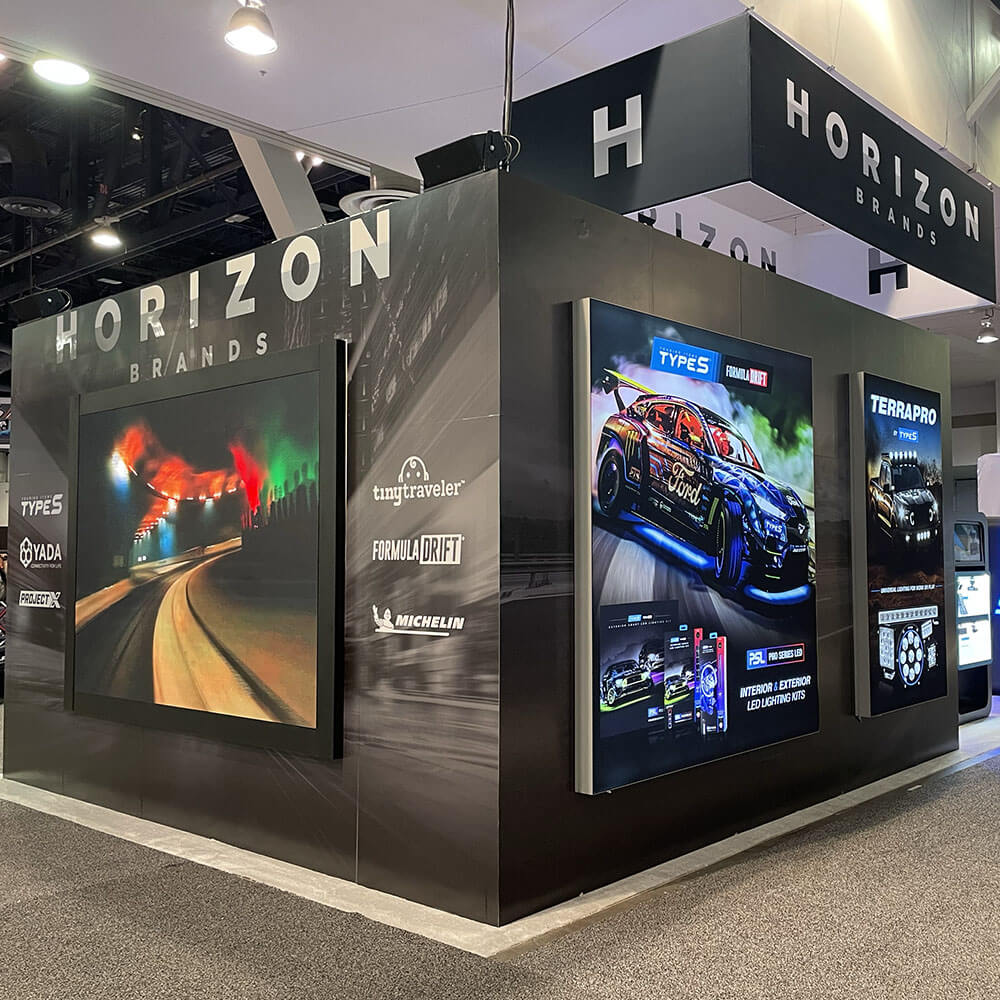
From Costa Mesa, California, the private company operates a portfolio that includes TYPE S automotive accessories, PROJECT X off-road technology, Tiny Traveler baby monitors and Koda home lighting. It also distributes automotive soft goods carrying Michelin and BFGoodrich names. The lineup is unruly on paper. Walk through a Costco, AutoZone, Target or Walmart, however, and the logic snaps into focus. Horizon is built around products that can explain themselves through a box, a demo and one useful sentence.
01 / The machineA portfolio assembled from annoying moments
Founder and CEO Allen Chai describes the mission in deliberately broad terms: improve everyday lives through innovative, high-quality solutions. The corporate wording is tidy; the actual work is more tactile. TYPE S makes smart vehicle lighting, dash and backup cameras, seat protection, jump starters and portable power. Koda makes indoor, outdoor, security and shop lighting. Tiny Traveler puts a dedicated monitor on the dashboard so a parent can see a rear-facing child without twisting around or surrendering a phone. PROJECT X tackles the spaghetti bowl of off-road accessory wiring with wireless controls for lights, cameras and other equipment.
The customer is usually a capable amateur, not a technician: a driver fitting a camera in the driveway, a homeowner improving a garage, an off-roader adding lights, a parent preparing for a long trip. Horizon's products aim for the zone between commodity hardware and professional installation. They offer enough technology to feel like an upgrade, but not so much ceremony that the buyer needs a contractor.
The bars show breadth of publicly described product categories, not sales. Horizon does not disclose segment revenue.
That middle position is the company's market niche. NOCO and Stanley compete in portable power; Garmin, Nextbase and Thinkware crowd vehicle cameras; RIGID and KC HiLiTES own enthusiast mindshare in off-road lighting; VTech, Nanit, CuboAi and Infant Optics compete for the nursery. Horizon does not beat all of them with one master brand. It meets them aisle by aisle, using separate names and a shared development, sourcing, quality, distribution and support apparatus.
02 / DistributionThe shelf is part of the product
TYPE S is the clearest proof. Horizon says millions of its do-it-yourself products have sold worldwide. The brand appears through Costco, AutoZone, Advance Auto, Pep Boys, Target and Walmart. Its relationship with AutoZone dates to 2003. In 2021 the retailer gave TYPE S its “Whatever It Takes To Get The Job Done Right” vendor award, citing the sort of work that rarely appears in launch videos: advertising, sponsorships, in-stock execution and innovation.
That list explains the business model. Horizon designs and develops company-branded hardware, imports and distributes it, sells into mass and specialty retail, supports wholesale dealers, licenses recognizable names and runs direct ecommerce sites for individual brands. The company earns no points for making a clever light if it cannot keep units in stock, make installation survivable and answer the support line. Retail is not merely a channel here. It is a demanding second customer.
“We seek solutions, not blame.”Horizon Brands core value
Partnerships extend that shelf logic. Michelin and BFGoodrich lend recognition to matting and soft accessories. A 2020 Hot Wheels collaboration turned automotive air care into something more collectible. Formula DRIFT, Team RTR and driver Vaughn Gittin Jr. help TYPE S speak to enthusiasts. PROJECT X worked with Gittin and Loren Healy on product development and sponsored the 2023 Fun-Haver Off-Road Tour, while Meyer Distributing put the line in front of specialty shops. Credibility travels from the race paddock to the peg hook.
03 / CapitalWhat $40 million actually bought
In March 2025, parent company ADC Solutions Holdings secured a $40 million senior credit facility. This was debt, not a venture round, and the public announcement was specific about its purpose: refinance existing debt and provide growth capital. The lender and economics were not disclosed. The distinction is useful because consumer hardware consumes cash in stubborn, physical ways. Inventory must be ordered before it sells. Retail programs require packaging, forecasting, freight, returns and promotions. A product can be popular while its working-capital calendar remains hostile.
The decision to test refinancing options did not appear to require a philosophical conversion. Management went to market to see what alternatives looked like and hired an adviser it already knew. The lesson is less cinematic than a founder epiphany: change the capital structure before debt and inventory schedules make the decision for you. For operators copying the portfolio model, this is the bill hidden underneath the attractive shelf photo.
04 / The testThe first thing to fail was the certainty
Tiny Traveler shows both the appeal and the hazard of translating technology into a retail promise. The AI Classic combines a camera, a dedicated monitor, a third-party Kneron AI chip and removable local storage. Processing happens on the device. Images and video stay on the monitor's SD card rather than traveling to Horizon's servers. That architecture is refreshingly legible for a product aimed at parents.
In December 2025, the National Advertising Division and Children's Advertising Review Unit examined claims around AI, emotion detection, movement features, safety and privacy. The broad “AI-powered” foundation held up. So did the local-storage privacy design; the review found no violation of the children's privacy guidelines and concluded that COPPA was not triggered.
Broad AI-powered positioning, evidence of the Kneron chip, on-device processing and local removable storage.
Certain emotion, motion and safety claims needed modification, qualification or retirement because the evidence was too limited for the advertised context.
The problem arrived one level lower, where a component became a specific promise. Horizon's summaries showed laugh-detection accuracy averaging about 89 percent and cry detection about 78 percent, but reviewers considered the testing too limited for the claims as they appeared. Distance, framing and low-light conditions mattered. Horizon agreed to comply with recommendations and permanently discontinue “Always Safe, Always Close.” The hardware was not exposed as imaginary. The certainty of the copy failed first.
That is the useful, non-dramatic version of a consumer-AI correction. An AI chip may justify saying a product uses AI. It does not automatically justify every emotional, behavioral or safety inference built on top. Feature claims need test populations, conditions, error rates and disclosures that match actual use. The closer a sentence gets to a child's safety, the less room marketing has for mist.
05 / The stealWhat another builder can copy
Horizon is most interesting when it notices an installation problem. PROJECT X began from the observation that off-road accessories were still designed in isolation and controlled through hard wiring. The answer was not another lamp with louder lumens. It was a wireless ecosystem for mounting, power and control. Koda's recognized shop light made a similarly plain improvement: link as many as six fixtures to one power source, reducing switches and cable mess. These products begin with friction a customer can point at.
The five-part Horizon field guide
- Find the repeated annoyance. Look for checking, wiring, charging, seeing or installing that customers already dislike.
- Make the benefit demonstrable. A solar camera, linked lights or a guided jump starter should make sense before the spec sheet begins.
- Design for the channel. Packaging, support, replenishment and returns are product decisions when retail is the customer.
- Borrow trust carefully. Retailers, licensed names and credible enthusiasts can speed adoption, but only sustained execution keeps it.
- Audit every claim separately. Proving the platform does not prove each feature, especially when AI and safety share a sentence.
The approach will not work everywhere. It weakens when the category cannot support inventory and returns, when a product requires professional installation despite a DIY promise, or when brand adjacency confuses more than it reassures. A sprawling portfolio also adds operational gravity: more suppliers, apps, warranties, regulatory claims and retail calendars. Without quality control, customer support and enough capital to finance stock, “brand platform” becomes a polite phrase for too many boxes.
Horizon itself describes a people-first culture of integrity, creativity, collaboration, accountability and respect. Its office has open work areas, meditation rooms, community desks, games and outdoor gathering space. Chai calls the workplace a family. Those details are pleasant, but the operating culture is easier to observe in the products: cross-functional teams have to make industrial design, electronics, merchandising and channel logistics agree. A family feeling does not rescue a late container or an unqualified safety claim.
The company's place in the market is therefore neither pure manufacturer nor conventional brand conglomerate. It is a consumer-goods engine with automotive roots, retail distribution and a growing appetite for connected hardware. Its best work makes an old category feel newly considerate. Its 2025 claims review supplied the necessary counterweight: usefulness wins the first purchase, but precision keeps the promise. In a business built on peace of mind, that difference is the whole shelf.