A wound that takes 31 weeks to heal is a long assignment for a patient, a nurse and a cupboard full of dressings. In Southwark’s ambulatory clinics, Health Innovation Network South London reports that median healing time is now four to seven weeks, compared with that 31-week baseline. Behind the improvement sits something less photogenic than a new medical gadget: changing how care is organised.
HIN has supported local work implementing recommendations from the National Wound Care Strategy Programme. It reports average savings of around £494 per wound in Southwark. A three-year programme, running from 2025 to 2028, aims to improve lower-limb wound care across all six south east London boroughs. The next task includes understanding existing services, agreeing training standards and bringing providers together.
The distinction between local results and wider expectations matters. HIN models potential dressing savings of £2.47 million across an estimated 5,000 lower-limb wounds a year. That is a projection, not money already banked. The wound-care account offers a useful introduction to this organisation: find something worth spreading, then get busy with the practicalities.
Fewer weeks with a wound.
The job after the good idea
Established in 2013, HIN South London belongs to England’s 15 regional health innovation networks. Its name can cause a small administrative double take: the regional organisation and the collective national network sound almost identical. Each regional body serves a distinct geography, helping NHS organisations put innovation into practice. NHS England describes their role in national adoption programmes, local evaluation and patient safety improvement.
South London’s organisation is hosted by Guy’s and St Thomas’ NHS Foundation Trust. Its relationships run through hospitals, community and mental health services, commissioners, universities, industry and patient groups. Chief Executive Rishi Das-Gupta leads a team whose published expertise ranges from commercial partnerships to health economics and implementation support.
The mission is succinct: “Speeding up the best of health and care, together.” Its institutional position gives that ambition some substance. An NHS-hosted team can help an entrepreneur understand the service they hope to enter, while helping that service work out whether the proposed change is useful. The organisation’s value lies in those relationships and the ability to do the analytical work around them.

A menu for people with different problems
The people using HIN are buying, building or changing different things. A commissioner might need an evaluation before extending a service. A clinical team might need help redesigning a pathway. A digital health company might have a working product and little idea how its evidence will land with an NHS decision-maker.
HIN’s Insights and evaluation service covers those questions with mixed-methods research, data analysis, health economics and patient and staff interviews. Its economists can examine cost-effectiveness, budget impact and return on investment. Its analysts can map need or build dashboards. These are useful distinctions: a service can be good for patients and still require funding or staffing arrangements that a particular provider cannot accommodate.
There is also a more approachable starting point. The South London Evaluation Advice Clinic brings HIN together with King’s Health Partners and NIHR ARC South London. For a team deciding what to measure, early advice can shape the project before its evidence gaps become expensive. A sensible first conversation concerns the decision the evaluation must support, not simply the data easiest to collect.
- DefineWhich care problem needs changing?
- TestWhat evidence would justify the change?
- AdoptWho will deliver it in routine care?
An editorial guide to using HIN’s support, rather than a guaranteed sequence or outcome.
An accelerator without the equity cheque
DigitalHealth.London is HIN’s conspicuous front door for digital businesses. Its programme names describe different stages of the journey. Launchpad helps earlier-stage companies prepare a product launch. The Accelerator supports a broader year of development, NHS navigation and adoption work. A focused Evidence Generator Bootcamp addresses evidence planning.
The Accelerator’s terms deserve attention before any founder starts celebrating. It does not invest, take equity or guarantee direct funding. It can connect companies with funding opportunities, but participants need sufficient resources to take part. The published offer values support at approximately £35,000 for subsidy purposes. That figure describes assistance received, not a cash payment.
Participation also costs time. The programme specifies at least four mandatory face-to-face events during the year, alongside other activity, and does not reimburse associated expenses. For an overseas company, a real commitment to the UK market helps. An introduction to the NHS is useful only if a business can follow it through.
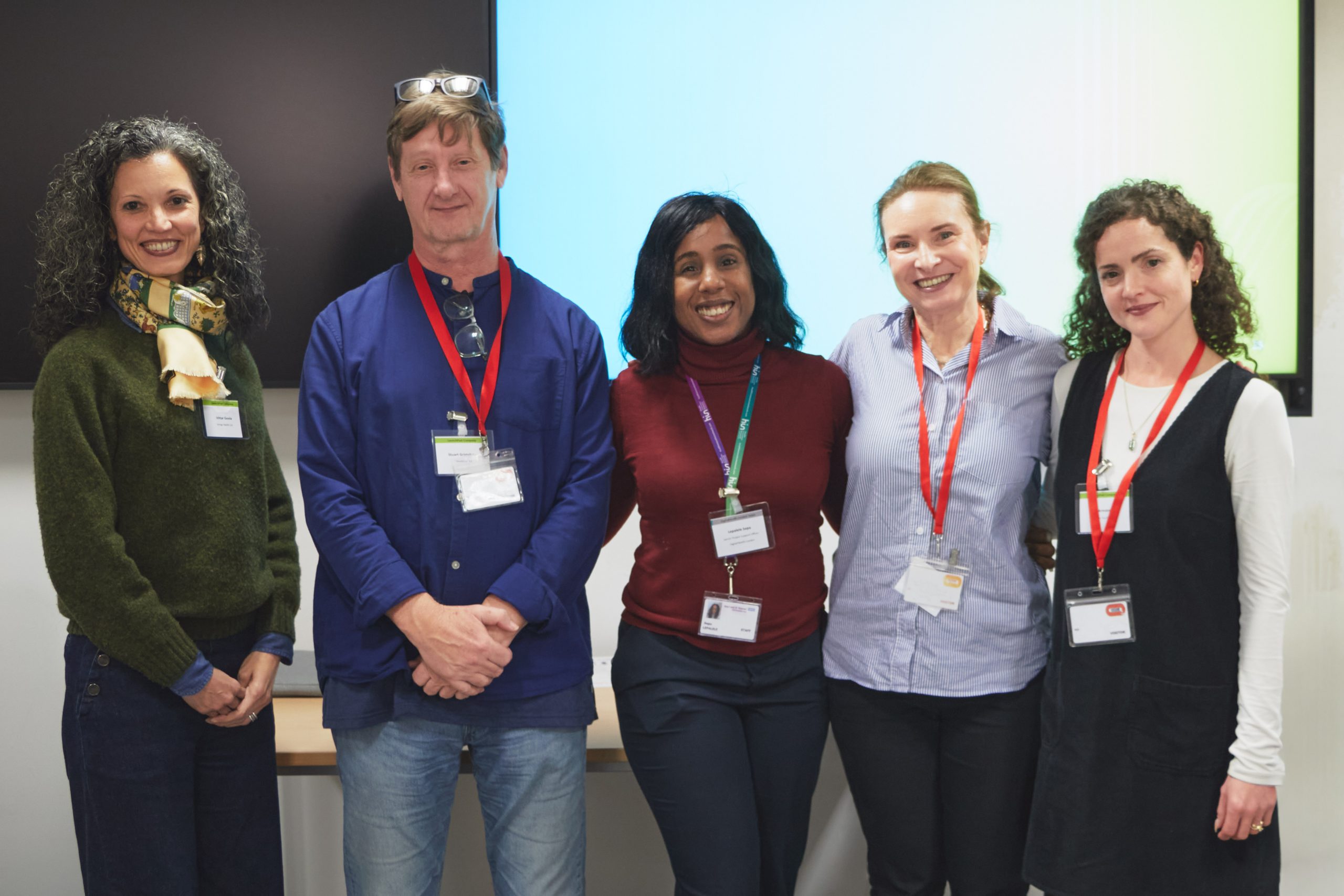
HIN’s 2025/26 programme review gives the activity some scale. Accelerator cohort eight selected 17 companies from 117 applicants and supported the creation of more than 50 jobs. Launchpad cohort eight selected 20 companies; 19 launched products in November and December 2025. Those are business milestones, which should be read separately from evidence of clinical benefit.
The support extends into particular markets. Mindset-XR worked with 74 Innovate UK-funded immersive mental health innovations. Accelerating FemTech: Evaluate supported ten later-stage women’s health companies, ending with a February 2026 showcase. The common task is making an innovation ready for the people and institutions expected to use it.
The dinner table is part of the design
HEAL-D gives the story a more human scale. Healthy Eating and Active Lifestyles for Diabetes is culturally tailored education for adults of African and Caribbean heritage with type 2 diabetes. It treats the social setting of eating and activity as part of the work of self-management.
Researcher Louise Goff developed HEAL-D with community involvement. During the pandemic, HIN helped adapt it for virtual delivery; a pilot evaluation followed in 2021. The programme’s research history makes the trigger clear: restrictions on meeting in person required a different way to keep the service available. The technology answered a delivery problem that already existed.
The subsequent BMJ Open evaluation examined the online programme’s feasibility and acceptability. Seven weekly sessions combined education, behaviour-change support and activity. The study reported 62% initial attendance and 77% completion, with favourable feedback from staff and service users. It also identified difficulties finding eligible patients, recruiting them and getting referrals into the programme.
Here, the trouble appeared upstream of the class itself. A programme people like can still struggle if the route into it is unreliable. And the evaluation had no control group, so it could not establish causation or clinical effectiveness. The useful lesson is specific: test how people reach a service alongside what happens once they arrive.
Listen to the awkward findings
A similar discipline appears in HIN and UCLPartners’ evaluation of London’s NHS 111 mental health service. Reviewing its first 11 months, they found promising changes in referral patterns and some indications of system-level savings. They also found lower call volumes than expected, while the physical health 111 service continued to handle a substantial share of mental health calls.
The published account notes that positive service-user feedback came from small samples. These qualifications make the work more useful to someone planning a service. Demand, routing and implementation matter alongside the experience of people who successfully get through. HIN’s contribution includes exposing those issues while decisions about further development remain possible.
“Speeding up the best of health and care, together.”
HIN’s published mission
The bill behind the introductions
HIN’s finances describe a publicly commissioned service organisation. Its 2025/26 financial statement reports £10.012 million in income and £10.196 million in expenditure, leaving a £184,000 deficit. Pay accounted for £8.094 million of spending. That makes sense for work whose main ingredients are professional expertise, analysis and sustained coordination.
Total reported expenditure
Income comes from NHS England, the Office for Life Sciences, local integrated care boards and other commissioners and partners. This is organisational income, not a healthtech funding round. Nor can the total annual bill establish the cost-effectiveness of each project. Those judgments require their own evidence.
The people doing the work include pharmacists, social workers, midwives, doctors, physiotherapists, analysts, economists and project managers. HIN’s careers page sets out five values: brave, kind, open, different and together. Their practical test is whether a team can accommodate clinical caution, commercial urgency and a patient’s inconveniently specific needs in the same project.
Bring a problem worth solving
HIN sits among internal NHS transformation teams, academic evaluators, consultancies and other innovation programmes. The regional networks are also collaborators. Its distinctive offer is the combination of a local NHS position, research connections and hands-on adoption support. The right alternative depends on the task: generating evidence, developing a product and expanding a proven service require different help.
The 2026 Evidence Generator Bootcamp illustrates that specialisation. Its ten-week virtual offer, with June onboarding, provided for up to 20 companies and approximately 12 supervised hours, plus self-directed work. A founder with an evidence-planning problem can seek a programme built around that problem.
For readers hoping to copy the approach, the instruction is pleasingly unglamorous. Define the service problem. Involve the people affected. Decide what evidence would change a commissioning decision. Make room for the staff who will deliver the change. The model needs those conditions: mentoring cannot supply missing clinical capacity, and good feedback cannot fix an absent referral route. HIN’s most persuasive stories begin when somebody pays attention to precisely those details.