The button says “Join for $499/year.” Behind it sits a company that talks about ending disease, invokes the Apollo program, and once closed a $31 million venture fund. StartUp Health has always enjoyed a large canvas. Its current sales proposition is pleasingly concrete: pay an annual fee and enter a community of people trying to turn health innovation into something other people can actually use.
That gap between an ambitious idea and a useful introduction is where the company works. A startup might have a promising device but no route to a buyer. An investor might have capital but need a better view of emerging companies. StartUp Health puts both inside a network organized around shared health problems. The business depends on whether proximity produces useful work.
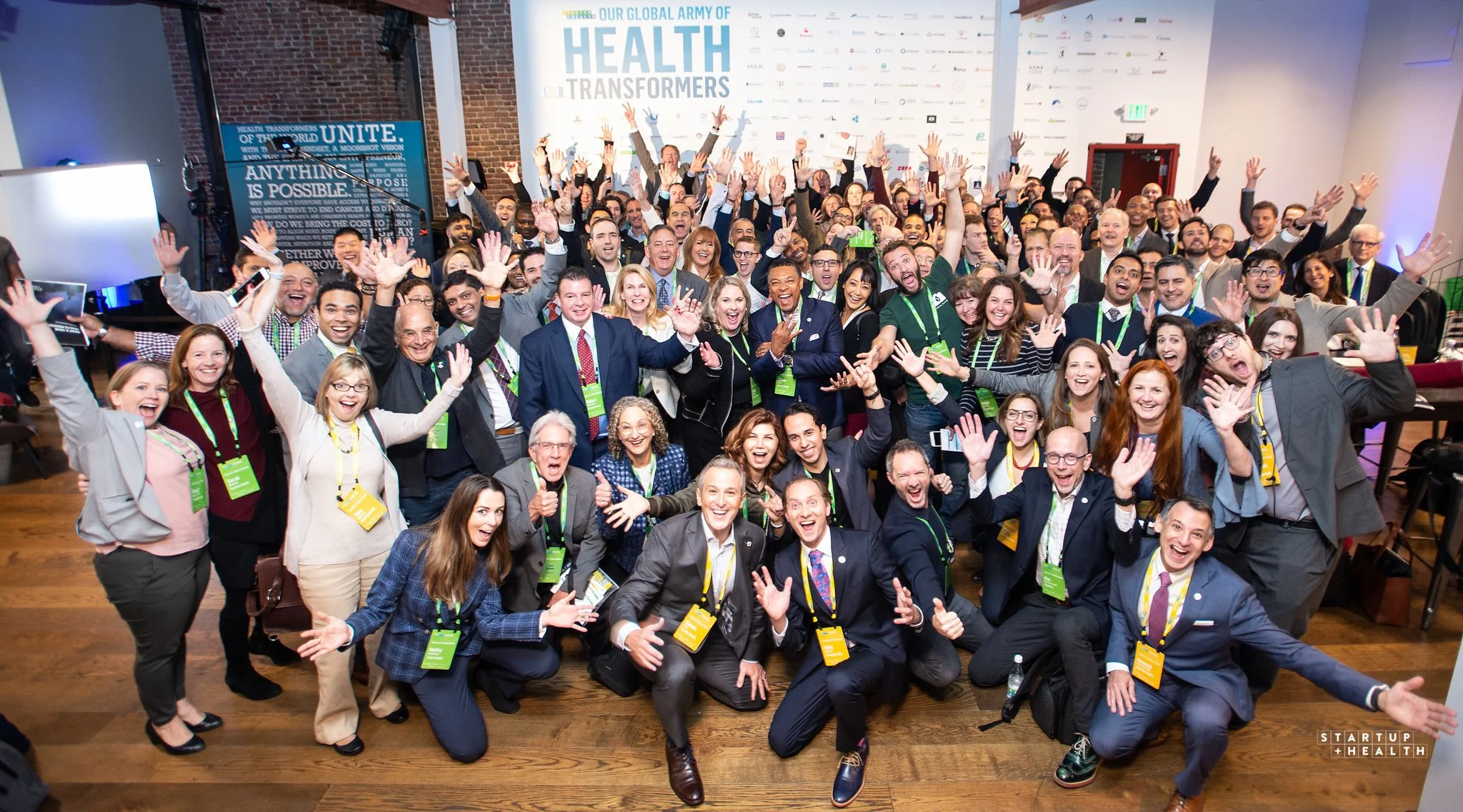
A moonshot with annual dues
The current offer includes a private app, expert question-and-answer sessions, fireside conversations, event benefits, and a content library. The company also sells access to additional media and partner services. Its members can be founders, healthcare executives, operators, investors, clinicians, or researchers. This is a business serving the people building and buying health innovation, rather than a service patients book for care.
The price makes the offer easier to inspect. At $499 annually, the advertised membership works out to about $41.58 a month, although that calculation does not make it a monthly payment plan. Custom content, media campaigns, and individual support sit in separate partner packages. The membership is an operating expense for access and participation; joining should not be mistaken for securing an investment.
Advertised annual membership
≈ $41.58 per month when divided by 12
There is a second price: attention. A directory can remain unopened, a recording unwatched, an introduction unanswered. The sensible buyer arrives with a specific need. Find someone who understands the next purchasing decision. Get feedback on a partnership proposal. Learn how another founder approached a similar obstacle. Those are manageable requests; “help us transform healthcare” is harder to put on a calendar.
The room was missing some people
In September 2025, co-founder Unity Stoakes explained why StartUp Health was opening its network to the wider health sector. Investors, buyers, and industry leaders would be able to participate alongside entrepreneurs. He described membership as a way to remove the equity arrangements and legal complexity that made participation harder. A paid, specialist community could also provide a filter against the noise of general networking platforms.
That is a revealing adjustment. If a founder needs customers, surrounding that founder exclusively with other founders leaves an obvious vacancy. Inviting buyers changes the conversation. A hospital operator may be interested in implementation; an investor may want to discuss financing; a researcher may see a question the pitch has overlooked. The value comes from their different responsibilities, provided there is enough common ground to make a meeting worthwhile.
The company’s more focused communities supply that common ground. Its published experience describes peer coaching, accountability circles, connection calls, and access to specialist advisers and partners. Those activities turn a broad ambition into recurring appointments. A group working on Alzheimer’s can talk about a shared care pathway even when its members are building very different products.
health challenge
Fifteen years is a long time to stay impatient
Steven Krein and Stoakes founded StartUp Health in 2011 with what their letters describe as a 25-year plan to improve global health. NASA’s Apollo program supplied inspiration for its principles. The founders called participating entrepreneurs Health Transformers, eventually a registered trademark. Even the vocabulary carries an instruction: think beyond the next product release.
Experience made the method more complicated. In their fifth founder letter, Krein and Stoakes complained that “Healthcare conglomerates move too slowly” and argued that conventional investors’ return horizons did not fit the work. They described repeated experiments and revisions, expanding their original emphasis on entrepreneurs and networks into a model that also included broadcasting stories, making connections, and sustained collaboration. Their diagnosis was about institutions and incentives.
The present leadership page reflects another change: Stoakes is listed as CEO, president, and co-founder; Krein as strategic adviser and co-founder. Around them are people responsible for community, content, operations, and finance. Those job titles fit the actual service. Running this network requires editors and organizers as well as people who understand investment.

The stated ethos asks members to stay committed, reconsider their approach, and help one another. That last requirement matters commercially. A community in which everyone arrives to extract a favor will soon feel like an inbox. Peer support gives members a reason to return between fundraising rounds, when the work remains difficult but the news is less photogenic.
Follow the money to the right account
StartUp Health’s investment history explains some of its access. In September 2018, it announced the close of its second fund at $31 million. Backers included Novartis, Ping An, Chiesi, GuideWell, Otsuka, and Masimo. This was capital for an investment vehicle, distinct from an equity financing round for the company that runs the community. Treating it as membership revenue would be wrong, too.
A different instrument arrived in March 2023: a program-related investment from the Helmsley Charitable Trust supporting the Type 1 Diabetes Moonshot. The announcement described education, support, and investment for entrepreneurs pursuing promising but unproven approaches to the condition. It illustrates how the model can bring philanthropic capital into a community of commercial founders without pretending the two have identical objectives.
These relationships are part of StartUp Health’s market position. MATTER, the Chicago healthcare innovation organization, offers an adjacent combination of startup support, community, and corporate innovation. Specialist funds and accelerators meet other needs. StartUp Health’s particular combination ties a venture-investing history to condition-focused groups and an ongoing publishing operation. A founder should compare the services needed for the next stage, rather than shop by the word accelerator.
Alzheimer’s makes the theory specific
The Alzheimer’s Moonshot launched in January 2024 with Gates Ventures and the Alzheimer’s Drug Discovery Foundation’s Diagnostics Accelerator. Programming began in May. StartUp Health said the first companies were selected from more than 100 applicants and covered different parts of the care journey, including detection, diagnosis, treatment, and support.
That range is the point. A community announcement described ADmit Therapeutics’ work on blood-based detection and ALZpath’s work on a diagnostic assay. Neither company alone represents the whole patient journey. Bringing different approaches into one group creates opportunities to understand where another company’s work begins, what evidence it needs, and where a partner might be useful.
Laura Nisenbaum of ADDF discussed the difficulties of translating academic science into something that affects patients in a StartUp Health interview. The distinction is essential to this business. A good scientific idea still has to become a viable organization and find a route into use. StartUp Health concentrates on the entrepreneurial and relationship work surrounding that translation. The scientific claims remain the responsibility of the companies making them.
“These are people who are committed to their health moonshot, recalibrate regularly, and uplift others.”
Unity Stoakes, describing the founders StartUp Health seeks
The community owns a publishing desk
StartUp Health NOW, its video interviews, journal, magazine, and newsletter give members another route to attention. In an interview republished in May 2025, Stoakes discussed storytelling as a way to attract teams, partners, customers, and investors. The conversation also described a pro membership introduced in 2024 that made media capabilities available to founders.
The commercial logic is straightforward. An interview gives a founder room to explain the problem and makes that explanation available after the conversation ends. Repeated publishing can keep a company visible between announcements. Readers should understand the setting: these are community and company stories published by an organization that also offers paid media services. Their existence demonstrates a distribution channel, not independent validation of a product.
The operation remains active. On September 8, 2026, StartUp Health NOW published a conversation about Aidar Health’s MouthLab. Its wider archive includes investor interviews and recordings from company events. For a prospective member, those conversations are a way to sample the subjects and people the community gathers before committing time to it.
From the app to an actual room
Apollo House made the network physical in January 2026. Held during JPM Healthcare Week in San Francisco, the summit was co-hosted with SVB, Johnson & Johnson, Advocate Health, and AWS Healthcare & Life Sciences. Its program included conversations with Vinod Khosla and Virta Health founder Sami Inkinen. Access was by invitation, with membership offering a route to priority consideration.
In June, StartUp Health joined Fedcap and Digital Health Hub Foundation for the inaugural Civic Health Forum in New York. The event centered on keeping people healthy before they enter the healthcare system. Its program mixed health infrastructure discussions with founder presentations and provider-led innovation. Recordings later appeared in the media operation, giving the gathering a life beyond the room.
There is a useful practice here for any founder: organize around the problem, invite people with different powers to act, and turn a meeting into a specific next step. The approach is less useful when the urgent need is a guaranteed check, an outsourced sales team, or a substitute for product evidence. A network can help locate a collaborator. The founder still has to give that collaborator a reason to proceed.
For StartUp Health, the test comes after the welcome message. Did a conversation sharpen the plan? Did an introduction reach someone relevant? Did the relationship survive the event? The annual fee buys a place to start asking. What makes the company worth watching is its attempt to keep the people who can answer close enough to one another.
Step inside the conversation
Explore the community, follow its coverage, or hear directly from the people doing the work.