The interesting thing about SimpleHealth is how little of its promise depended on inventing a new medicine. The pill already existed. So did the prescription, the pharmacy and the postal service. The opportunity lay between them: the appointment to arrange, the refill to remember, the journey to make. SimpleHealth took these familiar objects and offered a different sequence. For eligible patients, reproductive care could begin at home and arrive there, too.
- Online reproductive care, prescriptions and recurring delivery.
- A business descended from contact-lens telemedicine.
- Emme brought a smart pill case into the service in 2022.
- SimpleHealth wound down in April 2023; Twentyeight Health took over records and care transitions.
That last line matters. This is a company history, rather than an invitation to place an order. SimpleHealth’s independent operations ended, but its patients’ needs continued. The contrast gives the business a more revealing story than the usual account of a startup making something convenient. A brand can finish. A prescription still has a renewal date.
01 / First, a pair of contact lenses
The roots were decidedly unglamorous. Joel Wishkovsky needed to renew a contact-lens prescription before travelling and could not fit in an appointment. He and co-founder Ryan Quigley worked with ophthalmologist Saya Nagori on a remote renewal process. Simple Contacts turned the repeat visit into a digital service reviewed by a real clinician. It was a narrowly chosen problem with a conspicuous amount of bother attached.
Investors financed that earlier business: an $8 million Series A in April 2017, led by Goodwater Capital, followed by a $16 million Series B in May 2018. These were predecessor financings, an important distinction when reading the company’s later reproductive-health story. Capital funded an approach to delivering care before contraception became its central subject.
The birth-control service arrived in November 2018. By March 2020, the team had chosen a direction. A customer letter signed by Quigley explained that growing both businesses together had given way to concentrating on one. Simple Contacts transitioned its service to 1-800 Contacts. The change of mind was explicit: focus would better serve the patients of both businesses. Reproductive care got the attention.
02 / The price of one fewer errand
SimpleHealth’s customer was someone seeking contraception or related reproductive care who wanted a less cumbersome route to it. The service connected medical review with fulfillment. Its practical expertise lay in coordinating those steps, rather than manufacturing contraceptives. Compared with an office-and-pharmacy routine, the difference was where the work happened and how much of it the patient had to arrange.
The historical price makes the proposition concrete. In April 2021, SimpleHealth advertised a $20 annual care fee, medication starting at $15 a month for uninsured customers, and free delivery. Insured medication was typically covered without a copay. Care and medicine were separate charges. At the advertised uninsured starting price, twelve months of medication plus the annual fee came to $200.
The business combined a care fee with recurring medication fulfillment and, later, wellness-product sales. It occupied the consumer telehealth market alongside services such as Nurx and The Pill Club. Home delivery alone was hardly an exclusive invention. The more useful question was whether consultation, coverage, refills and follow-up formed a service people could reliably use.
03 / A prescription is only the beginning
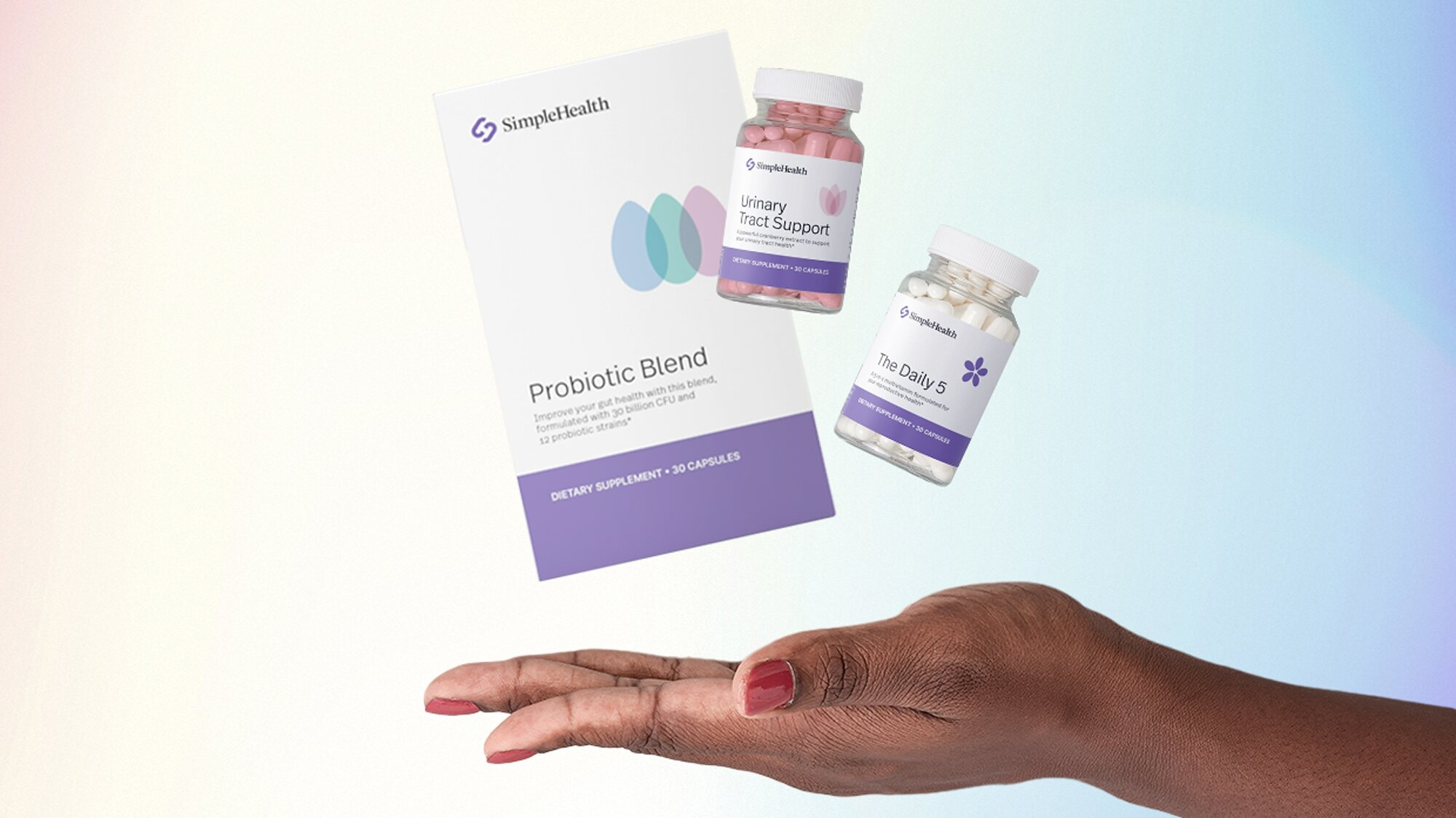
In March 2021, SimpleHealth added three supplements developed with physician Amy Shah: The Daily 5, Urinary Tract Support and Probiotic Blend. They could be bundled with a birth-control subscription. This widened the shopping basket, though a supplement and a prescription remained different sorts of products. The company was assembling a reproductive-wellness relationship around its recurring care business.
The more distinctive extension arrived in February 2022, when SimpleHealth acquired Emme. Its smart case used sensors to track pill-taking and synced with an app that sent reminders. Delivering pills addressed access; helping someone remember them addressed daily use. For a company built around removing errands, this was a move into the much smaller, much more frequent business of remembering.

Emme co-founder Amanda French joined as Chief Innovation Officer. The announced ambition extended into fertility preparedness and perimenopause. Those plans help explain the acquisition, but should not be confused with completed services. A company’s shopping list for the future can be considerably longer than the menu its patients actually receive.

04 / Applause, then a change of hands
In May 2022, SimpleHealth ranked first on the Women Presidents Organization’s list of 50 fastest-growing women-owned or women-led companies, up from second the previous year. The award documented growth. It did not establish profitability or guarantee continued independence. That distinction becomes unusually visible when the next chapter arrives less than a year later.
Expansion continued into February 2023. Evofem announced that SimpleHealth had added Phexxi, a hormone-free prescription contraceptive gel. The offering then included more than 120 branded and generic products. The range was broader than one pill in a monthly parcel; it offered different contraceptive options within the same online care-and-delivery arrangement.
- 2018Birth-control service begins
- 2022Emme joins the business
- 2023Patient care transitions
Then came April 12, 2023. SimpleHealth wound down, transferred patient records to Twentyeight Health and handed over its platform. Twentyeight’s transition guidance described continued Truepill deliveries for eligible patients and prescription-transfer support for people outside its service states. The handoff had to accommodate geography as well as technology.
“Our focus first and foremost is on continuity of patient care.”
Amy Fan, Twentyeight Health co-founder, April 2023
05 / Copy the sequence, mind the calendar
The copyable idea is to follow a recurring need through every step. Start with the nuisance people repeatedly tolerate. Connect the review to the delivery. Think about the reminder after the delivery. Then design how the relationship survives a change of provider. Each step matters because the customer is trying to complete one continuous task.
The conditions matter, too. Remote care depends on clinical eligibility, state coverage and dependable fulfillment. A pleasing interface cannot make every patient suitable for an online prescription, or every address serviceable. SimpleHealth’s story is useful precisely because it reaches beyond the first click: convenience is an arrangement that somebody must keep working, month after month.
For readers building services of their own, the useful exercise is modest: draw the entire customer journey, including the next renewal and a possible transfer. Put an owner beside each step. SimpleHealth makes that exercise memorable because its story follows the same customer need through several very different corporate decisions.