A capacity problem, not a technology problem
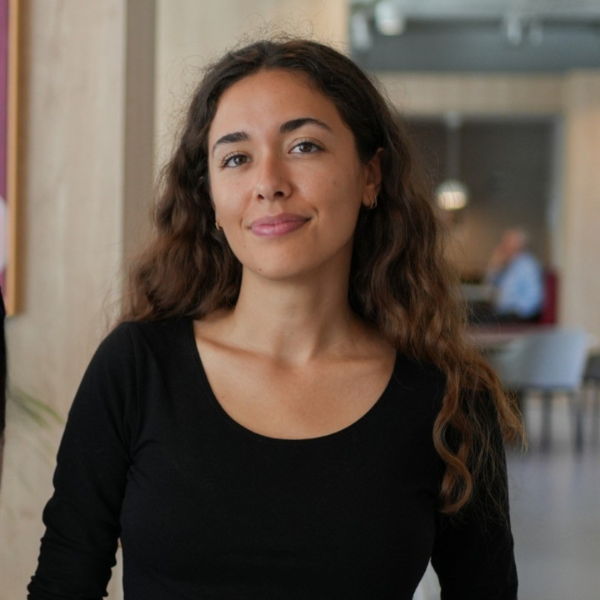
Ask Maria Manso what Tucuvi is trying to fix and she will not talk about algorithms first. She will talk about capacity - the gap between how many patients a hospital needs to follow up with and how many staff hours exist to do it. That framing shapes everything about the company. LOLA, the voice AI agent she and co-founder Marcos Rubio built, does not try to replace clinicians. It tries to absorb the repetitive, high-volume part of their job: the post-surgical check-in, the medication adherence call, the symptom screen that takes five minutes per patient and needs to happen for thousands of patients a week.
"Healthcare is under immense pressure, and incremental tools are no longer enough," Manso said when Tucuvi announced its Series A. It is a blunt line, and it doubles as a thesis statement for the company. Hospitals do not need another dashboard to look at. They need something that does the work.
Healthcare is under immense pressure, and incremental tools are no longer enough.
- Maria Manso, on Tucuvi's $20M Series AFrom ultrasound labs to a startup in Madrid
Manso's path into healthtech runs through a biomedical engineering degree at Universidad Carlos III de Madrid, which she completed in 2017. Before that, in 2016, she worked as an ultrasound researcher at the University of São Paulo - hands-on, technical work far from the world of term sheets and go-to-market strategy. From there she moved into industry, joining Medtronic in marketing and business innovation, a role that put her closer to how large healthcare organizations actually operate, and where they get stuck.
By 2019, she had left to start Tucuvi with Rubio. The company's early years were spent doing the unglamorous work that most AI startups skip: getting the clinical protocols right, building the data security infrastructure hospitals require, and eventually pursuing European medical device certification. LOLA is now CE-marked as a Class IIb medical device, a regulatory bar that most conversational AI products in healthcare never attempt to clear.
Built for hospitals, not headlines
That certification-first instinct is part of what separates Tucuvi from the wave of general-purpose AI tools now being pitched to health systems. Manso has described the company's approach as grounded in clinical rigor - protocols configured with medical teams, audit trails for every automated interaction, and integration with existing hospital workflows rather than a rip-and-replace pitch. It is a slower way to build a company. It is also, evidently, a way that investors are willing to back at scale: Cathay Innovation and Kfund co-led the Series A round, joined by returning backers Frontline Ventures, Seaya Ventures, and Shilling.
The result is a platform now embedded in more than 60 healthcare organizations, running over 50 distinct clinical workflows - everything from chronic disease monitoring to hospital readmission reduction to cancer follow-up calls. For a company five years removed from its founding, that is a meaningful footprint in an industry notoriously slow to adopt new technology.
Recognition, and what comes next
In 2025, Manso and Rubio were named to the Forbes 30 Under 30 Europe list in the Science & Healthcare category. A year earlier, the European Innovation Council recognized her as one of its most promising European women innovators. Neither award changes the day-to-day math of running a healthcare startup, but both point to something consistent in how Manso is perceived in European tech circles: as a builder solving a real operational problem, not chasing an AI trend.
With the Series A capital now in hand, Tucuvi's next chapter is international. Manso has said the funds will go toward expanding into the US and UK markets and toward extending LOLA's capabilities to handle more complex clinical use cases. For a founder who started out doing ultrasound research, the arc - bench science, corporate marketing, startup founder, now scaling a certified medical device across borders - has been anything but linear. It has also, so far, worked.