Harpal Sandhu gave luck an early speaking slot. Opening a fireside chat with fellow entrepreneur Tom Chavez at super{set}, he began with “Luck and timing.” He was discussing the forces behind a startup’s success. Here was a founder with decades in the business, volunteering that effort does not control the whole result.
It is a useful place to begin with Sandhu. He founded Integral in 1993 and still leads it. Along the way, the company has worked on electronic foreign exchange networks, customizable trading platforms, cloud software and digital assets. The recurring problem is rather less fashionable than any of those labels: getting into a market can be expensive before you have traded a thing.
There is technology to obtain, a source of prices to connect, credit to arrange and somebody to settle with afterward. Finance has a talent for making the entrance hall as complicated as the building. Sandhu has made a career out of examining that entrance hall.
Back to Stanford, with a different problem
His public career runs between two worlds that need one another and speak different dialects. Sandhu attended Stanford from 1984 to 1988, earning a BA. He worked as a financial engineer in Morgan Stanley’s Capital Markets Product Development Group, and became founder and CEO of Infinity Financial Technology before starting Integral.
The combination matters. A financial engineer encounters the practical work behind a transaction: how an instrument is priced, how exposure is handled, how information moves. A technology entrepreneur asks whether the same work can be organized differently. Sandhu’s later businesses would repeatedly bring those questions together.
Integral began on Stanford’s campus in 1993. Its stated founding aim was to combine technology and finance for end users. By the late 1990s, its FX Grid was linking major participants in foreign exchange. The ambition was a connected trading network, with institutions able to communicate electronically across the market.
That is a long way from an app launched into a ready-made distribution system. The connections themselves were part of the product. Each participating institution added another relationship that the network could make useful. A good screen would only get the project so far; there had to be something, and someone, on the other side.
at Stanford
with Stanford
launches
A desk without a gatekeeper
There is a smaller, revealing detail from 2013. Sandhu had no secretary. Integral had no administrative assistants. Management and employees sat together in an open workspace, in keeping with his preference for direct communication.
An office plan cannot establish everything about a person. It can show a choice. In this case, the choice was to shorten the route between colleagues. For somebody building networks between institutions, removing a layer between desks has a pleasing consistency.
He also helped lead a mentoring program for young South Asian CEOs. Its closed-door sessions gave founders somewhere to discuss difficult problems with peers. The useful connection here was between people who could ask an awkward question without having to turn it into a polished investor presentation.
These details make his career easier to picture. There is the public business of connecting markets, and the more ordinary business of making it possible for someone to speak directly. Neither requires an elaborate theory of personality. Both involve deciding which barriers earn their place.
Put a ruler beside the price
By January 2014, Integral’s work included FX Benchmark, developed with Stanford. It offered aggregated, second-by-second midrate calculations for an initial seven currency pairs, available for free daily download. The information could help institutions examine execution quality and transaction costs.
A price is more useful when there is a way to judge it. A transaction may have been completed quickly, but the customer still needs to assess the terms. Benchmark data supplies a point of comparison. The apparently dry work of collecting and organizing information becomes part of the argument for a fairer market.
Sandhu described the effort as “increasing market transparency and reducing friction.” That year he placed 37th in Institutional Investor’s Trading Technology 40. The recognition came more than twenty years after Integral’s founding. The interval gives some substance to his willingness to talk about timing: a project can keep developing long after its original pitch has stopped sounding new.
Two hundred businesses, other people’s names
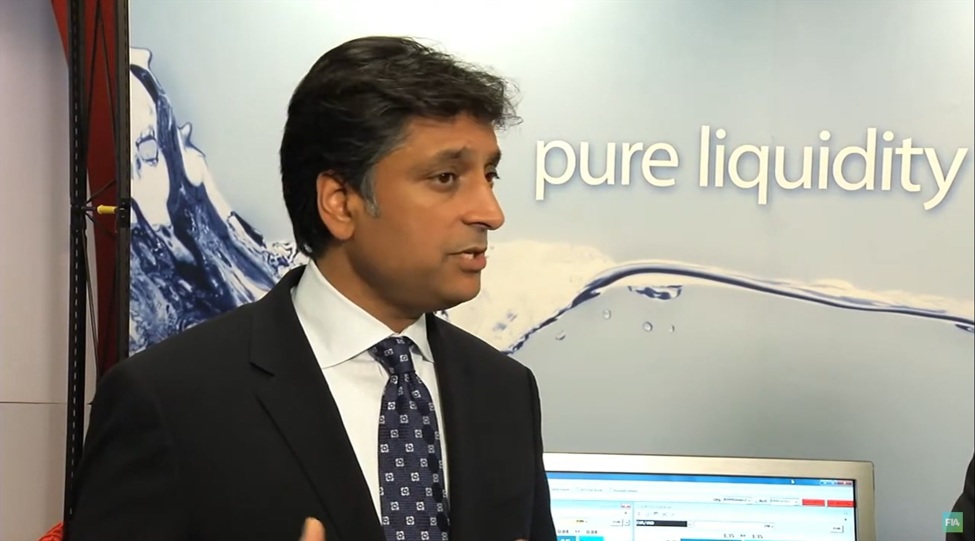
Ask a founder for a proud achievement and the answer can be revealing. In a 2019 question-and-answer, Sandhu chose the more than 200 FX platforms Integral had helped launch. They were customized businesses with different audiences, experiences and commercial models. They carried the customers’ brands.
There is a certain generosity of architecture in that arrangement. Integral supplies common machinery while the client decides what kind of business to build above it. Sandhu compared the flexibility with spreadsheet software, including Lotus 1-2-3 and Excel: a shared system that can support many applications designed by its users.
The distinction has consequences for cost. If every institution must independently build the entire technical foundation, participation demands a substantial investment before customers arrive. Shared infrastructure spreads that work across users. Customization then gives each institution room to serve its own customers rather than simply renting an identical shop window.
This helps explain why Sandhu’s descriptions of progress keep returning to access. His preferred example of achievement was a collection of businesses that did not put his company’s name above the door. For a founder, that is a fairly practical definition of being useful.
“relationships we have developed along the way”
Harpal Sandhu, reflecting on career highlights, August 2020
A connection still needs a counterparty
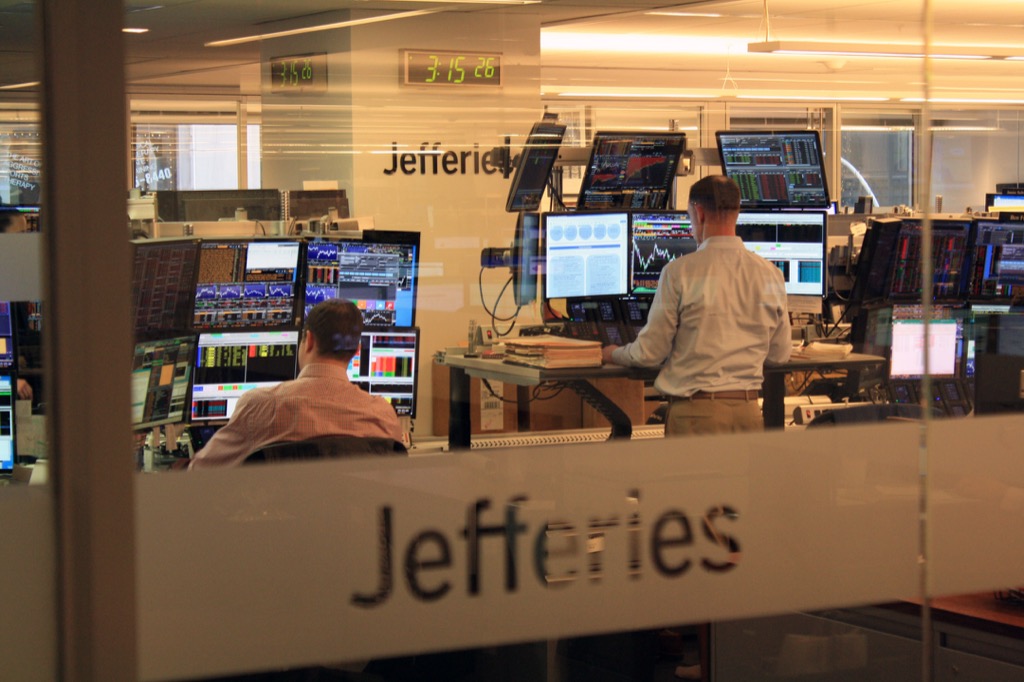
When discussing career highlights in 2020, Sandhu emphasized longstanding relationships. In that same conversation, he appeared alongside Brandon Mulvihill, then global head of FX prime brokerage at Jefferies, to discuss their TrueFX venture.
The pairing made the underlying problem visible. An institution needs technology, credit and liquidity to trade. Access to one does not automatically provide the other two. Sandhu’s argument was that these services had often been bundled at a high cost, making direct participation expensive.
Working with another provider could change the arrangement. Integral brought technology; Jefferies brought its prime brokerage role. The project joined capabilities that an institution would otherwise have to assemble. Sandhu was describing an ecosystem of working relationships as much as a software product.
There is something pleasingly unfashionable about that. Partnerships require agreement over the dull, consequential details. Who connects? Who clears? What does the customer have to arrange? A trading venue has to answer those questions even if the marketing department would prefer another adjective.
The currency changes. The plumbing follows.
Digital assets gave Sandhu another version of the connection problem. He said the Mint Exchange project began in September 2017 and launched a year later. It was designed for FX brokers trading cryptocurrencies and crypto contracts with customers who needed to hedge their exposure.
The approach was familiar: bring liquidity from exchanges, market makers and brokers into one pool, then make it accessible through a single account. The asset class had changed; the work of coordinating fragmented providers remained recognizable.
Integral announced its Integral Digital offering in January 2023, extending its technology into crypto trading and associated workflows. In September 2025 came PrimeOne, a stablecoin-based crypto prime brokerage platform built on the Codex blockchain. Virtu Financial and Europa Partners were among the firms named at launch.
PrimeOne’s design combines credit, trading and settlement. Integral describes a mechanism in which stablecoin margin moves between counterparties’ wallets as positions change in value. The intended benefit is less friction around credit and settlement across trading relationships.
Seen across Sandhu’s career, the progression has a certain logic. Connect institutions. Make their technology reusable. Work on access to credit. Revisit the same coordination problems when a new market develops. Novel instruments still arrive with paperwork and counterparties attached.
The next connection is inside the customer
By September 2026, Sandhu was talking about the connections needed for corporate FX automation. APIs, the interfaces through which systems exchange instructions and data, sit at the center of that work. Prices and execution can be embedded in the software a treasury team already uses.
Integral’s survey of banks and corporate treasurers put numbers around the expectation. Programmatic FX execution was projected to grow from 18% of volume to 42% by 2031. Those figures describe respondents’ expectations, with user-triggered API trading and fully embedded execution counted together. They do not describe growth already achieved.
More FX inside the workflow
*Expected share of trading volume. User-triggered API + fully embedded execution. Integral bank and corporate treasurer survey, September 2026.
The near-term work remains specific. On October 7, Integral announced that Yapı Kredi Kripto had selected its digital asset technology ahead of launching services. On October 15, it announced Movantis’ adoption of Integral FX, including pricing, liquidity aggregation, risk management and distribution capabilities for institutional customers.
These are separate customers in separate markets, yet the connective work is recognizable. Sandhu’s original campus venture now supplies machinery beneath businesses with their own names, requirements and customers. His public story has accumulated products and partners without losing sight of the cost of getting connected.
Luck and timing still deserve their seats. So does the patient work of making the next connection possible.
Follow the connections
Conversations, company updates and further reading.
- Integral: company website ↗
- Harpal Sandhu on LinkedIn ↗
- Watch: The Lowdown conversation on crypto settlement ↗
- Watch: Sandhu on cloud technology in FX ↗
- Read: Vivek Vaidya on luck and timing ↗
- Read: Sandhu’s ten questions on FX ↗
- Read: the TrueFX conversation with Jefferies ↗
- Read: Sandhu in the 2014 Trading Technology 40 ↗
- Read: 2026 embedded FX survey findings ↗
- Latest: the Movantis announcement ↗