A small business can buy from another country, sell to another country and still discover, at the bank counter, that it is considered rather small. Its invoice may be urgent. Its supplier may be waiting. Its foreign exchange rate, however, can depend on something less romantic: how much business it brings the bank. Adrian Yap built a company around that discrepancy. He had spent enough time inside finance to recognise the difference between a rate available to a large customer and the rate everyone else was expected to accept.
The idea behind MoneyMatch has an appealing lack of ceremony. Give people with less bargaining power a more economical way to send money overseas. Doing so would require the things a phone screen rarely advertises: permission, payment partners, identity checks and strangers willing to entrust a young company with their money. MoneyMatch would have to make all of those pieces work together, each time a customer pressed send.
A mamak before a money business
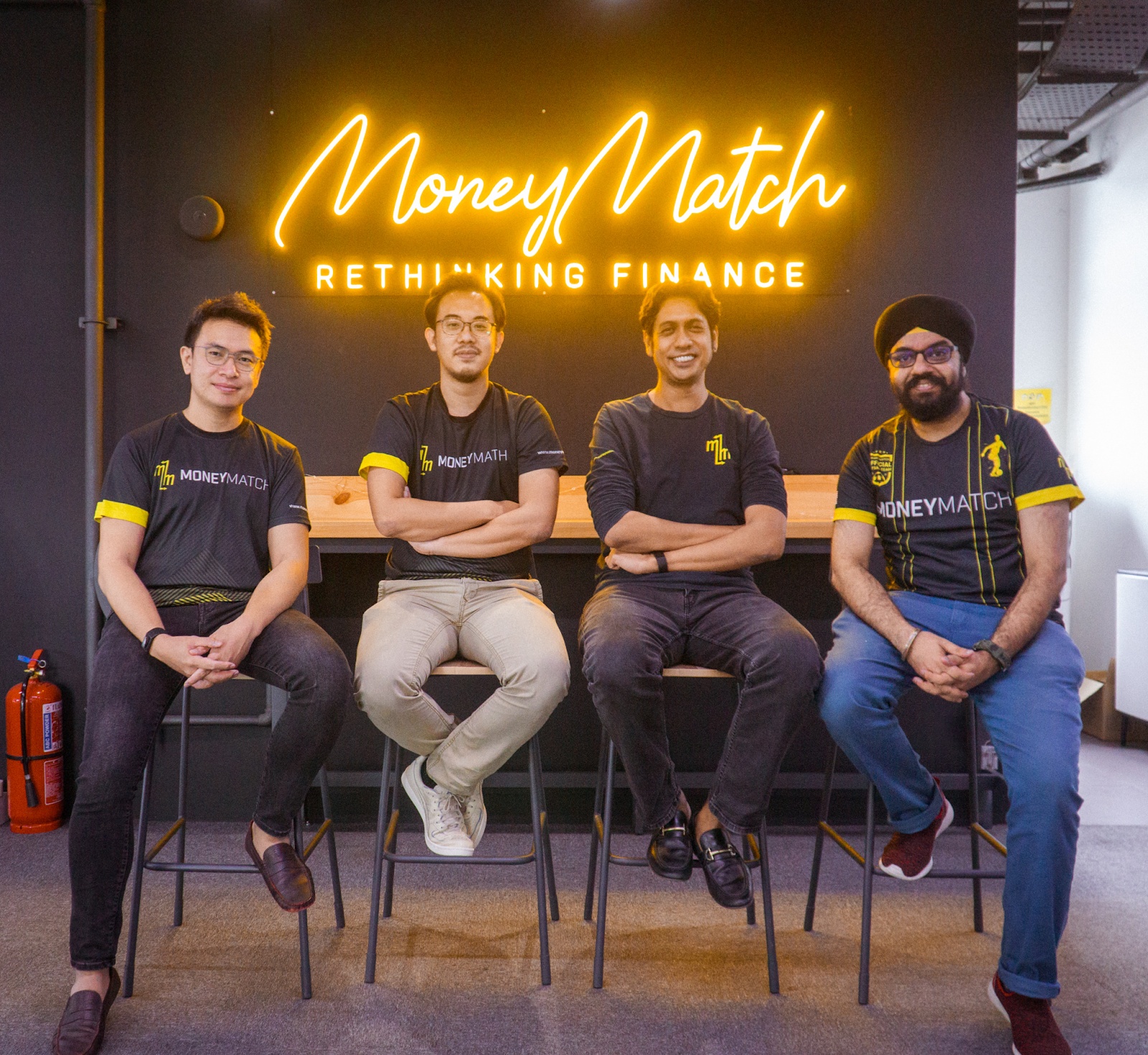
The beginning was suitably Malaysian. Around 2014, Yap and Naysan Munusamy were talking at a mamak, considering whether the time had come to start something themselves. That is how Munusamy later remembered the conversation. The conversation put a practical question in front of two people who knew the financial industry: could they build something of their own?
Yap saw internet adoption accelerating among younger users and new businesses. Financial services delivered through technology were already taking shape elsewhere. MoneyMatch followed in 2015. The Cyberview Living Labs accelerator, working with WatchTower and Friends, helped turn the discussion into an organisation, supplying early funding and support. Yap has credited that programme with giving the venture its initial push.
The setting is a useful antidote to the lone-founder portrait. This business began with a conversation and needed an ecosystem to get moving. Munusamy brought his own banking experience. Early support made taking the first steps more practical. An idea about making finance accessible was itself helped into existence by people willing to open a door.
The customer at the other end of the rate
Yap's route to that table ran through the United States and Malaysia. He began his financial career as a business analyst at Bank of America in the US, then returned to Malaysia and joined Hong Leong Bank's treasury department. His education included Northwood University in West Palm Beach. Before the startup, he had learned finance from inside institutions whose daily work involved moving and pricing money.
That experience supplied a specific problem rather than a general appetite for disruption. At MoneyMatch's 2017 launch, Yap described the small and micro businesses that lacked the transaction volume to negotiate better bank rates. The service also accommodated individuals, including parents paying for overseas study and people sending money home. Different lives, similar arithmetic: how much arrives after the exchange and the transfer?
For a small company, a cross-border payment is part of buying stock, settling an invoice or keeping a supplier relationship working. The conversion sits between the business and something it actually needs. A less expensive transfer therefore has a very ordinary virtue: more money remains available for the next job. Banking can make this sound complicated. The customer is usually trying to get on with Tuesday.
The original proposal used a matching model. Someone wanting to move funds in one direction could be paired with someone moving funds in the other, with local payments reducing the need for money to cross a border. Fazil Fuad, who had worked at Rocket Internet, joined the early effort. MoneyMatch's subsequent payment network grew beyond that starting design. The enduring question was which parts of a transfer could be made less costly.
The first transfer is an act of faith
A cheaper price does not automatically persuade someone to hand over money. In 2017, MoneyMatch entered Bank Negara Malaysia's regulatory sandbox and launched its platform publicly. The sandbox gave the business a supervised setting in which to test its service. In 2019, it graduated to become a full licensee under the Money Services Business Act. The sequence matters: the company had to establish how it would operate as well as what it would charge.
Electronic identity verification was one practical part of the proposition. Customers could complete onboarding through a phone instead of making a visit in person. That convenience helped the service reach people across Malaysia. For the user, the benefit appears as fewer errands. For the company, it changes how many customers can be served without replicating the branch model.
When investors asked what would stop other bankers from doing the same thing, Yap had a dry reply.
“I would like to see them try.”
Adrian Yap, 2018
The confidence came with an acknowledgement that acquiring customers and growing a financial platform were difficult. His early account described trust building gradually. In a later conversation about startups and trust, he again stressed the need to build a lasting relationship with customers. A transfer service is judged each time a payment reaches its destination. There is something bracingly unglamorous about that standard. Advertising has to wait for the money to arrive.
The machinery behind the cheaper invoice
Yap's banking background also made collaboration possible. MoneyMatch connected to RippleNet to reach financial institutions and payment providers internationally. In the published account of that relationship, the company reported reducing operating costs by as much as 40 percent and offering same-day settlements. Those are claims about a particular network and its economics, rather than a promise that every customer's bill falls by the same percentage.
Yap described credibility with overseas financial institutions as one of the benefits of joining the network. That detail is revealing. A company can improve its app while still needing partners who will accept it at the other end of a payment. The work of building those relationships is less visible than the interface, but the two are connected. A useful screen needs somewhere reliable to send the instruction.
Less spent on moving the money
This is where the founder's original insight becomes a problem of execution. Finding an expensive process is the beginning. Making an alternative work means connecting the customer, the checks and the payment network so that the saving survives the journey. An international supplier cannot spend a beautifully designed promise. The account has to be credited.
Expansion, with the brakes still attached
Yap was expressing caution about expansion as early as 2016. He and his co-founder wanted a sustainable business rather than a dash into ten markets. That preference gives the later milestones some texture. The ambition was international, but he was already talking about the conditions under which growth would be worth having. Restraint had made it into the business plan remarkably early.
In July 2021, MoneyMatch announced an RM18.5 million Series A raised across two tranches. Cradle Seed Ventures led the initial tranche in 2019, and KAF Investment Bank led the second. The company also secured a venture debt facility through Malaysia Debt Ventures. By that announcement, it reported serving more than 20,000 individuals and 3,000 SMEs, with cumulative transactions exceeding RM2.3 billion.
Those figures describe the business at that point in its life. They also show how far the practical task had travelled from two people considering a startup. MoneyMatch's tenth-anniversary account in 2025 described more than 5,000 Malaysian SMEs reaching over 130 countries in more than 40 currencies. It identified the 2022 launch of PULSE as another step in extending the company's cross-border offering.
Reach brings its own administrative geography. Singapore's financial regulator now lists MoneyMatch Singapore as a Major Payment Institution, with permissions covering account issuance, domestic transfers and cross-border transfers. A destination on a marketing map and an authorised operation are different achievements. In Yap's business, the second is what allows the first to become useful.
The former banker finds another way into banking
The relationship with KAF went beyond investment. MoneyMatch became part of the KAF-led Islamic digital bank consortium, alongside Carsome, Jirnexu and StoreHub. An official announcement in January 2025 confirmed approval for the banking entity to commence operations from December 2024. Public onboarding opened on 8 August 2025. The company that began by offering an alternative to bank transfers had become a participant in building a bank.
There is a pleasing symmetry here, but little reason for surprise. Yap had already argued in 2018 that the future would sit somewhere between centralised banking and the opposite extreme. His work since then makes that observation interesting to revisit. The outsider's advantage could coexist with institutional partnerships. The question remained whether the resulting service would work better for the customer.
Recognition has followed. Tatler named Yap among its 2020 Gen.T Leaders of Tomorrow in Malaysia. In 2023, he and Munusamy received Cradle's Best Male Founder recognition. Yet the more revealing measure of this career is the problem he chose to keep working on: a smaller customer's place in a financial system accustomed to rewarding size.
At the beginning, Yap could see the preferential rate from inside the dealing room. MoneyMatch gave him a chance to approach it from the customer's side. The ambition is easy to understand without a glossary. A business owner should be able to pay an overseas supplier and keep more of the money earned along the way. For a venture born at a mamak, that is a suitably practical thing to bring to the table.
Follow the conversation
- MoneyMatch website ↗
- Adrian on LinkedIn ↗
- Watch: the founders’ MYStartup interview ↗
- Read: the founding conversation ↗
- Read: Adrian’s 2018 interview ↗
- Read: the original transfer idea ↗
- Read: the 2017 launch ↗
- Watch: building trust with customers ↗
- Explore: MoneyMatch and RippleNet ↗
- Read: the 2021 funding announcement ↗
- Read: ten years of MoneyMatch ↗
- Check: Singapore regulatory listing ↗
- Read: KAF operating approval ↗
- Read: KAF’s public launch ↗
- Explore: Tatler’s Adrian Yap profile ↗
- Read: Cradle’s 2023 founder awards ↗
- Read: Adrian’s career introduction from MIDF ↗