The awkward part came after the click. A visitor to RinggitPlus could find a financial product, compare it with another, and decide what suited them. Then came the handover to a bank, the wait for a telephone call, and the possibility that nothing much would happen. For Yuen Tuck Siew, who had helped build the website, this was a rather expensive way to discover that a comparison table could only do half the job.
That unfinished transaction became the organising problem of his working life. Siew, often called YT, had returned to Malaysia after years in Britain, carrying an expectation that straightforward financial services ought to be available online. He would co-found Jirnexu, the company behind RinggitPlus, and spend the following years working through what that expectation required: applications, documents, bank partnerships, software, and the stubborn business of getting people from interested to approved.
There is something pleasingly unglamorous about the starting point. A website can promise convenience in a few well-chosen words. Delivering it requires a much longer conversation with the institution on the other side of the screen. Siew’s story lives in that conversation.
A historian comes home
His route into financial technology began with modern history at Oxford. His LinkedIn profile dates his studies to 2001-2004. Investment banking at Citigroup followed, then work at Kynikos Associates, the short-selling firm founded by Jim Chanos. These were jobs in which a persuasive account of a company had to survive a close examination of what was happening inside it.
At Kynikos, Siew analysed European banks as the financial crisis unfolded. He remembers colleagues preparing thoroughly before presenting an investment idea to Chanos. The lesson he took away was to look beneath the published numbers and understand the business producing them. For a history graduate, reading between the lines had acquired a rather immediate financial consequence.
He returned to Malaysia in 2010. He had spent roughly half his life in Britain and wanted to try something different. His father and grandfather had been in business, and he wanted to test his own instincts. London remained an option if the experiment failed. That made the move a decision with a possible return ticket, rather than a grand declaration that the old life was over.
The UK had also supplied a useful reference point: financial comparison services such as MoneySuperMarket. Back home, the banking processes he encountered felt cumbersome by comparison. The idea that became RinggitPlus drew on that familiar convenience. The local work, however, would prove considerably less portable than the idea.
The comparison table meets the telephone
Jirnexu traces its founding to 2012, with RinggitPlus launching in 2013. Siew started RinggitPlus with James Barnes. Separately, Hann Liew and Lucas Ooi were building SaveMoney, a financial education site. The two businesses came together in 2014 under Saving Plus, the name that preceded Jirnexu.
The pairing made sense: help someone understand the products, then help them choose one. Contemporary reporting described a combined team of 50 across Malaysia and Indonesia in November 2014. There was already a business taking shape around the consumer’s need to make sense of money, rather than simply around another bank advertisement.
Yet comparison created a new obligation. Having helped a visitor choose, the company had to make the application work. In his account of those early years, Siew described a poor experience for consumers and an equally frustrating commercial relationship: banks wanted actual customers, while the website was sending interested people into a process it could not control.
The resulting shift was toward taking responsibility for more of the application journey. XpressApply, its workflow technology, went live in 2015. The work expanded behind the attractive storefront, into the steps that determine whether an application is completed. A customer had little reason to admire the plumbing. They had every reason to notice when it failed.
- 01UnderstandFinancial education
- 02CompareRinggitPlus
- 03ApplyXpressApply & chat
- 04CompleteInstitutional processing
A banker’s pace, a founder’s patience
Working with banks meant accepting that enthusiasm and implementation ran on different clocks. Siew explained that an institutional process could take as long as two years to launch. A startup’s available funding might cover much less time. That mismatch put patience on the balance sheet.
He chose cooperation. Jirnexu would provide a digital sales channel for financial institutions, improving how they acquired and served customers. Banks would still undertake the checks and credit processing that belonged to them. The ambition depended on understanding their requirements well enough to build something they could actually use.
By May 2016, NTT DOCOMO Ventures had invested. Its explanation of the business emphasised both the comparison websites and the original customer management system behind them. It also described plans to supply that system to other companies. Siew’s consumer problem was becoming a service that institutions could buy.
The phone itself changed the design brief. RinggitPlus moved toward chat-based applications, and its current offering includes WhatsApp. Asking questions in a familiar conversation could make a lengthy process feel more manageable. It also kept the company close to the place where customers were already spending their time.
In 2020, Siew made his benchmark wonderfully ordinary: getting a loan or buying insurance should be as easy as booking a ride or a flight. Those services had taught people to expect a result from a screen. Financial services would have to answer the same expectation, even when their backstage machinery was more complicated.
Six founders, one slightly unruly company
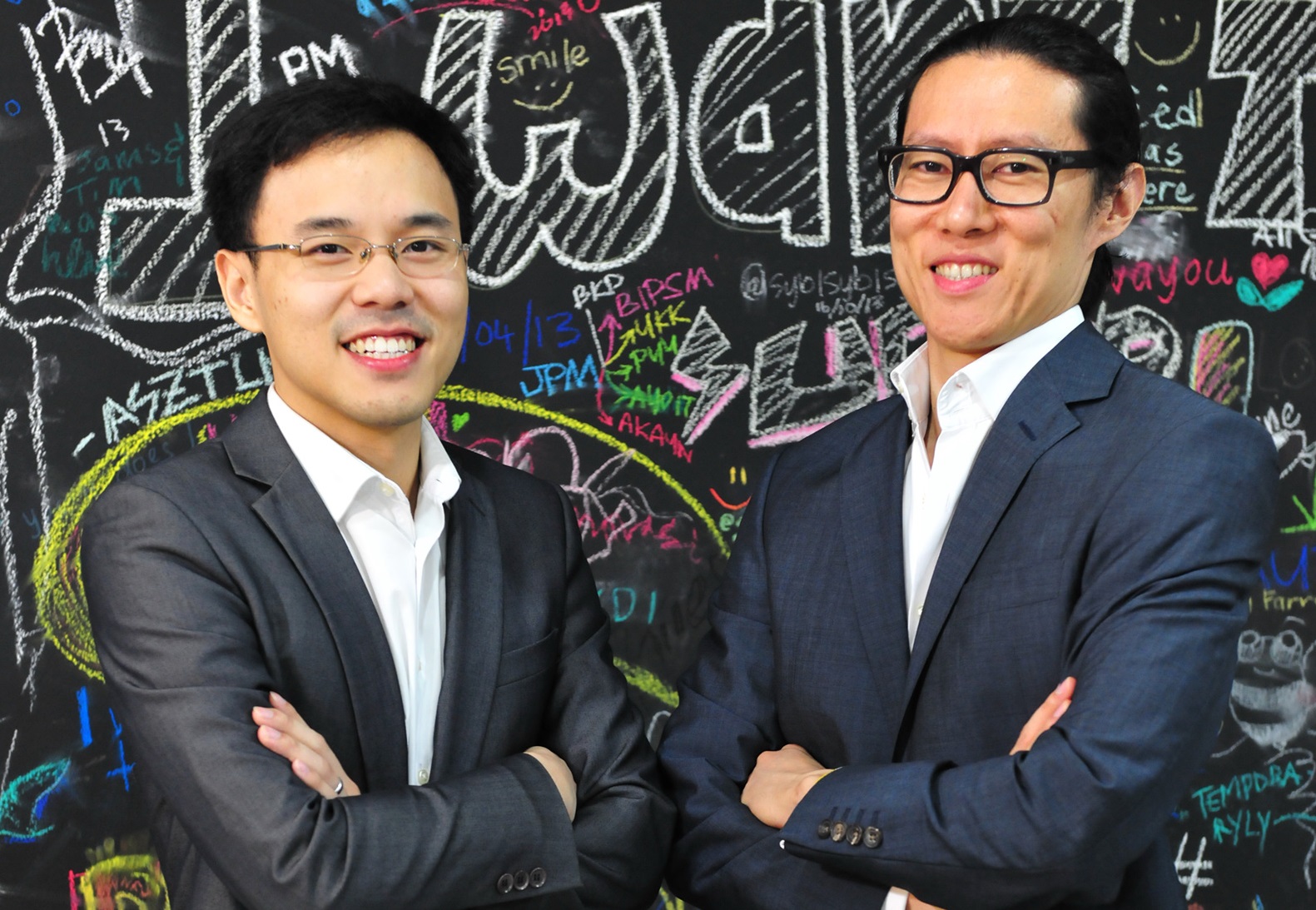
Siew’s own 2016 reflection gives a glimpse of the atmosphere inside the business. He credited a six-person founding team and described his role as maintaining shared belief while making experiments produce useful conclusions. His line on failure was unusually exact: You are better off failing with certainty than succeeding by luck.
He also found time to joke about a French technology chief reporting to an English operations chief, with their countries’ histories left tactfully outside the organisation chart. Ambition and a sense of the ridiculous could apparently occupy the same meeting room.
The name involved another practical negotiation. An investor offered a list of words with agreeable meanings in other languages. Jirnexu appealed because it was short, had an available dotcom, and meant “prosper” in Maltese. Even a statement of purpose, it seems, has to get past the domain registrar.
His investment interests extended beyond his own company. He backed StoreHub in 2014, drawn to co-founder Fong Wai Hong’s range of abilities, discipline, and leadership. Assessing a young founder called for a different judgement from scrutinising a listed company. There was less history to inspect and more confidence to place in a person.
“No one can do it alone.”
Yuen Tuck Siew, reflecting on the founding team in 2016
Capital, company, continuity
The venture rounds made that institutional work possible on a larger scale. In May 2018, Jirnexu announced an US$11 million Series B led by SBI Group, with SIG Asia Investments participating. At the time, the company said it served more than 30 financial service institutions in Malaysia.
Later that year, Experian led a separate US$10 million follow-on investment, bringing announced total funding above US$27 million. The distinction matters: these were two rounds in the same year. Experian also brought data and analytics capabilities aimed at improving the match between consumer profiles and suitable products.
SBI-led · May
Experian-led · December
US dollars. Company funding, not personal wealth.
The partnerships also reached consumers in other settings. In April 2021, Siew appeared at the launch of airasia money’s Financial Marketplace alongside AirAsia executives and Hann Liew. Financial comparison was being placed inside an app people already used for other purposes. The original question of access kept finding new entrances.
The founding team changed over time. In 2023, Liew and Ooi stepped back from daily leadership while remaining shareholders and board members. Siew continued as group CEO, supported by an executive team that included Barnes as COO. A company can outgrow its first arrangement without erasing the people who helped create it.
Then came CompareHero. In June 2024, Jirnexu announced the acquisition of MoneyHero’s Malaysian comparison business. MoneyHero would retain an equity interest in Jirnexu, turning a competing operator into an investor. Siew subsequently announced the acquisition himself, thanking the people on both sides who had made it happen.
The proposed consumer benefit was familiar: bring Jirnexu’s application technology and product recommendations to a wider audience. The two brands would continue separately. The transaction widened the reach of a process Siew had been trying to improve for more than a decade.
The numbers beyond the application
His public work also includes the annual RinggitPlus Malaysian Financial Literacy Survey. In his 2023 foreword, he argued for a definition of literacy that included protecting personal and financial information online. A service can make a transaction simpler while the surrounding digital world becomes harder to navigate.
By 2025, that conversation included savings and the gap between income and preparedness. On The Futurizts podcast, Siew discussed the 2024 survey’s finding that 48% of respondents earning more than RM10,000 a month were living paycheck to paycheck. As you earn more, it’s very hard to avoid lifestyle inflation,
he said. The observation punctures a comforting assumption that a larger salary will automatically arrange the rest.
In October 2025, he highlighted improved retirement planning among survey respondents earning below RM2,000 monthly: 55% said they had started planning, compared with 48% in 2024. The survey gathered more than 3,000 responses nationwide. These are findings from respondents, rather than a count of every Malaysian household.
A little more looking ahead
Recognition followed too: Tatler included him in its 2021 Asia’s Most Influential Malaysia list, and he was named among the Fintech Frontier Emerging 35 in 2025. RinggitPlus introduced its Bahasa Melayu offering in March 2025, another concrete way of making the service accessible.
The details give Siew’s ambition its shape. A history graduate becomes a banking analyst, returns home, and discovers a business in the frustrating interval between choosing something and getting it. Years later, the product range and company arrangements have changed. That interval still provides a useful test. When a person presses the button, does the next step actually work?