In January 2019, Ken Kodama’s company moved into a Tokyo office with four conference rooms. They were called Crypto, Wallet, Gerolamo Cardano and Ada Lovelace. Even the meeting invitations had a point of view. EMURGO had taken the top floor of a building in Akasaka, with space for community gatherings and a glass-walled conference room. A financial future that was supposed to be decentralized had acquired a very definite front door.
It is a useful place to begin with Kodama. His career has involved turning the language of a blockchain into things people can enter, download, learn and sometimes pay a dinner bill with. He founded EMURGO, Cardano’s commercial founding entity, and spent eight years as its CEO. Since April 2025, he has been its chairman. The work has produced tools and partnerships. It has also encountered the uncomfortable distance between promising financial access and sustaining people’s trust.
Before the wallet, a financial planner
Kodama’s first professional setting was traditional finance. He provided financial-planning services to personal clients before entering the cryptocurrency industry in 2013. His background puts a different emphasis on the story. Financial planning begins with someone else’s money and the question of what it needs to accomplish. In crypto, that question can disappear beneath the daily excitement of what the money happens to be worth.
His early account of the industry includes Mt. Gox, the Japan-based exchange whose problems became a national story. He recalled noticing that interest in Bitcoin kept increasing while established businesses were beginning to pay attention. The possibilities attracted him, even as the industry’s weaknesses were becoming visible. Opportunity and public distrust were already sharing a room.
He also met Charles Hoskinson. Their connection, as Kodama later described it, rested on a shared interest in useful applications for cryptocurrencies and blockchain. By 2015, he was involved in the Cardano project. EMURGO was established in Japan in 2017. Hoskinson’s presence is central to that history, but Kodama’s subsequent assignment had its own demands: finding commercial life for the network that the technical teams were building.
A company with a door to knock on
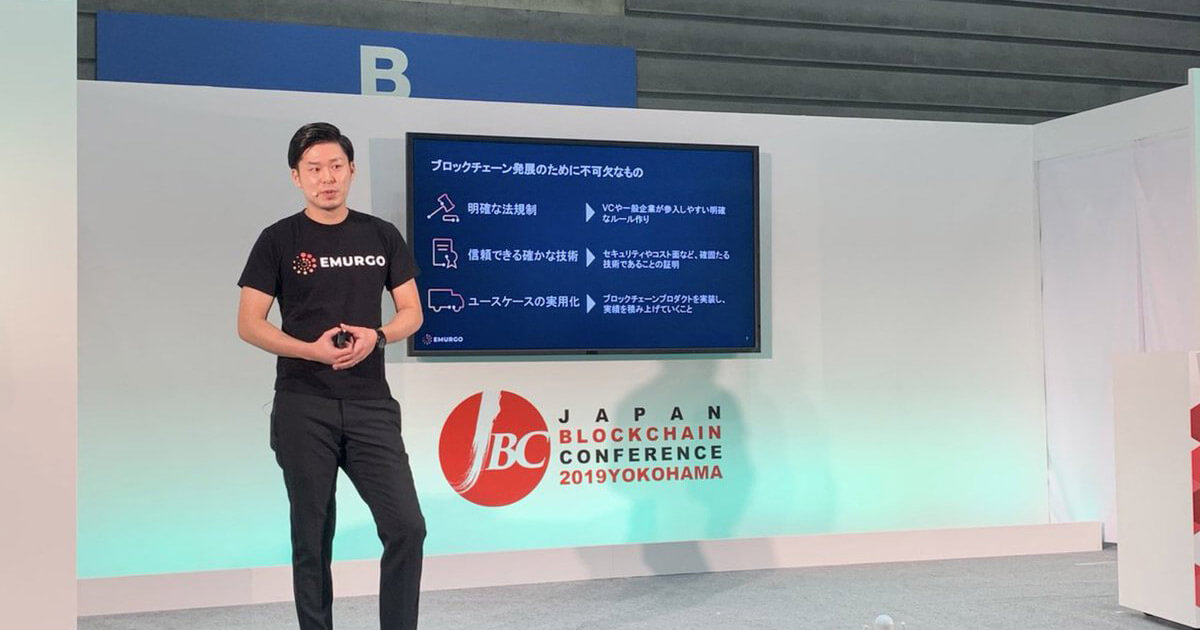
Cardano’s founding organizations had different responsibilities. Input Output handled technical development. The Cardano Foundation worked on the ecosystem’s standards and community. EMURGO pursued commercial adoption through products, investment, education and advisory work. The organizations were independent. A person could believe in the same blockchain while spending the working day on quite different problems.
For Kodama, those problems included how someone would hold and move ADA, Cardano’s native asset. EMURGO launched Yoroi Wallet in 2018. It subsequently developed Seiza, a tool for looking up blockchain transactions, and Tangata Manu, an open-source library for developers making wallets and explorers. There is a revealing progression there: give users access, help them see what happened, then give other builders tools to make more applications.
The office supplied a physical version of the same invitation. On June 10, 2019, EMURGO opened it for a showcase featuring partners and Hoskinson. Kodama’s introductory remarks covered regulation and consumer safety, alongside the community’s role in creating businesses. These are patient subjects for an industry with an occasionally impatient relationship to its own future. They also put a fairly conventional business concern at the centre of the project: people need reasons to trust what they are being offered.
- 2013Enters cryptocurrency
after financial planning - 2017EMURGO established
in Japan - 2018Yoroi Wallet
launches - 2025Becomes chairman
on April 16 - 2026TEAMZ lists him
as founder and chairman
Adoption has a dinner bill
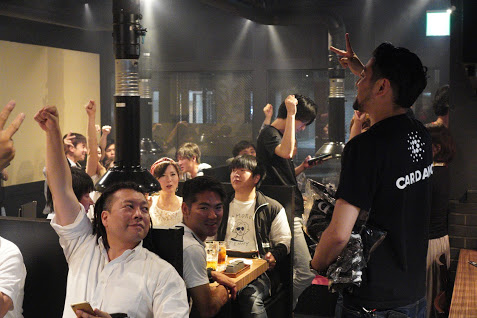
That summer, EMURGO took the argument to a place where the transaction came with a menu. In June 2019, it celebrated the introduction of ADA payments at Yakiniku Tamura, a barbecue restaurant in Osaka owned by comedian Kenji Tamura. Yoroi provided the wallet. The gathering included members of the local Cardano community and giveaways. Blockchain had found an evening engagement beyond the conference circuit.
A restaurant is a rather good editor of financial ambition. A customer has to pay. A merchant has to receive the money. Neither should need a seminar before the plates can be cleared. The setting made EMURGO’s commercial proposition legible: the asset should have somewhere to go after someone acquires it.
Other merchant initiatives followed, including businesses in Okinawa and a coworking space in Sasebo. These were specific experiments in acceptance. A launch event can establish that a payment is possible; habitual use takes considerably longer to establish. That distinction is essential to understanding Kodama’s record. The work demonstrates an effort to make ADA useful without turning every merchant announcement into proof that a new financial system has arrived.
The missing pieces
The shortage of useful applications had another side: someone had to know how to build them. EMURGO expanded education operations in India and Indonesia in 2019. In India, the academy’s initial offering included a 150-hour course, with small batches and a mixture of physical and online teaching. Such details bring the ambition down to the scale of a classroom, where a technology has to be explained rather than merely endorsed.
Education made commercial sense alongside investment. Developers could create applications; new ventures could give them a business. EMURGO also established the dLab accelerator in New York with SOSV. Kodama’s company was assembling several ways to address the same shortage, with different people responsible for each. A wallet alone could only do so much if the surrounding services never materialized.
Recruiting could be similarly conversational. Venture partner Kaimin Hu recalled being introduced to Kodama and chief of staff Shunsuke Murasaki by a friend in 2021. Several rounds of discussion followed, covering the industry’s direction, Cardano and business goals, before Hu joined EMURGO. It is a small episode, but a helpful one. Alongside the public announcements, the company was being made through introductions and repeated conversations. An ecosystem eventually requires colleagues, with calendars, responsibilities and their own reasons for taking the job.
By September 2022, the investment plans had acquired a substantial number. At TOKEN2049 in Singapore, Kodama outlined plans to invest more than $200 million of EMURGO’s capital in the Cardano ecosystem over three years, with $100 million earmarked for Africa. He pointed to lending and borrowing for daily use as a driver there. The figures described a proposed allocation. They are useful evidence of ambition; they do not establish how much was ultimately deployed.
Planned ecosystem investment over three years
In 2023, Kodama described a more diagnostic approach: EMURGO had identified 21 categories present in other leading blockchain ecosystems that it considered missing from Cardano. Decentralized identity and additional scaling infrastructure were among the examples. The proposed venture studio model would help fill those gaps through building and investment. Calling attention to what was absent gave the commercial mission a useful measure of candour. An ecosystem still under construction needs a list of unfinished jobs.
Eight years, then another chair
On April 16, 2025, EMURGO appointed Phillip Pon as CEO and announced Kodama’s transition to chairman. After eight years running the company, the founder was changing the distance from which he would work on it. EMURGO tied the handover to the completion of Cardano’s original roadmap milestones and its move into community governance.
“This transition allows me to focus on long-term strategy while supporting our broader ecosystem expansion.”
Ken Kodama · April 2025
The priorities accompanying Pon’s appointment were asset tokenization, stablecoins and wallet infrastructure. That month, EMURGO also described its integration with Kinka to support gold-backed tokens on Cardano. The commercial story was moving further into the relationship between familiar financial assets and blockchain infrastructure. Kodama’s former profession no longer looked so far away.
His investment work had another home as well. By the October 2025 Milken Institute Asia Summit, he was appearing as founder and CEO of Synapse Capital, a Singapore-based family office focused on long-term investment in emerging technologies and innovation. In April 2026, TEAMZ’s Tokyo summit still identified him as EMURGO’s founder and chairman. His advertised panel concerned Japanese companies moving blockchain projects from demonstrations into full implementation. The wording could have served as an agenda for much of his career.
Trust comes back to the desk
Then the wallet story changed. On April 22, 2026, EMURGO announced that Yoroi would evolve into SecondFi, expanding the wallet’s intended role in everyday financial activity. A security incident between June 21 and 23 was followed by a decision to cease operations. By October, the public instructions concerned moving remaining assets and a separate recovery process. The recovery tool launched on October 7.
Those developments make it impossible to tell the early wallet story as an uninterrupted march forward. They are also company and product events, with their own technical questions and responsibilities. They do not by themselves establish Kodama’s personal involvement in the failure. His chairman title supplies context, not a substitute for evidence about what happened.
For a career built around adoption, the reversal is consequential. Getting someone to use a financial tool creates an obligation that lasts beyond the moment of conversion. The practical questions become immediate again: access, reliability, understandable instructions and what remains available when a service ends.
Kodama arrived in cryptocurrency having worked with personal finances. He helped build a company that tried to take Cardano into classrooms, businesses and a restaurant. Now the record contains a handover, a family office and a wallet wind-down alongside those beginnings. The future of finance has a habit of returning to the ordinary concerns of the person whose money it holds. That is where the work becomes personal.