There was sourdough at the Chinese New Year party. Dato' Eric Cheng had baked it himself; his mother supplied the curry chicken. Around 500 guests gathered at his Singapore home in 2026, with lion dancers, a live band and Minister for Law Edwin Tong among those attending. The property entrepreneur had made room for the neighbours. A developer's house can advertise its owner's taste. On this occasion, it also had to accommodate a queue for dinner.
Cheng spoke about sharing his enjoyment and memories, and about the kampung spirit. The detail of the bread is appealing precisely because it is so domestic. Here was the co-founder and CEO of CapitalX, whose business life includes cryptocurrency exchanges and cross-border investments, contributing something that required flour, time and a kitchen. An investment portfolio tells you where someone puts their money. A party offers a different view of what they consider worth assembling.
“I like the kampung spirit.”
Eric Cheng, at his 2026 Chinese New Year gathering
Before the property keys, a cabin crew uniform
Cheng grew up in public housing in Singapore's Chinatown, the eldest of four children. He wanted to become a property developer, but the ambition came with a practical obstacle: capital. He spent more than eight years as a Singapore Airlines flight steward before entering real estate. The transition carried him from serving travellers to selling places where people might stay for decades.
His account of those early years gives service a place in the business story. Selling a home requires attention to the person buying it. A development has a life after the paperwork, too. Cheng has linked his emphasis on customers and after-sales care to his airline background. That is a useful connection to keep in mind as his career becomes more complicated: however elaborate the transaction, someone still has to experience the result.
The temptation with a career like this is to read the beginning as destiny. It is more interesting to see the sequence of jobs. He acquired experience in property sales, then built businesses around property, then expanded into investing. Each move involved a new set of decisions. The cabin crew uniform belongs in the story because it came before the keys.
A house worth buying at first sight
At a 1940s inter-terrace house on Makepeace Road, Cheng acted with the decisiveness he likes to claim for himself. He bought at the first viewing, signing the option without negotiating the price. The location in District 9 and the scarcity of transactions along the lane were part of his reasoning. The house became his first restoration project, with original wooden doors retained.
The episode is revealing because it combines an emotional response with a commercial observation. He liked the building and saw an opportunity in its location. Restoring the doors also put a limit on the urge to make everything new. An old house can retain something worth living with. A developer's intervention need not erase the evidence that somebody was there first.
For Cheng, Sevens Group offered a way to concentrate on bespoke landed homes. His stated ambition extended to his sons: he took them to building sites and hoped they might eventually carry the business forward. Those visits put the idea of succession into a setting where it could be understood. A family business looks rather different when there is an actual building to walk through.
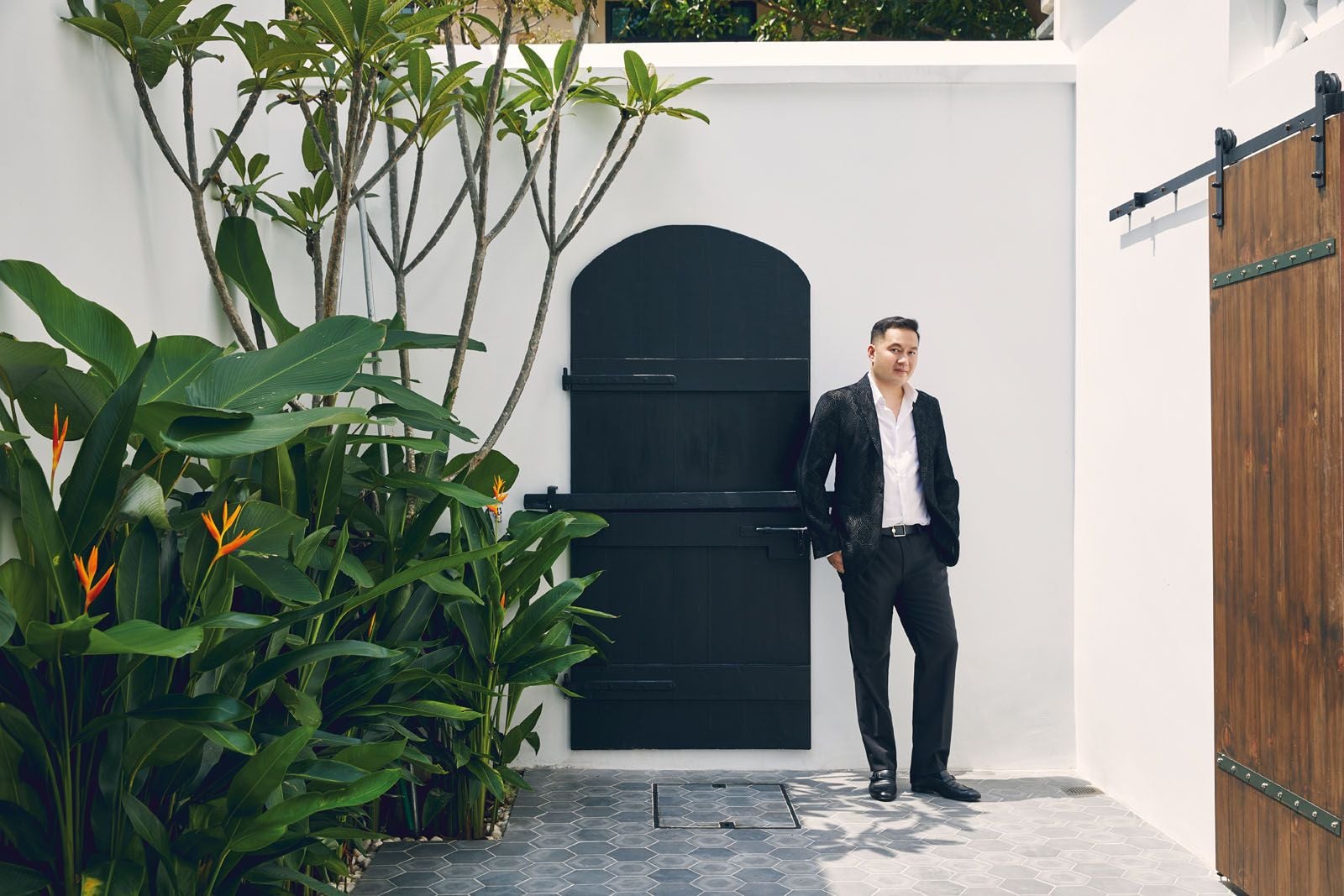
Seven, repeated until it becomes a signature
The name Sevens is personal. Seven is Cheng's favourite number, and the repeated sevens on his car plates make the attachment visible. Business naming is often an exercise in sounding larger than the founders. His approach keeps a small piece of preference in public view. A number has the additional advantage of being easy to remember, even if the houses require rather more explanation.
Today, Sevens Group describes a record of more than 150 completed landed developments and a combined gross development value exceeding S$720 million, across Singapore and Australia. These are company figures, measuring a property development record. Gross development value describes the value of developments; it should not be read as Cheng's personal fortune. The distinction matters when a business profile starts collecting large numbers.
The company's work brings together architects, designers and builders. That collaboration is a reminder of how many people stand behind a founder's signature. A preference can give a business its identity, but delivering a home takes coordinated work. The appealing name is printed first. The building has to earn the attention afterwards.
Sevens Group's published figures, checked October 2026.
The bookshelf beside the business
Cheng's books provide another record of his interests. Get Rich Through Property Investment appeared in 2009. Get Rich Through Business Leadership followed in 2010, and Get Rich Through Property Investment in Asia in 2013. The sequence moves from a particular asset to running a business and then to understanding a wider region. He was putting his experience into print while his own career continued to change.
The titles are admirably unembarrassed about money. Their practical subjects are less theatrical: preparing a purchase, choosing property, negotiating, dealing with agents and rental income. The regional volume addresses country differences and buying processes. A property investor can be attracted by a destination and still need to know how a transaction works there. The glossy ambition and the mundane checklist belong on the same shelf.
This part of Cheng's public life makes him an author as well as an executive and investor. It also adds context to the way he presents business. He has repeatedly offered experience as something that can be explained and passed on. Readers can assess the advice; the books themselves show an appetite for making the lessons public.
- 2009Property investment
- 2010Business leadership
- 2013Property investment in Asia
A different kind of exchange
In 2018, Cheng entered Japan's digital-asset business through BitTrade and its affiliated foreign-exchange business, FX Trade Financial. BitTrade was among the sixteen domestic cryptocurrency exchanges then licensed by Japan's Financial Services Agency. In September that year, Huobi Japan Holding agreed to acquire a majority stake in BitTrade. The change in ownership brought Cheng into a partnership with a larger international cryptocurrency group.
The interesting object here is an exchange: a business through which other people transact. It places an investor close to questions of access, operations and confidence. The transaction moved Cheng's public career beyond the physical properties with which he had been associated. A restored door and a regulated trading platform demand very different expertise. Both, however, have users whose experience depends on work they may never see.
The next February, he and ABCC co-founder Calvin Cheng led a consortium acquiring a controlling majority interest in ABCC. Eric's public statement emphasised strategic alliances and plans to expand the platform. There is a recognisable concern with relationships in that explanation. The partnership was part of the proposed machinery of growth, rather than a social detail added after the deal.
CapitalX gets into the workings
CapitalX links these investments to a broader technology business. A 2021 description of CapitalX Global identified holdings in blockchain, financial technology and augmented-reality start-ups, with Cheng as its sole director and shareholder. In a proposed joint venture for Custody Plus, CapitalX was expected to contribute technology knowledge, exchange experience and familiarity with regulation and licensing. The intended business was custody services for digital assets.
That proposal offers a concrete view of what the partner was being asked to do. Beyond investing, CapitalX would help with operating processes and requirements. Cheng's earlier Japanese exchange experience was relevant to those plans. The work involved understanding how a financial business functions inside a particular market, with its particular rules. Those details are less photogenic than an acquisition announcement, but they help explain why a partner might be useful.
Another relationship made the connection tangible. Cheng introduced ECXX to Hatten Land executive director Colin Tan, whom he had known for a long time. The subsequent due diligence included legal and financial review, staff interviews and an office visit. ECXX's platform integrated MyInfo for identity checks through SingPass. Together, these details show the practical work surrounding a digital-asset investment: introductions, scrutiny, identification and operations. The computer screen is only one part of the business.
Coffee enters the floor plan
Property and hospitality met in 2021 with Sevens Atelier and Sevens Cafe. The sales gallery and cafe occupied about 8,500 square feet across three two-storey shophouses in Joo Chiat. Show units and a dining space gave the group another way to introduce people to its work. A visitor could encounter a room as a customer, or arrive because breakfast sounded like a good idea.
Later that year, Sevens Kissaten opened in Tiong Bahru. Cheng was involved in its concept, describing the warm, orderly impression he wanted the place to give. His attention extended to the presentation of individual bowls. The business brought his interest in design down to the scale of a meal. A dining room is experienced at close range; the details sit in front of the customer.
The cafes make sense alongside the homes without needing to become a grand theory of everything. They show him working on another kind of inhabited space. Food also changes the rhythm of a visit. People have a reason to sit, look around and remain for a while. For someone whose career began in service and developed through property, that is an understandable experiment.
The neighbourhood comes round
By August 2026, Cheng was hosting another gathering. Sevens Group organised National Twilight outside his home, bringing neighbours, families, friends and business partners together for a National Day celebration. Singer and busker Jeff Ng led familiar songs. The gathering carried the same interest in the kampung spirit that Cheng had voiced earlier in the year.
His public interests include racing cars and travel, while his business roles span homes and financial technology. The neighbourhood events add a more local scale to that picture. An entrepreneur can work across borders and still have a street on which people recognise him. Opening a house for a celebration gives those relationships a place and an occasion.
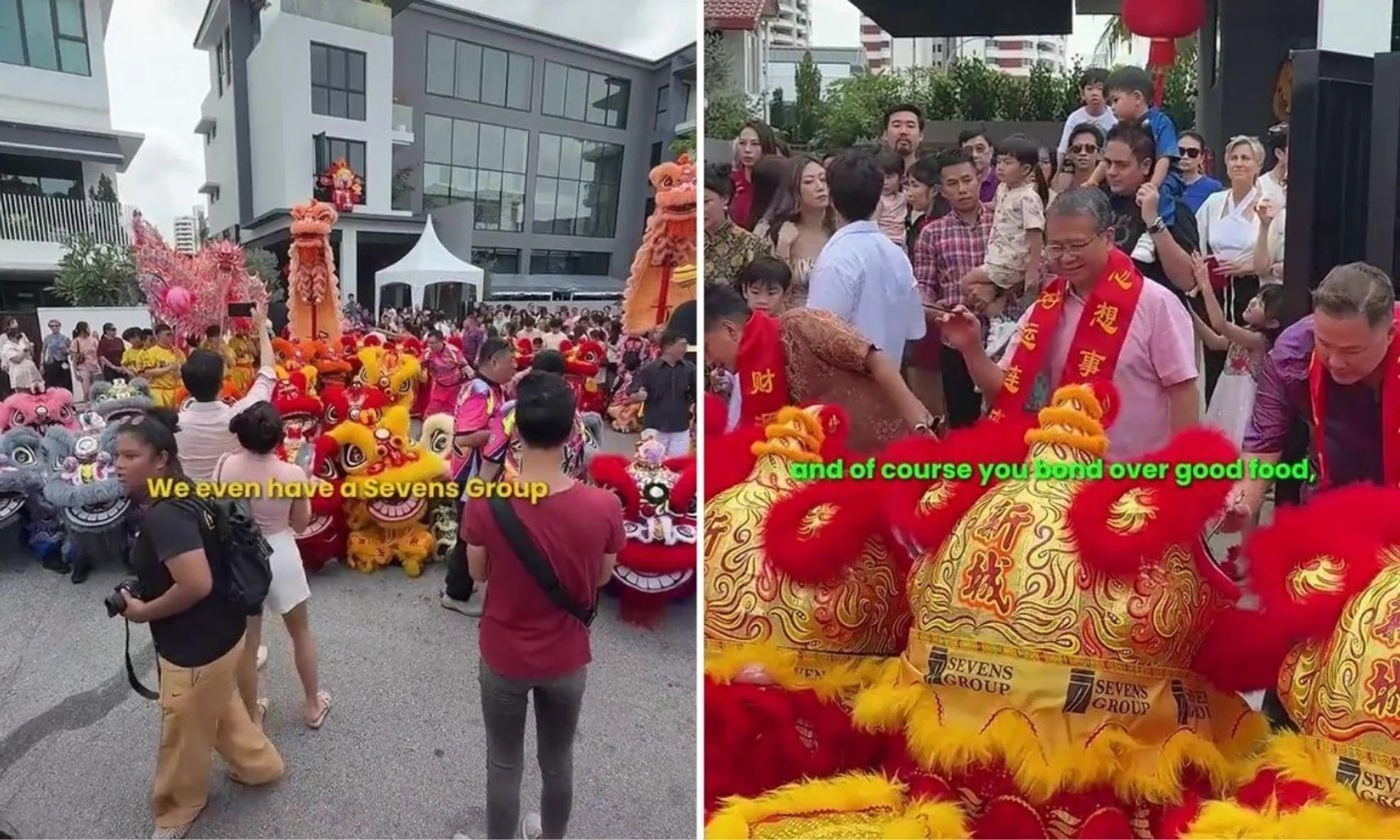
For a property developer, there is something pleasingly literal about this ending. The house does what a house can do: it holds people. The host has spent years selling, developing and investing, but a gathering asks a simpler question of the space. Can everyone come in? At Cheng's Chinese New Year party, the answer included bread from his own kitchen.