When Mo Shaikh was a boy in Brooklyn, his father drove a taxi. One day his father said he had made $100. Shaikh saw $60 reach home. The missing $40 had gone to intermediaries, an early and unusually concrete lesson in the plumbing of money. His father was the one who drove the car, yet other people took a turn at the meter. Decades later, Shaikh would tell that story while explaining why he cared about moving value more efficiently. A child’s arithmetic had become a founder’s question: what happens between the person who earns and the person who receives?
It is tempting to make a career seem inevitable after the fact. Shaikh’s has instead been a series of experiments, each with its own constraints. He tried to divide ownership of a Brooklyn building into tradeable digital pieces. He worked on Meta’s digital wallet, part of a corporate bet that eventually came undone. He then co-founded Aptos Labs and led it through big funding rounds, a blockchain launch and an international expansion. In December 2024, he left the CEO role. By the following October, he and three former Aptos colleagues had announced a $50 million fund. The scale changed; the question about access did not.
A city that teaches the price of a middleman
Shaikh grew up in Brooklyn, the son of Pakistani immigrants. His father drove a taxi; his mother kept the household running. He has described that upbringing as the reason he still cares about a more inclusive financial system. This is a particular kind of founder origin story: the first balance sheet was the family’s, and the lesson was visible before any business school classroom.
At Hunter College he studied economics, psychology and accounting, a combination that treats finance as both a ledger and a human habit. He later earned an MBA at the University of Rochester’s Simon Business School. His early career took him through KPMG, RBC Capital Markets, BlackRock and Boston Consulting Group. Those jobs gave him a view from the inside of the institutions that hold, price and move capital. The taxi question had acquired a vocabulary, and perhaps a few more columns in the spreadsheet.
The classroom offered an early sign that his interests were wider than a single market. At Simon, he was a regional finalist for the Hult Prize with NIA Nest, a blockchain idea aimed at reducing food waste in Pakistan. The problem was far from a trading screen: food had to reach people before it spoiled. That project did not become the company for which he is known, but it showed his preference for attaching technical ideas to ordinary shortages and tangible outcomes.
At BCG he spent time in Dubai; he later pointed to that experience when discussing payments across Asia and the Middle East. Money crossing a border can become an obstacle course of systems, fees and institutions. Shaikh did not have to invent a theoretical user for that problem. His family’s experience in Brooklyn had already supplied one.
“I knew this was the place that I wanted to be.”Mo Shaikh, on moving into blockchain
The first test had five apartments
In 2017, Shaikh moved into blockchain work at ConsenSys. The following year, Meridio, the venture he co-founded with Corbin Page, brought the rhetoric down to street level. Its pilot concerned 304 Troutman Street, a three-story, five-unit building in Bushwick. Eight existing investors were to receive digital tokens representing their shares, with trading between them and potentially with tenants. The promise was smaller than a new financial order and more useful as a test: could a property share move with less friction?
The building’s ordinariness was the point. It was not a gleaming tower or a metaphor in a presentation deck. It had tenants, owners, paperwork and an actual street number. Meridio proposed that the record of ownership could live on a blockchain while the person buying a small stake could use an interface that felt more familiar than the machinery underneath it.
The idea also invited hard questions. A faster trading system cannot decide who should own a neighborhood, or prevent bad information from entering a record. Critics of the pilot raised concerns about regulation, volatility and gentrification. Shaikh and Page argued that smaller stakes might widen participation; the local effects would depend on rules and on the people using the tool. That tension matters. A technology may lower a gate while still leaving the destination contested.
Brooklyn pilot
three-story building
in the property
Meridio gave Shaikh a working example of a theme he would pursue on a far larger stage: make a complex financial instrument behave like something a person can actually use. It was also a reminder that the product is never only software. It is property law, the preferences of owners and tenants, and the trust people place in a market they cannot see.
The project that survived its parent
Shaikh joined Meta in 2020 to work on strategic partnerships for Novi, its digital wallet effort. Avery Ching worked on the engineering side of the company’s blockchain ambitions. Their common project, Diem, had a vast corporate parent and an equally vast regulatory problem. By late 2021, the original plan was coming to an end. The two colleagues saw that the underlying work could continue outside Meta, and they formed Aptos Labs that year.
There is an almost literary neatness to the transition: a project designed inside one of the world’s largest technology companies became a new company’s starting material. But the practical task was less romantic. A network would need developers, applications, partners, capital and a reason for anyone beyond crypto’s inner circle to care. Shaikh took the CEO role; Ching brought deep engineering knowledge. One founder had to explain the opportunity across boardrooms and borders while the other helped build the system that was being promised.
Investors responded quickly. Aptos raised $200 million in March 2022 and another $150 million a few months later. Large checks did not settle the larger argument about what a new blockchain should do. The network launched into a market full of bold claims and vocal skeptics. The company also had to contend with the collapse of FTX, one of its investors. For a founder who talked about trust and accessible finance, crypto’s own institutions could be as complicated as the old ones.
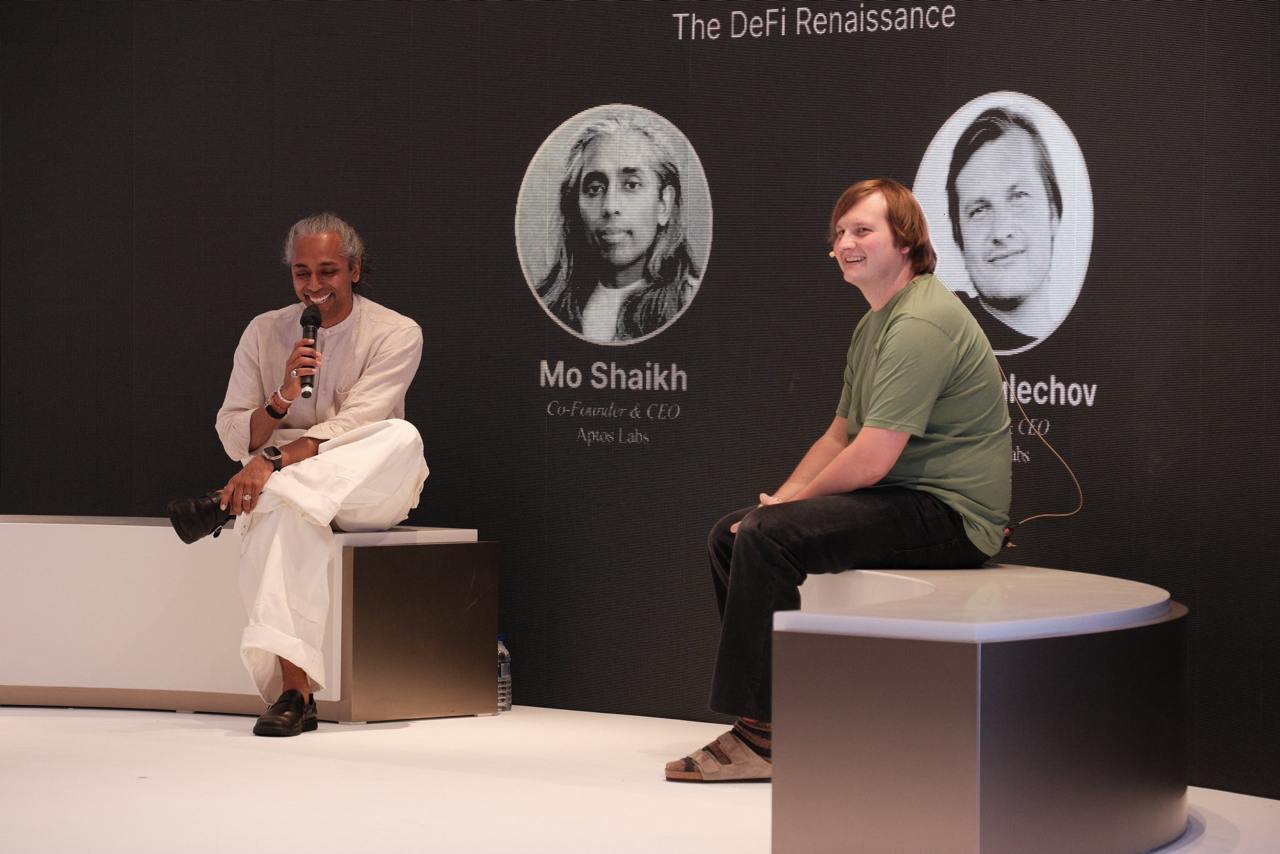
At its best, Shaikh’s pitch was about the dull but important work of making transactions fast and inexpensive enough that an application would not have to explain the chain beneath it. In a 2024 conversation during Korea Blockchain Week, he described a game whose on-chain actions had to feel immediate to a player. A delay of even a second or two, he argued, changes the experience. The engineering metric matters only because a person notices the pause.
He also made the case for looking outward. Aptos pursued relationships with major companies in the United States and Asia, including Microsoft, Google, SK Telecom and Lotte. In 2024, the company expanded into Japan through the acquisition of HashPalette. Shaikh discussed Asia’s varied payment systems and legacy infrastructure as reasons to build there, and he emphasized working with regulators as well as companies. The Brooklyn problem was now being asked across national payment rails.
The CEO leaves; the question stays
In June 2024, Shaikh joined the CFTC’s Digital Asset Markets Subcommittee, a place where the language of builders has to meet the language of market rules. Six months later he stepped down as Aptos Labs CEO, and Ching took over. Shaikh said he would remain a strategic adviser. There was no announced next company in that handoff. The next public chapter arrived in October 2025.
Maximum Frequency Ventures brought Shaikh together with Neil Harounian, Alexandre Tang and Jerome Ong, all former Aptos colleagues. The firm announced a $50 million fund focused on crypto companies. Shaikh said it had already invested $5 million in six startups by the time of the launch. Their stated approach was to work closely with founders, using experience in company building and international markets alongside capital. It is an understandable pitch from people who have been on the operating side of a large, closely watched blockchain venture.
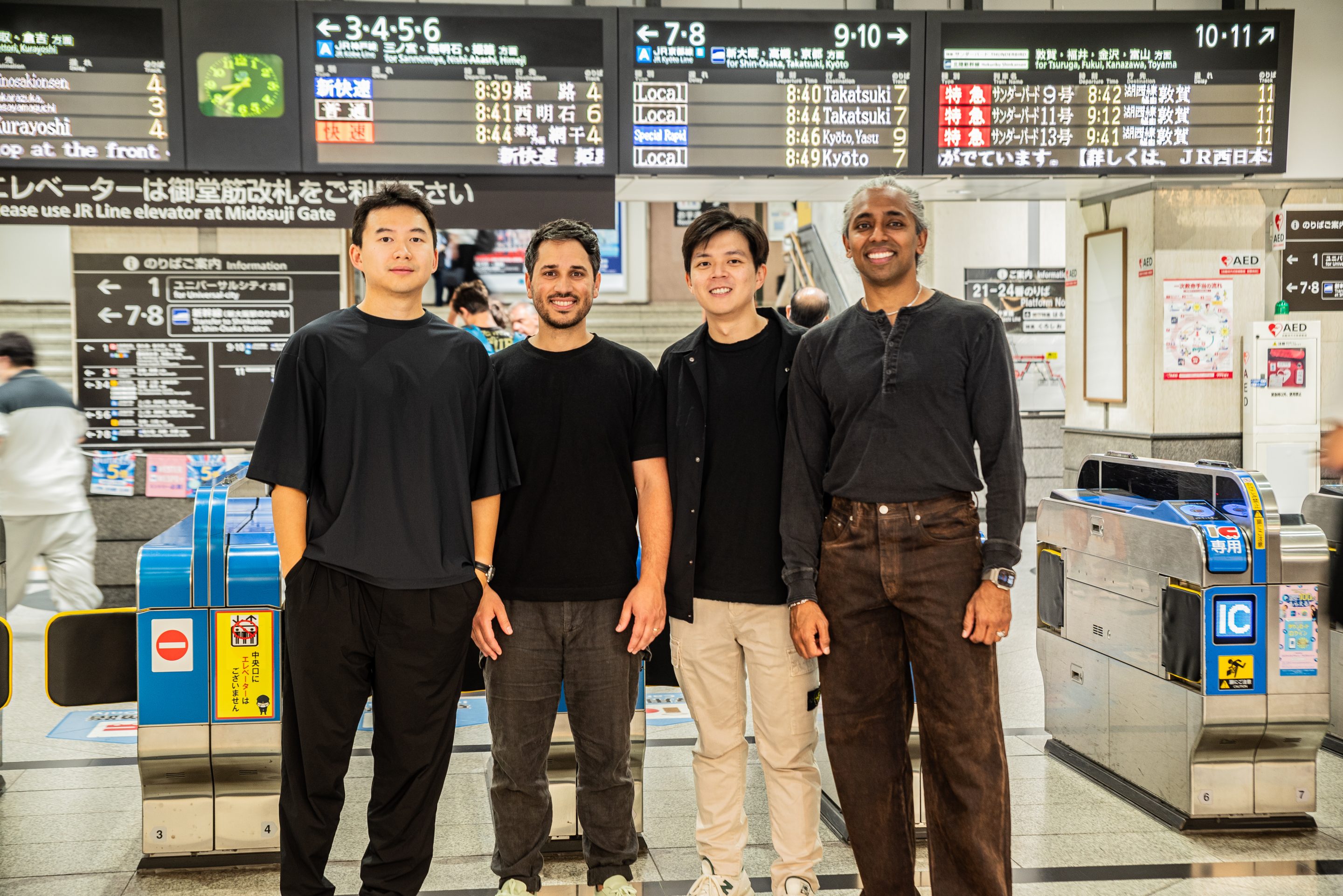
Asked about the name, Shaikh laughed at its deliberately cheeky initials. That flash of humor suits a founder who has spent years translating earnest financial machinery into language people might remember. The fund’s more serious proposition is that early ventures need help turning a technical possibility into a company that can survive contact with customers, institutions and geography.
His own site now describes his work as investing in and advising founders who turn crypto and AI into things people use. He continues to speak about financial market structure and the movement of money. Whether the new companies meet that standard will take time to see. Venture funds make promises in the future tense; products eventually have to perform in the present.
The missing $40 remains a useful measure. It asks who does the work, who collects the fee, and whether a new system changes the answer for the person at the end of the transaction. Shaikh has been a consultant, a builder, a CEO and now an investor. Those are different seats at the table. The old Brooklyn arithmetic still belongs on the page in front of him.