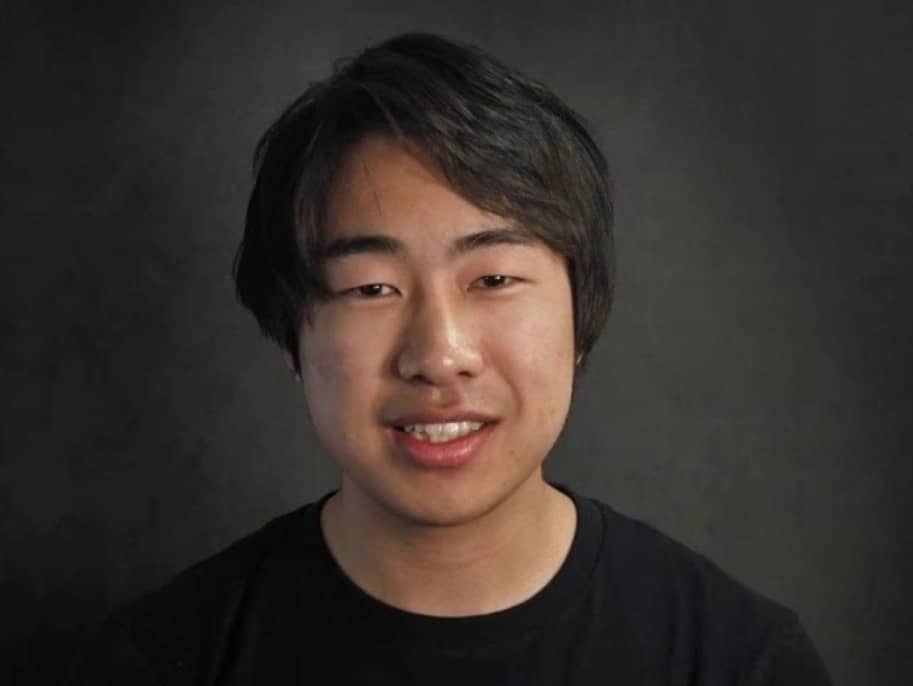
The Profile
A pitch, a chain, a policy seat.
The interesting thing about Sota Watanabe, as of mid-2026, is not that he has raised $63 million. That is a lot of money, but it is not, in the context of crypto fundraising, historically unusual. The interesting thing is who wrote the checks. SBI Group put in $50 million. Sony Innovation Fund put in $13 million. Both are pillars of Japanese finance and Japanese consumer technology, respectively, and neither is known for making speculative bets on 31-year-old founders. Watanabe got both of them into the same round.
He runs a company called Startale Group. Startale is a holding company. Underneath it sit several things: Astar Network, one of Japan's most recognizable Layer-1 blockchains, launched in 2019 as Plasm Network on Polkadot; Soneium, a joint venture with Sony that is intended to be a mass-market Layer-2 on Ethereum; and Strium, the network Startale is now scaling for tokenized securities and real-world asset trading. Startale also plans to issue two stablecoins, JPYSC and USDSC, and to launch something called SuperApp, which is meant to fold payments, asset management and onchain services into one product.
Crypto is no longer Bitcoin or Ethereum. It's about tokenizing traditional markets.
- Sota Watanabe, CCN interview
Watanabe was born in Kawasaki in 1995. He studied economics at Keio University, one of Japan's two most prestigious private universities, and then moved to San Francisco to study international business and English at San Francisco State's American Language Institute. He interned at Chronicled, a Silicon Valley blockchain startup, and worked as a blockchain researcher at the University of Tokyo. He returned to Japan and, in January 2019, founded Stake Technologies. Later that year, he founded Astar Network. He was 24.
The Astar bet was a specific one. Japan has a substantial retail investor population, a large enterprise software market, historically strict regulation of crypto, and, notably, a government that in 2022 began publicly declaring Web3 a matter of national economic strategy. Watanabe positioned Astar to be the local answer. He signed partnerships with Toyota, Mazda, Casio, Japan Airlines, Japan Railway, Fukuoka City, and Shibuya. He got Product of the Year from the Japan Blockchain Association in 2022. He was named to Forbes 30 Under 30 Asia the same year. In 2023, Newsweek included him in a list of the 100 Most Respected Japanese in the World.
By this point he had also become a fixture in Japanese Web3 policy. He serves as a task force member on the Trusted Web Promotion Council, a Japanese government body focused on digital identity and trust infrastructure, and as a director at the Japan Blockchain Association. He advises non-crypto companies including Dentsu, the advertising giant, and Marui, the retailer, and works with GMO Web3. This is unusual. Most crypto founders who court policymakers do so in reaction to enforcement actions. Watanabe has been doing it proactively for years, and in a country where those relationships take a decade to build.
My mission is to popularize Web3. Adoption is only at 3 percent of the global population. This is an incremental game, so we must bring the remaining 97 percent into this ecosystem.
- Sota Watanabe, Web3 Revolution podcast
The March 2026 Series A is the moment where the strategy becomes concrete. SBI Group is one of Japan's largest financial holding companies, with a securities arm that touches millions of retail investors, and it wants tokenized Japanese equities. Sony wants a consumer distribution channel for Web3 that is not owned by an American cloud company. Startale is being positioned as the pipe that connects both. The announcement language, echoed in the CoinDesk, Cointelegraph and Blockonomi coverage, is that the capital will be used to advance Startale's vertically integrated stack: Ethereum Layer 2 infrastructure at the bottom, stablecoin issuance in the middle, consumer-facing applications on top.
What Watanabe repeatedly says in interviews - the Astar Bulletin, PANews, Iolite, Web3 Revolution - is that the model does not work if the chain is treated as a self-contained financial casino. Astar's early advantage came from getting Japanese consumer brands onto the chain when almost no other Layer-1 had them. The Yoki campaign brought in Casio, JAL and Japan Railway. Toyota and Mazda have both explored applications on the chain. The corporate participation is not incidental. It is the point. In a country where individual crypto adoption is limited by tax treatment and cultural conservatism, the fastest path to scale runs through brands people already trust.
Startale itself is Singapore-domiciled, at 105 Cecil Street, which is standard for Web3 companies serving Asian markets. The commercial center of gravity, however, is Japan. Watanabe is listed as based in New York on some records - he travels heavily, and the company employs roughly 50 people - but the customer set, the regulatory conversation, and the strategic partnerships are all Japanese. In this sense, Startale is a Japanese company that has been engineered for global capital markets and Asian legal flexibility.
We're not just building a chain. We're building a movement, one that connects Web3 and Web2, culture and infrastructure, creators and users.
- Sota Watanabe, on Astar 2.0
The consistency is striking. Watanabe has been saying the same three things since 2020. Web3 has 3 percent adoption. Japan has an unusual opportunity to lead. The path is enterprise-plus-consumer, not retail-first speculation. What has changed is the size of the checks he can point to when he says them. In 2023, Sony invested $3.5 million into Startale Labs. In early 2026, Sony Innovation Fund put in another $13 million. In March 2026, SBI put in $50 million. Total funding across the group is now above $70 million, with $63 million of that coming in a single Series A.
The next question, the one every observer is asking, is whether the SuperApp launches on time, whether JPYSC gets regulatory approval, and whether Soneium can differentiate itself against Base and Optimism, the two dominant Ethereum Layer-2s. Watanabe has been public about the timeline for months. The Astar Bulletin interview in mid-2025 laid out the roadmap in detail. What is missing is not the plan. What is missing is the execution proof, and 2026 is when he has to deliver it.
A quirk worth noting: alongside the operating businesses, Watanabe also founded Next Web Capital, a small investment firm backing crypto founders. This is not the usual founder pattern. Most Web3 CEOs at his stage have narrowed to one thing. Watanabe has narrowed to a stack - infrastructure, protocol, product, capital - and refused to hand any layer off. Whether that is a strength or a liability probably depends on how the SuperApp launches. Ask again in 2027.