layer-1
(10)
The Foundation Building Solana - Then Trying to Get Out of the Way
Solana's Swiss nonprofit does not own the network. It funds public goods, nudges validators, courts institutions, and now builds practical rails for payments and AI - all while trying to make itself less essential.
The Blockchain That Handed the Keys to Its Own Community
A nonprofit built around a Turing Award winner's cryptography is doing something most crypto projects only talk about: giving up control on purpose.
Aleo Wants to Make Money Move Without Making It Public
Public blockchains turned every wallet into a glass bank account. Aleo is betting that programmable privacy - with disclosure on the user's terms - is the missing rail for stablecoins to enter payroll, aid and institutional finance.
The $6 Trillion Blockchain You Have Never Heard Of
It does not run a token you can buy on Coinbase. It runs the ledger under $6 trillion of tokenized assets - and Wall Street's biggest names are the ones building on it.
Stellar Development Foundation
The nonprofit behind Stellar wants to make moving money across borders as cheap as sending an email - and it has convinced MoneyGram, PayPal, and Franklin Templeton to help prove it.
Supra
Most Layer 1s rent their oracles, bridges, and randomness from other companies. Supra built all of it into one chain - and is betting 500,000 transactions a second that owning the whole stack beats gluing it together.

Sota Watanabe
Sota Watanabe is the founder and CEO of Startale Group, a Singapore-based Web3 infrastructure company backed by Sony and SBI. He is the founder of Astar Network, one of Japan's most recognized Layer-1 blockchains, and a central figure in Japan's push to bring tokenized stocks, JPY stablecoins, and onchain finance into the mainstream.
N1
N1 (formerly Layer N) is a high-performance Layer-1 blockchain built specifically for onchain finance at scale. Founded by DeFi veterans Dima Romanov, David Cao, and Sheheryar Parvaz, N1 pairs an ultra-low-latency, congestion-free execution layer with native financial primitives - an onchain orderbook, atomic transaction bundles, unified margining, and RFQ - so that trading applications that previously had to run offchain can run natively onchain. Every app runs in its own isolated environment with no state congestion, and developers can write smart contracts in TypeScript (with Python and other languages on the way). Backed by Founders Fund, Multicoin Capital, dao5, Kraken Ventures, and Arthur Hayes, the New York-based team is targeting the performance ceiling that has kept serious finance from moving onchain.
David Cao
David Cao is the co-founder and self-styled 'Chief Get Shit Done Officer' of N1, a Layer 1 blockchain built for finance that promises ultra-low latency and 100,000+ transactions per second. With co-founders Dima Romanov and Sheheryar Parvaz, he spent years building 01, a fully on-chain Solana derivatives exchange, weathered a two-year crypto winter, pivoted through Layer N, and relaunched the whole effort as N1 in December 2024. Backed by Founders Fund, dao5, Multicoin Capital and Arthur Hayes, the New York-based, Harvard-schooled builder is betting that congestion-free, developer-friendly infrastructure is the missing piece for moving real markets onchain.
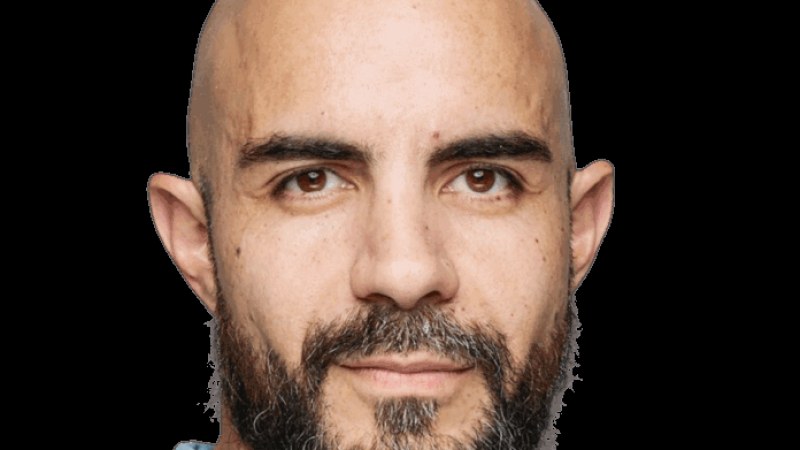
Ali Yahya
Ali Yahya is a General Partner at Andreessen Horowitz (a16z) where he leads the firm's crypto investing practice. A Stanford computer scientist and former Google Brain TensorFlow developer, he discovered Bitcoin in 2010 during security research and joined a16z in 2017 as its first full-time crypto investor. He has backed landmark bets including Solana and LayerZero, and is known for his deep technical thesis on privacy, zero-knowledge proofs, and the intersection of AI and crypto infrastructure. Off the charts, he runs a personal life operating system called walrOS built on 16 daily tracked habits and a spaced-repetition learning system.