Breaking
Harj Taggar: Oxford law grad turned YC Managing Partner Co-founded startup with the Collison brothers in 2007 - they went on to build Stripe YC's first-ever non-founder Partner, joining in 2010 Co-founded Initialized Capital with Garry Tan and Alexis Ohanian 1,000+ companies advised across 17 YC batches 20+ unicorns on his record: Coinbase, Instacart, Gusto, Benchling Triplebyte acquired by Karat in 2023 Harj Taggar: Oxford law grad turned YC Managing Partner Co-founded startup with the Collison brothers in 2007 - they went on to build Stripe YC's first-ever non-founder Partner, joining in 2010 Co-founded Initialized Capital with Garry Tan and Alexis Ohanian 1,000+ companies advised across 17 YC batches 20+ unicorns on his record: Coinbase, Instacart, Gusto, Benchling Triplebyte acquired by Karat in 2023
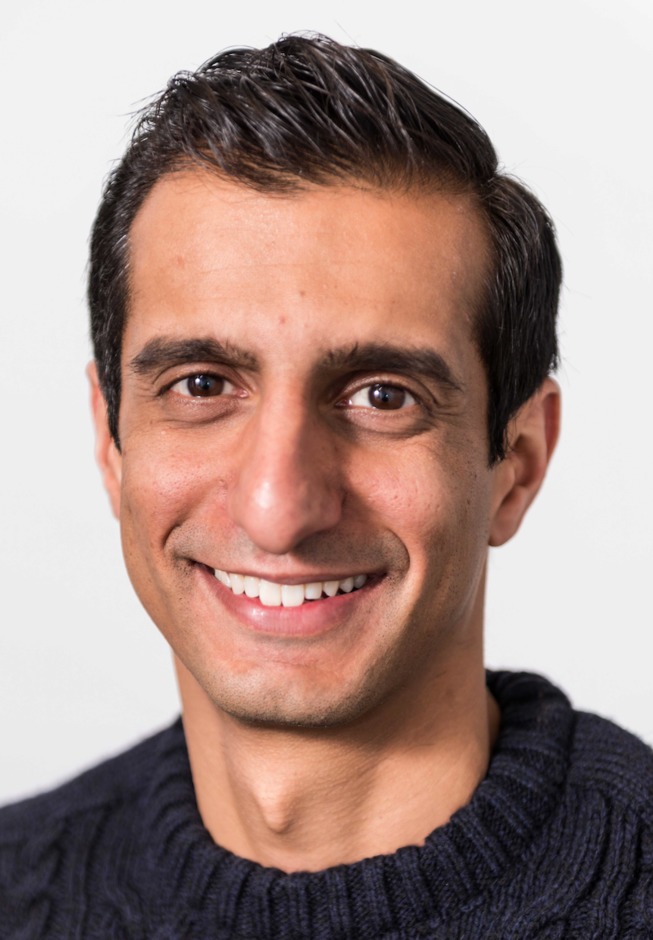
Harj Taggar - Managing Partner at Y Combinator
Y Combinator / Silicon Valley

Harj
Taggar

The man who left Oxford law, co-founded with the Collisons, and ended up running the world's most consequential startup school.

From Jurisprudence at Oxford to Managing Partner at Y Combinator - without practicing law for a single day. Harj Taggar's career is Silicon Valley's most elegant detour.

Founder Investor Y Combinator Oxford British
1000+
Companies Advised
20+
Unicorns
$3.2B
Initialized AUM
17
YC Batches Advised
5
Portfolio IPOs
$5M
First Exit (Auctomatic)
2007
Arrived in Silicon Valley

The Oxford Lawyer Who
Never Practiced Law

In 2006, Harj Taggar graduated from Oxford with a law degree and did something the Oxford careers office probably did not have a pamphlet for. He moved to California to start a company. He had no technical background. He had never shipped a product. He had no idea he was about to co-found a startup with the two people who would later build Stripe.

That startup was Auctomatic - a platform helping sellers manage listings across eBay and other marketplaces. His co-founders were his brother Kulveer Taggar and two Irish brothers named Patrick and John Collison. They applied to Y Combinator. They got in. Less than a year later, they sold the company for $5 million. The Collisons went on to build Stripe, now valued in the tens of billions. Harj took a different path: he went deeper into the machine that made them.

"YC changed my life in many ways. It's the reason I moved to San Francisco from England in 2007 and most of the best days of my career have been while working at it." - Harj Taggar

In 2010, Y Combinator asked Harj to join as a Partner. He was the first partner who had not founded the organization - a structural first for an institution that had until then been built entirely by its original team. He was 25 or 26, depending on which interview you trust. He spent four years helping build the machine that had built him.

Then he left to start again. Not because YC was bad - because the founder instinct was still there, demanding to be satisfied. In 2011, mid-tenure at YC, he co-founded Initialized Capital alongside Garry Tan and Reddit co-founder Alexis Ohanian. That fund now manages over $3.2 billion in assets and backed early positions in Coinbase, Instacart, Rippling, and Opendoor. Then in 2015, with two co-founders, he launched Triplebyte - a technical hiring platform that evaluated software engineers on demonstrated skill rather than school name.

Triplebyte's premise was blunt: the hiring process for engineers was broken. Too much weight on credentials, too little on code. The platform ran coding assessments and sent candidates directly to companies. By 2019, over 500 companies - including Adobe, Uber, and Dropbox - had hired more than 1,000 engineers through it. In 2023, Karat acquired Triplebyte, adding another exit to Harj's ledger.

Having a vision for your startup doesn't mean predicting the future, it means having a framework for making decisions quickly. Without this, you move too slowly and die through indecision or arguing internally.

- Harj Taggar

He returned to Y Combinator in 2020, first as Group Partner and eventually as Managing Partner. By that point he had sat on both sides of the table - the founder's chair and the partner's chair - multiple times. That dual perspective is rare. Most investors were never founders. Most founders never became investors at the scale Harj has operated. He has advised over 1,000 companies across 17 batches and watched more than 20 of them reach unicorn status.

There is a term Harj uses when he talks about second-time founders: "Second-Time Founder Syndrome." The theory is clean and quietly devastating. Experienced founders, having seen the startup world up close, start filtering ideas through the wrong lens. Instead of asking what problem they genuinely want to solve, they ask what idea sounds impressive to other founders. They optimize for approval from the room rather than truth from the market. The best ideas rarely look like the best ideas at first. That's the whole problem.

His own career is a demonstration of the opposite. Auctomatic did not sound like a billion-dollar idea. Triplebyte did not sound revolutionary. Neither did investing in a cryptocurrency exchange in 2012 when the word "crypto" still prompted confused expressions at dinner parties. And yet: Coinbase, Instacart, Rippling. The list keeps growing.
The YC Impact
by the Numbers

Companies Advised
1,000+ companies across 17 batches
Unicorn Portfolio
20+ companies reaching $1B+ valuations
Public Exits
5 companies gone public
Initialized Capital AUM
$3.2B in assets under management

The math on Harj Taggar's career is uncomfortable in the best possible way. He started with a $5M exit. He co-built a fund that grew to $3.2B. He helped advise the companies that built the internet's infrastructure for grocery delivery, payroll, and crypto.

Each chapter compounds on the last.

$5M First exit, age ~24
$3.2B Initialized Capital AUM

The Long Game,
Year by Year

2006
Graduated from Oxford with a law degree. Moved to Silicon Valley instead of practicing law.
2007
Co-founded Auctomatic with brother Kulveer and Patrick and John Collison. Accepted into Y Combinator's inaugural batches.
2008
Auctomatic acquired by Live Current Media for $5 million - in under a year of founding.
2010
Joined Y Combinator as a Partner - the first non-founder partner in YC's history.
2011
Co-founded Initialized Capital with Garry Tan and Alexis Ohanian (Reddit).
2013
Initialized Capital raised $39M for its initial fund. Early bets included Coinbase and Instacart.
2015
Co-founded Triplebyte with Ammon Bartram and Guillaume Luccisano. Went through YC S2015.
2018
Triplebyte raised a $10M Series A as it expanded hiring across top tech companies.
2020
Returned to Y Combinator as Group Partner.
2023-2024
Triplebyte acquired by Karat. Harj elevated to Managing Partner at Y Combinator.

What Harj Taggar Thinks

"Do the thing that makes sense to you. Do the things that address the problem that you feel you want to solve, not the problem that you think other people think is cool to solve."

On Idea Selection

"Having a vision for your startup doesn't mean predicting the future, it means having a framework for making decisions quickly. Without this, you move too slowly and die through indecision or arguing internally."

On Startup Vision

"It's what I call the Second-Time Founder Syndrome... you've seen all of these ideas, and so you really want to obviously work on the one that's going to be a huge success."

On Experienced Founders' Traps

"Big changes always create opportunities to find new startup ideas."

On AI and New Opportunities

The People in
His Orbit

Patrick Collison

Auctomatic co-founder who went on to build Stripe. One of the most consequential founder partnerships in Silicon Valley history started in a YC batch.

John Collison

Patrick's brother and Auctomatic co-founder. Together the Collisons built Stripe into one of the world's most valuable private companies after their shared exit.

Garry Tan

Co-founder of Initialized Capital. Now President of Y Combinator. Two former YC partners who built a fund together and both returned to run the institution.

Alexis Ohanian

Reddit co-founder and third co-founder of Initialized Capital. The fund's early portfolio now includes some of Silicon Valley's defining companies.

Paul Graham

YC's founder saw something in Harj that led to the first non-founder partnership offer in YC history. Their relationship shaped Harj's career arc.

Kulveer Taggar

Harj's brother and original co-founder of Auctomatic. A family partnership that launched two careers in the Valley.

The Triplebyte
Bet

When Harj left YC in 2015 to co-found Triplebyte, he was not solving an abstract problem. He was solving one he had lived. At Auctomatic, he had been the non-technical co-founder who had to learn to code under pressure when YC suggested one of them should. The traditional hiring process - résumé screening, credential-checking, phone screens anchored to alma maters - had never had much room for someone like him.

Triplebyte inverted the stack. Instead of filtering by where you went to school, the platform filtered by what you could do. Engineers took a coding assessment. Companies hired from the results. The credential noise was removed from the initial signal.

Within a few years, 500+ companies were using it. Engineers who had never made it past a recruiter's résumé screen were getting offers from Adobe and Dropbox. The model worked. In 2023, technical hiring platform Karat acquired Triplebyte, validating the thesis that skills-based hiring was not a niche concern but a market.

The best ideas never really look like the ones that were going to be the best ideas. That's the whole trap.

- Harj Taggar, on Second-Time Founder Syndrome

The Triplebyte arc is instructive because of how mundane the insight sounds in retrospect. Of course you should hire people based on skill rather than credentials. Of course the résumé-first process misses talent. Of course there are excellent engineers who did not attend Stanford. The insight is not surprising. What is surprising is how slowly the market moved on it - and that Harj moved first.

Back at YC as Managing Partner, Harj brings all of it: the founder experience, the investor lens, the specific knowledge of what it feels like to learn to code under pressure, the perspective of someone who built a hiring platform and watched the other side of the table for years. YC batch after batch, he sits with founders earlier in their career than he was when he had his first exit.

What he tells them now is consistent with what his own career demonstrates: work on problems that feel real to you. Do not optimize for approval. The best startups never sound impressive until they are. And the only way to be in the room when the best ones launch is to be honest about which problems actually matter.

The Side of Harj
Most Profiles Skip

⚖️

He has a law degree from Oxford and has never used it. He moved directly from graduation to Silicon Valley. The jurisprudence training shows up in how he thinks about founder decision frameworks - not in any courtroom.

💳

Before Stripe made Patrick Collison a household name in fintech, Harj and Patrick were building Auctomatic together - a marketplace tool that paid out before Stripe existed to handle the payments.

💻

When YC suggested Auctomatic needed a technical co-founder, Harj - who had a law degree - taught himself to code. That experience directly shaped his conviction that skills, not credentials, should define hiring.

🏦

He co-founded Initialized Capital with Garry Tan and Alexis Ohanian before either became the YC president or the cultural figure they are today. An early bet on two founders who themselves became investors.

YC didn't believe in crypto when they funded Coinbase in 2012. Harj backed the bet anyway. He later became YC's designated crypto lead as the space grew into one of the decade's defining financial movements.

📝

He coined "Second-Time Founder Syndrome" - the trap where experienced founders optimize for what sounds impressive to their startup-world peers instead of what they genuinely want to solve. He wrote and talks about it openly.

Harj Taggar On Camera

Share This Profile

Profiles & Resources