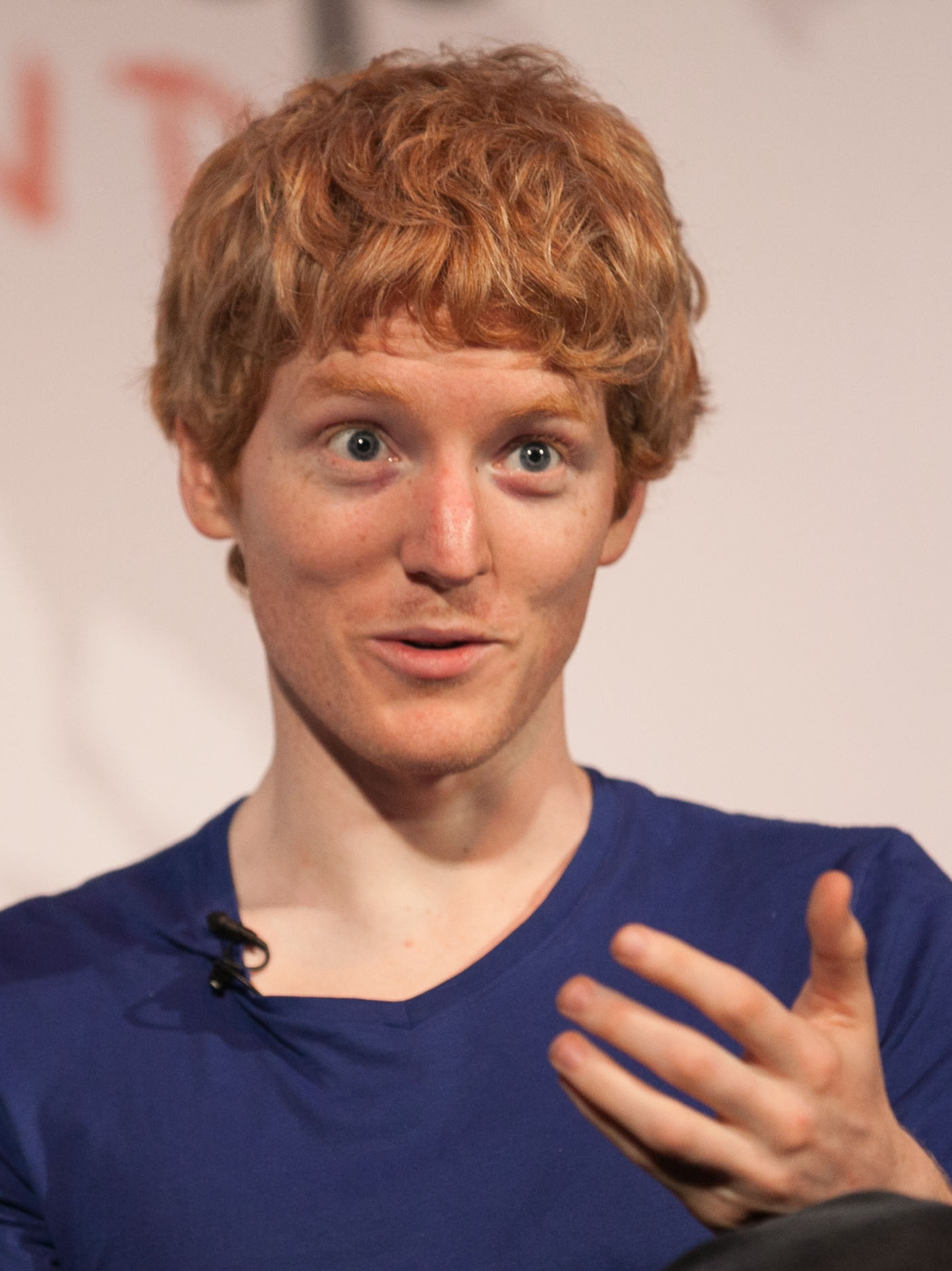
Today, Patrick is the CEO of Stripe, a company that makes moving money online as simple as sending an email. But the interesting part isn't the $91.5 billion valuation or the fact that he became the world's youngest self-made billionaire at 28. It's that he grew up in Dromineer, County Tipperary - a village so small and remote that the internet connection was essentially decorative. When the Collison brothers wanted to learn about computers, they rode to the library in Nenagh and read books. Physical books. About the internet.
At age 8, Patrick took a computer course at the University of Limerick. At 10, he was programming. At 16, he created Croma, a LISP-type programming language, and won Ireland's Young Scientist and Technology Exhibition. President Mary McAleese handed him a €7,500 cheque and a Waterford Crystal trophy. Most 16-year-olds would frame the cheque. Patrick cashed it and kept building.
The Pattern Starts Early
At 18, Patrick co-founded Auctomatic with his brother John. A year later, they sold it for $5 million. Do the math - most teenagers are figuring out college applications. Patrick was negotiating acquisition terms. He enrolled at MIT in 2007, dropped out in 2009, and by 2010 had co-founded Stripe while on holiday. The prototype was hacked together by two brothers who had never worked with merchant gateways or financial systems. Patrick was 21. John was 19.
Silicon Valley investors looked at these Irish kids with a payments demo and saw either genius or delusion. Turned out to be the former. In 2011, Stripe raised $2 million from Elon Musk, Peter Thiel, Sequoia Capital, and Andreessen Horowitz. By 2016, the Collison brothers were billionaires. By 2025, Stripe was valued at $91.5 billion.
Beyond Payments - The Science of Progress
Here's where Patrick gets interesting beyond the unicorn startup narrative. In 2019, he co-founded Progress Studies with economist Tyler Cowen - an entire academic discipline dedicated to understanding what cultural and institutional conditions lead to human advancement. It's the kind of moonshot thinking that emerges when you've already solved online payments and are wondering what's next.
Then COVID hit. In 2020, Patrick and Tyler launched Fast Grants. Traditional research funding takes 12-18 months. Fast Grants distributed money in 48 hours. Applications took 30 minutes to fill out. The program gave out over $200 million to COVID researchers, proving that bureaucracy is a choice, not a requirement.
In 2021, he co-founded the Arc Institute with $650 million in funding, partnering with Stanford, UC Berkeley, and UCSF to accelerate biomedical research. The pattern is clear - Patrick builds infrastructure. Sometimes it's financial infrastructure (Stripe). Sometimes it's institutional infrastructure (Arc Institute, Fast Grants). Sometimes it's intellectual infrastructure (Progress Studies, Stripe Press).
The Bitcoin Meetup Story
In fall 2010, Patrick read the Bitcoin paper and organized a meetup in Palo Alto. He spent $100-150 on food. If he'd bought Bitcoin instead, that money would now be worth millions. Patrick's response? He laughs about it. He never bought any Bitcoin. Some people optimize for every financial decision. Patrick optimizes for building things that matter.
The Paul Graham Patience Test
At 16, Patrick emailed Paul Graham asking to meet. Graham agreed but had to step away during their café meeting. Patrick sat there for two hours, reading a book, until Graham returned. That's not patience - that's conviction. He knew the conversation was worth the wait.
The Family Business
Patrick's parents are an electronic engineer and a microbiologist. His brother John co-founded Stripe with him. His brother Tommy is also in tech. The whole family flies light aircraft across oceans for fun. When John tweeted about flying a Diamond DA42 across the Atlantic, he called it a "bucket list" item. Normal families have different bucket lists.
The Reading List
Patrick publishes every book he reads on his website. He maintains a list of questions he ponders. He supports Stripe Press, which publishes books on technological and economic progress. His email (patrick@collison.ie) is publicly listed. He's skeptical of "founder mythology" and Silicon Valley narratives. He enjoys disagreement and rigorous debate. He's building in public while thinking in decades.
The Career Arc
What Patrick Believes
Patrick is skeptical of going public. "Being a public company certainly doesn't stop you from taking a really long-term time horizon, but it does make it more difficult." Stripe remains private at a $91.5 billion valuation. He has issues with "the mythology of the founder" - the Silicon Valley tendency to worship individual entrepreneurs instead of systems and teams.
On culture: "The main mistakes that companies make are being too precious about it, being too apologetic about it, and not treating it as dynamic and subject to revision." Culture isn't a museum piece. It evolves or it dies.
In January 2026, speaking at the Stripe Young Scientist Exhibition (the same competition he won 21 years earlier), Patrick told students: "We live in a volatile world and businesses need to be more adaptable than ever." Then he added: "The standard of your projects is extremely impressive and you are going to accomplish incredible things in the years to come."
That's Patrick - looking backward at where he started and forward at what's possible, all while building the infrastructure that makes both journeys easier for everyone else.
The Current Mission
Patrick is running Stripe, co-leading Arc Institute, supporting CA YIMBY's housing reform efforts, backing Stripe Climate's carbon removal coalition, publishing through Stripe Press, and maintaining Progress Studies. His net worth sits around $9-10 billion, primarily from his 12% stake in Stripe. He lives in California but maintains deep ties to Ireland.
In April 2026, he discussed with OpenAI's Sam Altman a "parabolic rise" in new firm creation, noting that "something as far as we can tell really has changed over the last couple of months." The internet's GDP is expanding. Economic growth is accelerating. New tools are enabling new businesses at unprecedented rates. And Stripe is the infrastructure making it possible.
Patrick's aspirations, according to those who know him, center on accelerating economic growth, scientific progress, and technological advancement globally. Through Stripe, he's increasing the GDP of the internet. Through Progress Studies, he's trying to understand what makes civilizations advance. Through Arc Institute and Fast Grants, he's reforming how science gets funded. Through CA YIMBY and Stripe Climate, he's tackling housing and climate as infrastructure problems.
What Makes Patrick Different
Most billionaire CEOs talk about changing the world. Patrick just builds the infrastructure and sees what people do with it. Stripe doesn't tell businesses how to use payments - it makes payments invisible so businesses can focus on what they're building. Fast Grants didn't tell researchers what to study - it removed the funding bottleneck and let science move at the speed of science.
He's intellectually curious to the point of publishing his reading list online. Patient enough to wait two hours for a meeting at 16. Collaborative enough to build Stripe with his brother John and keep that partnership thriving for 15+ years. Long-term enough to stay private at a $91.5 billion valuation because going public "makes it more difficult" to think in decades.
And he still remembers what it's like to learn about computers from library books because your village internet doesn't work. That kid from Dromineer, County Tipperary, who took a computer course at age 8, is now building the financial infrastructure for the internet. The trajectory is clear. The work continues.