Harbinder Khera was cleaning his desk when an earlier version of his working life turned up. There was a newspaper clipping dated September 28, 2003, concerning Pittsburgh businesses that had survived the dot-com collapse. Mindmatrix was among them. The date was his birthday. More than two decades later, he was looking at the evidence of a company that had stayed in the conversation long enough for the conversation to change.
Entrepreneurship has a fondness for the next thing. A desk, being less susceptible to fashion, sometimes supplies the previous thing. Khera’s discovery put the distance between them in his hands: the dot-com years, the intervening reinventions, and the current prospect of building with artificial intelligence. He has a name for the disposition he brings to that prospect: “cynical optimism.”
It is an economical phrase. Optimism supplies a reason to begin; cynicism might at least remember to read the contract. For Khera, the pairing makes an apt introduction to a career spent helping companies coordinate people, information and selling. He founded Mindmatrix in February 1998. He remains its founder and CEO, still working on the stubborn distance between having useful technology and persuading people to use it.
The four o’clock classroom
One of the clearest memories Khera has shared begins before the degrees and the business. His mother woke him at four in the morning to study. She sat beside him and prayed. She had never attended school herself. His parents came from a small village in Punjab, India; the lesson he remembers receiving from her was the importance of education and hard work.
There is an intimacy to that account which a professional biography seldom accommodates. Education appears on a résumé as an institution and a qualification. Here it begins with somebody keeping company with a child in the early morning. The person who could not offer her own classroom experience was determined to make room for his.
Years later, Khera described dedicating a 110,000-square-foot facility in India to his parents. He connected it to plans to hire and train more than 1,000 people for services, support, and research and development across his businesses. The ambition was a continuation of their example through learning and employment. The size is striking; the dedication makes it personal.
The facility in India Khera dedicated to his parents. He described training and hiring as part of its intended purpose.
An engineer follows the connections
Khera’s education took him through electronics and instrumentation at Devi Ahilya Vishwavidyalaya, then graduate study in the United States. He earned a master’s in computer engineering at Florida Atlantic University and another in information networking at Carnegie Mellon. His technical background includes conference research and presentations on wireless and high-speed networks. The eventual software executive had spent time thinking about how things connect.
His consulting work brought him into the orbit of companies including Southwest Airlines, IBM, Siemens, Citibank, Nationwide Insurance and Sprint PCS. Those names describe the range of organizations in his professional background; they should not be mistaken for a list of Mindmatrix customers. Consulting and building a company are different engagements with the same practical question: how does an organization get its machinery and its people to work together?
At Mindmatrix, the initial focus was solution selling for manufacturers, their channel partners and their own sales teams. A channel partner is a separate business helping another company reach a customer. The arrangement can multiply a company’s reach. It can also multiply the number of places where a useful piece of information goes missing.
Mindmatrix begins
Solution selling
CRM recognition
Connected sales tools
GTMOS introduced
AI and daily workflows
Selling has a coordination problem
By 2019, Khera’s work had earned him a place among CRM magazine’s three Influential Leaders. The recognition concerned a fairly specific proposition: bring marketing, operations and selling into a connected platform. Mindmatrix combined partner relationship management, marketing automation and sales enablement for both direct and indirect channels. The small word “and” was doing considerable work.
The product details help explain why. Integrations connected customer relationship records with calling, social platforms, email and print marketing. An opportunity recommendation feature could draw on earlier opportunities, a user’s own history and associated contacts. These are attempts to give a seller useful context while giving a manager a clearer picture of what is happening.
Sales software has a natural tendency to accumulate nouns: assets, opportunities, contacts, campaigns. A seller has verbs to worry about: call, explain, follow up, close. Khera’s platform approach concerns the passage between the two. Information has to arrive in a form that helps somebody decide what to do next. A collection of capabilities can look impressive on paper while leaving that passage surprisingly awkward.
His own writing shows that interest extending beyond channel software. In a 2014 essay on big data in retail, Khera explored how information could improve customer interactions across sales channels. One example concerned hotels responding to a guest’s complaint on social media. The point was the response that followed the information: somebody noticed, understood the problem and offered a useful change. It is an earlier expression of a question that still runs through his work. What does the data let a person do for another person? A business can collect a great deal and still leave its customer waiting.
The work after the purchase
Khera’s account of business also includes a less fashionable word: care. He connects that care with a sustained commitment to doing the work properly. The company’s service philosophy includes unlimited support. Its proposition extends beyond providing software to helping customers work through the complexity around it.
“It takes a long-term commitment to care and doing things right.”
Harbinder Khera
That commitment sounds modest until one considers the alternative workload. A customer has colleagues to train, habits to change and an existing business to keep running. Every new tool joins a household already full of tools. It may be welcome, but somebody still has to explain where everything goes. Service is where a vendor discovers whether the promised convenience survives contact with Tuesday afternoon.
Khera’s conversations with Sunny Kaila, founder and CEO of IT By Design, occupy this practical territory. Their Sunny’s Silver Linings interview covers leadership values, organizational culture, changing sales and marketing roles, customer engagement and what happens after a business decides to hire a marketer. These are operating questions, with people attached to them.
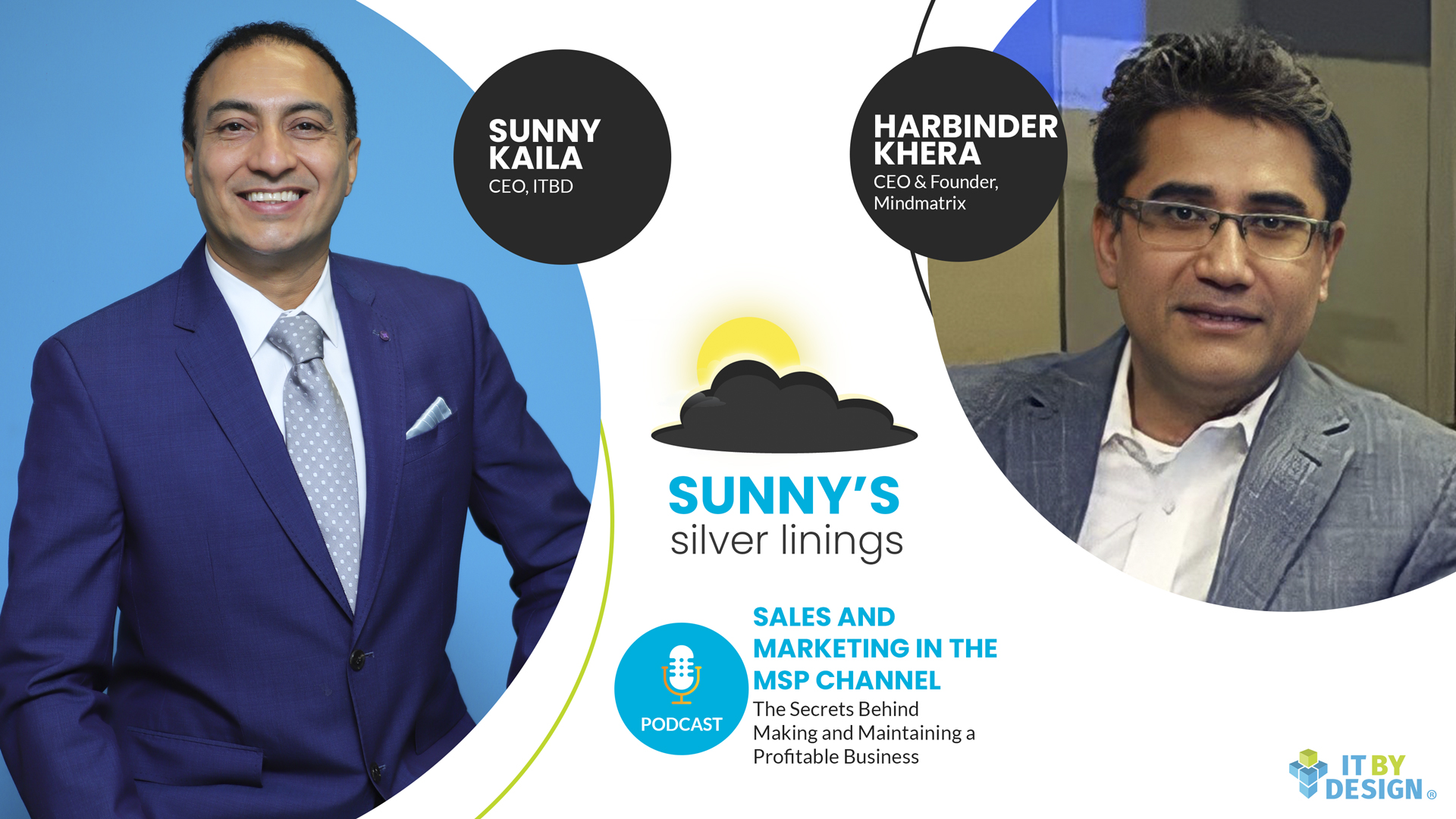
Interview artwork: IT By Design.
Somebody must mind the machine
His more recent discussion of AI carries a similar concern for what happens after the purchase. At a Channel Focus conversation, Khera pointed to security approval and data governance as practical obstacles to deployment. Enthusiasm cannot sign off a vendor. Somebody has to establish how information is managed and how one partner’s data remains separate from another’s.
He also proposed an AI Administrator. The job would cover prompts and context, data quality, monitoring responses, choosing models and managing costs, and tracking adoption. It is the sort of role that rarely supplies the dramatic moment in a technology presentation. It might, however, spare an organization several dramatic moments later.
His comparison was with sales enablement: without someone responsible for organizing documents and assets, sellers eventually make their own presentations. The pattern is familiar enough to make the AI problem less mysterious. If the shared system becomes unreliable or inconvenient, people improvise. The technology can be new while the organizational habit is thoroughly established.
- PrepareContext, prompts and usable data
- CheckResponses, access and model costs
- Keep usefulAdoption, feedback and improvements
A compact illustration of the responsibilities he describes.
Another part of his argument concerns where work takes place. Partners should be able to register a deal through email or Slack and obtain relevant resources without a separate expedition through a portal. The interface may retreat into the background while governance remains. For anyone who has interrupted a useful conversation to search for a form, the appeal requires little translation.
Another turn, with the people still in it
Khera’s current responsibilities extend to XSparks, where he is co-founder and CEO alongside co-founder and CTO Angad Singh Wadhwa. The company focuses on taking enterprise AI into operation and keeping it working. He is also listed as a principal advisor at Nervesparks. The relationships place him across the software, implementation and advisory sides of the current AI market.
At Mindmatrix, the next turn became concrete with the October 2026 introduction of GTMOS, its go-to-market operating system. The announced direction combines partner intelligence with recommendations and workflows delivered into tools partners already use. Structured records contribute the history of transactions; documents and communications supply additional context. The aim is to connect what an organization knows with what its people can do.
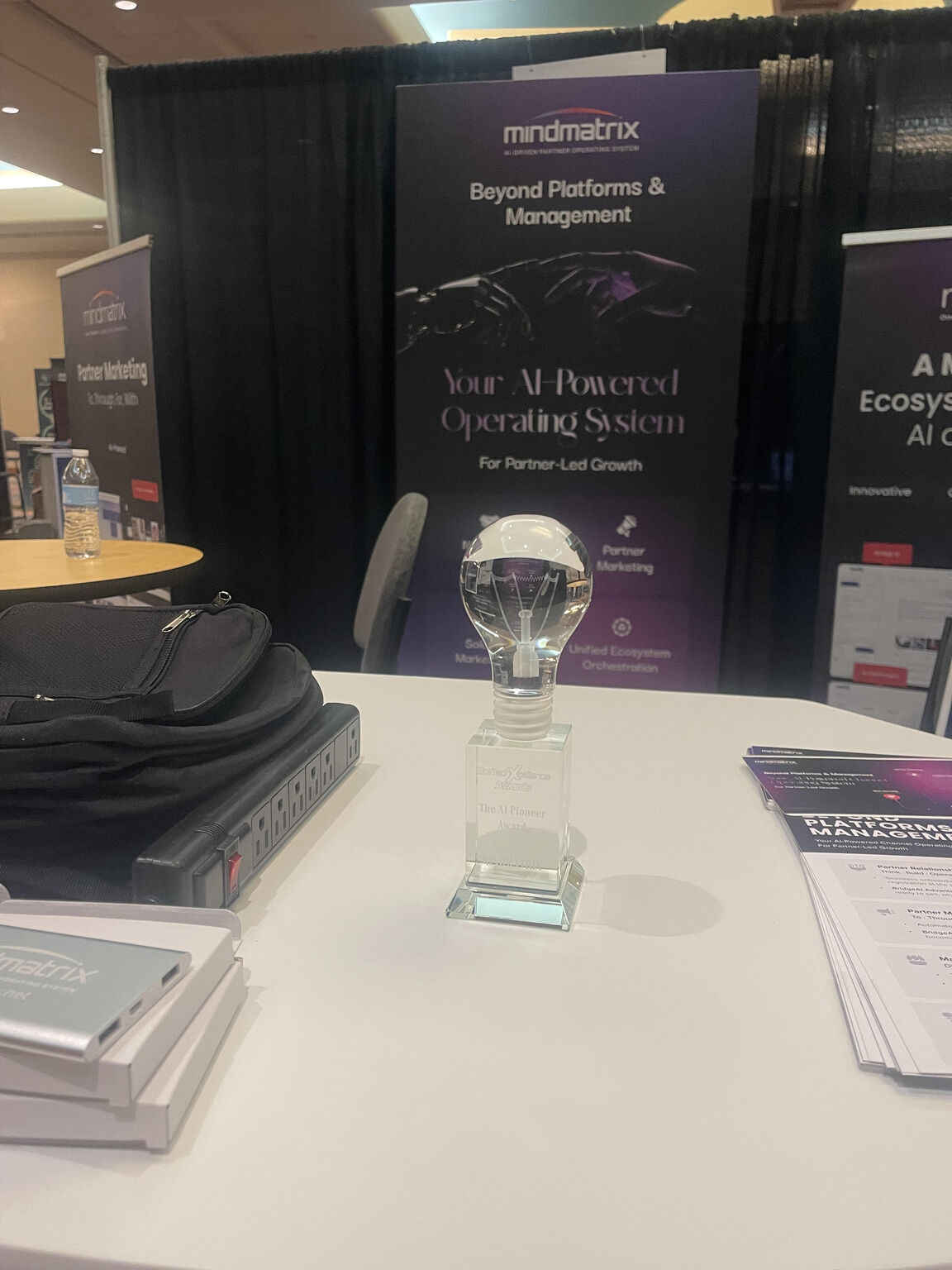
Khera has spoken publicly with Vaughn Mordecai and Cosmo Mariano about AI in partner marketing. A 2025 session with Lenovo’s Stephanie Perche focused on planning, processes and governance alongside AI tools. These discussions give his enthusiasm a recognizable shape: the technology matters through the programs and relationships that can actually use it.
That returns the story to the desk. The clipping belongs to a previous technology cycle, but Khera has kept the ambition that carried him into it. His recollections give equal space to family, employees and the people who supported the work. “Cynical optimism” leaves room for that combination: an appetite for another attempt, with enough memory to appreciate who makes the attempt possible.