Most people watch Shark Tank to see whether somebody gets a deal. Halle Tecco made a spreadsheet. She recorded the companies, the investors, the money and the valuations, turning a television ritual into something that could be sorted. The handshake was entertaining. The pattern underneath it was more interesting.
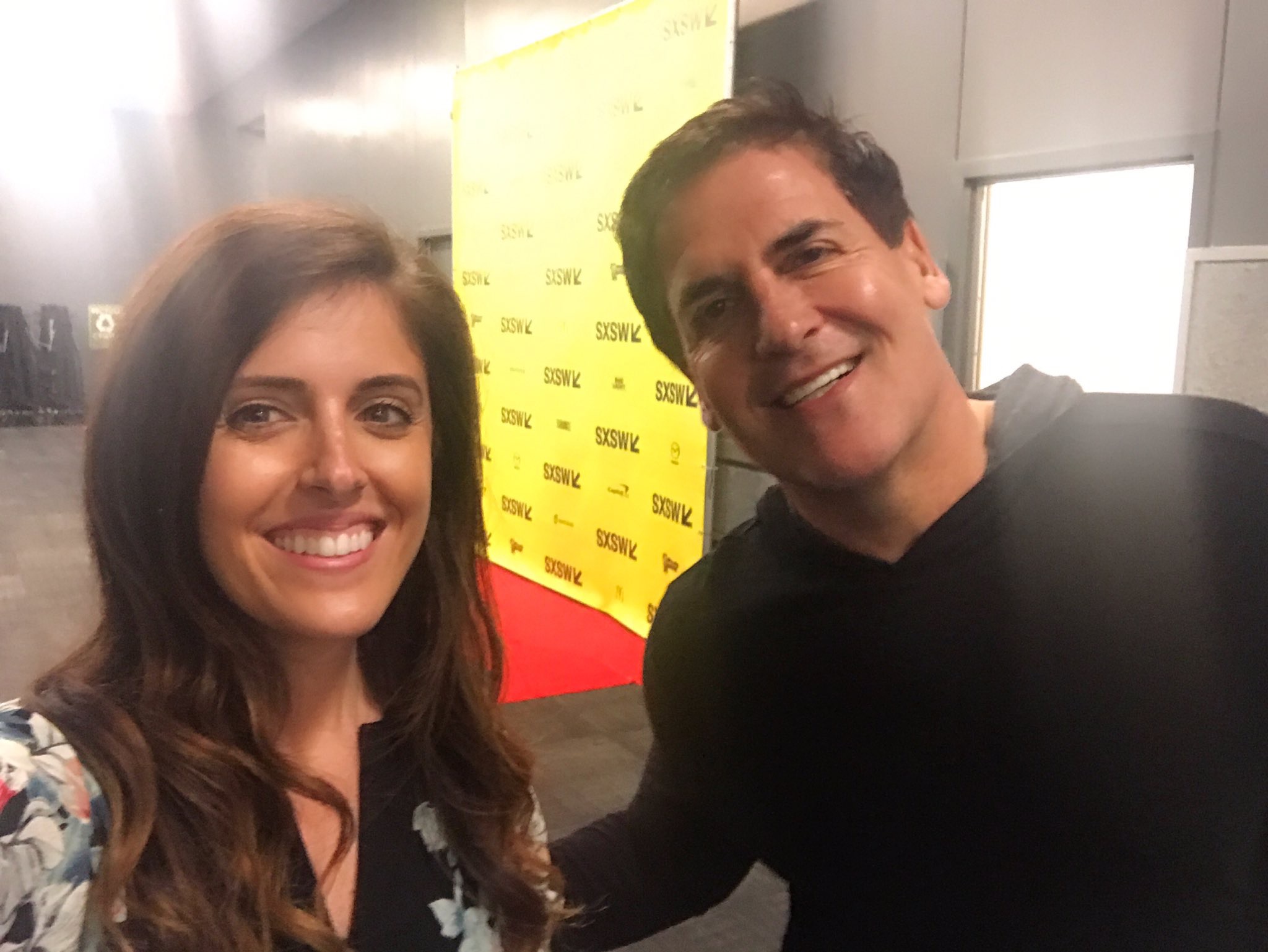
By March 2017, she was sharing a database of nearly 700 pitches. When she met Mark Cuban backstage at SXSW, she had something rather more specific than a request for entrepreneurial wisdom: a record of his appearances in the tank. There are many ways to introduce yourself to an investor. Arriving with his statistics is an unusually Tecco one.
It is also a useful place to begin understanding the co-founder and former CEO of Rock Health. Her career includes founding companies, investing, teaching and writing. Across those jobs runs a persistent habit: find the information people keep asking for, put it into a usable form, and let other people get on with their work.
The television had a spreadsheet problem
The Shark Tank project was both a hobby and a small act of demystification. An investor's reputation can seem like a matter of personality: the reassuring one, the difficult one, the one who enjoys saying no. Tecco recorded the decisions themselves. Her categories included industry, equity and valuation, allowing viewers to examine what the panel actually offered.
Her early analysis also examined gender. The results drew attention to differences between male-led and female-led companies, including the valuations attached to their deals. A show built around individual performances could also be read as a collection of recurring decisions. Looking across episodes changed the question from whether one pitch worked to what kinds of pitches received what kinds of responses.
That distinction matters for anyone trying to learn the rules of raising money. A memorable television exchange provides a story. A collection of exchanges gives the story some company, and occasionally challenges its conclusions. Tecco's contribution was the patient business of recording enough examples to make comparison possible. Watching television had acquired a research assistant's workload.
Before the dorm room, the factory
Tecco grew up in Ohio, in a family that ran a small manufacturing plant. Neither parent went to college. The business later went bankrupt. Her account of that childhood places entrepreneurship somewhere considerably more ordinary than a conference stage: it was work her family did, with consequences her family lived through.
Her father kept his appetite for making and repairing things. He likes fixing old cars, and Tecco and a cousin built a website documenting his garage. Its invitation is admirably direct: a place where visitors can spend time in a garage without borrowing a socket wrench. The site survives as a cheerful, specific counterweight to the polished biographies.
She became a first-generation college graduate at Case Western Reserve University. Finance classes introduced her to venture capital and startup formation; national business case competitions gave her practice in analysis and presentation under pressure. She graduated in 2006, then went on to Harvard Business School. An education in how companies work had begun well before business school issued the reading list.
Halle rhymes with Sally. She was named after Halle's Department Store in Cleveland.
The employer that didn't exist yet
Her early professional experience included finance and business development work at Intel and Apple. Those are companies with established names, recognizable products and organizational charts. The venture career she wanted proved harder to enter. While at business school, she tried to find a job in the field and found no takers.
Looking back in July 2026, she described an awkward mismatch: funds were not looking for the particular specialist she wanted to become, especially one with limited experience. She started Rock Health instead. The institution arrived before the conventional apprenticeship. She would learn while helping run it.
Rock Health began while she was a Harvard student; her company biography remembers the dorm room. That detail has the familiar shape of a founder origin story, but the job-rejection detail gives it a less polished edge. Starting something can be an expression of conviction and a response to the options actually available. In Tecco's telling, both belong in the account.
“I went from having zero VC experience to co-running a fund and learning everything along the way.”
Halle Tecco, July 2026
As co-founder and CEO, her responsibilities included partnerships and strategic direction. The work required other people to take the young organization seriously. Long before the later board appointments and speaking invitations, there was the practical task of assembling an institution that could give an unfamiliar proposition a place to operate.
Founding is a job. So is leaving.
Rock Health became one chapter in a longer working life. Tecco later founded Natalist, which Everly Health acquired in October 2021. She subsequently co-founded Cofertility, where her roles include board chair. The sequence includes building, selling, advising and governing, each with a different relationship to the people doing the daily work.
In her conversation on Behind Her Empire, she addressed a less flattering part of entrepreneurship's mythology: people-pleasing, perfectionism, and the difference between enjoying the work and enjoying management. She discussed finding the right operator and the responsibilities that come with being CEO. A founder's attachment to an idea does not automatically settle every question about who should run the company.
These are useful admissions from someone whose résumé could otherwise be reduced to an orderly procession of titles. A company needs decisions about staffing and responsibility; the person who started it also needs to understand what kind of work she wants to keep doing. Her public account leaves room for that distinction, including the discomfort of learning it.
There is a second correction to the usual founder narrative in her more recent reflections: she wishes she had enjoyed the early moments more. Milestones can make a working life look wonderfully legible afterward. While they are approaching, they can obscure the experience of getting there.
- 2011Rock Health launches while Tecco is at Harvard.
- 2015She begins teaching at Columbia Business School.
- 2021Natalist is acquired by Everly Health.
- 2026Board Partner at Giant Ventures.
Put the explanation where people can find it
Teaching offers a different way to be useful. At Columbia Business School, Tecco created a course she has taught since 2015. Her audience includes people still deciding how they might enter a field. The work asks her to turn experience into explanations that somebody else can use without having lived her career first.
She describes clear communication as something she does well. Finance literacy remains part of her advice to aspiring leaders: learn to read a profit and loss statement. The point is practical competence. Knowing what the numbers mean gives someone a firmer footing in a conversation that might otherwise be dominated by people who sound more certain.
Her writing and podcast extend that teaching beyond a classroom. The Heart of Healthcare marked five years in July 2026. Her first book, Massively Better Healthcare, was published by Columbia University Press in February. Both are ways of organizing conversations and experience for an audience larger than the people who can get a meeting on her calendar.
She has an amusingly candid description of the transition from newcomer to established figure: “But now I'm the old guard”. The joke acknowledges that influence changes hands. The responsibility changes with it. Someone who once needed an introduction can eventually decide how difficult introductions should be for everyone else.
A directory, and the small print
In September 2026, that impulse produced another public tool: a searchable investor directory. Founders kept asking whom they should pitch. Tecco had previously shared a list of 60 firms; the directory lets users filter by investment stage, firm type, fund size and focus. Its live page now lists 173 firms.
It belongs to the same family of projects as the television spreadsheet. Gather information scattered across an industry. Give it structure. Make it available to people trying to understand their options. The result has an obvious use before anybody has to call it thought leadership.
Her accompanying analysis is careful about what counts as investment success. Backing a company early and arriving at a much higher valuation years later can produce very different financial results. A list of billion-dollar companies alone cannot tell a reader the entry price, ownership or eventual return. The directory is useful partly because she explains those limits.
The next seat at the table
Tecco's current investing work is as a Board Partner at Giant Ventures, focused on Series B and later companies. Her personal site says she is no longer making angel investments. That distinction gives a more accurate picture of her working life than letting an old biography follow her indefinitely around the internet.
Her disclosed investing history also reaches beyond the companies she founded. It includes Scout RFP, acquired by Workday in 2019; Imperfect Foods, which merged with Misfits Market in 2022; and Within, acquired by Meta in 2023. Investing, operating and teaching have given her different vantage points on what happens after a promising pitch.
The Shark Tank spreadsheet is an appealing early clue because it makes the habit visible. There is a public performance, and then there is the work of understanding what happened. Tecco has repeatedly made that second activity available to other people. A class, a book and an investor directory are different objects. Each leaves somebody with a little less guessing to do.