H. Adam Holt had a perfectly respectable plan for his working life: draw buildings. He liked art. He liked numbers. Architecture seemed a reasonable place for the two to meet. Instead, he wound up helping financial advisors draw pictures of people’s money. The buildings remain unbuilt. The drawings have travelled rather further than he might once have expected.
Today, Holt is the founder and CEO of Asset-Map, a Philadelphia company built around showing a household’s financial life on a page. The idea grew out of his own advisory work. Its appeal is easy to grasp: people can inspect the relationships between their family, their accounts and their obligations without first learning to speak fluent financial report.
His route there included environmental research, a job fair, business school and a client who preferred the working drawing to the formal presentation. It also left him with a question that now runs beyond finance: how do you make the things that matter easier to see?
The buildings he never drew
At Rutgers, Holt combined economics with environmental planning when the architecture program he wanted was unavailable. He later worked in environmental science research at the U.S. Department of Agriculture. These were plausible destinations for someone interested in how systems fit together, even if neither supplied the career he eventually wanted.
“I had always loved to draw,” he recalled. The affection survived the changes of occupation. It would turn out to be useful in a business where the professional understood the diagram in his head and the customer was still trying to locate the beginning.
Holt’s advisory biography places his start in financial services at Karr Barth Associates in 1998. He joined RubinGoldman and Associates in 2000 to build its Wealth Management team. Along the way came professional credentials, including the CFP and Chartered Financial Consultant designations. The artist acquired the technical vocabulary. Later, he would spend considerable effort translating it.
A mother who talked to everybody
Holt grew up in New York and moved to the Philadelphia area for high school. In his telling, an early business example was his mother, who built a real estate practice as a second career. She could talk to strangers. Her teenage son did not always consider this a social achievement.
He remembers the embarrassment, then the growing recognition that she could get people laughing and turn a passing encounter into a relationship. He connects that example to his own enjoyment of meeting people. At 16, he also began attending Tony Robbins events with her, experiences he credits with teaching him about communication and reframing assumptions.
His first business, he says, was website design in 1996. Graphics and hand-written HTML offered another outlet for making things. A person who once wanted to design buildings was finding smaller structures to work on, with fewer planning applications.
The client reaches for the rough draft
Two years into government work, Holt wanted a more entrepreneurial career. He considered investment banking jobs, but his family encouraged him to investigate opportunities nearby. At a job fair, he met a local financial planning company and took a position. His background in economics and design made him an unusual recruit; the work caught his interest anyway.
He has described the insecurity of those early years: feeling too young, insufficiently experienced, or unqualified to help someone already wealthy. Looking closely at what people actually owned changed that calculation. An impressive collection of financial products could still be difficult for its owner to understand.
The practical response was a visual inventory. Family members and financial arrangements could share the page. The advisor could ask questions with the client looking at the same picture. A drawing gave both people somewhere to point.
priorities
Asset-Map dates its first copyright to 2002. Its history places a revealing client encounter in 2005: the client pulled the visual map away and rejected the traditional planning report. The informal aid was the thing worth keeping. For an advisor who had prepared the formal material, that was useful feedback with an awkward delivery.
The company’s account describes a technology build in 2009, followed by adoption among other advisors. By 2013, demand justified a rebuild and seed investment. A tool created inside one practice was becoming a business with requirements of its own. The one-page result concealed years of revision.
An MBA with no finish line
Holt entered Drexel’s Executive MBA program in 2002 and graduated in 2004. He was preparing for leadership at RubinGoldman while developing the thinking that became Asset-Map. Business school supplied people willing to test that thinking.
Years later, he credited his cohort and finance professor Ed Nelling with helping refine the platform. Nelling challenged his assumptions about finance, helping him reduce a much longer set of projections to a page. The reduction required someone who understood the material well enough to argue about what belonged.
In 2017, Drexel presented Holt with its EMBA Alumni Entrepreneurship Award for Asset-Map. He had previously served as president of the EMBA Advisory Board. The recognition came from a community he had helped sustain, giving the occasion a personal dimension beyond the company’s progress.
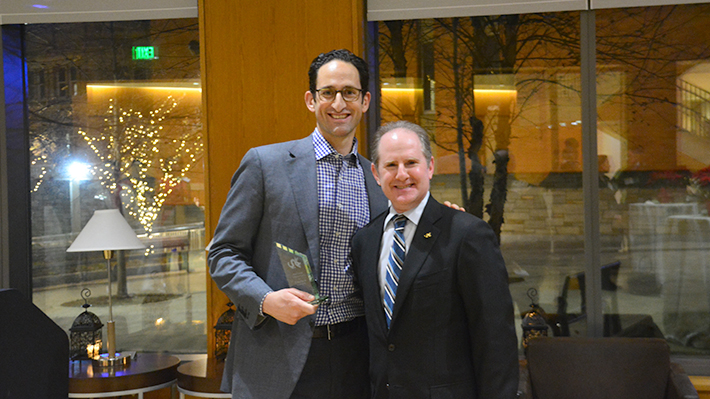
He has described building a company as “fumbling forward.” There is room in that phrase for the prototypes, the corrections and the people who improve an idea by refusing to admire it politely.
“You never truly finish your MBA.”
H. Adam Holt
The appointment at 5:30
The temptation in a founder’s biography is to make every hour point toward the company. Holt has spoken quite specifically about hours that point home. In conversation with Brad Johnson, he described being home for family dinner at 5:30 and wanting an office within walking distance.
He also described learning to delegate in his financial services business and concentrating his own work into less time. In his account, that created space to pursue the technology company. Other people’s competence became part of the design.
The arrangement still included late work. He told Johnson he used some evenings, after his daughter was asleep, for creative work and tasks he could not complete during the day. His team knew that a late email did not require a late reply. A founder’s enthusiasm can easily become everybody else’s interrupted evening; stating the boundary matters.
Holt has never needed to pretend that a page can contain everything a household values. It can, however, make a person ask whether their choices match those values. A calendar offers another version of that exercise.
A different sort of family business
With fellow financial entrepreneur Derek Notman, Holt co-hosts Rethink, a podcast about financial advice. Their collaboration also reaches into fatherhood through REBL Dads, where Holt is identified as a co-founder. The project brings entrepreneurial fathers together around leadership at home and at work.
The two have discussed a gathering on Necker Island with Richard Branson in January 2024. Their subsequent book, REBL Dad: What 100+ Fathers Reveal About Successful Leadership at Home and Work, draws on conversations with fathers about the practical problems of doing both.
The book’s account traces its development to Branson asking how they would bring the gathering’s insights to more dads. He wrote the foreword. The answer to a question asked among a small group became something a much larger group could read.
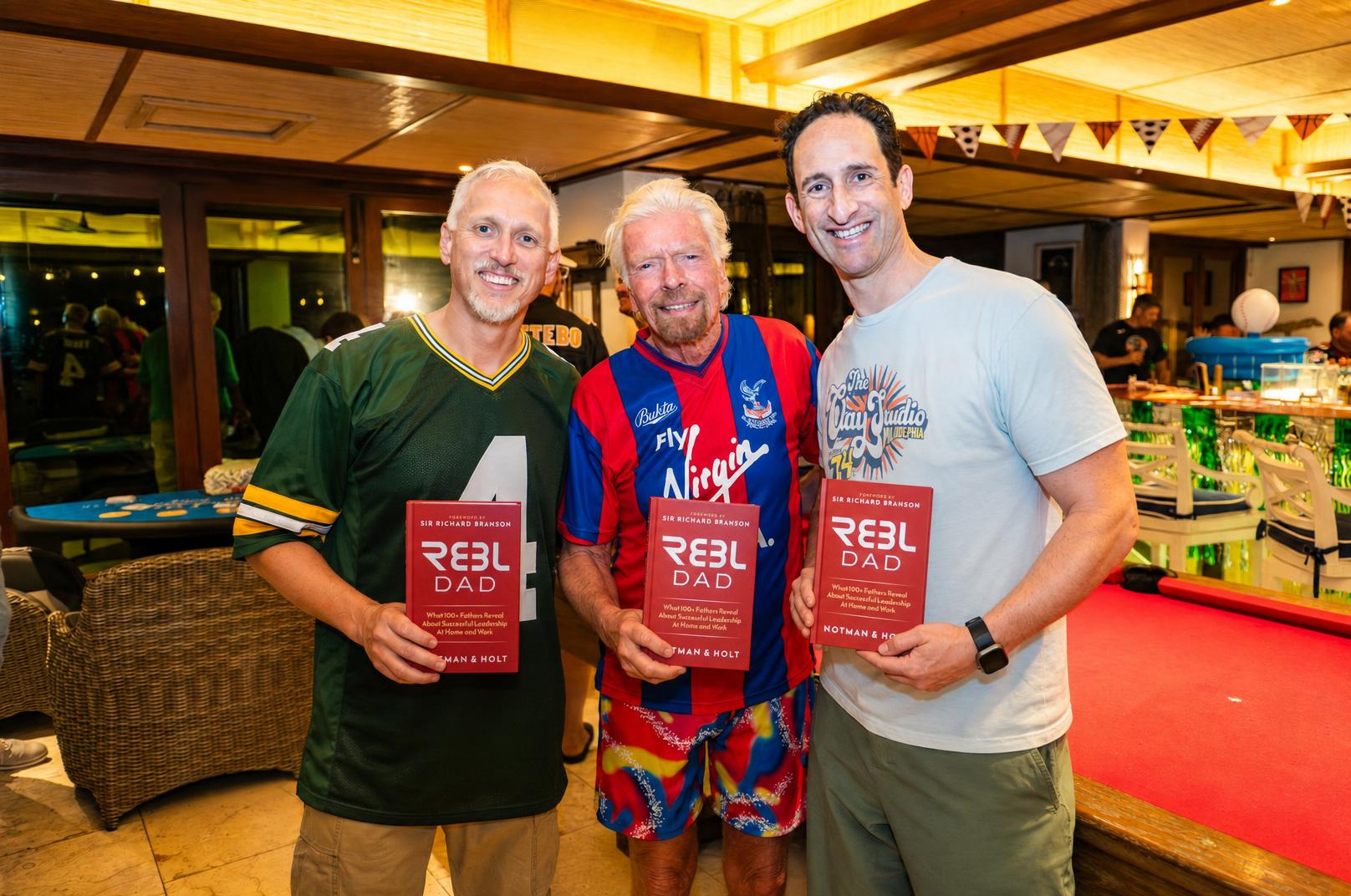
There is a familiar working method here: ask people about their lives, look for the useful pattern, and give the result a form somebody else can use. The subject has widened. The interest in making decisions discussable remains.
Getting comfortable on camera
There is another place where Holt has been testing how to make expertise approachable: video. By August 2025, he was discussing his use of it for education, connection and building trust. He described allowing vulnerability into the presentation and making content part of Asset-Map’s approach to reaching people.
For someone whose business depends on helping an advisor communicate, appearing on camera offers a fairly direct test. The viewer has to decide whether to keep listening. Holt’s discussion of the work emphasized being useful and human rather than delivering a flawless performance. The person explaining the picture needs to be approachable, too.
Let the software do its part
By 2026, Holt was applying that interest to the financial profession’s discussion of artificial intelligence. In September, he argued for discovery meetings that establish people’s facts and priorities quickly, rather than exhausting them with requests for data. His emphasis was on getting a useful conversation underway.
He has also urged advisors to think about the human purpose of a meeting as their software changes. Those are his arguments about the profession’s future, grounded in the same client encounter that shaped his earlier work: possessing a calculation does not guarantee that the person facing a decision understands it.
Technology still has work to do. In November 2025, Holt discussed Asset-Map’s integration with eMoney Advisor, describing an effort that had taken roughly nine years. Bringing structured information into a shared visual view was a practical way to support the meeting he cared about.
That conversation also caught his sense of humor. When host Craig Iskowitz joked about moving him from an emoji to an icon, Holt replied: “Promoted.” A modest career ladder, and pleasantly free of paperwork.
Today, Asset-Map reports use by advisors in 20 countries and more than 2.5 million people mapped. The scale has changed substantially from the drawing in one advisor’s practice. Holt’s recurring concern is still small enough to fit across a table: can the person opposite him see what matters, ask a better question, and decide what to do next?
Keep the conversation going
Explore Holt’s work, interviews and public profiles.
- Asset-Map · Holt on LinkedIn
- The architecture ambition and Drexel years
- The First Customer: upbringing and early businesses
- Do Business Do Life: work, family and the one-page idea
- REBL Dad · Watch REBL Dads on YouTube
- Asset-Map’s YouTube channel · Listen to Rethink
- WealthTech Today: the eMoney integration
- Holt on the discovery meeting · His argument for human advice
- Drexel Magazine: the platform’s development · The 2017 award
- Asset-Map’s history and reported reach · Holt’s advisory career