The client had been promised a financial plan. Adam Holt had brought one: the full ceremonial stack, dense with the labor of modern advice. He had also brought a sheet he had been scribbling on, a homemade picture of the household and its financial parts. The client's wife could not make the meeting. Holt had driven three hours to the house in Washington, D.C. The client looked past the polished report, pulled the sketch toward himself and asked the question that would reorganize Holt's career: What is this thing?
It was an Asset-Map before Asset-Map was a company. People sat in the middle. Accounts, income, insurance, businesses, trusts and other facts surrounded them. Lines made relationships visible. The page was imperfect and immediately useful. Its great trick was less compression than recognition. A client could look at it and say, yes, this is my life - or, more profitably, no, something is missing.
Holt had spent years watching expensive analysis lose a fight with human attention. Even affluent clients resisted reports that could run to 80 pages. The plans were technically serious and socially inert. His drawings invited interruption. A missing policy or misnamed account became obvious enough to correct. A risk became something two people could point at. The advisor was no longer reciting a report. Advisor and client were inspecting the same landscape.
When finances are complicated, people get stuck.Adam Holt
The strange ingredients finally meet
Holt's route to that page sounds delightfully overqualified for a doodle. He grew up in New York, moved to the Philadelphia area for high school and arrived at Rutgers hoping to study architecture. The program he wanted was not available, so he assembled another education: economics, environmental planning and design, with work connected to satellite imagery. He was artistic, good with numbers and uncertain which appetite should win.
After college, the federal government offered him a job. He conducted environmental-science research for the U.S. Department of Agriculture. The stability clarified what he did not want. In 1996, while still doing that work, he started a website-design company, writing HTML and making graphics. Two years later he moved into financial services. A job fair at Philadelphia's old Adam's Mark Hotel led to a role that taught him insurance, investment advice and sales. By 2000, he had joined RubinGoldman and Associates in Bala Cynwyd.
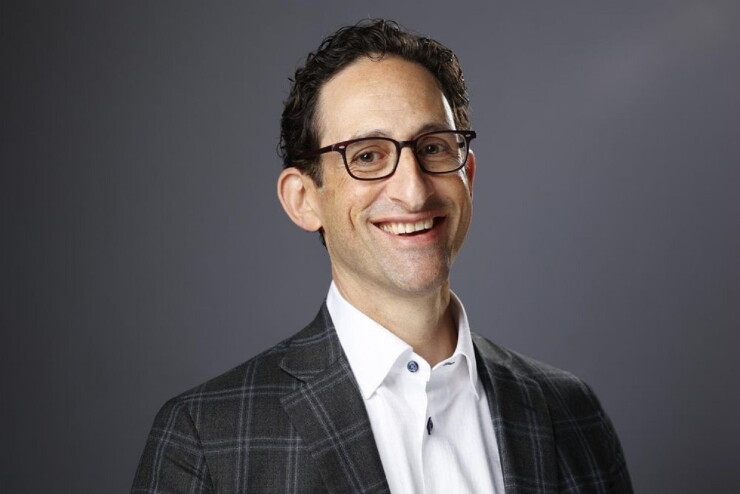
There was an earlier piece of education, stranger and more personal. Holt's mother had built a successful second career in real estate. When he was a teenager, she took him to a Tony Robbins seminar. He later volunteered at events and absorbed techniques of mind-mapping: put the subject in the center, arrange related ideas around it, look for patterns. Years later, facing the communicative fog of financial planning, he reached for the same visual grammar.
Holt has called Asset-Map a mashup of finance, satellite imagery, art and Tony Robbins. It is a funny list, but a precise one. Maps decide what deserves to be visible. Finance supplies the facts. Art manages attention. Coaching supplies the belief that a different picture can help a person act.
A pet project learns to pay rent
The public timeline of Asset-Map begins in 2002, when Holt filed the first copyright for the household visual framework. He refined it with actual clients, through family structures simple and complicated. By 2005, the kitchen-table reaction had supplied a decisive signal. From 2006 through 2008, the visual process accompanied a burst of growth in his advisory business. Holt has said revenue tripled in each of three years.
In 2009, he paid for the first technology build. The software moved across his firm's 1,600 client households, supported by 11 advisors and 12 staff. It remained, in his description, a pet project with an expensive appetite. His service business financed development because the tool was already creating value there. This made Holt the rare founder whose first customer and reluctant venture capitalist occupied the same chair.
Demand arrived by demonstration. In 2012, he showed the system to 25 financial professionals at a conference. Twenty signed up. The user count reached 90 by the end of the year, then 300 in 2013. Asset-Map became a standalone company on March 15, 2013. Friends and family supplied an initial $600,000; Holt had put roughly $1 million of his own money into the effort by then.
The story contains no overnight, only nights. Holt developed the program after work while helping run an advisory practice. He has been candid that the market was not ready when the intellectual property was. He spent heavily, hired ahead of clarity and learned how quickly a low-priced product acquires high-priced support needs. The first hundreds of professionals paid about $1,000 a year. Then came product management, technical leadership and the less romantic machinery required to keep promises at scale.
His retrospective advice is bracingly practical: pre-sell the idea, test whether a customer will pay, understand the economics and choose the right people. Being customer number one gave him conviction, but conviction did not replace operations. Holt eventually embraced the distinction between visionary and integrator. He describes Asset-Map president Thomas Bryan as the trusted operator who has run each of his companies and can translate his abundant ideas into action.
The screen is there to improve the room
Asset-Map grew because the map was not merely an image. It was a reason to talk. Holt calls the approach conversational planning. The software can show a household's members, resources, obligations and goals; advisors can compare targets, surface warning signals and bring tax information into view. Yet the product's center remains stubbornly human. The calculations matter because the decisions are difficult. The visualization matters because people must understand enough to participate.
Relationship capital is the real enterprise value in a wealth firm, even though it never shows up on the balance sheet.Adam Holt, 2025
By 2024, several thousand advisors were using Asset-Map on behalf of roughly 1.8 million people and $1.5 trillion in financial instruments. The company's current public profile reports more than 2.25 million people mapped and $4 trillion organized. The numbers are large; the interface is still built around the intimacy of a household. That tension explains Holt's position on artificial intelligence. He welcomes tools that identify neglected conversations or pull planning data together. He also argues that technology earns its place by reinforcing judgment and trust.
The company has kept adding layers without abandoning the page. A Holistiplan partnership brought tax analysis into the shared view. Relationship Maps made family connections and motivations interactive. Beneficiary visualization addressed estate-planning conversations. An eMoney integration, discussed by Holt in late 2025 after years of anticipation, connected established planning data with Asset-Map's visual framework.
Recognition followed the product work. Asset-Map won the WealthManagement.com Industry Award for Top Specialized Planning Application in 2020, 2021 and 2022. The company announced a $6 million Series B in 2023, taking reported funding since inception to $7.6 million. Holt was selected as CEO of the Year in the 2025 ThinkAdvisor Luminaries Awards. Earlier, Drexel had given him its 2017 EMBA Alumni Award for Entrepreneurship, a neat return for an artistic environmentalist who entered the executive program to prepare for leadership in financial planning.
The professional doodler
Asset-Map's team page gives Holt a second title: Professional Doodler. It reads like office whimsy, though it may be the more revealing job description. He remains the visual thinker at the product's edge, working with advisors, partners and the internal team on problems gathered from real planning rooms. He is also plainly a Philadelphia founder. He has favored local vendors and development talent, worked from the Bourse, moved the company through Old City and into an Arts Garage warehouse in Olde Kensington, and speaks fluent Eagles.
The biography has other welcome left turns. Pottery appears among his enthusiasms. Nerd Clusters receive a mention. Vancouver has served as an imagined alternate home base. In conversation, he is quick to puncture a compliment with a joke and quicker to admit an expensive mistake. He describes company culture through mutual coverage: when family needs someone, colleagues step in. He credits his mother for treating unfamiliar people as friends she had not met yet, a habit he says became his own.
That instinct may be the quiet architecture beneath the map. A household is not a portfolio with decorative humans attached. It is a network of people whose decisions, fears, loyalties and resources overlap. Holt's work began to move when the page made those relationships legible. The technology scaled when other advisors recognized their own communication failure inside his solution.
A map is useful because it admits that nobody lives in a straight line. Holt's career certainly did not. Architecture bent toward environmental planning. Government research gave way to websites. Financial advice led back to drawing. A teenager's mind-map returned as a founder's product. The pieces look obvious now because he arranged them for us. Once you see the page, as Holt likes to say, you cannot unsee it.