The ordinary financial plan has an odd double life. In public, it is a lucid map of retirement, taxes, assets, income and inheritance. Backstage, it is a small industrial project. Someone gathers the data, checks it, models the alternatives, spots the tax consequences, formats the pages and prepares the advisor to explain the result. The client sees the map. The advisor remembers the machinery.
Raygar Khailany has spent more than 20 years around that machinery. His career has run through technology, operations, corporate development, mergers and acquisitions, and the outsourcing systems used by financial advisors. Before becoming a founder, he served as a senior vice president at AssetMark. Earlier work listed in his professional record includes Genworth Financial and GE Aerospace. The titles vary. The recurring question does not: which work must the advisor own, and which work can a well-designed system carry?
PlanScout, the company he co-founded with John Murray in 2023, is his latest answer. It sells the SIPS Retirement Planning System to advisors who want to build plans themselves. It also runs an outsourced service for advisors who would prefer to send in client information and receive a branded, presentation-ready plan. Software and service sit beside each other, like two doors into the same workshop.
“I've spent my career building and transforming organizations that help financial advisors outsource parts of their practice.”Raygar Khailany, at PlanScout’s launch
The product begins where the software usually ends
The distinction is easy to miss because fintech has trained everyone to admire the calculator. A retirement tool can model income, taxes, withdrawals, asset allocation and inheritance across decades. Yet capability is not completion. A blank input field still needs a number. A useful scenario still needs judgment. A chart still needs a story that a family can understand across a desk.
Khailany’s bet is that the unfinished work is itself a product category. PlanScout describes its job in deliberately concrete terms: it prepares plans for licensed financial professionals, using the company’s own software and planning processes, then returns the material for the advisor to present. The advisor retains the relationship and the advice. PlanScout takes on much of the production.
- 01Collect client information
- 02Model scenarios in SIPS
- 03Prepare the branded plan
- 04Return it for the client conversation
This model did not begin with a new codebase and a heroic whiteboard. PlanScout acquired SIPS, a retirement-planning engine created by advisor James Gallagher and developed over 13 years. Hundreds of advisors had already used it to create tens of thousands of plans. Khailany and his colleagues were buying history: accumulated workflows, edge cases and the stubborn residue of real practices.
Before the public launch, the team spent more than a year in stealth mode. Khailany wrote that PlanScout reviewed more than 30,000 plans made with SIPS, looking for repeatable techniques that created value. That number matters less as a trophy than as a design method. The team was not merely asking what a plan could calculate. It was studying what experienced planners repeatedly did.
A startup built from operating memory
There is a certain kind of founder whose origin story begins with youthful obsession. Khailany’s begins with operating memory. His official biography places him in leadership work across AssetMark’s technology, operations and corporate-development functions. A 2019 AssetMark securities filing includes a stock-option award in his name, one dry but useful marker of his place inside the organization. By the time he left to build PlanScout, he had watched a large advisor platform grow from the inside.
That background shows up in the shape of the company. Buying SIPS was a corporate-development move. Turning its practices into a repeatable service was an operations move. Adding automatic calculations and scenario tools was a technology move. Selling the combination to advisor firms was an outsourcing move. PlanScout looks like several chapters of one career pressed into a single business.
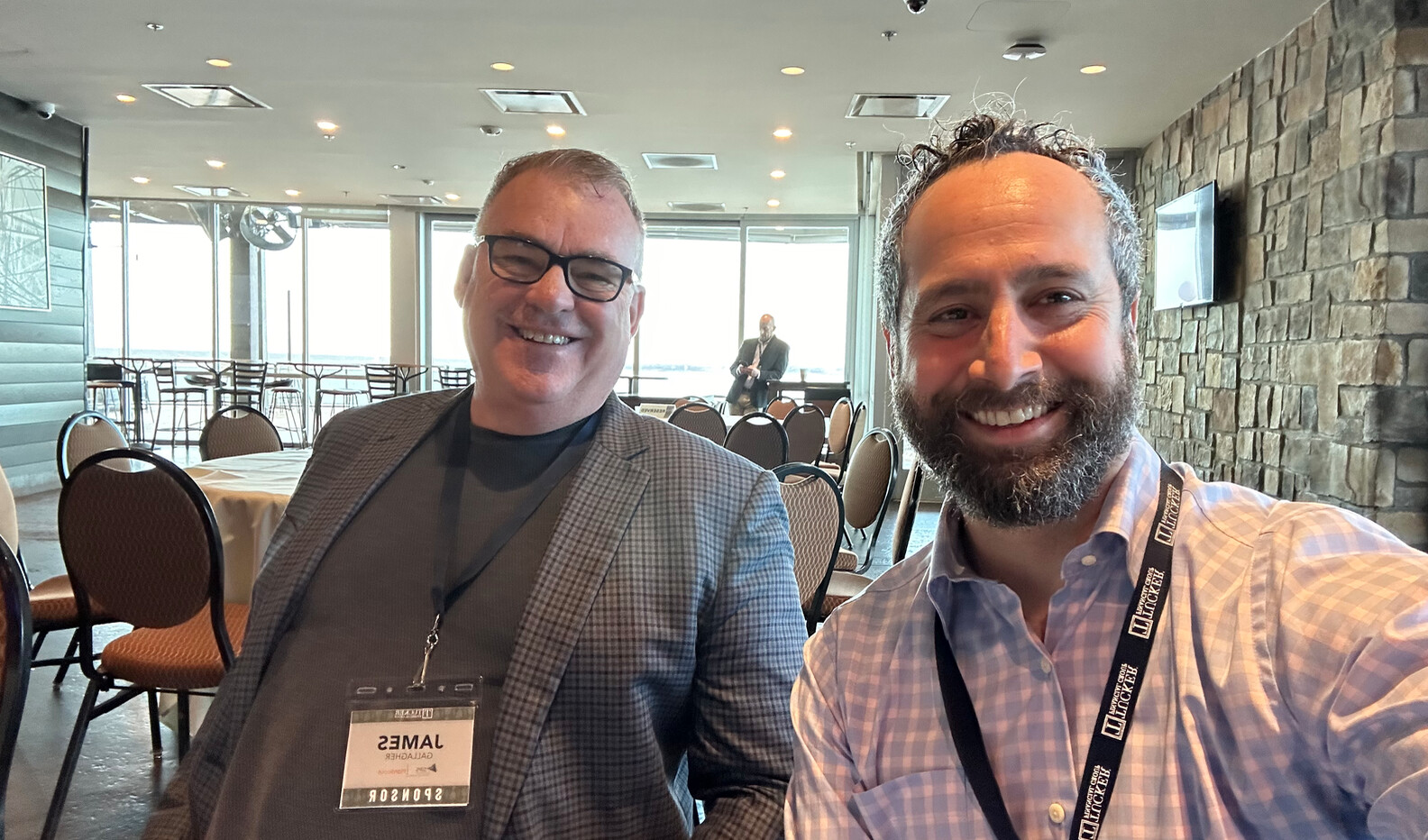
The partnership with Gallagher also gives the company an unusually tidy division of perspective. Gallagher built SIPS after his own work as an advisor exposed the limits of existing tools. Khailany arrived with the experience of scaling systems around advisors. One knew the calculation from the practitioner’s chair. The other knew the organizational work surrounding it.
At the Tucker Super Conference, the pairing became theater. Gallagher built a complete one-page plan live onstage in under five minutes. At another gathering for Ed Slott and Company’s Elite Advisors, Khailany and Gallagher presented the PlanScout origin story and deliberately worked jokes into the talk. Khailany later wrote that the audience response felt like a rare burst of validation.
“As an entrepreneur, getting told ‘no’ 60%, 70%, or 80% of the time is just part of the journey.”Khailany reflecting on an advisor conference
The line reveals a little of his public temperament. He is comfortable admitting the bruising arithmetic of a new company, but he does not linger over it. The anecdote moves quickly to jokes, colleagues and the energy of a receptive room. In his writing, approval is less a coronation than fuel for the next iteration.
Tax logic, translated into a meeting
In 2024, that iteration took the form of SIPS Advanced. PlanScout introduced six features shaped by advisor feedback: automatic tax-rate calculation, the ability to model more complex tax scenarios, faster population of cash-flow and tax information, hypothetical tax forms, entry of actual values for annual reviews, and a dynamic mode for adjusting income plans. The list is technical. Its purpose is plain: reduce pivots between tools and make planning choices easier to show.
Khailany’s product language keeps returning to visuals, clarity and the moment an advisor sits with a prospect. A mathematically impressive plan that cannot be understood has failed socially. A beautifully explained plan that took too long to produce has failed operationally. PlanScout is trying to make the two failures cancel each other out.
The company also lets advisors choose how much help they want. A firm can subscribe to SIPS and keep production in-house. It can outsource plan construction. Or it can combine the two. This is less elegant than the single, frictionless SaaS funnel that investors enjoy drawing, but it is closer to how professional practices behave. Expertise, staffing and appetite for delegation vary from office to office.
The useful founder lesson: when customers ask for better tools, trace the work that happens after the tool is used. The unclaimed steps between capability and outcome may be the larger business.
The candid planner
Khailany’s most revealing public writing is not about an acquisition or a product release. In early 2025, he wrote that he sometimes worries about his own retirement - quietly, wondering whether he and his wife will have the flexibility they want and whether their choices will burden their children. The admission is striking because it comes from the CEO of a retirement-planning company. Expertise has not abolished uncertainty in his own house.
He turns that discomfort into a distinction between money and certainty. The goal of a plan, in his account, is not merely to display an adequate balance. It is to help a person see whether income can last, whether choices remain available and whether an unwelcome surprise can be absorbed. The language explains why PlanScout emphasizes scenarios and annual updates. A plan is a living argument, not a laminated prophecy.
“Retirement isn't just about having enough money - it's about having enough certainty.”Khailany, writing in 2025
Later that year, his essays moved through the questions advisors hear in actual conversations: whether to pay off a mortgage before retirement, how to revisit a plan during uncertainty, what prospective clients need to know before hiring an advisor. He returned to transparency, communication rhythm and the first 90 days of a relationship. The operator’s eye remained visible. Trust was not a mood. It had a workflow.
In December 2025, PlanScout announced automatic updates to reflect major federal tax-law changes in plans produced through both its service and SIPS. The feature is a tidy example of the company’s premise. A law changes. The software changes its logic. Existing client scenarios need attention. Advisors need to know whom to call. The technical update becomes a reason for a human conversation.
The business between the buttons
Khailany is based in the Greater Phoenix area; PlanScout lists its headquarters in Seattle. His public profile shows an education at Arizona State University’s W. P. Carey School of Business from 2009 to 2011, though it does not specify a degree. Beyond those coordinates, he keeps his biography pointed toward the work. There is no grand mythology on offer, only a consistent set of obsessions: advisor time, repeatable operations, tax-aware planning, legible choices.
That restraint suits the company. PlanScout is not attempting to replace the advisor with an oracle. It is removing the production queue that keeps the advisor from acting like an advisor. The software does more of the arithmetic. The planning team does more of the assembly. The professional remains responsible for the relationship, the explanation and the judgment.
Plenty of technology businesses live inside a button. Khailany is building in the messier territory between buttons - where client information arrives incomplete, tax choices collide, presentations need branding and a meeting sits stubbornly on the calendar. It is not the cleanest part of finance. It may be the part most worth finishing.