Guido Ginesi wrote his father a letter. The occasion was the fortieth anniversary of X-28 Alarmas, the company his father had helped build. Guido had a company of his own by then, and the experience had changed his understanding of the family business. He could better appreciate the achievement, the commitment and the personal sacrifices behind something that had survived for four decades. Entrepreneurship had given him a new way to read his father's life.
It is a revealing place to begin with the co-founder and CEO of Pow*, an ecommerce technology business established in 2014. Founder stories tend to hurry toward the moment of departure: the resignation, the idea, the first sale. Ginesi's letter travels in the other direction. Having started something himself, he looks back and notices more. Forty years acquires a different weight when you have had to carry a few of them yourself.
His father, Daniel Ginesi, co-founded X-28 Alarmas and became its vice president. Both father and son graduated from the Instituto Tecnológico de Buenos Aires. Daniel studied electronic engineering; Guido studied administration and systems. The shared institution makes a neat family connection, but their work took different forms. One built a security business. The other went into the increasingly complicated business of helping retailers sell online.
The letter offers no theatrical conversion or childhood prophecy. Its appeal is quieter: a son finding that experience has made him a more attentive admirer. A corporate anniversary had become an occasion for saying something personal.
when Guido wrote to his father
was founded
An education in brands, then in processes
Before Pow*, Ginesi worked at Danone and Despegar.com. His early career included marketing work at the former and regional process analysis at the latter. The combination puts two everyday commercial questions beside one another: how do you persuade someone to buy, and how do you make the business work when they do? In ecommerce, those questions have a habit of arriving in the same inbox.
His education crossed similar boundaries. At ITBA, administration and systems brought business and technology into the same course of study. His career record also includes an innovation management exchange at Eindhoven University of Technology, followed later by an MBA at Universidad Torcuato Di Tella. He completed the MBA in 2016, after Pow* had already begun. Building the company and studying business overlapped.
There was also a product marketing role at Brandswall in 2013. By 2014, he was co-founding Pow* with Felipe Saguier, who became its chief marketing officer. The company would bring together development, digital strategy and marketing. Rather than requiring a retailer to treat those activities as unrelated errands, Pow* offered them within the same business relationship.
That career sequence is useful without requiring a grand theory about destiny. Marketing, processes, systems and management are all visible in the work he eventually chose. His route into entrepreneurship passed through existing organizations before he helped create one.
- DanoneMarketing
- DespegarRegional processes
- BrandswallProduct marketing
- Pow* · 2014Co-founder & CEO
The colleagues get names
Pow* works through squads, combining different specialties around clients' ecommerce needs. Its team includes people working in development, product, customer experience and marketing. That range matters to the portrait of its CEO because his public accounts of the company repeatedly make room for the people doing the work. He names colleagues and thanks teams, including when the occasion might easily have become a founder's victory lap.
There are small glimpses of that working environment from the other side of the desk. When Eric Hoare joined Pow's IT team in 2021, he thanked Ginesi, Martín Krieger and others for the welcome. Hoare described an opportunity to contribute and learn, and valued a team willing to back the individual as well as the experience on a résumé. Ginesi's response was a brief, enthusiastic welcome.
In another public farewell, Mark Mordo thanked Ginesi, Krieger and Saguier after more than six years at Pow*. He described professional and personal growth alongside the challenges and memories. Neither message can stand in for every employee's experience. Each does supply something more concrete than a culture slogan: a named colleague describing an actual arrival or departure.
For a company selling expertise, those transitions belong in the business story. Clients may buy a project, but the project is made by people who have to learn, cooperate and remain interested. An organization chart can show the reporting lines. It takes a welcome message to show who bothers to answer.
A booth in Peru, a client in Chile
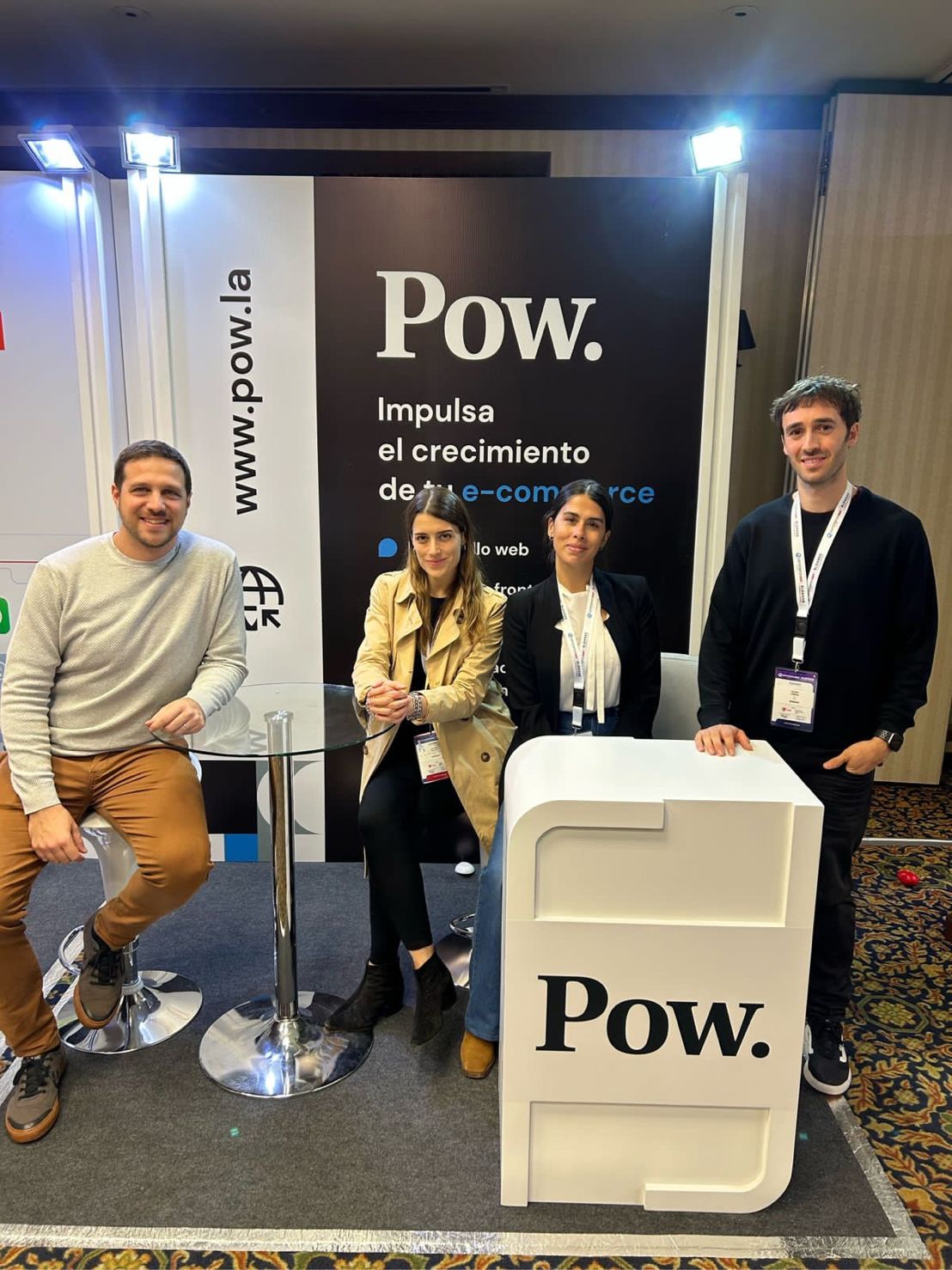
In 2023, Ginesi was on the eCommerce Day circuit. In Colombia, he announced a busy schedule of client visits around the event. In Peru, Pow* participated as an official sponsor, and Alicia Prats and Noelia Romina Merino spoke about digital commerce onboarding and designing an ecommerce framework. Ginesi's account emphasized both the team's participation and the opportunity to learn from other people in the industry.
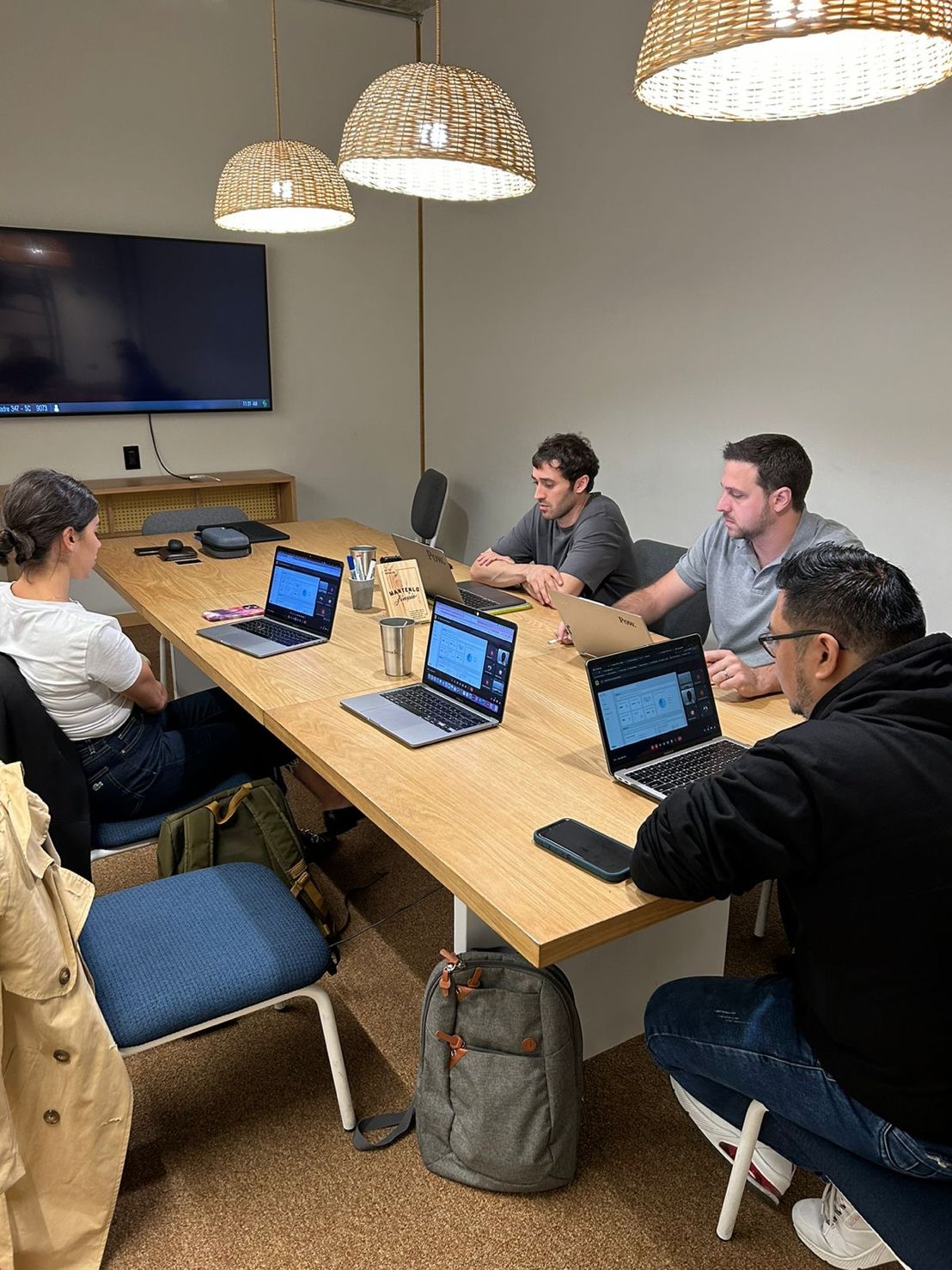
The photographs from that Peru trip are refreshingly ordinary. There is the booth, with its emphatic Pow branding. There are colleagues around a meeting table, laptops open. A conference can be photographed as an endless procession of stages; here, some of the story happens at sitting height. The business of discussing how businesses work looks a great deal like a meeting.
His appearances continued. The 2024 eCommerce Day Colombia speaker list includes him as Pow's co-founder and CEO. A Chilean summit programme that year scheduled him to discuss omnichannel implementation and its effect on sales. The subjects are practical, concerned with how a retailer connects its operations and customers.
In a later account of an event in Chile, he celebrated travelling with a client to present her company's case for the first time. He thanked Fernanda Cazalá, the organizers at VTEX and the Pow* team. He gave the team credit for making the story possible. The client came along to tell it, which made the trip a different kind of presentation.
Putting a fee beside a result
Ginesi has also described a commercial arrangement in unusually plain language: when clients sell more, Pow* earns more; when they sell less, it charges less. That is his description of the relationship, rather than a promise about every contract. It gives substance to his preference for talking about Pow* as a partner in a client's business.
A fee that moves with sales ties the supplier's interest to an outcome the client can recognize. It also exposes the supplier to the awkward weeks. Retail does not provide a smooth upward line simply because a presentation contains one. The arrangement Ginesi describes makes the claim of partnership easier to examine: the direction of the money becomes part of the argument.
His account of the company is capable of being playful, too. He has joked about his own affectionate bias toward Pow*, comparing himself to someone too enamoured to see a partner's faults. The joke is useful because it acknowledges the obvious. A founder is hardly a disinterested critic of his creation. Ginesi lets the reader see that affection rather than dressing it up as neutrality.
The more interesting detail is what sits beside it: colleagues, service and the willingness to share commercial risk. Those are specific things a prospective client can discuss. Charm may secure a conversation. A business relationship has to survive the invoice.
The second purchase has a memory
In July 2025, Ginesi joined Laura eRRe on Fashion Digital Talks for a conversation about ecommerce, automation and customer loyalty. The discussion put repeat purchasing near the centre of his approach. He stressed the importance of resolving problems transparently and looking after people who have already bought. The emphasis places attention on the part of commerce that begins after the excitement of acquisition.
There is a human distinction here between being persuaded and choosing again. The first transaction can happen before a customer has much experience of a company. The next one comes with a memory. A retailer has had time to demonstrate how it behaves, including when something requires attention. For Ginesi, that accumulated experience belongs in any serious discussion of growth.
His company operates in a sector fond of new tools. Yet his public work keeps returning to what those tools must accomplish for the retailer. Pow's services include implementation, strategy, marketing and user experience. Its own Hermes technology sits alongside work with VTEX and Shopify. The range gives the company several ways into a problem, and gives its CEO several kinds of work to coordinate.
The language of ecommerce can make every improvement sound like a software release. Ginesi's recurring interest in service brings another consideration into view: whether the person who used the system would willingly use it again. That question can travel across platforms without needing a migration of its own.
Still doing the homework
“Si no aprendemos a la misma velocidad que avanza la tecnología, nos vamos volviendo más juniors.”
Guido Ginesi · Fashion Digital Talks, 2025
Ginesi's warning is brisk: if people fail to keep pace with technology, they become more junior. The line gives seniority a slightly uncomfortable condition. Years on a résumé do not automatically keep someone's knowledge current. Even the CEO has homework.
The company's 2026 eCommerce Day Argentina communications returned to operational detail, with a case involving Equus Argentina, pick-and-pack processes and shipping from stores. Pow* also offered short sessions on user experience, product, marketing and exchanges and returns. After more than a decade in business, there were still plenty of specifics to discuss.
Those specifics bring the story back to the letter. Ginesi's appreciation of his father grew as his own experience accumulated. His public approach to work similarly leaves room for learning from colleagues, clients and other businesses. There is no need to turn that into a family formula. It is enough to notice the attention he pays to what other people have built.
Forty years is a long time to keep a company going. A second purchase is a much smaller interval. Between those two measures sits much of Ginesi's working life: building an organization, helping a retailer, making another trip, answering another problem. The customer gets a vote each time. His job is to help make the next choice a willing one.