Juan Carlos Gavito joined his family’s outdoor advertising business in March 2020. Within weeks, its prospects had changed. The useful question became how to reach customers online. That question would eventually lead him from helping other people sell their products to buying and operating the businesses behind them.
Today, Gavito is the co-founder and CEO of Quinio, a Mexican company built around an apparently modest proposition: a good product can belong to a small business with a much bigger future. His career has taken him through private equity, investment management and digital advertising. Quinio brings those experiences together at the point where a seller has proved that customers want something, but needs help delivering more of it.
There is a pleasing lack of glamour in the underlying problem. Advertising can attract the customer. Someone still has to buy the inventory, move the box and make the arithmetic work. The checkout button is small; the business behind it can be rather large.
A financier meets the checkout button
Before Quinio, Gavito had already spent years on the financial side of business building. He studied industrial engineering at Universidad Iberoamericana and earned an MBA at IPADE. At Nexxus Capital, he worked on transactions that included the stock market listings of Genomma Lab and Grupo Hotelero Santa Fe, alongside private acquisitions involving businesses such as Harmon Hall and Mármoles Arca.
He also founded Airos Capital, an investment management firm spanning public and private markets. These are useful credentials for an entrepreneur whose business involves buying companies. They also give his later move into commerce a particular shape. Gavito arrived with experience examining businesses from the investor’s chair, where the questions concern price, financing, governance and what happens after a transaction closes.
His subsequent roles included principal at Walton Street Capital and CEO at Emblem. The sequence put investment work alongside direct management. By the time Quinio emerged, the distance between valuing a business and running one had become a central feature of his working life.
That distance matters. An acquisition announcement describes a change of ownership. An operating company has to live with everything the announcement leaves out.
The business hiding inside the agency
The move into digital advertising began with clients who needed new ways to reach consumers. Search, social advertising and programmatic campaigns led into e-commerce. Gavito and his team could help businesses sell more, but the work exposed a broader opportunity: promising products needed an operating structure as well as an audience.
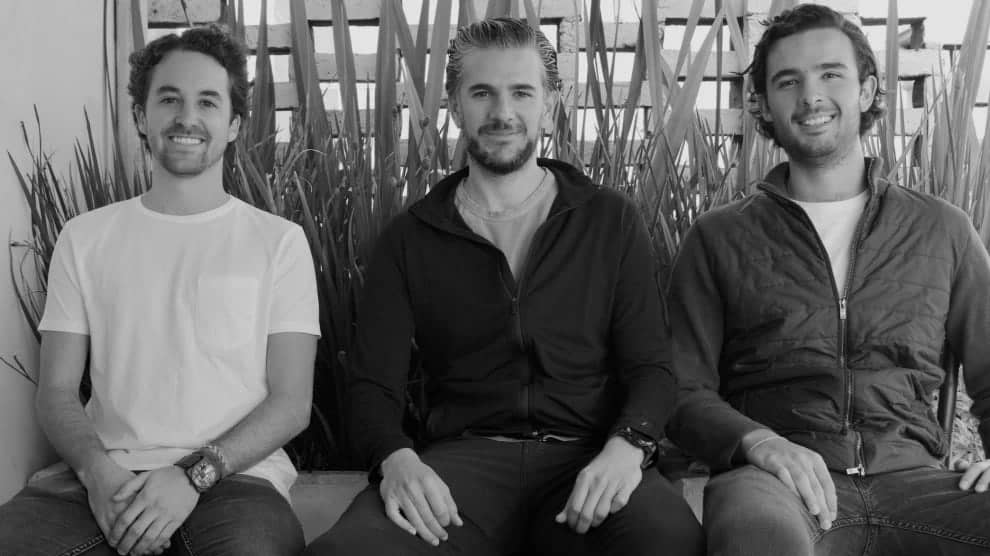
His brother Santiago Gavito became a co-founder. A mutual friend introduced them to Iker Garay, who brought the aggregator model into the conversation. Quinio was founded in 2020. The three founders combined experience across marketing, commerce and investing, with a plan to acquire or partner with established sellers and help their brands expand.
The change in the relationship was consequential. An agency helps a client pursue growth. An owner takes responsibility for the costs and consequences of that growth too. Quinio’s proposal gave sellers another route: sell the business, or work with a partner that could contribute capabilities beyond advertising.
It is an idea with an ordinary entrepreneur at its centre. Someone has already done the difficult work of creating a product and persuading strangers to buy it. Gavito’s next question is what that business could become with a different set of resources behind it.
Buying a brand is the opening chapter
Quinio’s early acquisition criteria favoured medium-sized online businesses, including sellers with annual revenue of at least US$250,000. Products needed an established reputation with buyers. Amazon, Mercado Libre and a brand’s own website all offered routes to customers. A seller’s success could be visible before Quinio entered the picture.
In December 2021, the company announced a US$20 million seed financing combining debt and equity. Cometa led the round, with participants including AlleyCorp, DILA Capital, Western Technology Investment and GBM Ventures. Kueski founder Adalberto Flores was among the individual investors. The stated plan was to fund acquisitions and expand the team.
The early pitch was concrete: improve sales, centralize operations and make costs more efficient. Quinio also recruited people with experience at Mercado Libre, Unilever and Uber. Gavito’s financial background sat inside a team intended to deal with the daily mechanics of commerce.
For a founder considering a sale, that combination changes the conversation. The buyer is offering money for what has been built, while also making a case for what might happen next. The future becomes part of the negotiation, even though it cannot be delivered at the signing table.
- FindAn established product and customer base
- JoinAcquire the brand or form a partnership
- OperateCoordinate inventory, marketing and finance
- ExpandDevelop products, countries and sales channels
The year the forecasts needed editing
By November 2022, the easy assumption that online growth would keep following its earlier trajectory was under pressure. Gavito described the year as unusual for e-commerce. Shopping behaviour was changing, and aggregators faced a more demanding environment. Companies that had expanded quickly now had to reconsider their expectations.
Quinio responded by tightening the criteria used to evaluate potential acquisitions. Gavito also described a greater emphasis on products and technology. When other buyers slowed their acquisition programmes or struggled to raise money, he saw an opportunity to find attractive businesses at more favourable valuations.
This is where his investor background becomes especially relevant to the story. A less enthusiastic market can make buying easier, but it does not make operating easier. The price of entry and the quality of the business still have to be examined separately.
In his account of the company’s learning, Gavito emphasized better projections, less time spent on routine tasks, more informed product development and improved marketing decisions. These are the kinds of gains that rarely make a theatrical announcement. They can still determine whether a brand earns enough to finance its next shipment.
Forty million dollars, several different jobs
On November 3, 2022, Quinio announced more than US$40 million in new capital and debt financing. Northgate Capital led the equity portion. Existing and new investors joined, including Cometa, DILA Capital, AlleyCorp, Western Technology Investment and Alchimia Investments. The announcement left the debt details undisclosed.
The money had several intended uses: acquiring brands, expanding the regional team and developing technology. The company also described product innovation, geographic expansion and sales channel diversification as routes to growth. Quinio already operated brands with a presence in Mexico, Colombia, Chile and the United States.
Gavito’s stated aim was to become an ally for online sellers who wanted to sell their businesses or partner to expand them. That ambition ties the financing back to the person on the other side of an acquisition. A brand is also somebody’s years of work, and a buyer must offer a convincing reason to entrust its next chapter to new hands.
A portfolio is a collection of decisions
Cometa’s investment case for Quinio centres on independent sellers sharing an operating platform. Supply chains, data and acquisition experience can serve multiple brands. The attraction is practical: individual businesses retain products that customers recognize, while some of the machinery behind those products can be shared.
That arrangement asks a lot of a chief executive. Common systems must be useful across the portfolio, yet brands still need reasons for customers to choose them. Efficiency alone is a rather thin personality for a consumer product. The operating platform must leave room for the things buyers actually care about.
In April 2024, Gavito reported a portfolio of 18 brands and operations in five countries, now including Spain. He put annualized sales at approximately US$30 million at the end of 2023. Those figures give the story a dated checkpoint rather than a prediction.
April 2024
April 2024
end of 2023
Numbers can make a portfolio look tidy. A country count takes up very little space on a page. Behind it lies the work of making a product available, attractive and economically viable in another market. Gavito’s business lives in that gap between the compact number and the many decisions required to sustain it.
The investor gets an interview too
Gavito’s advice to other founders includes an unusually reciprocal idea: investigate your investors. He urges entrepreneurs to understand the people they hope to bring into the business, rather than treating the funding process as an examination conducted in one direction.
“Tener buenos socios, tanto de capital como de deuda, hace la diferencia.”
Juan Carlos Gavito, April 2024
Good partners matter in both equity and debt.
The advice fits a career spent on both sides of the table. An investor’s cheque is easy to describe. The working relationship that follows is harder to measure. A founder will encounter that relationship again whenever the company needs time, another decision or a different plan.
His public career also continues beyond Quinio. In April 2025, Genomma Lab’s shareholders ratified him as an independent board member. The governance work provides another connection between his earlier investment career and his role as an entrepreneur.
Quinio’s current portfolio presentation makes the commercial idea tangible: Sognare, Bio Mattress, Ecofiltro, Puff and Drops sit together on a platform focused on household products. Furniture, filters, bedding and cleaning products are familiar purchases. Their familiarity is part of the point. Gavito has built his entrepreneurial project around helping existing brands reach more customers, with the financial and operating work to support them.
His story began with a change in how businesses could reach people. It has grown into a question about how businesses themselves can grow. The promising product remains at the centre. Around it, Gavito and his partners have been assembling the less photogenic essentials: people, systems, financing and the next sensible decision.