Greg Hong used to arrive at restaurants between four and five-thirty in the afternoon, order a drink, and ask for the manager. The drink was part of the sales strategy. He was a paying customer, after all. Surely that would earn him a hearing for Reserve, his restaurant technology company. His first fifteen attempts produced no sign-ups. One manager supplied a review blunt enough to spare everyone a second meeting.
Hong kept making calls. Gradually, he changed the conversation. He asked about the restaurant's customers and how to make them happy. Four months passed before the first yes. After a year, Reserve had four hundred restaurants in seven cities. The useful discovery was embarrassingly simple: buying a drink had made him a customer; asking a better question made him useful.
Years later, his business would involve depositions, court reporters, and legal transcripts. The restaurant vocabulary survived the journey. At Steno, the company he co-founded in 2018, hospitality became an operating principle. The connection looks odd until you follow Hong's attention: he keeps coming back to the person trying to do a job while the machinery around them gets in the way.
A dinner reservation is only the beginning
Before Reserve, Hong worked in small-business consulting and directed business operations at true[X], the advertising technology company formerly known as SocialVibe. His work crossed finance, product, and operations. That combination matters in a career spent moving between industries. A product can look elegant on a screen and still create trouble for the people who must use it, reconcile its payments, or answer its customers.
Reserve launched in October 2014. Hong co-founded it with Joe Marchese; the company emerged from Garrett Camp's startup studio, Expa. It entered a business where a booking could be mistaken for the whole experience. Hong's interest extended through the meal and its payment. The ambition was a dining concierge, with technology supporting the relationship between restaurant and guest.
In 2015, he described wanting technology to be almost invisible. The point was to improve the interactions surrounding dinner without draining dinner of its personality. A restaurant could be efficient and still remember who had walked through the door. Software would earn its place by helping that happen.
“If it becomes transactional, you lose the hospitality end of the experience.”
Greg Hong, 2015
His later writing about restaurant customer management followed the same line. Staff often relied on memory or handwritten notes to recognize regulars. Better tools could carry preferences and special occasions across shifts and locations. In Hong's account, a new employee should be able to give a familiar guest a familiar welcome. There is a pleasant modesty to that ambition: sometimes the desired technological breakthrough is a competent hello.
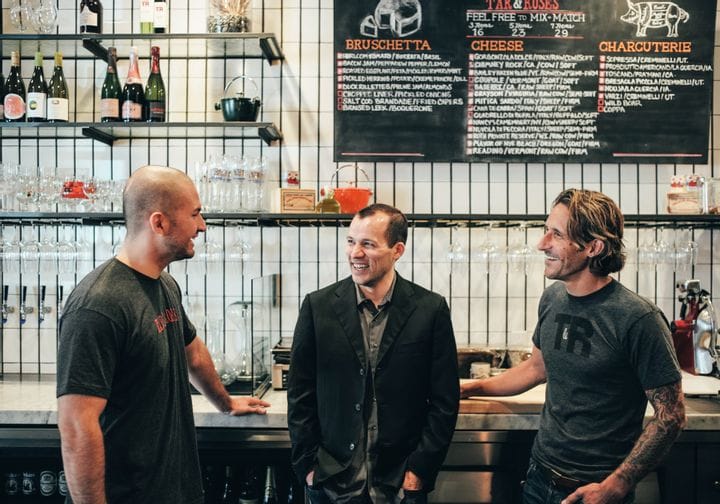
Listening, with a paper trail
At Reserve, restaurant feedback reached into the unglamorous parts of the product. The team initially planned to combine several days of revenue into one payment. Restaurants wanted deposits corresponding to individual days. Reserve changed its accounting approach. It is the kind of decision that rarely makes a launch party speech, though the person balancing the books may remember it rather fondly.
The company also planned Reserve After Hours, a program allowing employees to shadow restaurant workers. Watching service offered a closer view of what the software needed to accomplish. An inconvenient interaction repeated throughout an evening could become a material problem. Hong's approach gave the people using the product a say in its development.
He applied a similar approach to culture. In 2016, Reserve created mascots for each of its ten company values and hung them on office posters. When the values were introduced, committee members described colleagues putting them into practice. The mascots gave abstract principles something to wear; the examples gave them something to mean.
Hong's advice was to gather views across a company, look for patterns, and refine the results with a steering committee. Culture, in this account, deserved investigation before decoration. A founder could have a view of the business while an intern had another. Both belonged in the conversation. Asking everyone for input was an acknowledgment that the office looked different depending on where you sat.
His customer-service writing was equally concrete. Replies should address a person's actual concern, managers should get involved when needed, and businesses should follow through. The recurring demand was action after listening. A suggestion box has very few moving parts; an organization capable of responding has considerably more.
The lawyer already knew the problem
In November 2018, Resy announced its acquisition of Reserve. Most of Reserve's employees would join Resy, and Hong would stay through the transition. The deal combined restaurant relationships and technology in a market both businesses had spent years trying to change. Resy itself was later acquired by American Express.
A relationship formed during those restaurant years helped lead Hong elsewhere. Dylan Ruga had been Reserve's trademark attorney. A practicing trial lawyer, Ruga brought him an idea for a court reporting agency that would let attorneys delay paying until their cases resolved. Hong saw an opportunity and asked to take the lead. He brought in Dan Anderson, who became the third co-founder and chief technology officer.
The founding team had a useful arrangement: the intended customer was also one of the founders. When the team needed to understand an attorney's problem, Ruga could explain it from experience. Hong later described that clarity as making Steno easier to launch than some of his previous projects. The initial question had already survived contact with a working law firm.
The bill had arrived before the money
Ruga's frustration concerned timing and risk. His firm paid for court reporters while the eventual proceeds of its cases remained in the future. Agencies that offered some payment flexibility still left the firm responsible if a case was lost. Steno began by offering court reporting with a non-recourse deferred-payment option.
The arrangement distinguished the attorney's payment schedule from the court reporter's. Steno paid the reporting professional regardless of the case outcome. Under its non-recourse offering, the firm's obligation depended on a recovery. That difference mattered to the people on both sides of the booking: one needed working capital, the other needed to be paid for completed work.
DelayPay became Steno's signature deferred-payment offering. The idea moved the financing question into the service itself. An attorney arranging a deposition could consider payment timing alongside the practical work of booking it. For Hong, this opened a route into the wider collection of tasks that law firms depend on but that sit outside practicing law.
- 01Book the serviceA firm arranges court reporting.
- 02Pay the professionalSteno pays the court reporter.
- 03Wait for resolutionThe firm's eligible payment is deferred.
By 2023, Hong was describing a broader service layer for law firms, encompassing court reporting, e-filing, and service of process. Steno had raised a $15 million Series B led by Left Lane Capital, with a strategic investment from Clio Ventures. The expansion followed the work surrounding a case, including the administrative steps that have to happen for the lawyer's own work to proceed.
From the deposition room to the transcript
Steno also built Steno Connect for remote depositions and a dashboard for managing litigation support. The business grew beyond its plaintiff-firm origins to serve defense and general litigation practices. Tools for court reporters included a marketplace where they could claim assignments. Hong's company was assembling several connected parts of a professional service, with different users needing different things from the same system.
In September 2021, Steno reported that monthly revenue had reached $1 million from zero in two years. Its team had grown from six people to more than 120 following its seed funding. Those figures belong to that moment, but they show how quickly the small founding group acquired the responsibilities of a larger organization.
The transcript then presented another problem. Attorneys told Steno that reading and analyzing testimony consumed time. Transcript Genius used generative AI to let them search and question their transcript collections. In its early development, Claude's larger context window made long transcripts more practical to work with. Anderson's team built a proof of concept within a week.
The product linked its answers to the relevant locations in transcripts. That design preserved a path back to the words a witness had actually spoken. Hong's career had traveled from making a reservation to helping someone inspect testimony, but the product question remained recognizable: which part of the work is making the user's day harder?
A founder makes room
In September 2024, Steno named Prabhdeep Singh chief operating officer. Hong spoke about expanding the product range, keeping customers happy, and helping the business reach a larger scale. Bringing in another operational leader was part of that work. The company's ambitions were growing along with the number of people responsible for delivering them.
On March 26, 2026, Steno announced a $49 million Series C led by Savano Capital Partners. It planned to increase investment in geographic expansion and its litigation technology, including Transcript Genius. Hong's argument for the business rested on its daily involvement in litigation services: building tools while working close to their users gave the company a particular understanding of the tasks it wanted to improve.
On June 9, Singh became CEO. Hong moved to the board, continuing to support Steno's strategic direction after more than seven years of founder-led growth. He called Singh the right steward to carry the company forward. It was a change in responsibility, with the original service philosophy left for a larger organization to practice.
Hong still had a restaurant answer when asked where he liked to celebrate in Los Angeles: Nobu, provided he could get a reservation. A founder of reservation software was allowed to want a good table, too. His public career suggests a more demanding preference as well: businesses that understand why the person across from them has shown up. The early sales calls became productive when he began asking about that person. Steno grew from another such conversation.
Keep the conversation going
READ / WATCH / CONNECT
- Steno: company and services ↗
- Greg Hong on LinkedIn ↗
- Hong’s essays on service and company culture ↗
- Hong’s Reserve-era writing on Medium ↗
- Listen: Court Reporting and the Evolution of Legal Support ↗
- Listen: Confessions of a Stenographer, with Greg Hong ↗
- Watch: Steno’s approach to court reporting ↗
- Watch: a walkthrough of Transcript Genius ↗
- The June 2026 leadership announcement ↗
- Restaurant photograph and Reserve partnership conversation ↗