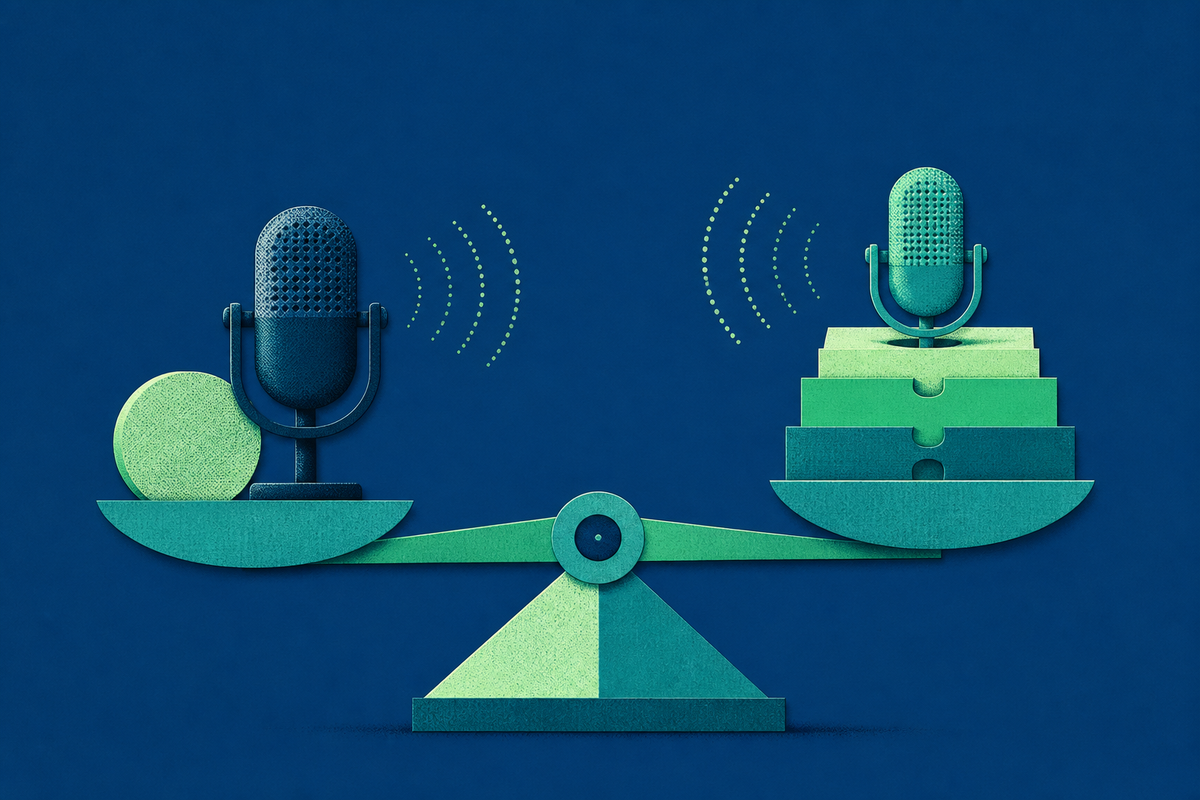
There is a moment in every software evaluation when the feature spreadsheet stops being useful. For Gong versus Wingman, that moment may arrive before the first demo. Wingman was acquired by Clari in 2022 and is now sold as Clari Copilot. If your company already buys Clari seats and Copilot is included in that agreement, its marginal price can be zero. Gong is then not competing against a similarly priced recorder. It is asking you to add another per-user license, a platform fee, another implementation, and another vendor relationship.
That does not make Gong a bad product. It makes the purchasing question more demanding. Gong has helped define modern conversation intelligence: capture calls and emails, turn them into searchable records, surface risks, coach reps, update the CRM, and connect those signals to revenue work. Its current product extends into enablement, engagement, and forecasting. Some teams will find that breadth, maturity, or user experience worth paying for. But “better” only matters if the difference travels all the way from a demo screen to a measurable operating result.
The invoice comes before the scorecard
Start with the contracts. Gong’s pricing page is unusually clear about the shape of its price, if not the amount: licenses are priced per user, and there is a platform fee based on the number of users supported. Clari also withholds public list prices and asks prospects to request a quote. This is why online estimates are a weak foundation for a board-ready recommendation. Your signed Clari order form is the primary document.
Look for the Copilot SKU, included users, role restrictions, recording and storage allowances, support level, overages, renewal language, and any price step-up. “Free with Clari” is useful shorthand only when it means no incremental charge for the people and workflows in your evaluation. The total Clari platform is not free. A bundled feature can also become more expensive at renewal. Procurement should translate the bundle into a three-year marginal cost, not accept a cheerful zero in year one.
Once the entitlement is confirmed, build the comparison from marginal cost. Do not allocate the entire Clari contract to Copilot if you already bought Clari for forecasting and pipeline inspection. The relevant number is the additional cost of turning Copilot on for the intended users. Then compare that with Gong’s complete incremental cost: subscription, platform charge, implementation labor, integration work, change management, security review, and the internal cost of running two overlapping systems during migration.
The honest starting line
*Illustrative marginal cost when Copilot is contractually included. Verify entitlements and renewal terms. The bars do not represent vendor list prices.
What each product is really selling
At the job level, the overlap is substantial. Both products can turn sales conversations into recordings, transcripts, summaries, coaching material, and deal signals. Clari says Copilot transcribes in real time, captures intent, objections, contacts, and next steps in CRM, and offers Battlecards, Playbooks, and Gametapes. Its strategic advantage is adjacency: conversations can feed the same Clari environment used for pipeline inspection and forecasting.
Gong describes automatic capture across calls, meetings, emails, and other interactions, plus topic detection, deal-risk signals, coaching, CRM updates, scorecards, and searchable conversation data. Gong’s broader pitch is that those interactions become a shared data foundation for enablement, engagement, and forecast workflows. For a team that lives in Gong, the call is not an isolated recording. It becomes material for a manager’s coaching inbox, an enablement program, a deal review, and a forecast discussion.
| Buyer question | Gong case | Copilot case |
|---|---|---|
| Core job | Deep conversation record feeding coaching and revenue applications | Real-time guidance and conversation context inside Clari |
| Economic hurdle | Must justify a new per-user license and platform fee | May have no marginal seat cost when bundled |
| Natural fit | Teams standardizing broadly on Gong workflows | Teams already running pipeline and forecast work in Clari |
| Proof needed | Incremental outcomes large enough to clear incremental cost | Adoption and capability adequate for required workflows |
The meaningful differences will be local. Can managers find coachable moments without hunting? Are real-time prompts fast and specific enough to help a rep without distracting them? Does the system map calls to the correct account and opportunity? Can enablement teams create and audit scorecards? Do security, consent, data residency, and retention controls satisfy counsel? A generic category grid cannot answer those questions.
Good enough is an operating strategy
Software buyers dislike the phrase “good enough” because it sounds like surrender. In practice, it can be disciplined allocation. A product with fewer beloved details may create more realized value when identity, permissions, CRM mappings, and management routines already exist around it. Every new tab asks for another habit. Every duplicate dataset invites a reconciliation meeting. Every best-of-breed purchase needs an owner after the champion moves on.
The bundle therefore changes the burden of proof. Copilot does not need to win every row. It needs to perform the essential jobs at an acceptable level. Gong needs to show that its additional depth changes behavior or economics enough to cover the difference. “Our managers like it more” is a clue, not yet a business case. How many more calls get reviewed? How much faster does a manager prepare for a one-on-one? Do reps complete more CRM fields? Does the system surface risks early enough for someone to intervene?
There are still clean reasons to choose Gong. Your organization may have a mature coaching program that depends on workflows Copilot cannot match. Revenue leaders may want one conversation data layer across sales, customer success, and enablement while using another system for forecasting. Reps may adopt Gong materially more often. An integration may be stronger in your exact stack. Or you may be planning to leave Clari, which turns the apparent bundle discount into a short-lived artifact.
There are equally clean reasons to stay with Copilot. You may already have the entitlement, implementation support, data model, and executive sponsorship. Real-time Battlecards might matter more to your reps than another layer of post-call analytics. Forecast and deal teams may value conversation signals appearing beside the records they already inspect. Consolidation may reduce cost, administration, and the political drag of asking sellers to feed two systems.
Run a pilot that can disappoint you
The best pilot is designed to produce a no. Pick a representative group, define a short list of high-frequency workflows, and record the baseline before either vendor receives credit. Avoid vanity measures such as calls recorded or summaries generated. Those show that software ran. They do not show that anyone worked better.
- Verify the bundle. Have procurement write a one-page entitlement memo covering today, expansion, and renewal.
- Name the jobs. Choose three to five workflows, such as call review, CRM capture, live objection help, onboarding, and deal-risk intervention.
- Measure behavior. Track active managers, weekly reviews, rep follow-through, corrected CRM fields, and time to useful insight.
- Price the full delta. Include fees, labor, implementation, migration, integrations, and the cost of duplicate administration.
- Set a walk-away rule. Decide in advance how much improvement Gong must show to justify the incremental three-year cost.
One more precaution: keep the commercial team away from the measurement design. Vendors should help configure their product, but your operators should choose the success criteria. Ask finance to convert time savings into a conservative value. Ask managers whether the saved time was actually redeployed. Ask reps what they stopped doing, not only what they enjoyed. If no one can point to a changed routine, the product has demonstrated possibility rather than return.
The decision hiding in plain sight
Gong versus Wingman sounds like a contest between two conversation-intelligence products. For an existing Clari customer, it is closer to a capital allocation question. Do the additional outcomes available from Gong exceed the marginal cost of Gong by enough to deserve attention, implementation capacity, and another place in the stack?
Often the answer will be no, because a zero-dollar marginal line item is a hard competitor. Sometimes the answer will be yes, and the evidence will be visible in manager time, rep adoption, cleaner data, faster ramp, or rescued deals. Either result is respectable. The mistake is spending a month admiring feature depth before reading the contract that already set the starting price.
Frequently asked questions
Is Wingman the same as Clari Copilot?
Yes. Clari acquired Wingman in 2022 and later renamed the product Clari Copilot.
Is Copilot free with every Clari seat?
No universal public promise establishes that. Some agreements include Copilot with no incremental seat charge. Confirm the SKU, users, limits, support, and renewal terms in your own contract.
How does Gong price its platform?
Gong says licenses are priced per user and that a platform fee applies based on the number of users supported. It provides custom proposals rather than a public list price.
When can Gong still be worth it?
When measured improvements in required workflows - such as coaching, adoption, CRM automation, or deal intervention - create enough value to exceed its full incremental cost.
What should a pilot measure?
Measure changed behavior and operating results: manager preparation time, completed reviews, rep adoption, CRM accuracy, useful risk alerts, onboarding progress, and actions taken.