Gilly Regev had two kinds of homework. While completing her doctorate at the Hebrew University of Jerusalem, she also worked as a sommelier. One job required her to understand chemistry. The other required her to explain a bottle to someone deciding what to order. The overlap was useful: knowledge had to survive a conversation.
A wine list is a small test of communication. The person across the table has tastes, questions and a limited amount of patience. A technical explanation can be accurate and still miss the occasion entirely. For a scientist who would eventually have to persuade colleagues, partners and investors, that earlier work makes an unusually apt opening chapter.
Regev went on to co-found SaNOtize Research and Development Corp. with Chris Miller in Vancouver in 2017. She became its first CEO. Today, BridgeWell, formerly Tickit Health, lists her as its chief executive. Between those titles lies a career of research, company building and learning to make decisions beyond the boundaries of a familiar subject.
A degree, then a change of direction
Regev grew up in Ra’anana and Herzliya in Israel. Her university education stretched from 1993 to 2004, taking in food sciences and postgraduate work. After her doctorate, she began a postdoctoral appointment at the University of British Columbia. Within a few months, she decided she wanted a more directly applicable kind of research.
That choice gives the academic chapter a different ending from the customary one. A doctorate is often treated as a destination, with the next appointment supplying confirmation that the route was correct. Regev used hers to change routes. She wanted her work to reach beyond publication, and meeting Miller helped her find a way to do that.
She credits her doctoral supervisors, Oded Shoseyov and Zohar Kerem, with helping develop her independent and critical thinking. Those are portable habits. They matter when a problem is carefully defined; they also matter when the problem has arrived before anyone has written a useful definition. A company supplies plenty of the latter.
“Be resilient.”
Gilly Regev, on advice for people entering her field
There is a practical modesty in that advice. It assumes difficulty will come. It leaves room for the relationship, the revision and the second attempt. Regev also stresses meaningful professional connections and staying true to one’s values. Her account of the move into applied work gives those recommendations a context: expertise needed somewhere to go, and people helped it get there.
The experience behind the founding date
SaNOtize’s founding date can make the story look as though it began in 2017. Regev had already held research leadership positions at Nitric Solutions and Bovicor. At the former, she was Director of R&D. From 2012 to 2017, she was Bovicor’s co-founder and chief scientific officer. The new company followed years of work with Miller.
Those earlier roles deserve space because they change what “first-time CEO” means. Someone can be new to the chief executive’s chair while bringing substantial experience of research, collaboration and technical judgment. The unfamiliar part is the range of responsibility. Questions about the science begin sharing the day with questions about money, staffing and the organization itself.
- 2004Doctorate completed
- 2012-17Bovicor co-founder & CSO
- 2017SaNOtize co-founded
- 2023Moves into strategy & innovation
By March 2021, her public speaker biography recorded more than $8 million raised in equity and non-dilutive funding. Her later Creative Destruction Lab biography puts the funding secured under her leadership above $45 million. These are snapshots from different stages of the company, rather than rival versions of the same moment.
Funding figures are easy to print in large type. Their significance here is the change in the work they accompanied. Regev’s responsibilities extended across intellectual property, partnerships, manufacturing and commercialization. Scientific judgment remained part of the job, while the company required an expanding set of people and decisions around it.
Learning to lead other people’s expertise
Her preparation for leadership included experiences outside a university. Regev has described driven, supportive parents, involvement in the Hebrew Scouts and military service. She connects those years with learning to manage groups in demanding circumstances. Long before there was a company, there were people to organize and problems that needed an answer.
She has also been candid about learning corporate finance after becoming a founder. That admission is useful. It allows competence to develop in public, instead of requiring the founder to arrive already equipped for every part of the role. A scientist knows how much effort expertise takes. Moving into company leadership means respecting that effort in other fields, too.
In her account, confidence and learning belong together. Waiting to know everything would make the first step rather difficult. Taking responsibility creates an obligation to find out what the next decision requires. The interesting part of her career is how often an established skill became the starting point for another kind of work.
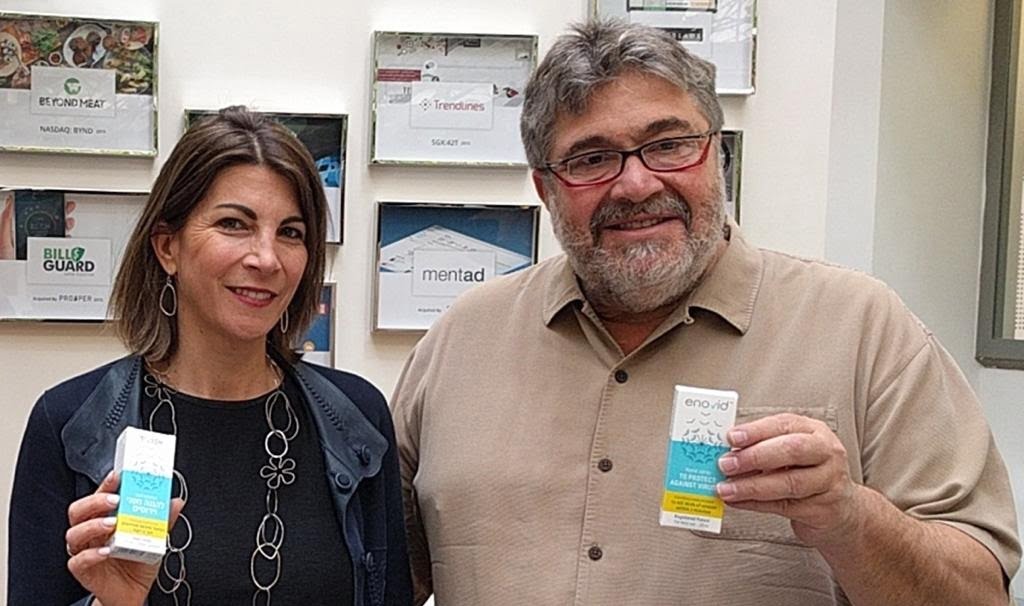
The company around the founder
The YWCA’s 2022 Women of Distinction recipients list recognized Regev in Entrepreneurship & Innovation. Its account of her work emphasized fundraising, international partnerships and manufacturing in two countries. It also noted her commitment to opportunities for women, who made up half the board and nearly half the wider group of employees, consultants and advisers described there.
Those details put people beside the commercial milestones. An organization becomes a place where expertise is hired, trusted and developed. Representation has a visible form in who gets a seat and who gets an opportunity. The award’s account gives that part of Regev’s leadership some dimensions without turning a past team snapshot into a claim about today.
Her professional relationships also cross generations. In a 2023 remembrance of Ferid Murad, Regev described him as an early supporter, adviser and board member. She recalled spending several days with him at a conference in early 2020 and receiving thoughtful feedback in a later conversation. The relationship appears in her telling through the time he gave to the work.
That is a useful detail in a career often summarized through names and credentials. An adviser’s value becomes tangible when there is a question to discuss. Regev’s own listing as an associate at Creative Destruction Lab in Vancouver places her experience in another setting where founders and experienced operators can meet.
Regev has a sharper anecdote about being underestimated. After a New York pitch, a male investor complimented her shoes instead of her presentation. She later won the competition and returned to him with the result. The episode has the pleasing economy of a well-timed comeback: she had an answer, and the judges had supplied it. It also puts a person inside the formal language of founder recognition. There was a room, a remark and an opportunity to reply. A trophy seldom records the conversation that made taking it home especially satisfying.
Making room for a successor
In September 2023, SaNOtize announced Steven Basta as its new CEO. Regev moved into the role of chief strategy and innovation officer and remained a director. She had decided to step down after leading the company from its beginnings. The announcement presented the change as preparation for its next phase.
A succession introduces a different kind of founder decision. Creating a company gives someone an unusually close relationship with its history. Choosing a successor requires thinking about the work ahead and the experience it calls for. Regev’s move retained a place for her within the organization while handing the chief executive’s responsibilities to another person.
The chronology has continued. A November 2024 podcast appearance still introduced her through strategy and innovation at SaNOtize. BridgeWell’s current leadership page now identifies her as CEO. Another executive role adds a new chapter to a biography that began with scientific training and repeatedly expanded into company building.
Eighty-two kilometers, three days
Away from the office, Regev has described an undertaking with a particularly clear set of measurements: an 82-kilometer hike over three days in Wicklow, Ireland, with her son. In June 2023, she spoke about being outdoors, taking in the views and having time to think. Family and a couple of books were part of her account of time away.
The numbers describe distance and time; the point of the trip, in her telling, was the experience within them. There is something welcome about a founder’s anecdote that contains a son, a landscape and an ordinary pleasure. It lets a working life share the page with the rest of a life.
She also makes sculpted birthday and wedding cakes for family. The scientist has kept a place for making things whose success can be judged at the table. A cake is quite capable of attracting an exacting review, especially from relatives. Alongside the wine work and the walk, it gives the biography texture that a list of executive appointments would miss.
Regev’s career has involved several forms of explanation: a subject understood, an idea discussed, a company introduced, a new responsibility taken on. The sommelier’s early task still makes a fitting way to think about that work. Knowing something is the beginning. The next part happens when another person asks a question, and the answer has to be useful to them.