Gaurav Dhillon made 156 sales calls and sold nothing. The team had built software that could take a COBOL program from a mainframe and produce code for Oracle and Sun systems. They had consulted by day, worked by night, and become deeply attached to the result. Now someone had to persuade customers to become attached to it too. That task fell to Dhillon.
Zero sales creates an awkward atmosphere among colleagues who have been working very hard. Was the product wrong? Was the salesman wrong? Dhillon took a weekend away, probably in Santa Barbara, as he later recalled. He reconsidered what the prospective buyers had actually said. They wanted new applications with Windows interfaces. Preserving an old program in a new location held considerably less appeal.
They did, however, need help moving their data. A modest piece of the team’s work, treated as a side project, answered that request. Informatica’s future was hiding in the part of the product its makers had considered secondary. The customers had been explaining this. Dhillon’s useful achievement was eventually hearing them.
An education outside the classroom
He grew up in an industrial town in northern India, surrounded by people who made things. An engineer uncle helped turn his attention toward electronics. Talking to local entrepreneurs gave him an education that ran alongside school: businesses were things people could begin, rather than institutions one simply joined.
He studied electrical engineering at Punjab University and arrived in the United States in 1987 to pursue graduate work in computer science. He remembered leaving India with $20, under the restrictions of the time. His early years in America involved learning unfamiliar social conventions as well as finding his professional footing.
A summer internship at Unisys became a job offer. He left graduate school for work, finding mentors and formal training inside a large computer company. Both his parents were university professors, so abandoning the degree was a family surprise. Giving up the respectable job would provide the sequel.
The appeal of electronics had already required a small act of dissent. Older engineers around the family had recommended civil engineering as the substantial profession. Dhillon chose the tiny transistors. Concrete was perfectly respectable; he preferred the possibilities inside the computer.
The product hidden inside the product
In November 1992, he left his job to begin the venture that became Informatica, alongside co-founder Diaz Nesamoney. Early research funding helped get the business started. The eventual opportunity took time to emerge. Knowing that computing was changing did not automatically reveal what customers would pay to change.
The shift away from mainframes created a practical migration problem. The failed application-conversion pitch exposed the more durable requirement underneath: data had to travel between systems even when customers chose to rebuild the applications themselves. Dhillon’s account gives the discovery a welcome lack of ceremony. A company can find its direction through repeated, uncomfortable conversations.
The team moved from Los Angeles to Silicon Valley in February 1994. Advice came with the money. Former Oracle finance executive Bob Oscar, seeing Dhillon struggle with spreadsheets, helped write the business plan. Investors and advisers encouraged the company to win recognizable customers across different industries, demonstrating that the product could serve a broad market.
Informatica went public in April 1999. Dhillon led its expansion into Europe and Asia and remained CEO until 2004. The lesson he later drew from those years included a warning: attention to earnings per share can crowd out the work of maintaining the product. Success creates its own distractions, some wearing very good suits.
- 1992Begins Informatica
- 1999Informatica IPO
- 2006Co-founds SnapLogic
- 2025Moves to chairman
A cinema intermission
After Informatica, Dhillon took time away and tried something with a different audience. Jaman brought independent and international films to computer screens. Where enterprise software asks whether a system can do its job, cinema asks whether anyone wants to spend an evening with it. His taste for building had wandered into the projection booth.
He remembered demonstrating high-definition video on a laptop at Cannes in 2005, ahead of widespread enthusiasm for watching films that way. The service sought out Indian and South American cinema. It was a substantial change of subject for someone known for corporate data, and a reminder that a founder’s curiosity need not obey his résumé.
Jaman did not become a money-making success. Dhillon said the financial crash of 2008 and 2009 helped close off its prospects. He still described it as a fun project. There is room in a career for an experiment that fails commercially without needing to be repackaged as a secret triumph.
Returning before the customers were ready
SnapLogic, co-founded in 2006, brought him back to integration. He supplied early backing and became CEO in 2009. Cloud applications were spreading, and he saw another version of the problem he knew: businesses would buy new software, then discover how much of their old world still needed to talk to it.
Conversations with Marc Andreessen had helped sharpen his interest in that shift. As work moved into the cloud, Dhillon wondered how the pieces would connect. The proposed answer used visual pipelines, allowing users to express the movement of information by arranging components rather than writing every connection themselves.
Timing made the return difficult. SnapLogic was running on Amazon Web Services in 2008, he recalled, while large enterprises were still approaching cloud software cautiously. Having the technology ready did not bring the buying cycle forward. The company had to focus on enterprise customers and rebuild its platform to meet their requirements.
Ben Horowitz helped him think through that architecture. Dhillon also recognized that a second company carried different economics. Traditional software licences brought substantial payments upfront; subscriptions spread receipts over time. Customers expected a new platform to match capabilities they already relied on. Experience helped him see the burden. It did not remove it.
The unglamorous pleasure of things working
Ask what integration does, and Dhillon can bring the answer down from the clouds quickly. A company hires someone. Their information sits in a cloud human-resources system, while accounts and financial processes live elsewhere. Everything must agree that the new colleague exists. Ideally before that colleague spends the first morning asking for access.
Or a salesperson closes an order in Salesforce. The sale needs to produce the right information in purchasing and finance. The celebratory announcement is the easy part. A business still has to complete the transaction across systems that were acquired at different times for different reasons.
These examples explain his repeated interest in making powerful software usable. In Australia in 2023, he described asking how Apple would approach the integration business: how to combine ease of use with capability. He also emphasized reputation. A company connecting important systems wants evidence that its supplier has done the work before.
In December 2021, SnapLogic raised $165 million in a round led by Sixth Street Growth, at a $1 billion valuation. The money was intended for international expansion, product development, sales and marketing. A business built around connections had reached a scale that required plenty of connections of its own.
The professor on the payroll
One hiring decision shows how far back Dhillon’s interest in machine learning went. Around 2010, he met Greg Benson, a computer science professor at the University of San Francisco. Their discussions paired a founder’s insistence on usefulness with an academic’s appetite for hypotheses and experiments.
Dhillon hired Benson part-time and encouraged him to keep teaching. SnapLogic had only about a dozen employees. Some colleagues wondered whether a small company could afford that choice when other jobs urgently needed filling. Dhillon wanted a different way of looking at the problem, and Benson’s university work was part of the attraction.
The practical question was how to reduce the tedious parts of building integrations, including matching fields between systems. Other customer priorities interrupted the early machine-learning work, but the research direction persisted. The company introduced its Iris integration assistant in 2017, years before the current enthusiasm for generative AI.
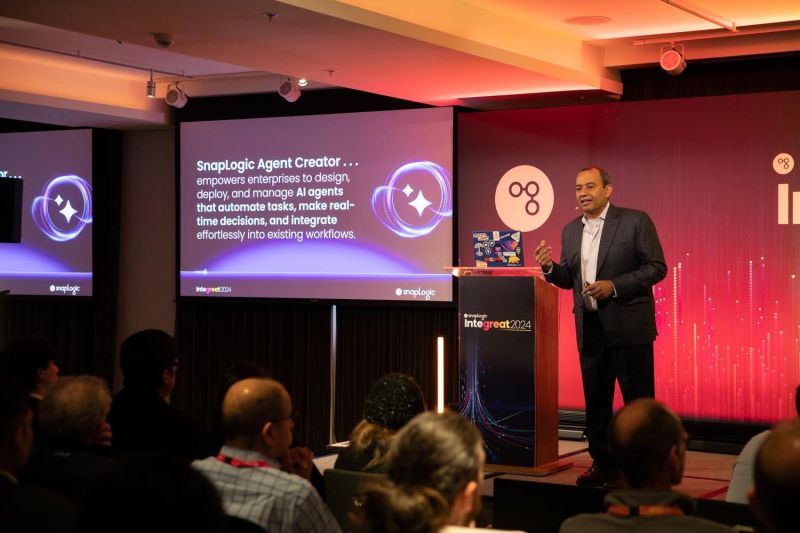
SnapGPT followed in August 2023, bringing natural-language requests into the integration process. AgentCreator arrived in October 2024. Dhillon’s stated ambition was a unified platform covering a range of enterprise needs. The products changed; the hoped-for experience remained consistent: people should spend less time wrestling with the machinery required to connect their work.
What the trout knew
A family holiday in Sun Valley, Idaho, supplied Dhillon with a less technical explanation of his method. Fly fishing required him to study how the river flowed and where trout might be. Random casting was a poor substitute for understanding the water.
He turned that observation into advice for entrepreneurs: investigate the market before entering it, work methodically, and change tactics when the current approach produces nothing. Sometimes the answer is a different fly. A fish has no obligation to reward the effort invested in the last one.
“Being patient just makes you better.” His fishing advice sits comfortably beside the 156 sales calls, though patience in that story had to include changing the product. Persistence becomes useful when it leaves room for new information. Otherwise, a determined founder can spend a very long time demonstrating the wrong software.
The analogy also catches his conversational manner. He explains enterprise technology through hiring, house sales, rivers and cinema. The machinery can be complicated. He keeps looking for a way to make the decision understandable.
“Being patient just makes you better.”Gaurav Dhillon, on fly fishing and entrepreneurship
A different seat at the table
On August 13, 2025, SnapLogic announced that Dhillon was retiring as CEO and moving to chairman, with Brad Stewart taking over the executive role. He would continue to advise the company. The handover came after the business had passed $100 million in annual recurring revenue.
At the time, SnapLogic reported processing more than five trillion records and 1.7 billion integrations each month. Those are company-wide operating figures, a measure of the work passing through the platform at the transition. Behind them sit the ordinary tasks he had spent years describing: orders, accounts, applications, data arriving where it is needed.
Dhillon called the change the right time to begin a new chapter. The title changed after roughly sixteen years as CEO; the relationship continued through the board. His career had already accommodated a public listing, a cinema venture, a return to integration and a long wait for enterprise customers to catch up with the cloud.
The early sales tally remains a useful detail to keep beside the later numbers. Before the public company and the billion-dollar valuation, there was a founder with a carefully built product and 156 conversations going badly. He could revisit them. He could discover that the less celebrated piece of work deserved the company’s attention. Then he could begin selling something people wanted.