A prescription is an instruction. It is not yet a medicine in somebody’s hand. Between those two things sit insurance checks, payment decisions, pharmacy messages and the practical question of getting a package to the right doorstep. Fuze Health has built its proposition around that interval. The interesting object in its story is the handoff.
- Fuze combines LetsGetChecked’s testing, Truepill’s pharmacy infrastructure and Alto’s delivery experience.
- Its buyers include health plans, employers, providers and drugmakers.
- The bet: fewer disconnected steps between discovering a need and receiving care.
The box is the easy part
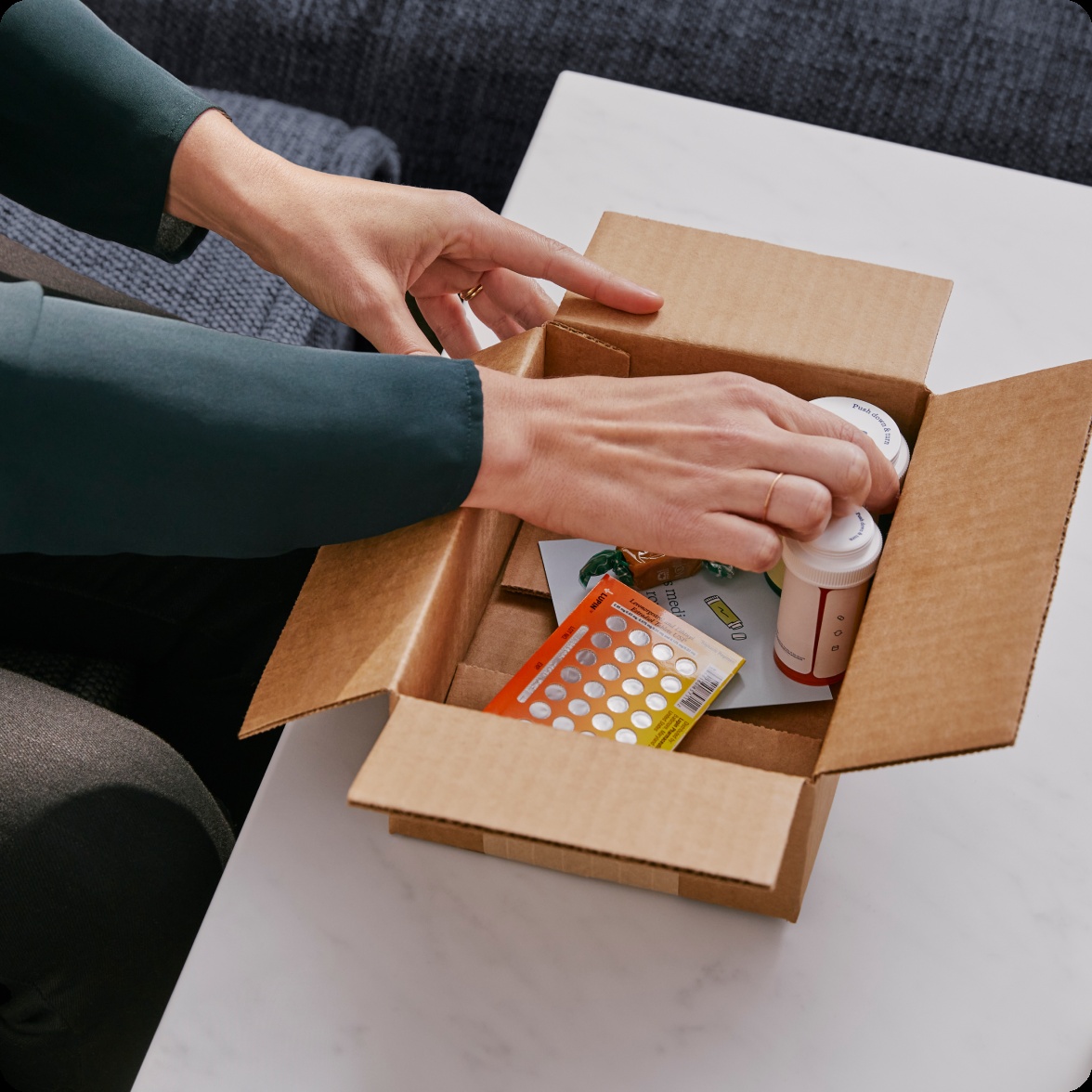
Look at the company’s pharmacy photograph: cardboard, bottles, hands. Almost aggressively ordinary. Yet the box is the visible end of a much longer process. Fuze offers organizations a way to connect diagnostics, clinical support, prescription fulfillment and patient engagement. Its promise becomes useful when the result of one service can lead somewhere in the next.
For a health plan, that might mean helping members complete screenings. For a pharmaceutical manufacturer, it might mean getting a prescribed therapy through access checks and into a patient’s routine. For the patient using FuzeRx, the task is more immediate: manage an order, arrange delivery or ask a pharmacist a question.
Three businesses, one unfinished journey
Fuze appeared publicly on May 21, 2025. Its constituent parts were already working. LetsGetChecked had completed its acquisition of Truepill on October 1, 2024, connecting home health testing and virtual care with digital pharmacy infrastructure. Alto joined the company during the week of Fuze’s launch, adding local delivery capacity and particular experience in fertility medications.
That sequence matters. Fuze’s origin is a combination of operating businesses, each with different expertise. A testing company knows sample collection and laboratory analysis. A pharmacy platform knows prescription intake and dispensing. A delivery pharmacy knows what happens when a patient needs medication at a particular place and time. Putting those disciplines together is an operational project.
- 01ScreenDiagnostics & genomics
- 02InterpretClinical expertise
- 03FulfillPharmacy & delivery
- 04SupportEngagement & follow-up
A service map, not a guarantee that every program includes every step.
The consumer-facing identity has since caught up with the corporate combination. On October 1, 2026, Alto became FuzeRx. Patients can use the app to manage orders and payments, follow deliveries, access medication guidance and message their pharmacy team. Fertility medication delivery reaches all 50 states; same-day courier service depends on the local footprint.
The price of another try
There is a less tidy history behind the combination. In 2022, Truepill went through four rounds of layoffs. Its retrenchment focused the business on pharmacy and cost reduction. In a June employee letter, then-CEO Sid Viswanathan explained the change: “While this was the right strategy up through 2021, the markets have shifted, and we must adapt.”
The acquisition that followed was substantial. Renatus’s October 2024 deal review reported approximately $525 million in consideration for Truepill, with roughly $25 million in cash and the remainder in stock, plus possible earnouts. That was the reported price of the predecessor transaction. It does not establish a valuation for Fuze or demonstrate that integration will pay for itself.
The useful question is how many people complete the next step.An editorial test for the combined business
The lesson is sharper than a merger announcement suggests. Building a broad service catalog can consume resources before the connections earn their keep. Fuze’s combination gives the ambition another organizational form. Whether it works depends on what the connections accomplish: completed screenings, filled prescriptions and patients who can get the support they need.
A pharmacy that other companies can build on
Fuze sells both healthcare work and the technology around it. Its pharmacy offering includes API-powered fulfillment and configurable digital experiences. Its clinical arm includes diagnostics and genomics through LetsGetChecked and Veritas. Its technology business adds software, analytics, consulting and the PatientsLikeMe community. Buyers can engage with capabilities rather than invent every component themselves.
This puts Fuze in several markets at once. A patient choosing a digital pharmacy may consider Amazon Pharmacy or Capsule. An organization buying home testing may evaluate Everly Health. A manufacturer shopping for access services has still another shortlist. Fuze’s proposed distinction is the breadth of connected capabilities. Buyers still need to examine the particular service they are purchasing.
Fuze’s reported cumulative pharmacy volume. It describes operating history, not an annual growth rate.
The commercial arrangement follows that mix. Enterprise buyers discuss programs with sales; prescription payments depend on medication, insurance and assistance options. FuzeRx accepts insurance and other payment methods. Convenience does not create a single price. A buyer should ask how the proposed program changes total cost and patient effort, alongside the appearance of the interface.
The next step is the product
Two 2026 collaborations make the strategy unusually concrete. In April, Fuze and Valeris announced a division of labor: Fuze’s Access+ would handle digital pharmacy operations, including intake and coverage checks; Valeris would provide benefit verification, authorization and appeals support, affordability services and patient support. The work between prescribing and treatment is the subject of the arrangement.
In March, Illumina and Veritas Genetics Powered by Fuze Health announced a preventive genomics consortium. The aim is to bring whole-genome sequencing into health-plan programs, with interpretation, counseling and pathways for actionable findings. A genetic result has limited practical value until someone understands what action, if any, should follow. Here again, the handoff determines the usefulness.
There are clear limits. Local courier coverage varies. Pharmacy services operate within jurisdictional rules. An integrated program still needs workable clinical follow-up, patient participation and coordination with the buyer’s existing systems. For a straightforward prescription, the broader service portfolio may add little to the decision. Complexity creates the opening, and also the execution burden.
What can another company copy? Map the steps after the apparent finish line. Give each transition an owner. Measure completion rather than treating an invitation, a test or a prescription as the final result. Fuze has assembled substantial pieces of that approach. The box on the doorstep is where the proposition becomes tangible.