A paycheck arrives as one number. Life immediately divides it into several arguments: the rent, the holiday, the credit card, the future. The arithmetic may be simple. The administration is exhausting. Fruitful, a New York financial technology company, has built its proposition around this small but consequential mismatch. People receive money in a lump; they need to use it according to a plan.
- A CFP professional helps refine a personalized Money Map.
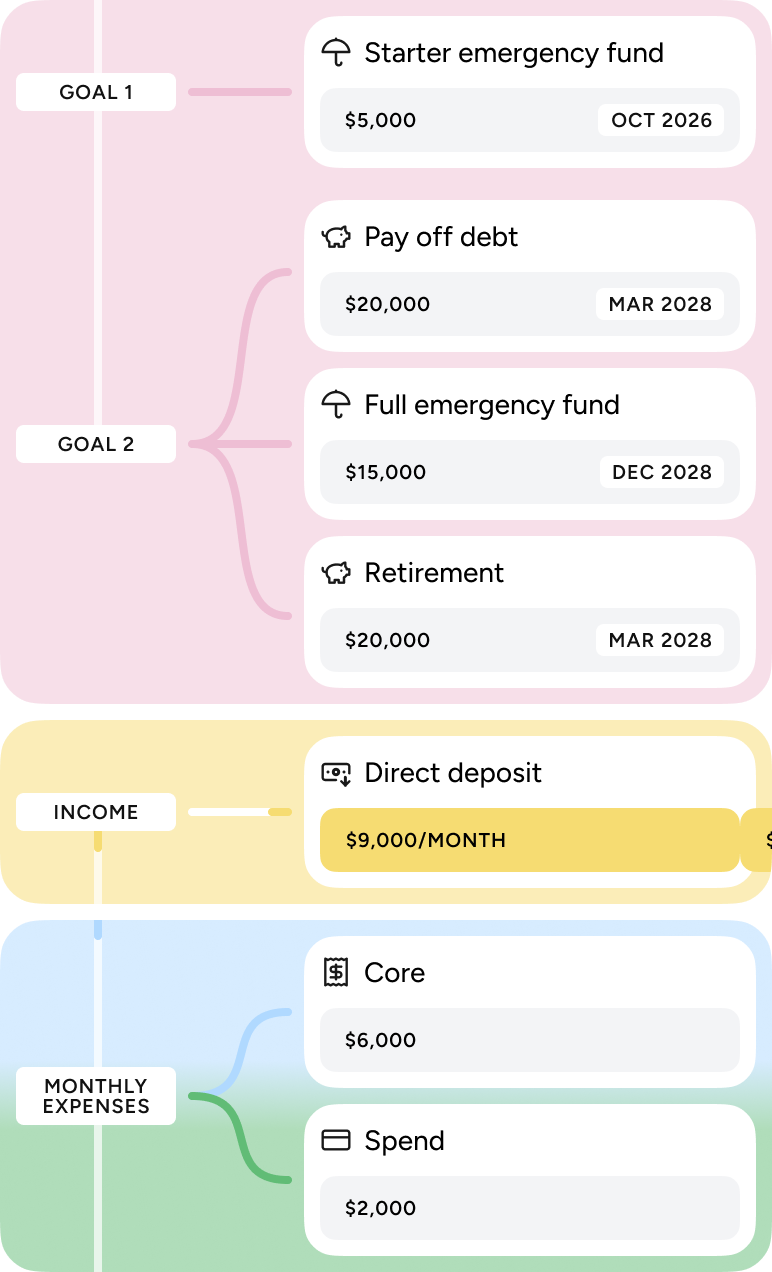
- The system routes income toward bills, spending, savings and investments.
- Base membership is free; Premium costs $999 a year after three included months.
Consider the distinction. A budgeting app can provide an excellent account of yesterday. A planner can provide an excellent account of tomorrow. Between those two accounts sits a person with six browser tabs, three passwords and a transfer they meant to make on Friday. Fruitful wants to occupy that interval. Its product joins the recommendation to the machinery that carries it out.
The customer between two worlds
Fruitful was formed in 2021. Its financing counsel confirmed $33 million in aggregate equity financing the following year: an $8 million seed led by Emigrant Bank and a $25 million Series A led by 8VC. The company’s early pitch concerned people with respectable incomes who had yet to accumulate the assets that attract traditional private-client services. It was an unusually ordinary customer to build a financial company around.
That customer does not necessarily need an exotic investment. They may need to reconcile a student loan, a deposit for a home and the suspicion that everyone else has already mastered adulthood. Fruitful’s public interviews describe younger adults and mass-affluent households as its audience. Its website says thousands trust the service. That gives a sense of reach, rather than a precise count of active paying members.
The alternatives explain its position. A traditional planner offers expertise; a robo-adviser offers portfolio management; a bank offers accounts; budgeting software offers visibility. A diligent customer can assemble these pieces. Fruitful sells the coordination. The appeal depends on how much the customer values having somebody help connect the pieces and keep them connected.
A plan with plumbing attached
Money Map, publicly unveiled in September 2025, makes that coordination visible. Members supply information about their finances and goals. A Fruitful Guide refines the allocation, answers questions and helps activate the system. The resulting map assigns income across obligations, everyday spending, savings targets and investments. Linked paychecks can then fund those destinations automatically.
The launch announcement said Money Map could work with financial institutions members already used. That matters because moving every account is itself a chore. The claim describes the intended breadth of the system; it should not be read as a promise that every outside account supports every action. The practical question is whether the accounts and transfers a particular household needs can be connected.
Fruitful also supplies its own financial products. Cash accounts and a secured charge card launched in February 2025. Cash is held at Emigrant Bank, which also issues the Mastercard card. Spending is linked to the cash account, avoiding revolving balances and interest charges. Investments are held and cleared by Apex Clearing, with portfolios built primarily from diversified, low-cost funds.
The person stays in the picture
There is a reason the human is called a Guide. Money conversations involve facts, but also embarrassment, competing priorities and promises made to partners. Every Fruitful Guide is a CFP professional and an investment adviser representative. The company presents their personalities alongside their credentials. Analytical, empathetic and pragmatic are descriptions of how a conversation might feel, rather than what a portfolio might earn.

CEO Sam Lewis has described AI as a way to accelerate the work behind those conversations. In a July 2025 interview, he said planning tasks that once took four hours could be reduced to three minutes. That is his description of workflow improvement, not an independently measured productivity result. The premise is sensible: preparation can be automated while judgment remains a conversation.
“Having a human in the loop really builds that emotional connection and builds that trust.”Sam Lewis / July 2025
The bank relationship supplies another part of the explanation. Lewis said Fruitful was incubated within Emigrant, an investor as well as its sponsor bank. He also identified Synctera as the technology partner between them. Close cooperation, in his account, helps the company build products. Underneath the friendly language sits the less glamorous work of accounts, compliance and reliable movement of funds.
The price of follow-through
The offer has changed. In July 2025, Lewis discussed a $98 monthly membership. The current website offers a free base membership, with three months of Premium included. Afterward, Premium costs $999 annually. The free money system continues working if a member chooses not to keep the upgrade.
Premium includes three ongoing guidance sessions a year after the trial, anytime Guide messaging and no investment management fees. Free-tier investments above $10,000 carry a stated 0.25% annual management fee; the first $10,000 is managed fee-free. The published cash rates are variable: 3% APY for the free tier and 4% for Premium. Card rewards are 1% and 2%, respectively, with separate conditions for legacy memberships.
Those distinctions deserve attention. The annual membership is a real expense, and fee-free investment management does not remove underlying fund expenses or market risk. Fruitful is a fintech, while Emigrant provides the deposits. Eligible deposits have FDIC coverage subject to limits and conditions; investments are not FDIC insured and can lose value. A tidy interface cannot abolish those differences.
Borrow the routing rule
The idea a reader can copy is allocating income at arrival. Give recurring obligations and chosen goals explicit destinations, then arrange transfers around that decision. Review the arrangement when circumstances change. No proprietary vocabulary is required. The value lies in reducing the number of times the same sensible decision must be made.
Automation still needs enough income, accurate information and a workable plan. Irregular pay or frequent changes in expenses call for closer review. Someone seeking individual stock selection or elaborate bespoke investment strategies may prefer another adviser. Fruitful’s distinctive wager is narrower and more practical: a financial plan becomes more useful when it can survive an ordinary, distracted week.