The warning was accurate. That was the problem. Synovus, a regional bank in the American Southeast, had placed an AI-generated note inside its digital banking experience. The note told customers they were overspending. Customers answered with a blunt review of their own: 3.6 out of 5. So the team changed the wording. Instead of announcing a failure, the bank observed that the customer was “spending differently this month.” The rating rose to 4.7.
That 1.1-point swing is the most useful way to understand Personetics, the company behind the machinery. Its software had done the hard computational work - cleaning financial data, spotting a pattern, deciding the moment mattered and placing the insight in front of the right person. Yet the decisive variable was ordinary human tact. The machine found the truth; the product succeeded only after it learned not to sound like a scold.
A company designed to disappear
Personetics is a New York-headquartered, Israeli-founded enterprise fintech. David Sosna and David Govrin started it in 2011. The company now says its technology supports about 150 million active monthly users in 35 markets, through more than 130 financial institutions. Most of those people will never download a Personetics app or see its yellow logo. They meet the company as a spending recap from their bank, a duplicate-subscription alert, a savings suggestion or a forecast that next week’s bills may outrun the available balance.
That invisibility is not a branding accident; it is the business model. Personetics sells software to banks, credit unions and financial-services companies. The institution keeps the customer relationship and chooses the channels. Personetics supplies the intelligence underneath: APIs, widgets, predictive models, prebuilt banking scenarios and tools for tailoring them. Pricing is negotiated privately, as enterprise software pricing usually is. Deployment can be cloud-based or on-premise, a necessary concession in a market where security committees can matter as much as product demos.
The customer roster shows why the architecture bends. Santander, UOB, RBC, BMO, Huntington, KBC, Synovus and Central Bank do not share one core system, one regulatory environment or one idea of a helpful tone. A regional bank may want a modest library of savings and cash-flow messages. A global institution may need languages, local merchant data, several digital brands and millions of decisions every day. Personetics' product is therefore less like a finished banking app and more like a box of opinionated parts. The repeatable models create speed; the bank's controls preserve local judgment.
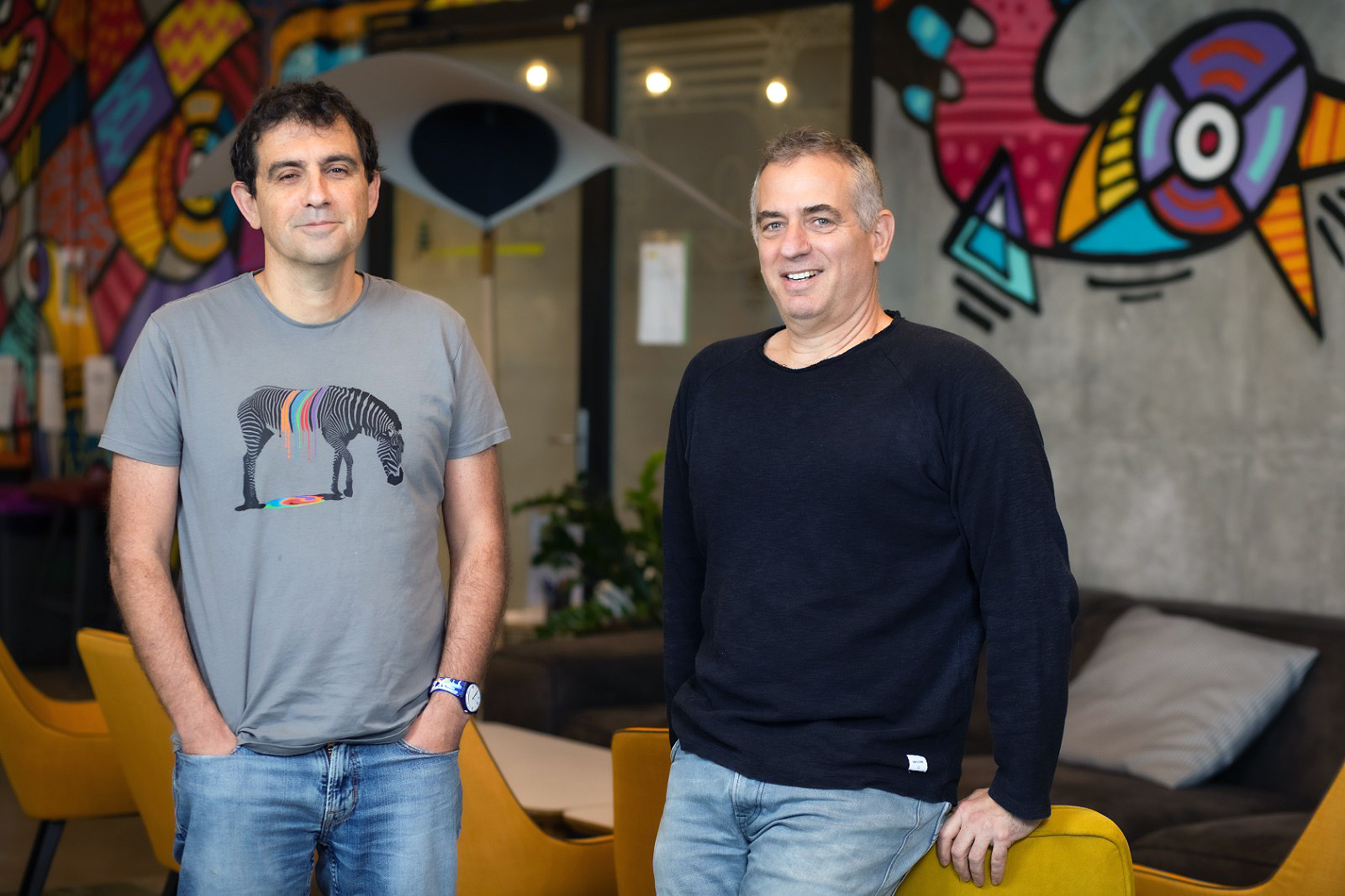
Its current chief executive, Udi Ziv, arrived with the résumé of an enterprise-software scaler, including leadership at Earnix and NICE. The founders remain part of the company’s story, but the platform has grown beyond one clever recommendation engine. It now spans the entire trip from ugly transaction string to customer action.
First clean the mess, then make the suggestion
Bank data rarely arrives ready for a tasteful mobile card. One merchant can appear under several cryptic descriptions. Accounts sit in different systems. Transactions need categories, locations, logos and subscription signals. Personetics Enrich normalizes that mess. Engage then analyzes behavior in real time, chooses from prebuilt or custom insights and ranks what a customer should see. Act handles savings and other goal-based journeys. Assist adds finance-specific conversational self-service. Discover points the same intelligence inward, toward bankers, marketing systems and customer-relationship tools.
The distinction from a budgeting app matters. A consumer tool asks the user to adopt another destination and often connect outside accounts. Personetics goes where the customer already banks. It also gives the institution control over the logic, wording and delivery. Its Engagement Builder lets business teams change insights without waiting for a new coding cycle. This is how a wording fix can become an operating capability rather than a one-time apology.
A useful nudge might be almost embarrassingly mundane. The system notices a refund arrived, flags a double charge, identifies an abandoned subscription or warns that a recurring payment will land before payday. The customer does not need a financial plan; they need the right fact at the right minute. More ambitious journeys can calculate a safe amount to save, invite the user to set a goal and adjust transfers as cash flow changes. That progression - from observation to explanation to permitted action - is where Personetics tries to move beyond the charts and category wheels of traditional personal-finance management.
“We’re passing the baton between virtual and personal, so it all feels coordinated.”Liz Wolverton, Synovus
At UOB, the bank went live with more than 100 out-of-the-box insights, then created about 70 custom ones during its first three months. At Synovus, more than 60 Personetics-powered insights reached 300,000 digital users. Twenty percent were described as highly engaged. A prompt aimed at frequent check writers suggested Zelle and converted 19 percent of click-throughs. Customers who engaged with the insights grew average relationship balances by 7 percent, compared with 4 percent among those who did not.
Those figures come from one bank’s program and are not a universal forecast. They are still more informative than an airy promise of “hyper-personalization.” They show the chain a buyer should demand: observable behavior, specific intervention, customer feedback and a business outcome. The result can serve both sides of the screen. A timely Zelle suggestion reduces check friction for the customer and deepens digital use for the bank. A safe-to-save recommendation can build a household cushion and retain deposits.
Financial wellness meets the sales department
Here lies the tension. Personetics presents its mission in the language of smarter financial decisions and stronger financial health. Its bank buyers also want deposits, cross-sales, loyalty and lower service costs. These motives can coexist, but they are not automatically identical. The same system that notices a customer’s need can help solve it or exploit it. The product’s credibility depends on whether the recommendation feels like assistance first and inventory second.
Personetics' advantage is domain depth. Generic marketing platforms can segment customers; generic chatbots can answer questions. This platform arrives with bank data models, transaction enrichment, hundreds of financial scenarios, regulatory deployment choices and evidence from multinational institutions. Competitors such as Meniga, Moneythor, Strands, MX, Bud, Tink and FinGoal attack overlapping slices of the same market. A bank can also build internally, though Personetics argues that midsize institutions may spend a year producing five to 10 insights. Its Express package advertises a typical launch in about 12 weeks.
The buy-versus-build question is not settled by the calendar alone. Buying imports years of patterns and implementation knowledge, but it also imports a vendor's abstractions. Building gives a bank total control, but requires scarce data engineers, model governance, content design and continuous testing. A fast launch that nobody owns internally will decay. A careful internal program that never leaves the lab is equally useless. Personetics works best when the institution treats the platform as a learning system, assigns real product owners and accepts that every “smart” insight is an editorial decision with a metric attached.
Do not begin with “personalize the bank.” Pick one behavior, one message and one action. Instrument the response. Let business teams edit the copy. Expand only after the first loop works.
That is the reader’s portable lesson. Start narrower than the transformation deck. Synovus did not need a synthetic relationship manager to learn something valuable. It needed a detectable group - frequent check writers - and an easier behavior to suggest. It needed a feedback score on a low-balance message. It needed permission for non-engineers to adjust tone. The loop produced information quickly enough to act on.
Where the machine stops being helpful
The model weakens under predictable conditions. Delayed or incomplete data produces late, false or strangely specific advice. A fragmented institution can install a personalization layer while leaving branch, call-center and marketing teams in separate worlds. Customers may resent even accurate inferences if consent and privacy expectations are unclear. A cheerful savings prompt can feel absurd to someone with no money to spare. And a small credit union may find enterprise integration, governance and vendor dependence heavier than the benefit.
The 2023 cut of 30 jobs, about 8 percent of the company, is another reminder that a large funding round does not suspend gravity. Personetics announced $75 million from Warburg Pincus in 2021 and another $85 million led by Thoma Bravo in early 2022. Then the technology market tightened. Capital paid for expansion; it did not remove the need to match growth with demand.
The product is moving with the industry. In 2025, Personetics launched an MCP server so banks could expose its financial-behavior models and insights to controlled agentic applications. In August 2026, it announced a Plaid partnership that combines a bank’s own records with a broader open-finance view. That could make recommendations more complete: the primary bank can see obligations, investments and activity elsewhere. It also raises the stakes for permission, accuracy and restraint.
Personetics calls the destination “cognitive banking.” The plainer description is better: a bank that notices, remembers and chooses its words. The company’s scale is evidence that institutions want this layer. Its little 3.6-to-4.7 experiment is evidence that scale alone is insufficient. In financial software, intelligence includes knowing when the customer is different from the average. Judgment begins with knowing how to tell them.