A homeowner checks what her house is worth. It is an ordinary question, with an unusually valuable consequence: somewhere, a lender may be about to lose her attention. Financial Plus Credit Union identified member departures to third-party home-value sites among its digital problems. The useful conversation was beginning elsewhere.
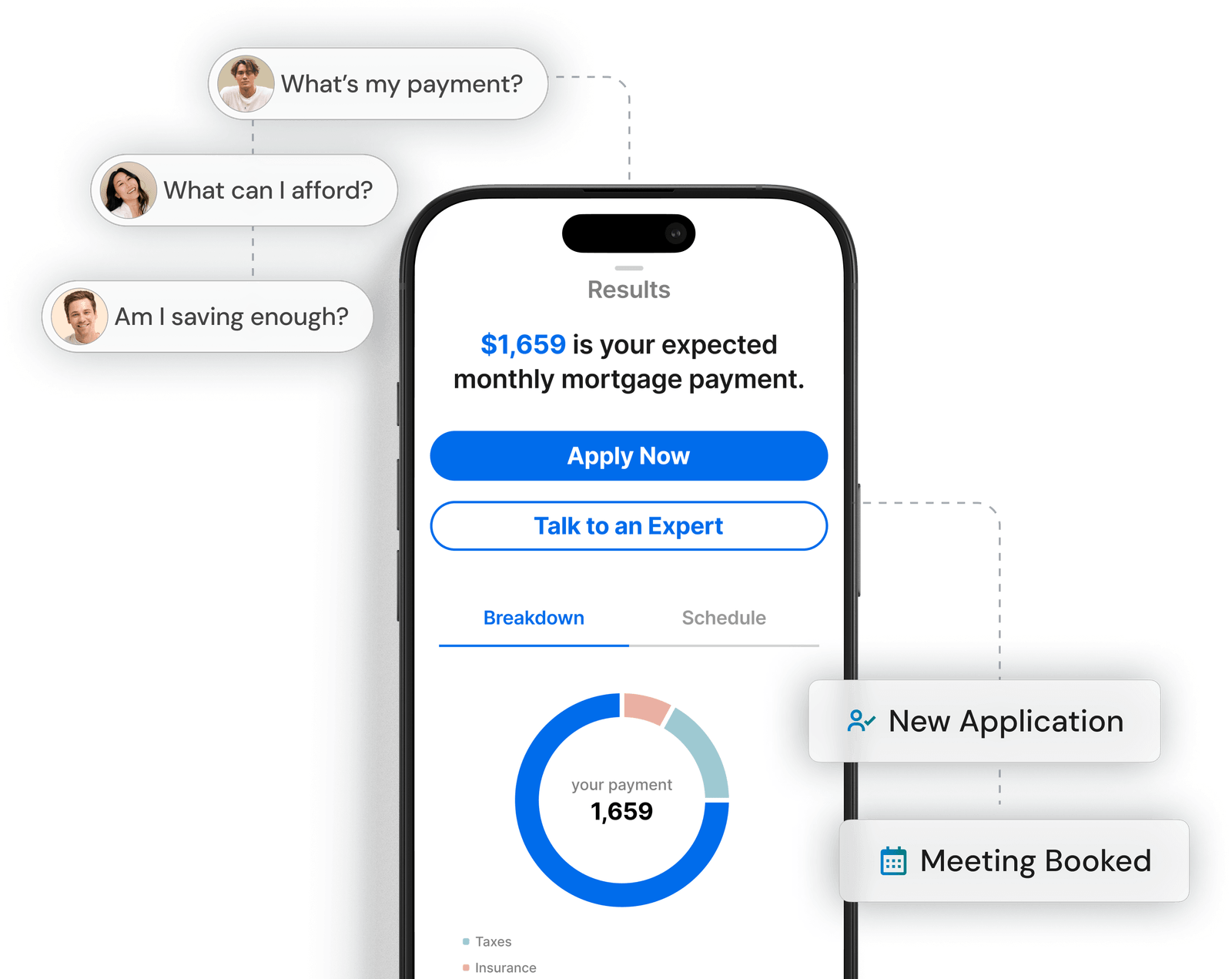
Its response was to put My Home Value inside digital banking. Members could see property values, borrowing power and personalized loan offers, then apply within the banking experience. Array now sells the product following its acquisition of Chimney. The little tool explains the larger company: meet a customer at a financial decision, supply something useful, and let the familiar institution keep the relationship.
- Array supplies financial tools that appear under its customers’ brands.
- Buyers include banks, credit unions, fintechs and digital businesses.
- Its acquisitions connect credit information with debt guidance, home decisions and payments.
- The commercial bargain: buy the capabilities, keep the customer experience.
A small window with a large view
The credit union’s published case reports 183 applications and 56 funded loans totaling $2.7 million after seven months. It also reports a $40,000 investment and no additional marketing spend. These are vendor-published customer results, not a forecast. The distinction matters: loan principal is not revenue, and dividing lending volume by software investment does not produce a profit calculation.
Still, the case supplies something more interesting than a promise about engagement. It shows a path from information to an application to a funded loan. Before the deployment, the institution described siloed teams and slow, campaign-driven processes. Its first problem was a fractured journey. Moving the home-value check inside banking gave the next step somewhere to happen.
56 of 183 applications became funded loans: approximately 31%, calculated from the reported counts. Published investment: $40,000. Loan volume is principal, not profit.
“First and foremost, the lift was light.”Jess McNier / Financial Plus Credit Union
The company behind somebody else’s button
Array was founded in 2020 by Martin Toha and Phillip Zedalis. Toha had already built consumer-credit products through Pentius; before that came VOIP.com and OrderMachine, an e-commerce and payments business. His official biography offers an appealing detail: he built and sold his first technology product in high school. Apparently, homework was not the only deliverable.
Array’s mission is to fuel financial security. Its practical role is to give other companies financial capabilities they can present as their own. The buyers have users, a brand and an existing digital experience. Array brings configurable products, financial data connections and delivery infrastructure. A bank can add credit monitoring; a digital brand can offer identity protection; a fintech can add debt guidance without inventing each system from the beginning.

The company calls itself “invisible by design.” That is a distribution strategy with a certain elegance. A conventional consumer app must persuade people to find it, download it and return. Array works through organizations where a relationship already exists. Hundreds of organizations have partnered with it, according to its customer materials. The end user can benefit without making Array a household name.
One score, several unfinished questions
My Credit Manager provides scores, reports, alerts, score factors and simulation. These are useful because a number rarely explains itself. Someone who sees a change wants to know what moved, what it means and which action might matter next. In September 2026, Array announced support for VantageScore 4.0, extending the scoring models available through the product.
Credit is only one part of the collection. Identity Protect combines monitoring with restoration services and insurance subject to plan terms. Privacy Protect seeks to remove exposed personal information from data brokers and people-search sites. Subscription Manager reveals recurring spending. BuildCredit Rent supports consumer-permissioned rent reporting. These products address different annoyances: a confusing score, an exposed identity, a forgotten subscription, a payment history that is not reflected in a credit file.
There are also tools for the institution’s side of the relationship. Offers Engine supports personalized offers using credit data; Data Furnishing helps organizations report payment information to credit bureaus. Array’s expertise lies in joining consumer-facing experiences with the data and infrastructure underneath them. The buyer gets both a visible feature and work that users should never have to think about.
A map of the portfolio’s purpose, not a required sequence or a promise that every tool is integrated in every deployment.
Buying the missing next step
The acquisitions make more sense viewed as a sequence of household questions. Array acquired Payitoff in October 2024. Founder Bobby Matson had started it while trying to manage his family’s student loans and other debt so they could buy a home. Credit information can identify the problem; repayment guidance can make it less bewildering.
MoneyKit joined in July 2025, bringing financial connectivity infrastructure. In February 2026, Chimney added calculators and home-value tools, while Penny Finance added financial education and money management. EarnUp brought payment infrastructure designed to align contributions with pay cycles. Taken together, the purchases suggest a company moving closer to what a person actually does after opening a financial dashboard.
Chimney’s founders describe learning that decision tools cannot operate in isolation. Consumers expected guidance to be personalized, available where decisions happened and actionable. Joining Array offered a broader setting for those tools. This was a shift in how they understood distribution: a calculator could be useful on its own, yet more useful as part of the surrounding journey.
EarnUp tackles a particularly human mismatch. Bills arrive monthly; income often arrives on a different rhythm. Its platform breaks large obligations into smaller contributions, sets funds aside as income arrives and remits payment when the full amount is collected. Array announced the acquisition on February 25, 2026. The mechanism makes the cash-flow calendar easier to manage. It still requires money to arrive.
Who pays for the useful part?
Array’s public pricing page describes per-member-per-month and per-transaction charging. Clients select products and features; they can offer access free or charge their customers. Array+ packages multiple tools for free, premium or hybrid offerings. For a product team, these choices change the economics: a useful feature can be a retention expense, a subscription product or part of a wider lending relationship.
Delivery is similarly configurable. Embedded tools sit inside an existing app or website. A standalone hosted experience offers another route, including pilots and campaigns, with single sign-on support. Array says deployments can launch in weeks, while explicitly noting that times vary. Its modular framework also lets clients change the mix of tools through configuration. A launch estimate should still be tested against the buyer’s actual systems.
Narmi illustrates how the model travels. Its August 2026 update describes Narmi-branded tiers built on Array+: a free layer with a credit score, subscription visibility and privacy insights, and a broader premium layer. Access Softek and Lumin Digital have also announced partnerships with Array. Digital banking vendors become another way to reach institutions and their account holders.
The feature list is only half the purchase
Array operates in a competitive market. SavvyMoney also embeds credit insights, financial wellness tools and personalized offers within banking. Buyers can build internally or combine specialist vendors. Array’s argument is the breadth of a configurable collection delivered through an existing brand. That proposition is strongest when several customer needs can share the same experience.
Dumbo Credit offers a useful reminder that configuration includes language. Array’s customer story describes Spanish-language credit reports and support for an audience that found existing information difficult to use. It reports nearly 3,000 users in the first six months. The lesson is not to put every available module on a screen. It is to make the chosen tools intelligible to the people expected to use them.
Array describes a remote-first culture built around ownership, customer focus and collaboration without committee rule. Those are the company’s stated principles, rather than an independent measure of employee experience. They fit the operating challenge: many products, many partners, and a consumer who expects the pieces to behave like one service.
Copy the placement, measure the consequence
A product team can borrow a modest idea from this model: identify a financial question customers already ask, put the answer where they already go, and measure the next action. For home lending, that could mean tracking applications and funded loans. For subscriptions, it might mean whether people recognize and manage recurring costs. Choose the outcome before buying the whole cabinet.
The conditions deserve equal attention. Data must be accurate enough for the task; consumers need to understand permissions and terms; partners need viable economics and an experience people can find. Monitoring does not guarantee protection. Rent reporting does not guarantee a higher score. Payment scheduling cannot cure an income shortfall. These limits give a buyer a better brief than an indiscriminate demand for more features.
Array’s expanding portfolio is a bet on proximity: useful help should be close to the moment it is needed. The homeowner came looking for a number. The institution had a chance to help her decide what to do with it. Array would be quite content if she remembered only her bank.