- Bond packaged accounts, cards, payments and credit behind APIs for brands and software companies.
- It raised $42 million, and its last reported private valuation was about $182 million.
- FIS acquired Bond in June 2023 for an undisclosed price and folded its capabilities into Atelio.
- The repeatable lesson: sell the removal of regulated friction, not the novelty of an API.
The strange thing about a financial product is that the bit a customer sees is usually the least consequential part. A blue card appears in a wallet. A balance rises on a screen. A payment disappears with one tap. Behind the tap sits a procession of identity checks, bank contracts, ledgers, network rules, fraud controls, statements and reports. Bond Financial Technologies was built for that procession. Its wager was that the dull middle could be standardized, connected and sold as software.
The company began in San Francisco in 2019, after Canaan investor Michael Gilroy approached former Twilio and Mapbox executive Roy Ng with a thesis he called “Twilio for banking.” Ng understood the comparison immediately. An API company would stand between banks and technology brands, translating one institution's complexity into something developers could use. The next day, according to Gilroy's account, Ng sent him Apple's announcement of the Apple Card. A consumer brand was placing finance inside an existing relationship. The future had offered them a visual aid.
Ng recruited Yan Wu and Matthew Bradley as co-founders. Canaan led a $10 million seed round, with Coatue and a group of operators joining. Less than a year later, Bond announced a $32 million Series A led by Coatue, with Goldman Sachs, Mastercard, Canaan, B Capital and others. This was July 2020, before the first pilots had become a long public ledger of outcomes. Investors were purchasing the architecture and the timing.
The bank became a set of verbs
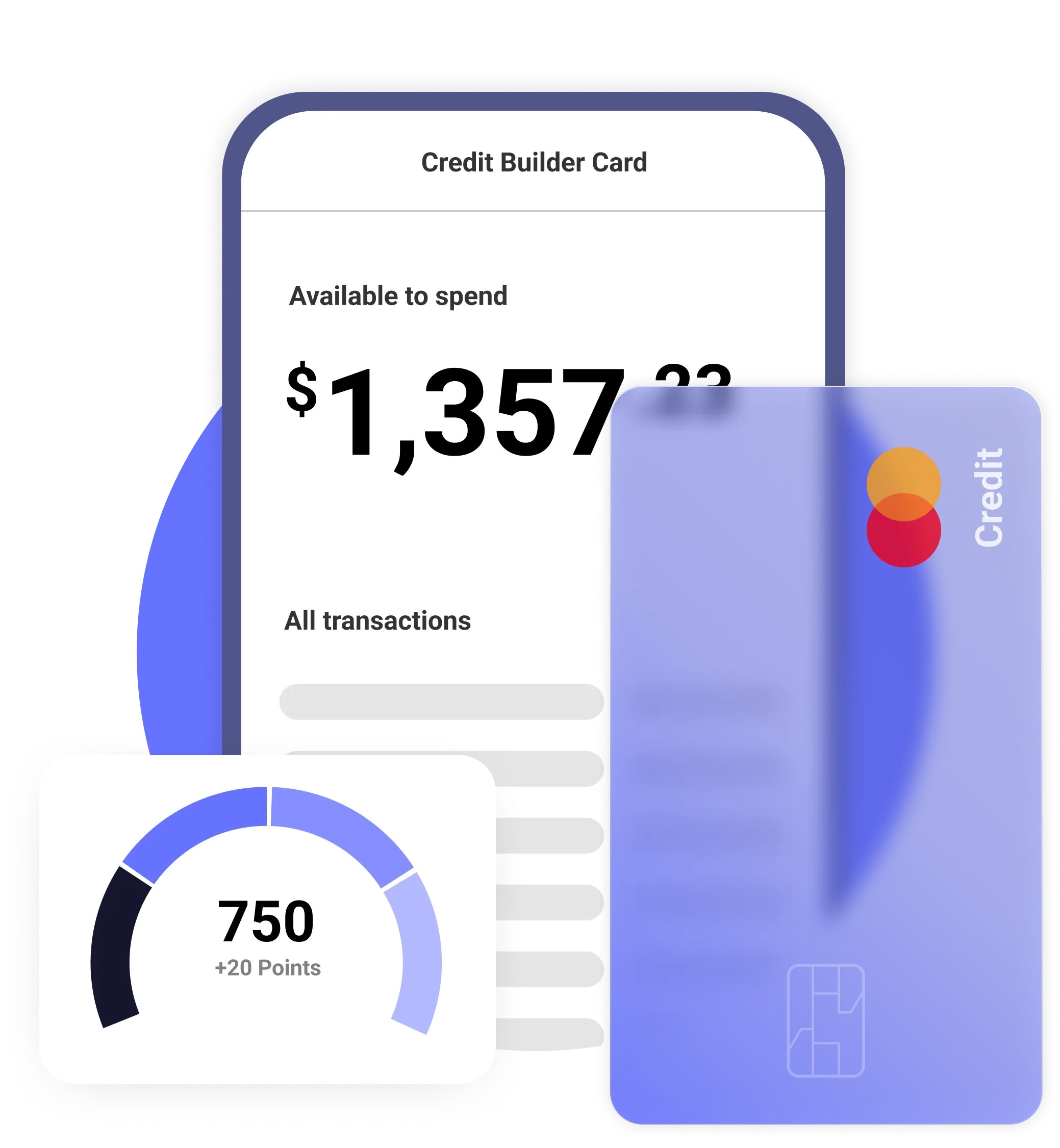
Bond divided banking into actions a product team could call: open an account, verify a customer, issue a card, move money, assess credit, record a transaction. The original suite included Bond Banking, Bond Pay and Bond Issuing. Embedded Credit arrived in 2021 with underwriting, risk management, servicing and compliance. In 2022, Bond introduced a secured Credit Builder Card, issued by Evolve Bank & Trust and powered by Mastercard.
The Credit Builder Card is a tidy example of what Bond meant by infrastructure. A user deposits money into a security account. That balance sets the spending limit on a linked charge card. Payments can be reported to credit bureaus, giving a person with thin or damaged credit a way to establish a record while limiting the issuer's exposure. To the user, it is a card and a score. To the developer, it is KYC, account funding, card issuance, transaction events, statements and bureau reporting that must agree with one another.
“Rather than have every app and every bank recreate the wheel, Bond does the hard work in the middle.”Roy Ng, co-founder and CEO
The first thing to fail was the shortcut
A brand could, in theory, build this without Bond. It could negotiate with a sponsor bank, choose processors and identity vendors, commission legal work, create monitoring systems and stitch the lot together. Square and Lyft proved that large technology businesses could do it. They also proved how much work it required. The shortcut - “just partner with a bank” - failed on contact with due diligence, incompatible systems and hundreds of pages of obligations.
That is where Bond differed from a simple processor or an API with a handsome documentation site. It sold orchestration: technology plus program management plus a repeatable compliance layer. Its rivals included Unit, Treasury Prime, Highnote, Marqeta, Galileo, Synctera and Stripe's issuing products. Some emphasized card infrastructure, some direct bank relationships, some ledgers or developer speed. Bond's pitch was breadth and bank-agnostic coordination, especially once it pushed beyond debit and accounts into credit.
The cost of making that argument was substantial. Bond raised $42 million in two rounds. Public pricing for customers was not posted, and FIS did not reveal what it paid in the 2023 acquisition. The most useful benchmark is imperfect: PitchBook placed Bond's last private valuation around $182 million in 2020. Valuation is not a sale price, particularly after the venture market turned and banking-as-a-service attracted sharper regulatory attention.
One small test with unusually legible numbers
Infrastructure companies tend to describe scale while hiding outcomes. Bond left one compact case study behind. TeamUp, a neobank for student athletes, used Bond's secured card, money movement, KYC and credit reporting. TeamUp said bank approvals came 36 percent faster than was typical with other providers. It also reported 100 percent take-up among eligible players and coaches, with projected average spend of $5,000 per user.
The interesting number is not the adoption rate, flattering though it is. It is the approval time. Bond's real customer was partly the developer, but also the committee: compliance officers, bank reviewers and operators who decide whether the program may exist. A prettier endpoint cannot hurry a committee. A prepared operating model sometimes can.
Why the startup disappeared into something larger
FIS acquired Bond in June 2023. Reporting at the time described roughly 30 employees moving into the buyer. No dramatic product failure was publicly identified, and no acquisition price emerged. What had changed was the environment. Venture funding for fintech had contracted, regulators were scrutinizing bank-fintech arrangements, and the advantage of a small orchestration layer increasingly depended on access to reliable banks and distribution.
For FIS, Bond filled a conspicuous gap. FIS already supplied technology to financial institutions around the world; Bond knew how to present regulated building blocks to modern software teams. In May 2024, FIS launched Atelio with accounts, money movement, cards, invoicing, fraud tools and adjacent capabilities. KeyBank, College Ave and RoyalPay were named as lighthouse customers. College Ave used it to combine an account, credit card and payments for college students. Bond had not vanished so much as changed scale.
The founders raise a $10 million seed round.
Coatue leads; Goldman Sachs and Mastercard join.
Embedded Credit and the Credit Builder Card turn infrastructure into packaged programs.
The terms stay private; the team and platform move inside a much larger company.
Bond's embedded-finance logic gains FIS distribution and a broader product catalog.
What is worth copying
Bond's best idea was not “add finance.” It was choosing a repeated, expensive coordination problem and turning it into a product. Founders in other regulated markets can copy the method without copying the market: identify the contracts and checks every customer repeats, encode the workflow, keep experts beside the software, and publish a measure that matters to the buyer. Time to approval is more persuasive than the number of API endpoints.
Build around the work every participant must redo, not around a decorative feature.
Compliance, monitoring and reporting belong in the architecture from day one.
Measure launch speed, approval speed and operational load - the costs buyers actually feel.
Infrastructure wins through trusted channels as much as through elegant code.
There is also a useful filter. Embedded finance is a poor fit when a product has little transaction frequency, no natural financial moment, weak customer trust or too little scale to support compliance and program costs. A company that only needs checkout may be better served by a payment processor. A company that cannot staff oversight should not pretend an API has assumed its obligations. And a brand with no special understanding of its users is merely adding a bank product to a place where nobody asked for one.
Bond's original proposition was grand - every brand could become a fintech - but its enduring contribution was narrower and better. It made the machinery more reusable. The consumer still sees the card. The brand still gets the relationship. The bank still carries regulated responsibility. Between them, quietly, sits the plumbing.
Continue exploring
See the surviving product material, the platform that followed, and three customer demos released with Atelio.