Rent has a peculiar résumé. It can be the biggest payment a household makes, faithfully dispatched every month, and still contribute little to the credit history a lender sees. IDIQ has made that disconnect part of its business. The company best known for IdentityIQ, its identity-theft protection brand, now wants a role in the less dramatic business of making ordinary financial behavior count.
That ambition has produced an unusually crowded product shelf. There are credit alerts, FICO scores, rent reporting, financial coaching, legal plans and a customer-management system named Disco. The names suggest a family of apps. The acquisition record tells a more useful story: IDIQ has assembled services that can reach consumers through people already involved in their financial lives.
A landlord can introduce rent reporting. A benefits broker can offer identity protection alongside legal assistance. A financial coach can import a client’s credit report into software supplied by the same group. For IDIQ, the relationship that brings someone to the service is part of the product’s commercial appeal.
Three purchases, three new doors
The company’s roots precede that expansion. Identity Intelligence Group began in 2009; the announcement of its later private-equity transaction identifies Mikol Sesker as its founder. Its own history traces early operations to a house in Canyon Lake, California, followed by a move into a Temecula office in 2017.
In December 2020, Corsair Capital acquired a majority stake. Scott Hermann remained CEO and, at the time, the second-largest owner. Corsair’s stated priorities included increasing the customer base and product range through IDIQ’s partnership model. The deal placed an investor specializing in financial and business services behind a company already selling recurring protection.
The expansion became tangible in 2022. February brought Resident-Link, a rent-reporting service then distributed through participating property managers. June brought Credit & Debt, adding financial education, money-management tools and industry veteran Jeff Mandel. October brought Countrywide Pre-Paid Legal Services, a longstanding partner with an attorney network and employer-benefits relationships.
Each purchase added a different reason for a consumer to engage. Renters could document payments; households could seek help managing money; employees could obtain legal advice. Each also brought relationships that would take time to build from scratch. Read together, the deals describe a company buying both capabilities and routes to customers.
- 02 / FebruaryResident-LinkRent payments → credit history
- 06 / JuneCredit & DebtMoney questions → coaching & tools
- 10 / OctoberCountrywideLegal needs → employee benefits
Your landlord becomes the introduction
Rent reporting shows the strategy at its most concrete. A qualifying payment becomes information that can be added to a credit file. The appeal is understandable: a renter has already paid the bill, and the service gives that payment a potential second use. IDIQ advertises reporting of up to 24 months of previous on-time rent payments.
The distribution effort widened in September 2025 through an alliance with the National Consumer Reporting Association. NCRA’s member agencies already work with property managers. The announced arrangement offers rent reporting to all three major credit bureaus through that network, extending the relationship beyond the original tenant-screening transaction.
There is a commercial argument for every participant. Residents get a credit-building service. Property managers get another amenity to offer. Screening businesses get an ongoing service to discuss with existing clients. These are the partnership’s intended benefits; a promised improvement in retention should not be mistaken for a measured result at every apartment building.
The consumer’s outcome is equally specific. A payment must reach the relevant credit file, and the score being used must account for that information. The Consumer Financial Protection Bureau explains that people have multiple scores because formulas, reporting sources and lending purposes differ. A better-looking number in an app therefore does not automatically translate into approval for a particular mortgage.
The alert is only the opening act
IdentityIQ remains the familiar entrance to the group. Its service combines credit and identity monitoring with alerts and restoration assistance. A suspicious account, exposed personal information or an unfamiliar address change can trigger the need to investigate. The practical value depends on what is monitored, how quickly a member responds and what support follows.
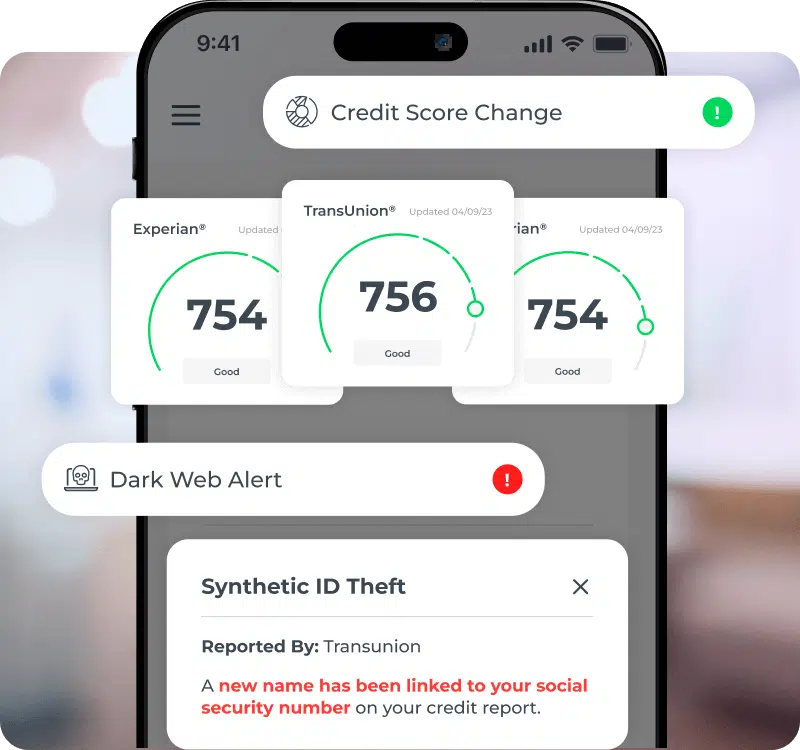
The other brands address different tasks. MyScoreIQ emphasizes FICO scores, including industry-specific scores across its offerings. Credit & Debt combines education with financial coaching and Money Sensei tools for examining finances. Prepaid legal plans provide access to services such as consultations, document review and will preparation.
CreditBuilderIQ, launched in April 2024, made the move toward consumer action explicit. In its launch announcement, IDIQ said its work with members and partners had revealed demand for combined digital credit-management tools. The company pointed to a gap between having credit products available and knowing how to use them. That is a documented product rationale, without needing a dramatic boardroom conversion story.
For a member, the useful sequence is straightforward: understand the report, identify a specific problem and use the appropriate tool or support service. Dispute software can organize a challenge to inaccurate information. It cannot make a correct adverse entry incorrect. A score simulator can explore possibilities; it cannot commit a lender to a decision.
The price of watching - and acting
The subscription table gives this broad proposition some boundaries. At the time of review, IdentityIQ’s website displayed monthly base prices from $8.49 for Secure Basic to $31.49 for Secure Max, before optional VPN and antivirus. The four tiers differ in monitoring coverage, report frequency and additional features.
| Plan | Per month | Bureaus monitored |
|---|---|---|
| Secure Basic | $8.49 | 1 |
| Secure Plus | $11.49 | 1 |
| Secure Pro | $21.49 | 3 |
| Secure Max | $31.49 | 3 |
The distinction between reports and monitoring deserves a second look. Secure Plus lists an annual set of three-bureau reports but monitors one bureau. Secure Pro and Secure Max list three-bureau monitoring, with different report schedules. A shopper comparing only the phrase “three bureaus” could miss a meaningful difference in the service being purchased.
At those base rates, twelve monthly payments total $101.88 for Basic and $377.88 for Max, before add-ons or applicable taxes. These are arithmetic comparisons, not annual-plan quotes. The insurance headline also needs context: advertised protection up to $1 million is subject to policy terms and eligible losses. It is neither an automatic payout nor a promise that theft cannot happen.
For someone who only needs to inspect a report, free credit-report access is a relevant alternative. The paid proposition has to earn its place through continuing monitoring, convenience and recovery assistance. That puts the decision back on the household’s actual needs rather than the longest feature list.
Disco gives the strategy away
The group’s most revealing name may be its least solemn. Disco is software for financial-coaching businesses. It imports IdentityIQ credit reports, automates workflows, tracks client progress and supports dispute letters, documents and billing. Its website lists three monthly plans at $79, $149 and $349 after a 30-day trial.
Disco places IDIQ inside a professional’s working day. A coach who already uses its reports and client tools has a practical connection to the wider group. The product demonstrates a repeatable business idea: serve the intermediary who helps the customer make sense of the information. That intermediary needs useful software, not merely a referral link.
The part another business can copy is the sequence: identify a recurring customer problem, find the professional already helping with it and make that professional’s work easier. Acquiring a product can accelerate the process, but ownership alone does not make the services fit together. The customer still needs clear enrollment, understandable pricing and someone who can answer a question. For IDIQ, those ordinary details determine whether a collection of acquired businesses feels like a useful service or another set of accounts to manage.
IDIQ also operates in a market where breadth alone will not settle the contest. LifeLock and Aura offer identity and digital-protection services. IDIQ’s more distinctive combination is its financial-coaching software, rent-reporting relationships and legal-benefits distribution. Comparing the companies therefore requires matching a particular need to a particular plan.
People behind the notifications
The operation is less weightless than a phone screen makes it look. IDIQ’s company history describes approximately 300 employees and locations beyond California, including offices in Illinois, Florida and India. Its consumer services emphasize U.S.-based support and restoration, work that matters when an alert becomes a pile of unfamiliar paperwork.
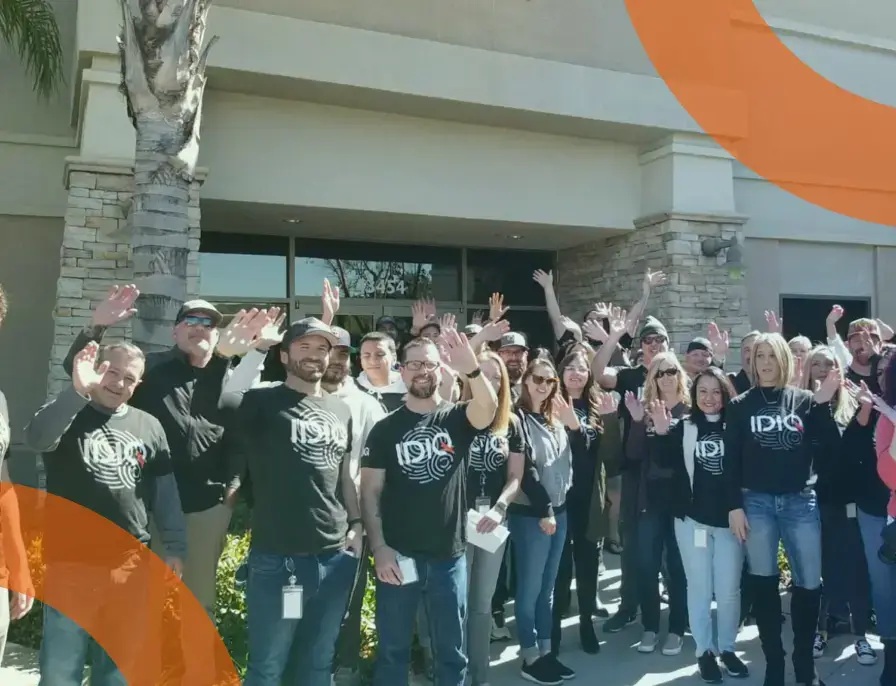
The recruitment pitch includes a campus gym, massage chairs and arcade games. Those details give the office some personality, although amenities alone say little about an employee’s Tuesday afternoon. More relevant to the customer is whether the organization can connect monitoring, explanations and recovery across a growing list of products.
There is evidence of expansion. IDIQ reported 77% revenue growth between 2020 and 2023 when it made the 2024 Inc. 5000, its fifth consecutive appearance. That is a defined historical growth measure. It should not be read as an annual growth rate or as proof that every acquired product has performed equally well.
A financial dashboard needs a language
The latest product move addresses a simpler barrier than a scoring formula. On August 31, 2026, IdentityIQ announced a Spanish-language experience, covering enrollment, the member dashboard and account management, with a localized experience for business partners. The significance is practical: a protection tool must be understandable when something goes wrong.
“Financial protection shouldn’t depend on language.”
Rick Eggleton · IDIQ chief revenue officer
Spanish-language launch, August 2026
For a company relying on partners to introduce its services, language also affects who those partners can comfortably serve. An employer or financial professional needs members to understand the account after signup. Translation reaches into the continuing relationship, where notifications, decisions and questions arrive.
IDIQ’s expansion offers a useful lesson in product design: start with the next job the customer needs done. A report leads to a question; a question may lead to a dispute, a coaching session or a payment-reporting service. The company has assembled businesses around those transitions. Its continuing test is whether the handoffs feel helpful to the person paying the bill.