A paycheck has a date. A broken refrigerator does not. Between those two facts sits a substantial part of American consumer finance. MoneyLion built an app for that interval, then discovered that the interval was also an entrance: someone looking for money today might need a bank account, a better loan, or a way to invest tomorrow.
- Instacash brings people in; banking, credit building, and investing give them reasons to stay.
- Engine sells the matching machinery to other businesses, extending MoneyLion beyond its app.
- Gen bought the company for about $1 billion in 2025. Its next chapter bundles money management with identity protection.
That makes MoneyLion an interesting business to misunderstand. On a phone, it resembles a collection of financial tools. Behind the screen, it is also a distribution network, connecting financial institutions with prospective customers. The person needing a hundred dollars and the lender needing a customer are entering opposite ends of the same machine.
01 / The refrigerator problem
Founded in 2013, MoneyLion emerged from the world of data-driven consumer lending. Co-founders included Diwakar “Dee” Choubey, Chee Mun Foong, and Pratyush Tiwari. The intended audience was the working American whose financial life rarely justified the attention that banks lavished on wealthy customers. Borrowing and building wealth belonged in the same conversation.
The products follow that logic. Instacash offers eligible users advances against recurring income without a credit check. MoneyLion Spend, the banking account previously branded RoarMoney, handles everyday spending through bank partner Pathward. Credit Builder Plus combines monitoring with access to a credit-building installment loan. Managed Investing automates contributions into portfolios of exchange-traded funds.
Each addresses a different clock: bills this week, credit history over months, savings over years. The appeal is continuity. A customer can begin with an immediate problem and find another tool nearby when circumstances change. Whether that becomes a useful habit depends on the customer's income, eligibility, and willingness to manage the account.
02 / Put a price on the hurry
Here is where the clock becomes a business model. MoneyLion's published pricing lists free standard Instacash delivery into MoneyLion Spend. Optional Turbo delivery costs 7.5% of the advance to Spend, capped at $14.99, or 9% to an external account. Tips are optional. On a $100 external advance, the delivery charge alone is $9.
The distinction matters because a customer usually arrives with a deadline. “No interest” describes one component of the transaction. It does not tell you what speed costs. The practical move is to compare the total dollars leaving your account, including delivery and subscriptions, with the benefit you actually need.
Credit Builder Plus is $19.99 monthly, with loan payments separate. Managed Investing ordinarily charges $1, $3, or $5 monthly according to balance, while underlying funds have their own expenses. Small recurring charges deserve particular attention when the amount invested is small. More features do not automatically improve the arithmetic.
03 / Buy the road to the customer
MoneyLion's expansion involved two revealing purchases. In November 2021, it acquired MALKA, a content studio, for $10 million cash and $30 million in stock at closing, with additional contingent consideration. The relationship had already lasted four years. MoneyLion wanted more control over the stories that attracted and retained customers.
Then came Even Financial in February 2022. The announced transaction provided for up to $440 million in consideration. Even supplied technology that matched people with financial products through websites and apps. Instead of relying entirely on people downloading MoneyLion, the company could put its marketplace inside places they already visited.
“We're a financial lifestyle and destination.”
Dee Choubey, describing MoneyLion in 2019
Today that enterprise business is called Engine by Gen. Its network advertises more than 1,300 partners. Financial institutions get distribution; publishers and other channel partners get financial offers to present to their audiences. MoneyLion earns from matching and referral activity alongside consumer subscriptions, service charges, and lending. Its expertise spans product design, risk assessment, data integration, and customer acquisition.
The competitive set consequently changes with the question. Consumers can compare banking apps such as Chime, advance providers such as Dave and EarnIn, or loan marketplaces such as LendingTree. MoneyLion combines those jobs. The distinctive choice is to operate both the consumer destination and infrastructure used outside it.
04 / Growth had a bill attached
By 2024, MoneyLion reported $545.9 million in annual revenue and $9.1 million in net income, following a $45.2 million net loss in 2023. Its 20.4 million total customers at year-end were a cumulative company metric, not a count of people using the app every month. Scale and engagement answer different questions.
Customer friction also became a legal issue. The CFPB sued in 2022, alleging military-lending violations and problems with membership cancellation and fees. A court entered a stipulated resolution in November 2025 requiring $1.75 million in consumer redress. That outcome is a concrete cost of the dispute; the allegations should not be mistaken for findings on every claim.
The reproducible move is to separate the product from its distribution: let partners surface an offer where demand already exists. That needs willing institutions, reliable matching, and clear customer terms. More reach makes confusing fees travel farther.
05 / A new home for the paycheck
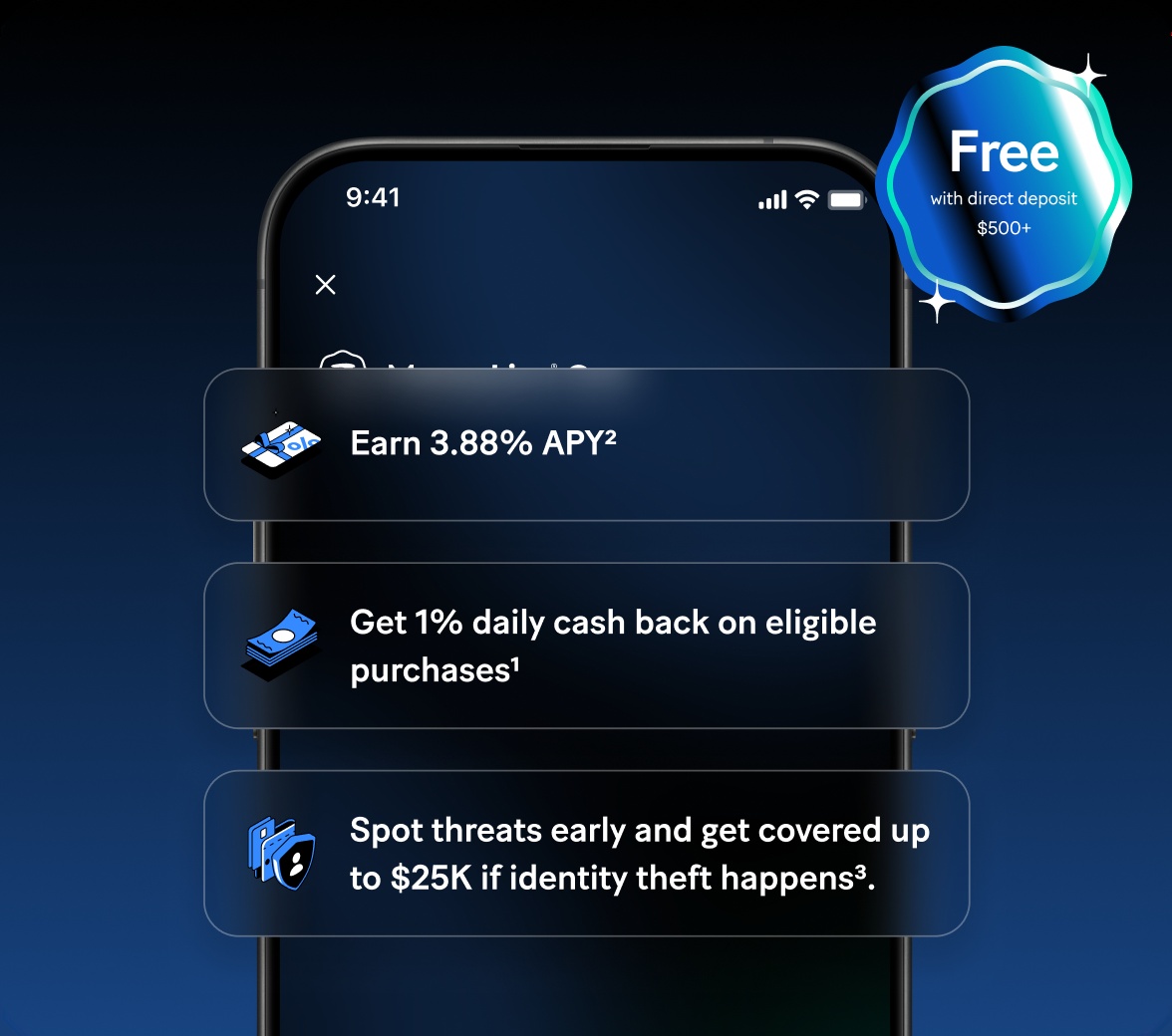
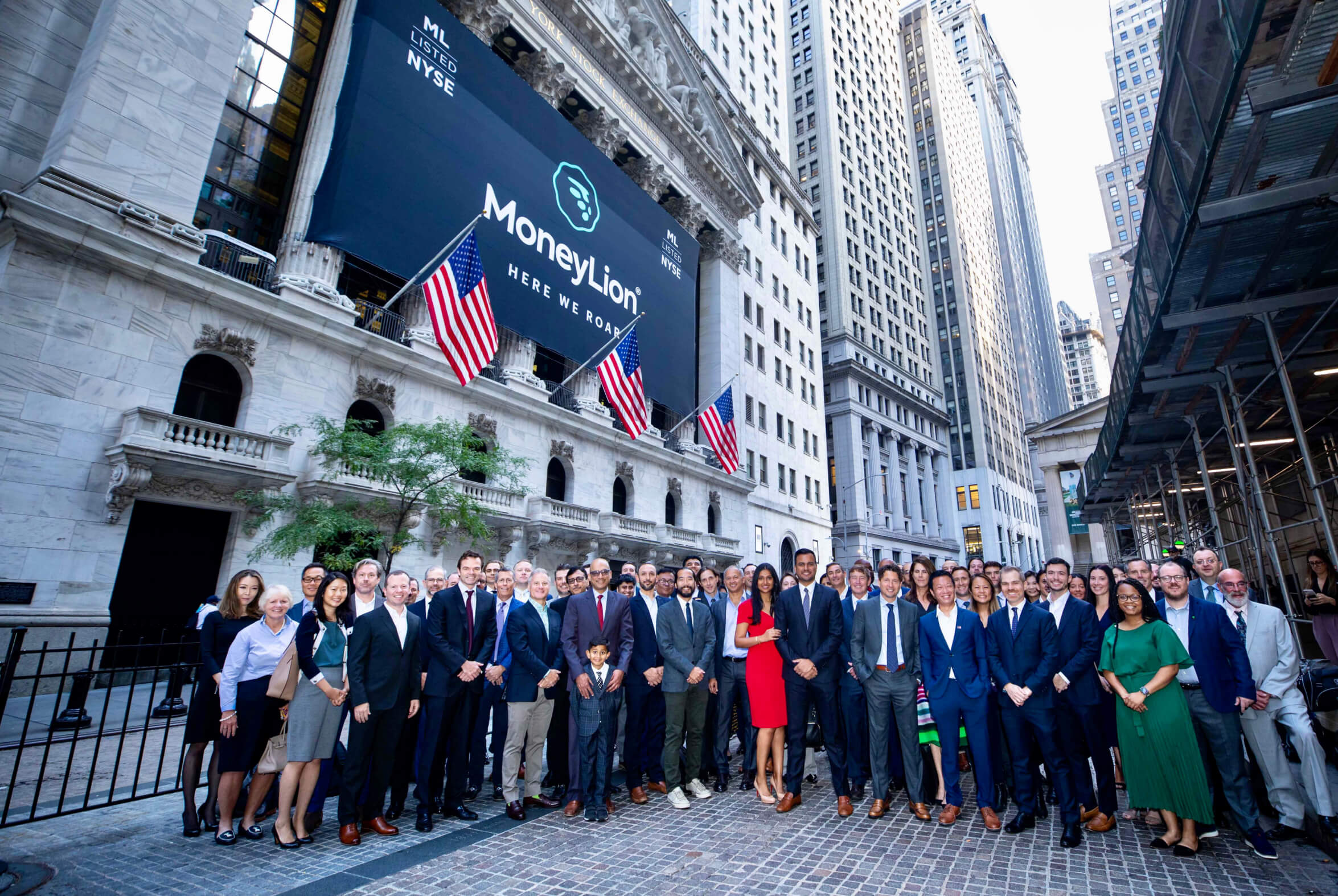
Gen completed its acquisition in April 2025, paying $82 per share in cash, approximately $1 billion overall, plus conditional rights. MoneyLion One, launched in July 2026, brings the connection to Gen's LifeLock into view: banking benefits and identity protection now share a membership.
One costs $9.99 monthly, waived with at least $500 in qualifying direct deposits during the applicable rolling 30-day period. Benefits include eligible debit cashback and waived managed-investing account fees. For a customer who meets the conditions and uses the benefits, the bundle can simplify several decisions. For someone repeatedly paying for speed while struggling to cover the next payday, another advance still leaves the underlying shortfall intact.