Money advice has a plumbing problem. The person explaining the pipe is often paid when you buy the faucet. SmartPath, an Atlanta financial-wellness company, built its business around removing that suspicion. Employers and financial institutions pay. Employees, plan participants and customers receive classes, coaching and digital tools. The learner is not pushed toward a credit card, an insurance policy or an investment product at the end of the lesson.
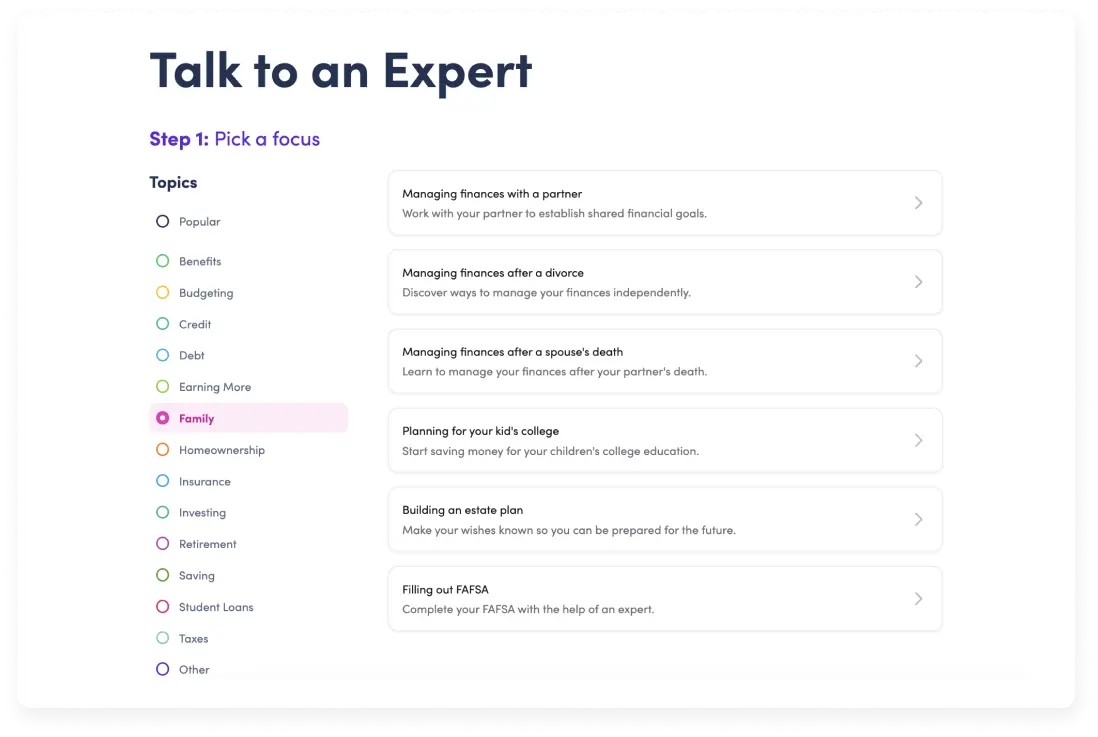
That sounds almost quaint in a fintech market trained to prize automation. Yet SmartPath's offer is a deliberate hybrid. SmartPath Learn runs live classes every weekday, keeps recordings in an on-demand library, allows questions in real time and recommends sessions through email or text. SmartPath Coach connects a user with a dedicated financial professional for problems that refuse to fit inside a three-minute video: student loans, divorce, a first home, a new baby, debt, retirement or a badly timed medical bill.
The software handles scale, reminders and reporting. The humans handle the sentence that begins, “Here is what is actually happening in my life.” SmartPath says more than one million people were supported by the program as of August 2025, up from the more than 700,000 it reported a year earlier.

The hotel ballroom was the MVP
The origin is pleasingly low-tech. After watching the 2008 recession hit his community, family and friends, Alok Deshpande left Bain and began teaching personal finance. SmartPath dates its founding to 2010. Deshpande has described the early version as a “money nerd” teaching classes in a hotel ballroom. No recommendation engine. No engagement dashboard. Just a teacher, a room and the recurring discovery that ordinary financial decisions were being made with poor information.
By 2012, he was presenting seminars to employers. One audience member was Stuart Lawder, then at Pardot. Lawder and his wife later met Deshpande one-on-one while paying off a car and student loans. The advice worked for them. Lawder kept helping the small company, worked with Deshpande on the personal-finance book FUEL, and by 2015 the pair were discussing a more consequential shift: turning an education company into a service company.

What failed first? Public accounts do not describe a spectacular collapse, and it would be tidy fiction to invent one. The visible limitation was the format. A seminar can explain; it cannot remember your goal, send the right follow-up two weeks later, give an employer usable adoption metrics or sit with you through a second decision. The original class was evidence of demand. It was not yet a system.
“When you actually know something, you should be able to easily explain it to a middle schooler.”SmartPath on its value of simplicity
What changed their minds was not a spreadsheet predicting software margins. It was Lawder's experience as a user, followed by years of consulting and the work of packaging Deshpande's method. The lesson became a relationship; the relationship became a repeatable product. SmartPath entered Y Combinator's Summer 2016 batch, launched its corporate financial-wellness program in 2017 and raised more than $2.7 million in 2019 in a round led by PJC, with TTV Capital, Y Combinator and angel investors participating.
A classroom with an API
SmartPath sits across fintech, education, benefits software and professional services. Employers use it as a wellness benefit. Retirement-plan advisors use co-branded education to encourage participation and maintain contact. Banks and credit unions use it to deepen customer relationships. Fintech products can embed the material through an API rather than building a curriculum and coaching bench from scratch. Brokers can fold it into a benefits package.
That buyer list is broad, but the product is modular rather than vague. Learn is the classroom: live sessions, on-demand video, live Q&A and demographic-based recommendations. Coach is the consultation room: the same coach can return for later calls, sparing users the ritual of retelling their financial biography. Custom courses explain company-specific events such as a pension freeze, restricted stock units or a new retirement plan. Reporting shows partners what people use. The full experience and popular classes are available in Spanish.
Its customer references make the market position less abstract. Public testimonials identify HII, GoDaddy, Leidos and Lumen. Lumen says the program began there with a 2017 pilot. HII describes SmartPath as part of its benefits and well-being work. SmartPath also announced a partnership to provide education to Atlanta Mission's staff. These are not direct-to-consumer subscriptions hunting for app-store attention. Distribution arrives through an organization that already has a reason to communicate with the user.
What it costs - and what it is really selling
SmartPath does not publish dollar prices. It says organizations can buy annual contracts or discounted multi-year agreements, select some resources a la carte and pay from plan assets, wellness dollars or departmental budgets. So the honest answer to “what did it cost?” is: for customers, a negotiated contract; for the company, at least the publicly announced capital plus years spent converting expert labor into a managed platform. Revenue and valuation are not public.
The business model is B2B2C SaaS wrapped around services. The institution buys reach, content, coaching capacity, automation and evidence of engagement. The user gets help without paying at the moment of stress. SmartPath gets recurring institutional revenue and avoids financing itself through product referrals. That last choice is its cleanest differentiator from retirement providers and financial apps whose free education may sit beside a sales funnel.
There is a subtle compromise. For banks, advisors and fintech firms, SmartPath promotes customer insights and timely cross-sale opportunities. The education itself can remain product-neutral while the purchasing institution learns what its population needs. That is commercially useful, but it makes consent, privacy and restraint important. Trust is not a slogan here; it is the fragile asset connecting the learner, SmartPath and the sponsor.
Those figures come from surveys and studies cited by SmartPath, not independent audits: 95 percent of surveyed class attendees said they felt more confident, 81 percent of users in one study took intentional 401(k) action, and 70 percent of attendees said the content helped them focus at work. They are encouraging signals, but they should not be mistaken for universal outcomes.
The parts worth stealing
SmartPath's most portable idea is not “add AI.” Its algorithms recommend classes based on demographics, but personalization is the supporting mechanism, not the pitch. The more useful playbook is organizational.
Founders can copy the sequence: begin manually, watch which questions repeat, package the repeatable material, add software around delivery and use human expertise where uncertainty stays high. They can also copy the language discipline. SmartPath's culture page says finance should be explainable to a middle-schooler. In a category where complexity often masquerades as authority, plain speech is a product feature.
When the model does not work
Education cannot create money that a household does not have, fix predatory terms or substitute for legal, tax or individualized regulated advice. The program also weakens when the sponsor sends one launch email and disappears, when shifts or language block access, when employees distrust employer-linked financial tools, or when reporting feels like surveillance. A library without timely distribution becomes an expensive shelf.
The company seems aware of the adoption problem. Its product emphasizes recurring classes, automated messages, seven-day coaching availability, Spanish delivery and custom material tied to actual workplace decisions. Its culture, meanwhile, favors simplicity, autonomy and the cheerfully stubborn line, “If there is no wind, we row.” That is useful shorthand for a company trying to move people through a subject they would rather avoid.
SmartPath has now appeared on the Inc. 5000 three years running. It reported 187 percent revenue growth over three years with the 2024 recognition, then crossed the one-million-user mark in its 2025 announcement. Those facts do not reveal its revenue or guarantee that every participant changes behavior. They do show that employers and financial firms will pay for a layer many products once treated as free marketing.
The larger wager is that financial education works better when it is neither homework nor bait. SmartPath wraps it in a calendar, a coach, a text message and a buyer with a budget. The hotel ballroom never disappeared. It acquired distribution, memory and an API.