François Forest had customers. What he needed was a better explanation of them. His team had built a business selling WordPress themes, the pieces of software that help turn a blank website into something useful. People bought the products. Competitors improved theirs. Growth became harder. The next feature could be written in code; deciding which feature deserved to exist required listening.
That awkward interval, between having users and understanding them, is where his Feedier story begins. There is something pleasingly unceremonious about it. The business opportunity arrived disguised as a problem in a business he already had. Before Forest could sell anyone an argument for customer intelligence, he needed the intelligence himself.
The route since then has taken him from WordPress development and support to leading software for larger organisations. The vocabulary has expanded to include AI analysts, enterprise reports and customer signals. His underlying concern remains easy to recognise: a company can collect a great deal of information about its customers and still struggle to decide what to do on Monday morning.
The sale was only the beginning
The early products included intranet themes for small and medium-sized businesses. These were tools for helping organisations put more of their working lives online. They also gave Forest a practical education in the gap between what software is designed to do and what people actually need from it.
As competition increased, the team wanted better information for product decisions. They tried survey tools and found the experience and response rates unsatisfactory. More elaborate experience-management systems presented another difficulty: cost and complexity. Eventually, they sold the WordPress themes business and pursued the feedback problem. Feedier’s first iteration, in 2018, used gamified surveys.
A theme business and a feedback platform look like different enterprises. The connection becomes clearer when you imagine the decision facing a developer with a queue of possible improvements. Which request represents one person’s preference? Which reveals a problem affecting many users? A sales total will not settle either question. Success had given the team a customer base; it had also given them something they needed to understand.
Code, customers and a business education
Forest’s education brought two disciplines together early. From 2014 to 2019, he studied at ITEEM, the partnership between Centrale Lille and SKEMA Business School. The programme combined engineering and business, with project work spanning computing, mathematics, management and finance. It is a useful background for a career in which a technical answer must also survive a commercial question.
His experience extended beyond the classroom. He worked as a software engineer in Canada. In the WordPress world, his responsibilities included lead development and support. By the time of his 2019 WordCamp Dhaka speaker biography, the products he had worked on had accumulated more than 15,000 installs. He was already presenting a talk about building better products through a culture of feedback.
Support is an unusually direct form of product research. People rarely contact it to admire the architecture. They arrive with the thing they cannot do, the instruction they cannot follow, the result they expected and did not get. Forest’s early work placed him close to those conversations as well as to the code that might resolve them.
There are other details in the picture. He volunteered with Manana Juntos on a school facilities project in Arequipa, Peru, involving fundraising and a three-week construction effort. His 2019 biography listed climbing, scuba diving and running as interests. These are small pieces of a life, with the welcome advantage that none needs a software subscription.
A customer gives the problem a shape
The early survey product developed into a broader enterprise proposition. Feedier dates its customer intelligence platform’s launch to 2020. Forest identifies Heppner, the transport and logistics group, as a formative customer: an organisation intent on listening, with difficulty making sense of the volume it heard.
That is a more exacting brief than making a questionnaire pleasant to complete. Feedback has to be assembled, interpreted and made useful to people with different responsibilities. The distance between an individual comment and an operational decision can involve several departments. Building for that journey changes the product.
The company’s first venture capital round followed in 2023. Its named backers now include LocalGlobe and Kima Ventures. Its customers span businesses such as Savills, CEVA and RX Global. The scale of the setting has changed since the WordPress years, but the organising problem has a family resemblance: understand what people are experiencing before deciding what to build or fix.
- 01Hear itBring feedback together
- 02Understand itFind the recurring problem
- 03Act on itGive a team the next step
- 04Check itLook for an actual change
The procurement file gets thicker
Moving into larger organisations also changes the founder’s working day. A buyer may need to justify a purchase to colleagues who will never see the sales demonstration. Existing suppliers, internal requirements and procurement procedures all enter the conversation. A young company has to explain why the disruption of choosing it will be worthwhile.
Forest has addressed this terrain in Masters of Tenders, discussing how startups can compete for contracts. The episode centres on understanding the buyer’s needs, tailoring the response and establishing a clear product difference. La Poste appears in that conversation as an example of the sort of organisation a startup might hope to serve.
This part of his career fits the business half of that engineering education. Software quality matters, but the buyer must be able to explain the decision inside their own organisation. The proposal has to travel, too. For a founder selling a tool intended to help information move between teams, that is a fairly practical reminder of the problem.
A score needs a consequence
Forest’s public discussions repeatedly return to financial impact. A satisfaction score can be useful without telling a manager which problem deserves attention first. Combining comments with other customer information gives the question more detail: who is affected, at what point, and what might improve if the problem is addressed?
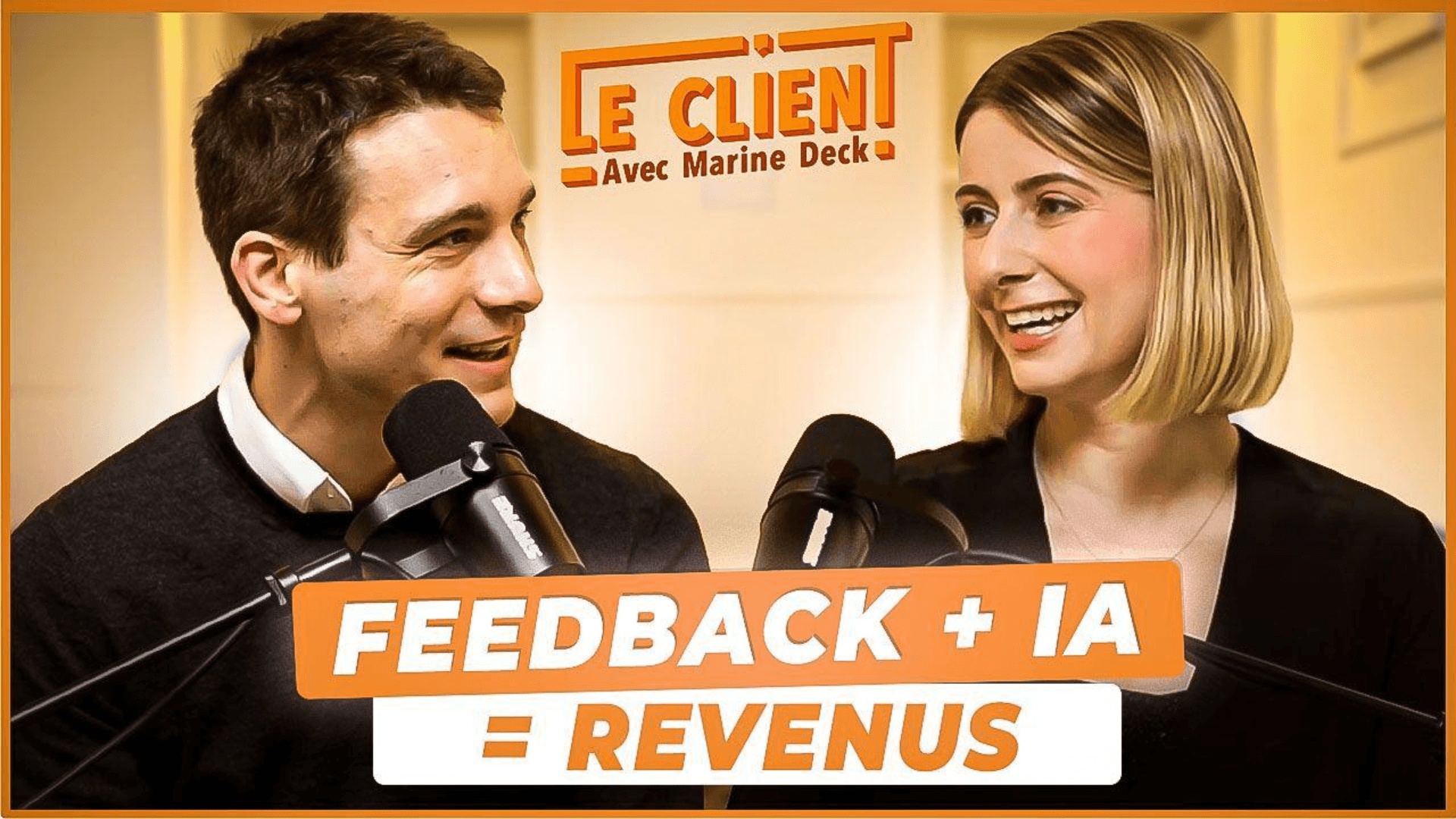
By March 2026, he and Marine Deck were taking that argument onto the All4Customer programme in Paris. Their session paired customer experience with profit and loss, asking how insights could become financial arguments. It is a revealing subject for a founder whose product began with the need to make better decisions about his own customers.
The temptation in this field is to mistake measurement for progress. A beautifully arranged score has the manners of an answer. Forest’s emphasis on actions and outcomes asks for something more demanding: an explanation that a manager can use, followed by a change whose effects can be examined. The dashboard must eventually justify its screen space.
“AI shouldn't be a gimmick or a chatbot bolted onto a dashboard.”
François Forest, on Feedier 4.0
Feedier unveiled version 4.0 in December 2025, with an AI analyst, a reworked interface and a rollout planned from the following quarter. The product brought survey responses, support tickets, reviews and CRM information into a common setting. Forest’s objection to a decorative chatbot is consistent with his wider concern about use: an answer has to make sense in the work around it.
The developer is still in the room
Forest’s technical involvement remains visible. Feedier’s knowledge base credits him with documentation for its Feedback Query Language, the filtering syntax used across the platform and API. The detail is modest, but telling: alongside the conference appearances and commercial conversations, there is still a piece of documentation explaining how the software works.
His return to Le Client brings the distribution question into focus. He discusses the Model Context Protocol, which lets AI assistants retrieve customer intelligence directly. The demonstration described in the episode asks an assistant to find recent customer problems, with figures and supporting material. The audience for the work can therefore extend beyond the person who normally opens the reporting dashboard. For Forest, the practical problem includes getting the information to colleagues through tools they already use.
That discussion also covers the limits of analysing feedback with a homemade AI setup. It adds a useful complication to the story: making an answer easy to request does not automatically make it dependable. In his AI Experience conversation, Forest explores subjectivity, hallucinations and organisational reluctance to confront customer feedback. Faster analysis still leaves people with the responsibility of judging an answer and deciding whether to act. The company receiving the feedback has work to do, too.
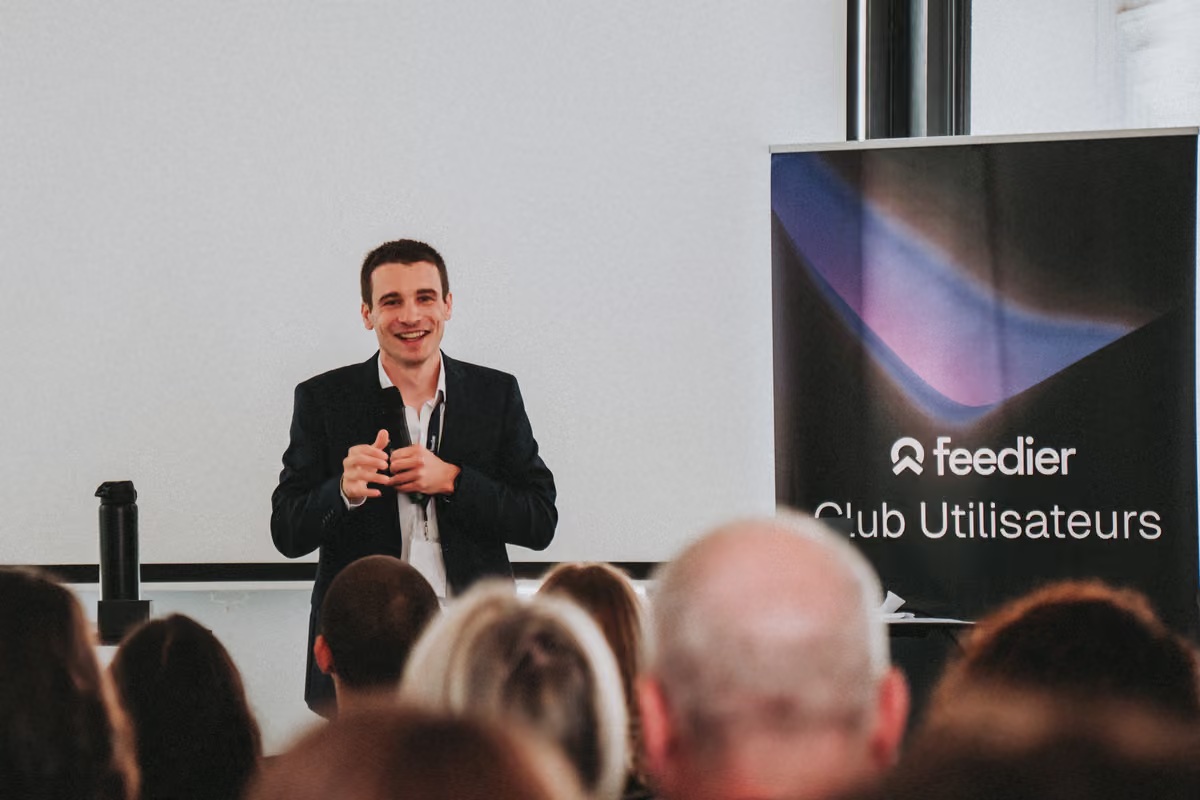
On 1 October 2026, Google Cloud listed him among the speakers for Startup Day France at STATION F in Paris. Feedier’s Alexis Riot described their joint presentation as a look at AI already running in production. The subjects included detecting weak signals in feedback, managing large volumes of analysis and an assistant connected to the company’s customer intelligence.
There is a considerable distance between a WordPress support queue and a production AI presentation. Both reward attention to what happens when software meets a real user. Forest’s career has kept him near that meeting point, even as the systems and customers have grown more complicated.
The question that survived the software
A founder can spend years refining a product category. Forest’s more durable subject is the difficulty of knowing what customers mean. The WordPress business supplied an early lesson. Heppner gave the platform a concrete enterprise problem. Tenders, budget conversations and AI development have added further tests of whether the answer is useful.
His work now reaches organisations whose customers speak through many different channels. Somewhere in that material is a problem a team can address. Finding it, explaining it and getting someone to act remain separate pieces of work. Forest has built his business around bringing them closer together. The next customer comment will give him another chance to see how well it works.
Follow the conversation
More from Forest and the people he talks with.
Feedier’s website ↗François Forest on LinkedIn ↗His Medium profile ↗Watch: Le Client with Marine Deck ↗Watch: Transformation Heroes ↗Listen: customer intelligence and MCP on Le Client ↗Listen: AI Experience ↗WordCamp Dhaka 2019 speaker biography ↗Feedier 4.0 announcement ↗Google Cloud Startup Day France 2026 ↗