A company can remember your last purchase, your shoe size and the complaint you made on Tuesday, then greet you on Wednesday as though you have just arrived from another planet. Ragy Thomas has spent much of his working life thinking about this peculiar form of corporate amnesia. Somewhere inside the organization, the information exists. Getting it into the right conversation is the expensive part.
His answer began in a spare bedroom in New Jersey in 2009. Sprinklr would help large companies manage their increasingly public relationships with customers. The setting was domestic; the intended customers were emphatically large. An early Dell server, photographed and preserved in the company’s origin story, offers a pleasing corrective to the abstraction of cloud software. Even the cloud needs somewhere to put its things.
Thomas later took Sprinklr public. He remains its founder and chairman, having handed over the chief executive role in 2024. His next operating role brings him back to a familiar problem: as chairman and co-CEO of UnifyApps, he is working on connecting the systems that enterprise AI needs to use. Different technology, recognizably persistent preoccupation.
A programmer arrives in Wisconsin
Thomas’s childhood took him between India and Nigeria before his adult life brought him to the United States. He studied computer science engineering at Pondicherry University. At 22, he arrived in Wisconsin for a programming job, then moved to the East Coast after six months. The itinerary has little in common with the tidy founding myths that start with a business plan and proceed directly to a bell-ringing ceremony.
He added an MBA in finance and information systems at NYU Stern. The combination matters to the work he eventually chose: the engineer has to understand how a system holds together, while the executive has to persuade an organization to pay for it. In enterprise software, a promising demonstration is only the beginning of the argument.
Before Sprinklr, Thomas was chief technology officer at Bigfoot Interactive from 2001 to 2005. Epsilon acquired the email marketing business in 2005; he subsequently served as president of its interactive services from 2006 to 2008. Email gave him an early education in the machinery behind digital communication. Sending a message is easy to describe. Running communication for a large business requires rather more plumbing.
The customer gets a megaphone
Social media changed the balance of that relationship. A company could send its preferred message, but customers could now answer in public, compare experiences and carry a complaint well beyond the original exchange. Thomas saw a management problem developing inside that new freedom. Marketing, service and other departments could all encounter the same person while retaining separate fragments of the conversation.
In a 2015 essay about Sprinklr’s partnership with SAP, he described a reversal of the old customer relationship management premise: customers were increasingly managing their relationships with brands themselves. They chose where to speak and expected continuity across channels. Businesses had organized their operations around their own departments. Customers had neglected to organize their lives accordingly.
He put the organizational snag neatly in a Yale interview: “when it’s everybody’s problem, it’s nobody’s problem.” A public conversation could demand coordination across several functions, yet responsibility remained dispersed. The opportunity was to give those functions a shared place to work. Better listening would achieve little if nobody could decide who should answer.
A spare bedroom, with enterprise ambitions
Sprinklr’s beginnings in September 2009 were modest in location rather than in customer selection. Its first customer arrived in January 2010. Cisco, Dell, Microsoft and Nike were among the early customers. That is a demanding audience for a young company operating from somebody’s house. Large organizations bring permissions, governance and security requirements along with their purchasing power.
Thomas deliberately used his own money during the early development. His explanation was disarmingly personal: losing his own investment felt easier than explaining another person’s loss. It also bought him control over the sequence of building. He could spend time on the underlying architecture before accelerating the business around it.
He called one of his operating principles “frontload the pain.” In practice, that meant seeking demanding users rather than easy reassurance. His account of early customer development describes approaching the organizations already pushing social media hardest. The people encountering the awkward problems would be useful judges of whether the product deserved to exist.
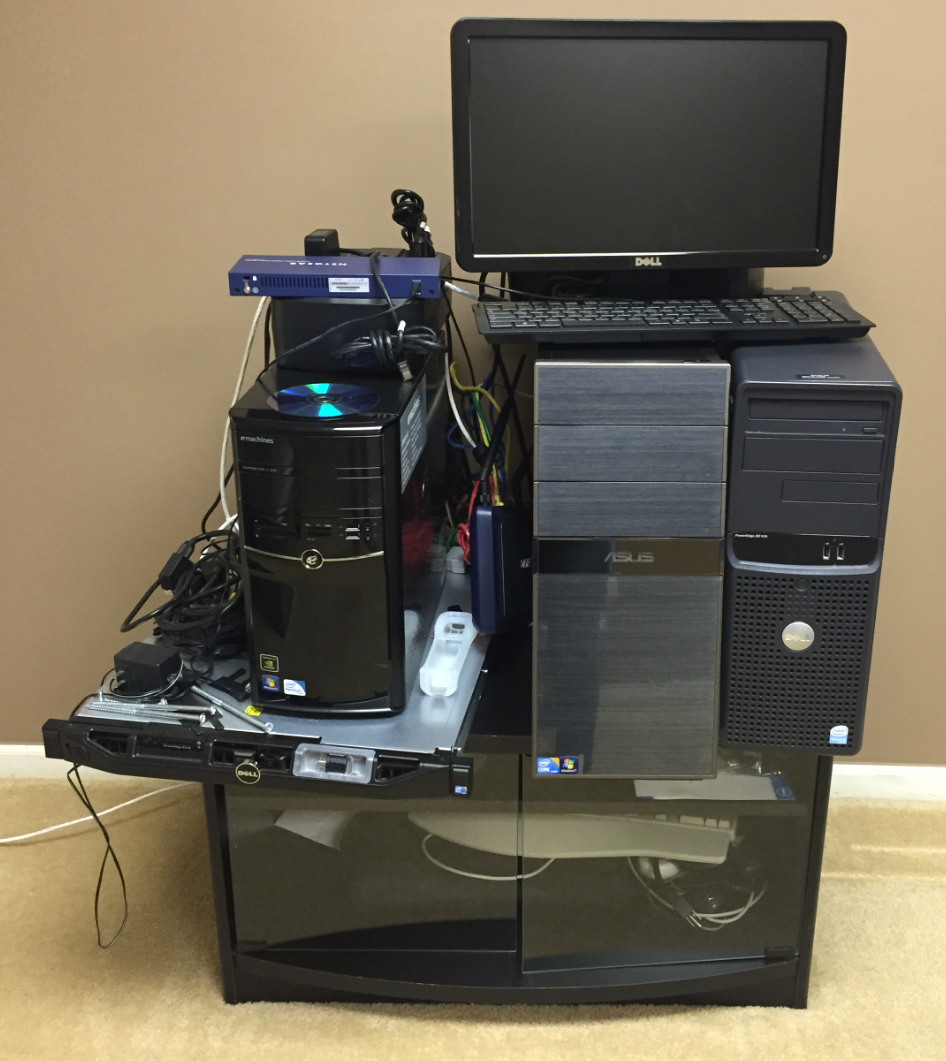
There is an engineer’s logic to that choice. A friendly prospective buyer might praise the presentation. A demanding one exposes what breaks. Thomas had already experienced the difficulty of redesigning a platform while customers depended on it. The bedroom operation gave him room to work through those decisions before the cost of changing them multiplied.
Learning to run the company he built
Sprinklr raised $46 million at a valuation above $1 billion in 2015. It expanded its product range beyond social engagement into insights, marketing and customer service. In 2017, Fast Company included it among its ten most innovative companies in social media. Thomas credited customers with providing the pressure and ideas behind the work. The organization was acquiring both scale and expectations.
He also sought help. John Chambers, Cisco’s former chief executive, joined Sprinklr’s board in 2017 after serving as an adviser. Chambers saw complementary skills in Thomas and then-president Carlos Dominguez: a product-oriented founder alongside an experienced commercial leader. Their relationship connected a younger enterprise company with people who had already dealt with the complications of a much larger one.
The mentorship took time to establish. Battery Ventures described a getting-to-know-you process of at least a year. Thomas valued Chambers’s ability to recognize patterns in situations involving leadership and hiring. It is a revealing admission from a founder: some problems become easier to identify when someone else has already made an expensive acquaintance with them.
His humor could be pointed at himself. Asked on CXOTalk what he actually did as CEO, he began with responsibility for whatever went wrong. The joke worked because it acknowledged the asymmetry of the position. Success could belong to many capable people; the chief executive still had to answer for the failures.
The culture problem arrived from inside
One of Thomas’s more candid accounts concerned the culture he had helped build. As Sprinklr grew, he began recruiting for experience rather than cultural fit. He later described a year in which 300 people were dismissed and 400 hired. The organization continued changing, but something he valued in its character had slipped away.
The response involved outside research and conversations with customers, current employees and former employees. The effort helped shape the Sprinklr Way, an attempt to make expectations explicit and carry them into recruitment. The episode complicates the comfortable version of the founder story: recognizing fragmentation in a customer’s organization offered no automatic protection against trouble at home.
“It’s based on who gets promoted, who gets fired, and what gets celebrated.”
Ragy Thomas, describing how culture is made
That observation makes culture testable through decisions. A statement on a wall can promise almost anything. Promotion, dismissal and public recognition show what the business actually rewards. For Thomas, the lesson came from discovering that experienced hires and rapid growth could change an organization in ways its founder had failed to anticipate.
The bell rings. The job changes.
On June 23, 2021, Sprinklr listed on the New York Stock Exchange under the symbol CXM. The spare-bedroom project had become a public company. The initials reflected the broader customer experience management business it had pursued, beyond the original task of helping companies handle social conversations.
- 2009Thomas founds Sprinklr.
- 2021Sprinklr lists on the NYSE.
- 2024Thomas leaves the CEO role and remains chairman.
His executive responsibilities changed in stages. Trac Pham became co-CEO alongside him in June 2024. On November 5, Rory Read succeeded them as president and chief executive. Thomas continued as founder and chairman and became adviser to the CEO. In the announcement, he described work with Pham to stabilize the business and assess the leadership it needed next.
A founder’s name stays attached to the beginning. The operating job can pass to somebody else. Thomas’s transition made that distinction concrete after roughly fifteen years leading Sprinklr. Read brought experience from Vonage, Dell and other technology businesses; Thomas retained a board role in the company he had started.
Another room full of disconnected systems
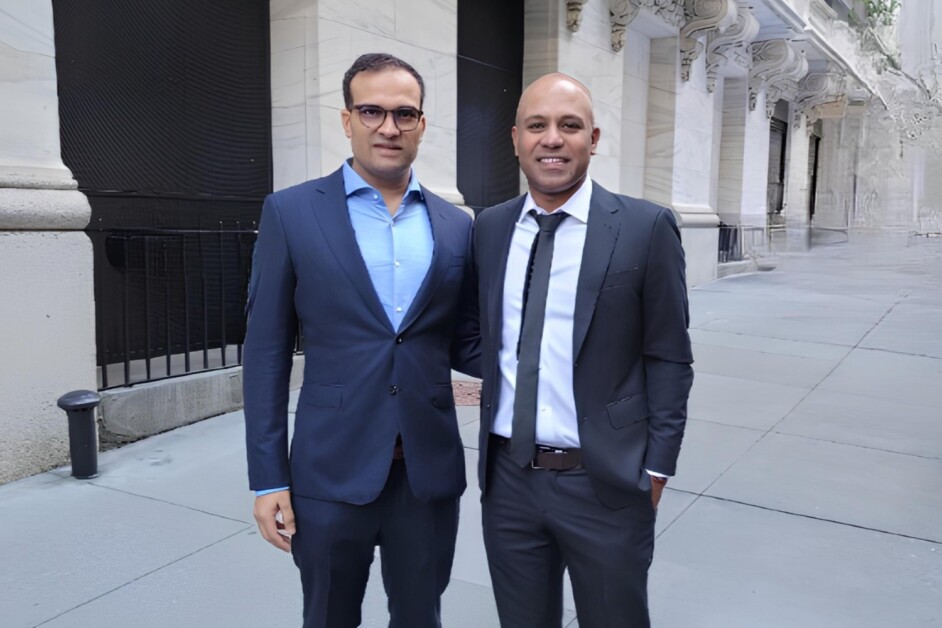
In October 2025, UnifyApps announced that Thomas, an early investor, was joining as chairman and co-CEO alongside Pavitar Singh, formerly Sprinklr’s CTO. The company raised a $50 million Series B led by WestBridge Capital, bringing its announced funding total to $81 million. A familiar working connection had become part of a new operating partnership.
UnifyApps connects enterprise systems so AI can work with business information and take action through workflows. Thomas’s public writing has continued circling architecture: how shared knowledge, permissions and business logic can support successive deployments. His September 2026 article on enterprise AI returns to that question of foundations, with a newer generation of software waiting upstairs.
The continuity is more interesting than a sudden conversion to a fashionable technology. Email taught him about communication infrastructure. Social media exposed the gaps between customer-facing teams. AI now confronts another collection of systems that need to cooperate. Across those changes, Thomas keeps returning to the awkward journey between information existing somewhere and becoming useful here. A company may own many rooms. Its customer would appreciate a connecting door.