There are two kinds of maps in business. One shows everyone where to go. The other is a decorative object waved around by whichever department has the floor. Fran Wilson has spent more than two decades insisting on the first kind. Her terrain is enterprise software, where products are technical, buying committees are crowded, and the distance between a clever campaign and actual revenue can feel roughly continental.
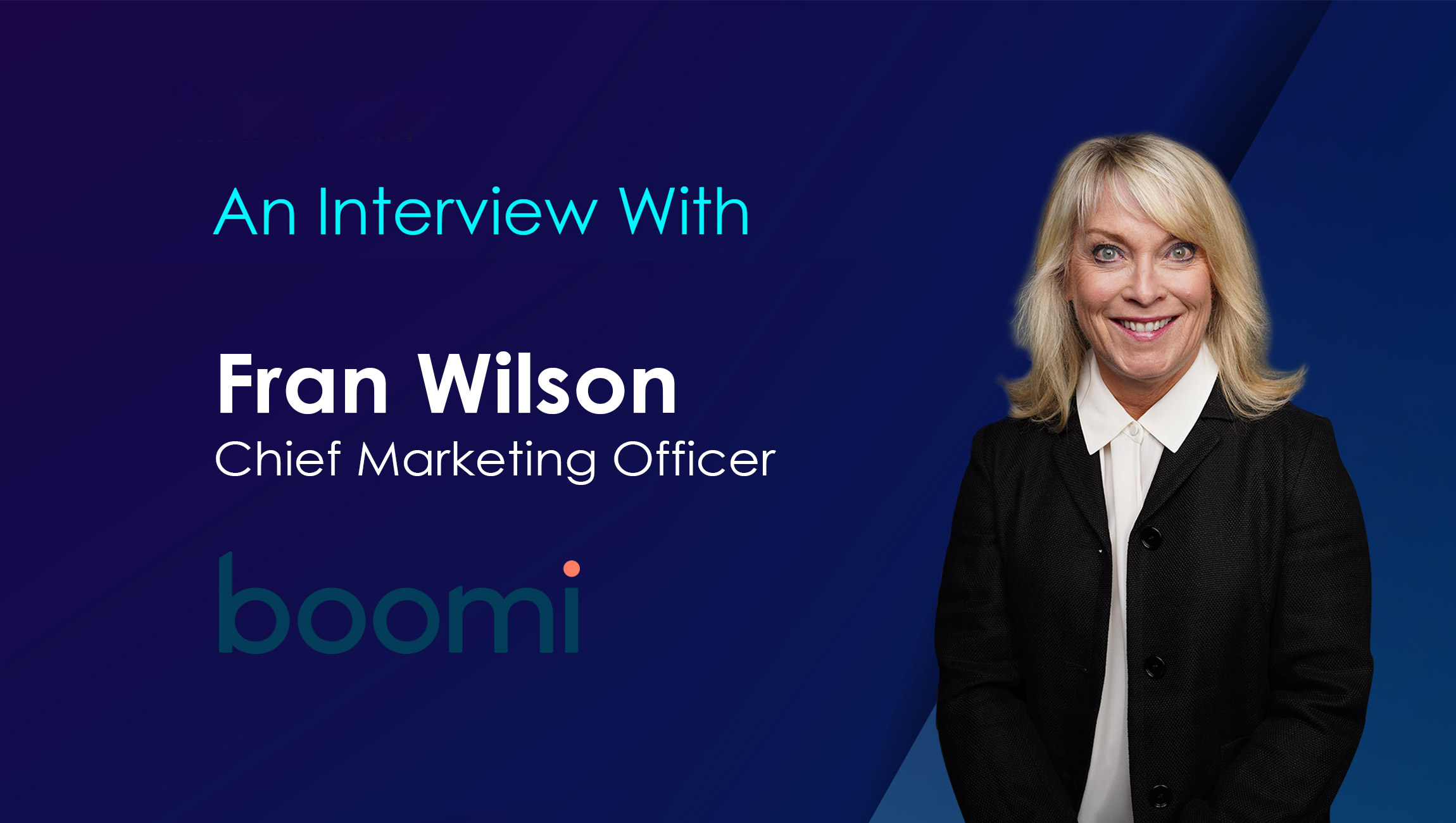
Wilson is the chief marketing officer at Semarchy, the data management company. She leads its global marketing organization across demand, brand awareness, and customer experience. The title places her in the usual C-suite neighborhood of forecasts, positioning, budgets, and pipeline. Her public philosophy, however, begins somewhere more basic: all the go-to-market functions should be looking at the same map.
Sales, marketing, product management, and customer success each see a different piece of the customer journey. Left alone, they also develop different dialects, different dashboards, and the occasional belief that everyone else has misunderstood the plot. Wilson’s remedy is a shared plan and a single view of the metrics that matter - global pipeline, retention, customer lifetime value, and the signals that reveal whether the business is creating an experience customers want to continue.
“It all starts with a shared plan.”Fran Wilson on go-to-market alignment
The phrase is short enough to fit on a coffee mug. Living by it is harder. A shared plan makes pet projects visible. It forces teams to agree on definitions. It exposes the awkward moment when four green dashboards combine into one red business result. The reward is equally concrete: decisions arrive faster because people spend less time debating whose version of reality deserves a passport.
The long Red Hat chapter
Wilson’s instinct for coordinated growth was tested over a long stretch at Red Hat. She joined during the company’s startup phase and stayed through a transformation few software marketers get to witness from inside. Red Hat grew into a multibillion-dollar open-source company, passed $4 billion in annual revenue, and was acquired by IBM in 2019 for $34 billion.
Her roles expanded with the company, from program marketing through director and senior director posts to vice president of global demand and revenue marketing. After the acquisition, she co-led joint IBM-Red Hat go-to-market programs designed to bring sales and marketing together around new customer acquisition. Integration, in other words, was not an abstract corporate memo. It was the work.
Former colleagues describe a leader who built campaign systems with clarity and patience, encouraged people to experiment, and allowed mistakes to become material for improvement. The descriptions pair empathy with high expectations. That combination is less cuddly than it sounds. A genuinely experimental culture needs enough trust to admit what failed and enough accountability to do something useful with the admission.
After Red Hat came a compressed sequence of senior assignments. Wilson became global head of marketing at the ecommerce risk company Riskified, then joined Boomi as chief marketing officer in 2022, shortly after Boomi began operating as an independent company. Each move kept her close to a recurring problem: how to explain complicated infrastructure in terms of what customers can now do.
The peanut-butter problem
In a 2023 discussion about go-to-market practice, Wilson offered an image that any overcommitted planning team can recognize. Chase eight or ten growth bets, she warned, and the organization spreads its resources like peanut butter. Every opportunity receives a thin coating. Few receive enough attention to become consequential.
Her preferred range is three to five growth bets. The number matters because strategy needs scarcity. A priority that sits beside nine other priorities is merely a sentence with good posture. Three to five choices can be named, funded, assigned, measured, and remembered. They can also be rejected when new distractions arrive wearing the fashionable hat of urgency.
Three to five serious growth priorities. Enough variety to learn. Few enough to fund and execute.
This is useful counsel for marketers because the discipline runs against the profession’s appetite for possibility. A new segment, channel, partner, event, message, or machine-learning tool always promises incremental reach. Wilson’s rule asks the less glamorous question: what must the organization stop pretending it can pursue at full strength?
Data helps answer, but only if it is shared. Wilson has argued for technology and analytics that connect customer insight to investment decisions, improve targeting, and reveal return on marketing spend. Yet she does not present the stack as a vending machine that dispenses certainty. The tools serve the plan. They help a coordinated team adjust its route.
Selling trust in the AI rush
At Semarchy, Wilson’s management ideas and product category now mirror one another. The company sells a data platform built around mastering, integrating, governing, and making enterprise information useful. Wilson joined in 2024 and now markets those capabilities during an AI investment cycle in which executives are discovering that an ambitious model cannot rescue unreliable source data.
Her recent work focuses on trusted, AI-ready data products, including Semarchy’s native master data management offering in Snowflake. The business claim is technical but the human problem is familiar. Organizations have customer names duplicated across systems, product records that disagree, and ownership rules that exist more clearly in slide decks than in daily work. Intelligence built on that foundation inherits the confusion at machine speed.
Wilson’s language keeps returning to customer outcomes: cleaner foundations, more precise decisions, faster responses, less organizational friction. It is a sensible way to market data plumbing. Nobody wakes with a tender longing for master data management. They do wake wanting the forecast to be credible, the customer record to be complete, and the AI initiative to survive contact with reality.
The stack serves the plan. The plan serves the customer. The shared data tells the room when either one has drifted.
Two boards, two kinds of future
Wilson’s work beyond Semarchy widens the frame. She serves on the board of Launch Chapel Hill, an accelerator linked to UNC-Chapel Hill, where she earned her BA. The organization supports founders working through the unglamorous early questions: does the idea solve a real problem, can a first product find its market, and can a small team turn interest into a durable company?
She also serves on the board of The HDF Group, the nonprofit steward of HDF technologies used to store and work with scientific and engineering data. HDF5 belongs to the quiet infrastructure beneath research, industry, and computing. Its time horizon is long. Data should remain usable when today’s machines, platforms, and fashionable vocabulary are gone.
The boards appear to face opposite directions: one toward companies not yet fully formed, the other toward data that must outlive the systems that created it. Wilson’s contribution makes sense in both rooms. Early founders need a legible route to customers. Infrastructure stewards need a legible route to relevance, support, and a sustainable community. Maps again.
The operator’s advantage
Wilson holds an MBA from Wake Forest University in addition to her UNC degree, plus executive education for chief marketing officers at Columbia University. The credentials sit beneath a career built through operating repetitions: launch, measure, align, revise. Her earlier jobs even included sales leadership, a useful inoculation against the idea that marketing ends when someone fills in a form.
What emerges is not a theory of louder marketing. It is a theory of reduced waste. Fewer bets reduce diluted effort. Shared metrics reduce rival realities. Customer-centered planning reduces internal theater. Trusted data reduces the time spent arguing about what happened. None removes uncertainty, but each makes uncertainty more productive.
There is wit hidden in the practicality. The team with a map finds the treasure first, Wilson once observed. The metaphor flatters no one. A map does not care which department commissioned it. Treasure does not appear because a quarterly business review used confident verbs. People still have to choose the route, carry the supplies, and notice when the landscape differs from the drawing.
The portable playbook
Choose three to five growth bets. Give every go-to-market function the same scoreboard. Connect investment to customer outcomes. Treat data as shared infrastructure. Then keep enough humility to redraw the map.
That may be Wilson’s most transferable lesson. Alignment is not agreement performed once at an off-site. It is an operating habit. The plan is shared, the evidence is visible, and the route can change without the expedition dissolving into four competing travel agencies. In enterprise software, where complexity is plentiful and attention is not, that habit is a serious advantage.