The most interesting thing about FoodHealth Co is not that it can assign yogurt a number. It is that the company spent six years figuring out where that number belonged. At first, the answer was everywhere: meal planning, dietitian recommendations, nutrient tracking and food delivery, all crammed into one consumer app. When Bitewell, as the company was then called, launched that product in 2022, the result was an expensive buffet of middling features. Founder and CEO Samantha Citro Alexander later offered the cleanest review possible: it “kind of sucked.”
That sentence is more useful than most startup manifestos. FoodHealth did not discover a new mission after the flop. It discovered that its mission - helping people answer “is this healthy for me?” - had been buried under too much product. The team kept the scoring engine, changed the vehicle and eventually changed the name. Today the FoodHealth Score is a 1-to-100 rating built from nutrient density and ingredient quality. It appears in retailer shopping flows, analytics products, food-benefit rules, a browser extension and a mobile app aimed particularly at people using GLP-1 medicines.
01 / The failure
A Ferrari, a bicycle budget and 55 slides
Citro Alexander came from beauty marketing, where she had watched “clean beauty” alter products, packaging and retail. Co-founder Chris Fanucchi had built food brands, including Limitless sparkling water. They met in 2020 and sketched an everything-nutrition app. Antler supplied the first $200,000 through a SAFE. The founders skipped salaries; Fanucchi consulted on the side, while Citro Alexander moved with her husband from Los Angeles to Dallas, where she estimated living costs were 30 to 40 percent lower.
An offshore development team of roughly seven built the first version. The problem was not a shortage of ambition. It was the multiplication of interfaces, data and workflows before any single behavior had earned its keep. Bitewell was simultaneously a planner, tracker, expert directory and delivery layer. The user experience needed serious investment just as cash tightened. The founders called it an attempt to build a Ferrari on a bicycle budget. Their fundraising materials displayed the same appetite: the deck ran 55 pages.
“The idea is going to change 600 times, but the mission shouldn’t.”Samantha Citro Alexander, co-founder and CEO
The first correction was practical. Bitewell raised capital and moved toward a digital “food farmacy” for employers and health plans. Food received a personalized score from zero to ten; participating employers could fund healthy-food stipends, and the marketplace filtered purchases. Members had asked the company to stop showing every possible choice and help them focus on good ones. This was a sharper product, but it still made Bitewell responsible for a marketplace, benefits administration and the underlying nutrition intelligence.
The product kept changing. The question did not.
02 / The engine
What FoodHealth actually sells
The score combines two components. Its Nutrient Density Score weighs helpful and limiting nutrients against recognized intake guidance, often normalizing them per calorie or by relevant ratios such as fiber to carbohydrate. Its Ingredient Quality Measure uses a taxonomy of more than 30 “boosters” and “detractors,” weighted by the strength of evidence connecting them to health outcomes. Special rules address odd categories: a zero-calorie drink cannot sensibly be evaluated per calorie, and cooking oils need a way to distinguish fat profiles.
The score is a translation layer.
For a shopper, 70 means a quick comparison. For a retailer, it powers search and swaps. For a brand, it is a benchmark. For a health plan, it can become an eligibility threshold.
This is different from a calorie counter and more ambitious than a traffic light. A number allows two yellow cereals to be compared. Ingredient treatment attempts to see beyond a tidy nutrition panel. The system also carries a limit that FoodHealth cannot design away: compressing a complicated diet into one score is useful only if the methodology stays legible, current and appropriate to the person and category. The company says dietitians, data scientists and an external review board oversee the work, and that the algorithm changes as nutrition science develops.
03 / The market
One engine, four different buyers
FoodHealth’s current business is a neat piece of stakeholder origami. Kroger announced the score in 2024 as part of its OptUP program, placing it on product pages, in the mobile app and behind UPC scans. Hy-Vee followed in January 2026 with scores, explanations and better-for-you alternatives. Those integrations turn a nutrition model into retail software at the precise moment a shopper is choosing between two boxes.
Decide without a spreadsheet
Scan a shelf, compare products, improve a cart and get a nearby swap.
Make health searchable
Add scoring, recommendations and progress to commerce and loyalty experiences.
See the reformulation gap
Benchmark products, locate ingredient drivers and compare category performance.
Turn nutrition into a rule
Use score thresholds to define which groceries a benefit will cover.
NielsenIQ gives the B2B side another dimension. FoodHealth Intel pairs nutrition scores with purchase data, letting brands and category managers ask not just which product is healthier, but whether healthier products are gaining share. Their joint “Health of America’s Grocery Carts” analysis covered more than 200 billion purchases from 70,000 households. Soda Health uses the score differently: managed-care organizations can set a threshold for products eligible under a grocery benefit. In this market, the same integer can be user interface, research variable and policy rule.
The company sells enterprise access through annual, quote-based arrangements. Consumers can encounter the score free through participating grocers and promotional browser access. The current iOS app offers a seven-day trial, followed by publicly listed founding prices of $9.99 a month or $89 a year. FoodHealth says it has scored more than one million packaged products. That breadth matters because a scanner is charming for exactly one use if it repeatedly answers “product not found.”
04 / The return to consumer
GLP-1 users told them where to aim
The latest change is the most revealing. After building B2B infrastructure, FoodHealth returned to a direct consumer app. The company says people taking GLP-1 medicines engaged with the FoodHealth Score more than any other group. Their appetites may be smaller, their nutrition targets more consequential and generic advice less useful. That observation challenged the supposedly universal score. One-size-fits-all was no longer enough.
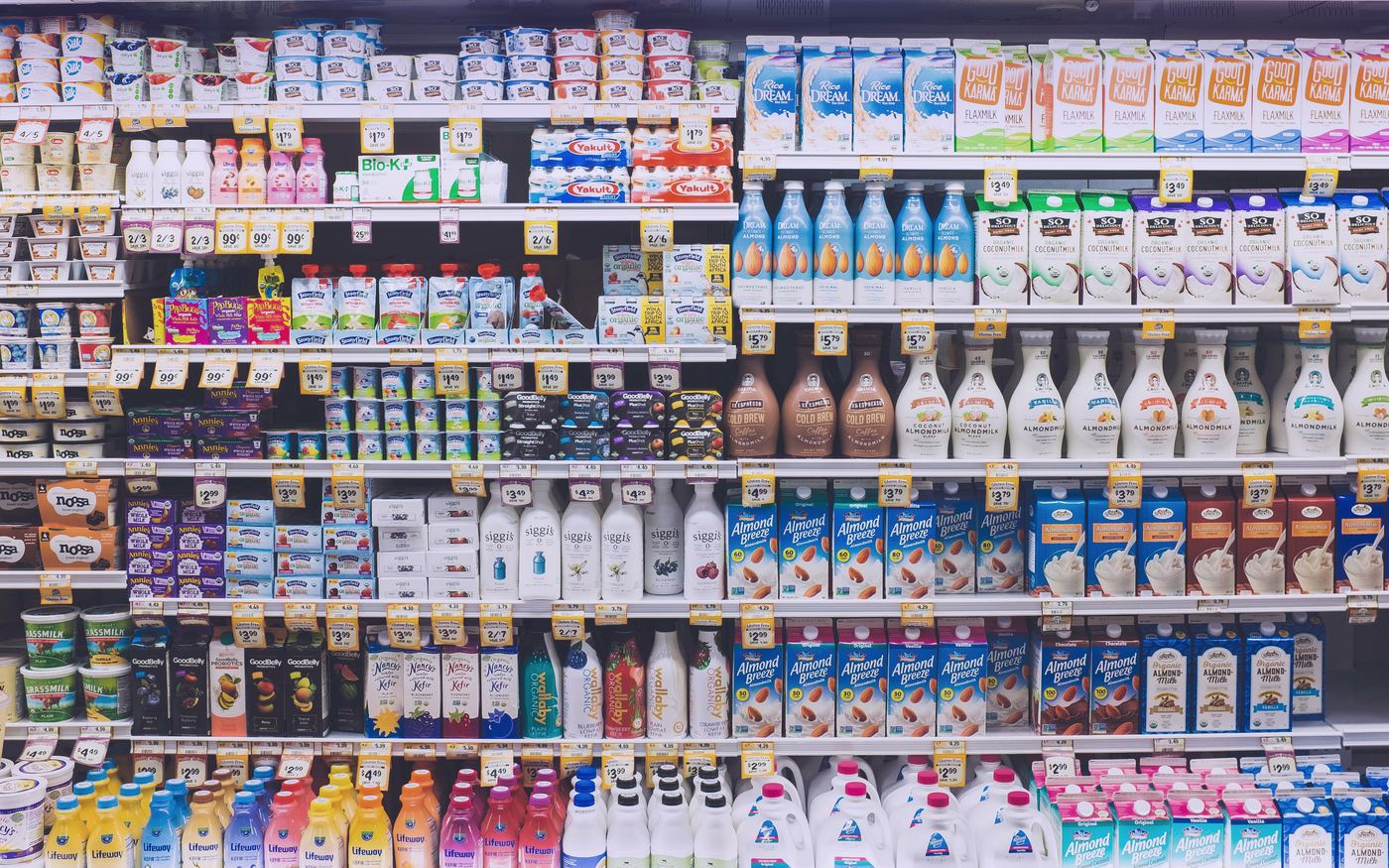
The new mobile product lets a person photograph a shelf, a package or a refrigerator. It returns personalized product scores, explains tradeoffs and suggests a better option in the same aisle. Protein, fiber and added sugar receive particular attention for GLP-1 users. It is deliberately not a meal log or a demand to rebuild the pantry. The intervention arrives while the shopper’s hand is still hovering near the yogurt - a small design decision that captures FoodHealth’s accumulated learning.
The moat is not a prettier score. It is putting defensible advice inside the few seconds when a choice can still change.
Competitors surround every edge: Yuka and Fooducate scan products; MyFitnessPal tracks intake; Guiding Stars rates food; retailer-owned programs have built-in distribution; product databases can feed similar interfaces. FoodHealth’s differentiation is the connective tissue. One model crosses consumer guidance, retailer APIs, brand analysis, purchase-data research and benefit eligibility. If those uses reinforce the product database and methodology, distribution compounds. If they pull the score toward conflicting customers, simplicity can become strain.
What another founder can copy
- Find the product inside the product. The overloaded app failed; the score had independent value.
- Move advice to the decision. Grocery pages and shelves beat a lecture hours later.
- Reuse the engine, not the interface. Shoppers, brands and payers need different screens around the same core intelligence.
- Let behavior narrow the audience. GLP-1 engagement produced a sharper consumer wedge than another general wellness pitch.
- Keep the mission stable enough to survive a pivot. “Is this healthy for me?” lasted when several products did not.
When the playbook will not work
This strategy depends on a reusable core asset, credible domain expertise, broad data and partners willing to place an outside system in their customer journey. It is a poor fit when the “engine” has no standalone buyer, when recommendations cannot be explained, when coverage is too thin to be reliable or when regulation and clinical nuance make a single score unsafe. FoodHealth also has to prove that a number changes durable behavior, not merely the next click.
05 / The company behind the number
Where FoodHealth fits now
FoodHealth sits between digital health, grocery technology and enterprise data. It employs roughly a few dozen people across nutrition, public health, data science, machine learning, product and commercial work. Public job descriptions value intellectual rigor, speed, transparency, kindness and hands-on ownership - sensible traits for a company whose central artifact needs both scientific caution and startup velocity.
The company has publicly announced a $4 million seed in 2023 and a $7.5 million Series A in 2025, alongside earlier financing described by its founder. The Series A was co-led by Reach Capital and Ulu Ventures. Its rebrand from Bitewell accompanied a move from Denver to San Francisco and a more explicit identity as nutrition infrastructure. The legal entity still appears publicly as Bitewell, Inc., a small souvenir from the earlier company inside the current one.
What failed first was breadth. What changed the founders’ minds was use: members wanted healthier choices filtered; enterprise partners wanted the score separated from the marketplace; GLP-1 shoppers wanted it personalized. FoodHealth’s story is not that pivots are automatically brave or that every discarded app contains a platform. It is narrower and more useful. A company listened hard enough to notice that the part it kept rebuilding was the part customers kept pulling toward themselves.