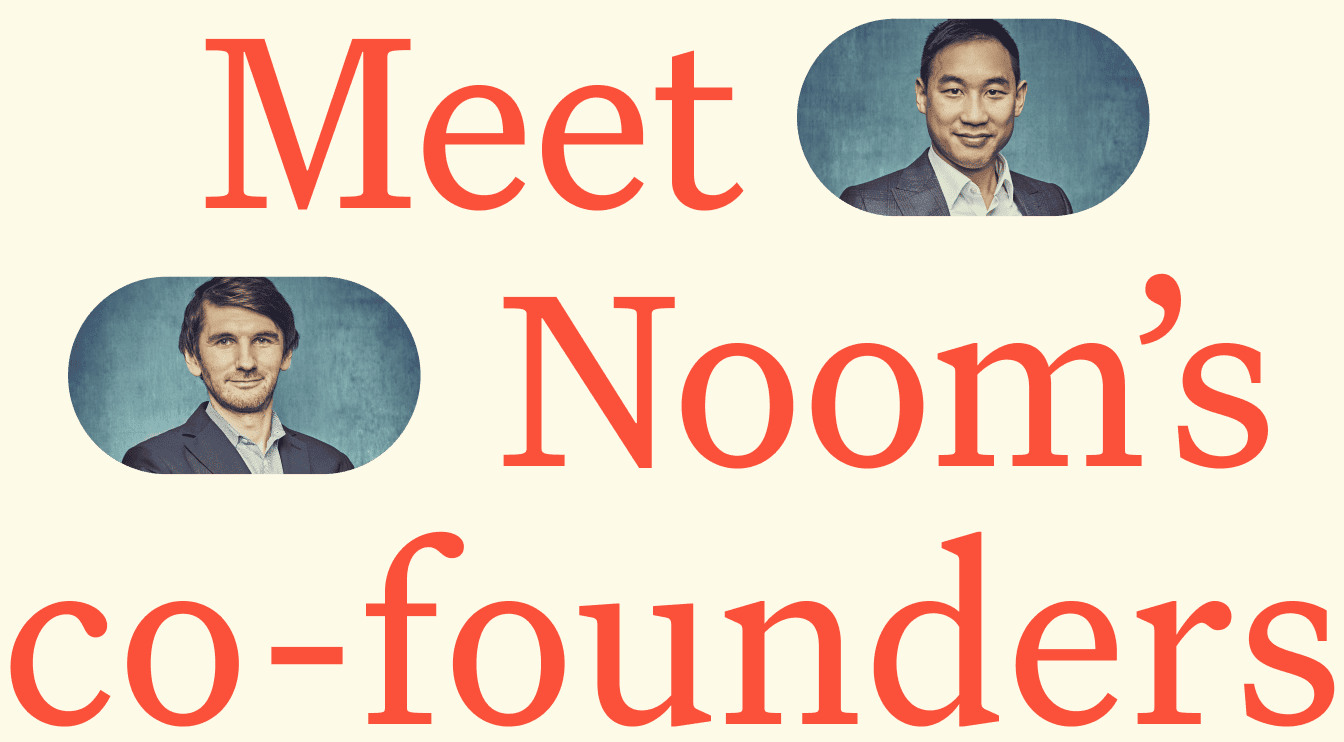
Noom began with butterflies. Not the nervous kind, although there were surely plenty of those. The company's first prototype bolted a touchscreen onto a stationary bicycle and invited riders to pedal through a bright game, catching virtual butterflies as they went. Gym users liked it. Investors did not. The market was too small, the hardware too awkward, and the founders' ambition - preventive health for everyone - far too large for a machine parked beside the ellipticals.
That mismatch set the pattern for nearly a decade. Co-founders Saeju Jeong and Artem Petakov moved from gym hardware to calorie counting, then through a collection of fitness apps that attracted users without producing a durable business. They spent money and exhausted staff before asking the cheapest question: will people pay for this idea? Jeong's later verdict was bracingly useful. “We learned we should have tested the concept before we built it.”
The app stopped counting and started asking why
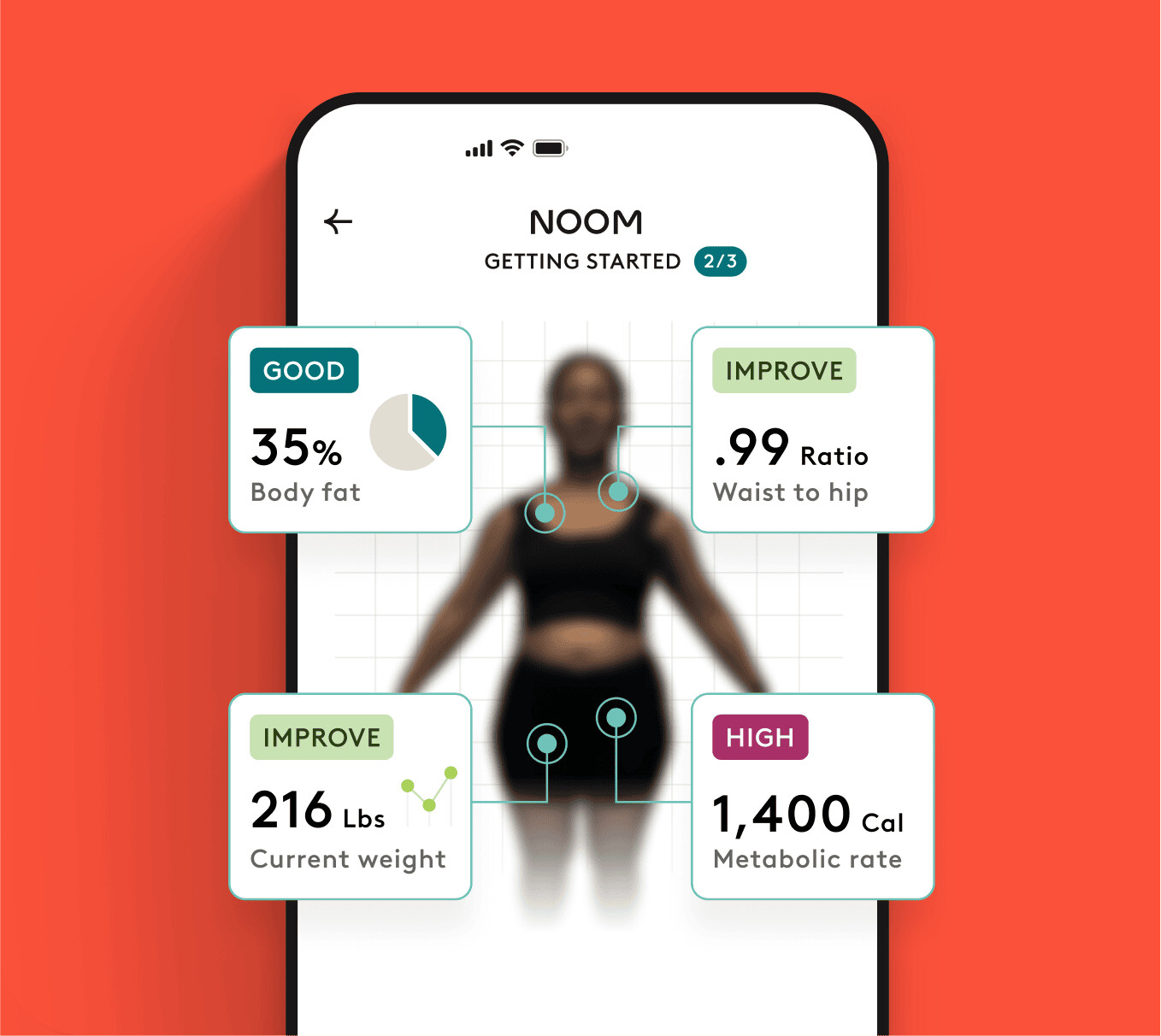
The breakthrough arrived in 2017, when Noom narrowed itself around weight management and added an explicitly psychological layer. A user still logs meals, steps and weight, but the product behaves less like a spreadsheet and more like a short daily course. Lessons introduce ideas from cognitive behavioral therapy. Foods are sorted by caloric density. Prompts ask about triggers, routines and the private logic behind a late-night snack. Coaches and groups add accountability. The point is not simply to record the cookie. It is to notice what happened five minutes before it.
That distinction put Noom between two familiar products. It had the convenience and data of MyFitnessPal, but borrowed the accountability of WeightWatchers without requiring an in-person meeting. The customer was usually someone who already knew the rough rules of healthy eating and had discovered that knowing is not doing. Noom sold the missing bridge as a recurring subscription.
Focus paid. Noom reported $237 million in 2019 revenue and $400 million in 2020 as pandemic routines collapsed and demand for at-home health products surged. Downloads reached tens of millions. In May 2021, Silver Lake led an approximately $540 million financing round alongside Oak HC/FT, Temasek and Novo Holdings, with existing investors including Sequoia participating. The deal reportedly valued Noom at $3.7 billion. An initial public offering at a much higher figure was discussed. Overnight success had taken nine years.
The growth bill arrived in 2022
Recurring revenue can make a subscription company look smooth from a distance. Up close, Noom had sharp edges. Customers sued over trial enrollment, automatic renewals and a cancellation process they said was unduly difficult. In 2022, a federal court approved a settlement with a $56 million cash fund and $6 million in subscription credits. Noom also agreed to clearer consent and easier cancellation. The episode is a blunt operating lesson: retention earned through usefulness compounds; retention produced by friction becomes a liability.
The same year brought a human cost. Noom cut hundreds of jobs in two rounds, with coaches heavily affected. In October, about 500 employees - roughly 10 percent of staff at the time - were reportedly laid off. Management spoke about efficiency and longer-term growth. To users who understood Noom as empathy plus software, reducing the people supplied the obvious question: how much of the original difference could be automated before it became another tracker?
“Focus is beauty.”Saeju Jeong, co-founder
Then the market changed more radically than any dashboard redesign could answer. GLP-1 medicines such as Wegovy and Zepbound altered expectations about weight loss. A service built around patient, incremental change now faced treatments capable of producing substantial results through biology. Noom could defend behavior alone, become a lead generator for prescriptions, or combine the two. It chose the third option.
Noom became the clinic around the app
Noom Med launched in 2023, pairing the app with online clinical evaluation and prescription management when medically appropriate. GLP-1 Companion added medication reminders, side-effect guidance, protein targets, meal logging and workouts intended to protect lean mass. Noom's pitch is practical: medicine may reduce appetite, but it does not plan dinner, build strength, interpret a setback or decide what happens after treatment stops.
The company kept adding pieces. It introduced compounded GLP-1 options, including a microdose program based on individualized clinical judgment. Compounded drugs are not FDA-approved or reviewed by the agency for safety, effectiveness or quality, a distinction customers have to understand. It expanded into menopause education and clinician-guided HRT. Its free camera tools estimate body composition or selected wellness signals and show an imagined “Future Me”; Noom says these are educational, not diagnostic. In 2026 it added a $125 at-home blood test covering markers such as HbA1c, ApoB, triglycerides and inflammation.
The biggest structural move came in April 2026: Noom acquired Tailor Made Compounding, a 503A pharmacy operating in 46 states. This was not a feature release. Owning pharmacy capability moved Noom deeper into fulfillment, regulation and clinical operations, while opening a route into peptide therapies and healthy aging beyond weight. Two months later, it made GLP-1 Companion free to anyone taking one of the medicines, even if another provider wrote the prescription. Free support creates a wide top of funnel; medication, clinical programs and diagnostics sit further down.
Who buys the whole stack?
Consumers remain the visible customer: people trying to lose weight, manage treatment or understand a health risk. But Noom also sells to employers, health plans and health systems that care about a different equation - engagement, outcomes and total cost. Its enterprise menu includes weight management, diabetes prevention and management, clinical obesity care and medication support. Mount Sinai began referring selected patients to Noom in 2024 so they could receive digital support between visits. The CDC-recognized Diabetes Prevention Program gives the company a credential beyond consumer branding.
This puts Noom in several competitive fights at once. WeightWatchers offers a familiar behavior program and its own clinical services. Ro and Hims & Hers are fluent in direct-to-consumer telehealth. Omada and Vida sell chronic-care support to organizations. MyFitnessPal and Lose It! offer cheaper tracking. Noom's claim to difference is not any single component. It is the continuity of a psychology-led habit layer across the app, clinic, medicine and employer benefit.
The trick worth copying is smaller than Noom
Builders can copy the early correction without copying the healthcare empire. Test demand before building. Pick an outcome customers can measure. Use automation for repetition and humans for moments that require judgment or empathy. Treat emotional complaints as product data. Most of all, let one clear job organize the feature set. Noom worked when it stopped trying to improve health in every possible way and made weight the visible starting line.
The irony is that today's Noom once again looks broad. Medication, menopause, diabetes, AI scans, blood tests, pharmacy and longevity can form a coherent care loop, but they can also become the old urge to boil the ocean in more sophisticated packaging. The strategy depends on users staying engaged after the novelty of a scan or the first rush of weight loss. It depends on clinical quality surviving consumer-scale marketing. It depends on employers seeing enough durable benefit to keep paying. And it depends on customers wanting a behavior program, not merely the fastest prescription.
The uncomfortable test
Noom's model is least persuasive for people who need intensive in-person care, dislike daily tracking, cannot sustain a subscription, or want medication without curriculum. It also weakens if coaching costs exceed the retention it creates, if clinical regulation limits compounded products, or if insurers and drugmakers bundle equivalent support for less.
The company publishes encouraging engagement and weight-maintenance analyses, but several are observational and cannot prove that app use caused the better result. The honest product promise is support, not certainty.
Noom's first reinvention found a way to sell behavior change. Its second is trying to make behavior the connective tissue of preventive care. That is a larger business, a harder operation and a much stricter test of trust. The butterfly bike only had to persuade people to keep pedaling. The new Noom has to persuade patients, clinicians, employers and regulators that all these moving parts lead somewhere better.